
Chef Juliana
Açaí com Camarão do Pará
You think açaí belongs with banana and granola because that's the version that traveled. In Pará, thick unsweetened açaí sits beside shrimp, rice, and farinha. Anota aí: same fruit, different meal.
A cooking platform built around craft, culture, and the stories behind what we eat.
Created by
You think salted fish, tucupi, banana, farofa, eggs, and olives means “isso não é pra mim.” It means layers. One at a time, a gente resolves the whole celebration plate.
You look at salted pirarucu and hear that quiet little voice: “isso não é pra mim.” I know the voice. Mine used to appear whenever a recipe had more than three bowls on the counter. But cooking isn't a gift, it's something you learn, and this dish is not a mystery. It's assembly with good sense.
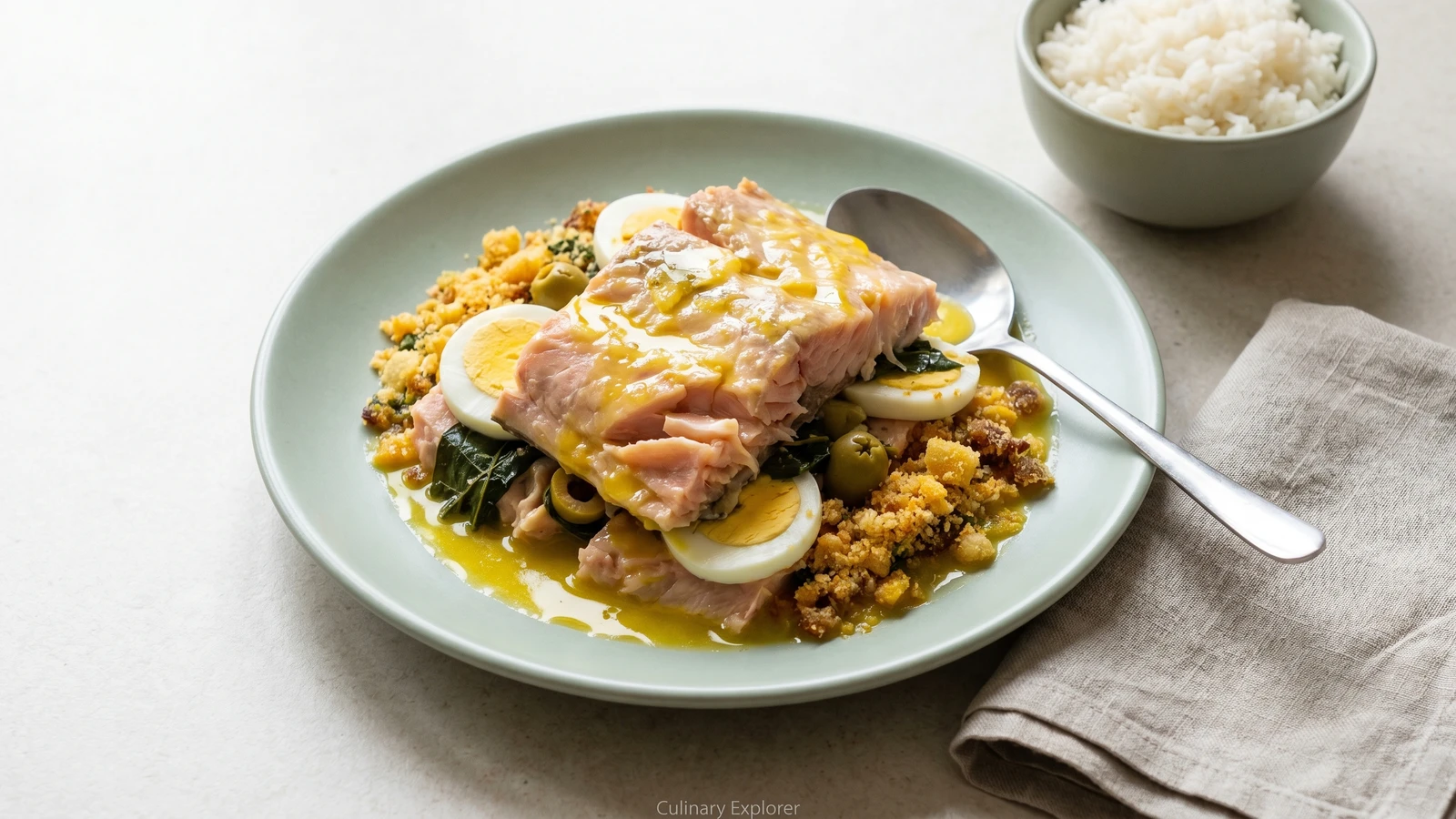
I teach this with my feet firmly outside the throne, because Pará and Amazonas cooks carry this tradition, not me. What I can give you is a home version with receitas que funcionam: dessalgar the fish properly, build a real refogado with onion, garlic, chicória-do-pará, and tucupi, moisten without drowning, fry the banana until it smells sweet, and layer everything so each forkful has fish, farofa, egg, olive, and that bright yellow caldo.
Tucupi is non-negotiable here. Real bottled tucupi, made from mandioca brava and already boiled long enough to drive off the cyanogenic compounds that make the raw juice unsafe. Then a gente boils it again at home with aromatics for flavor and confidence. Molho amarelo from a shelf is not tucupi. It's the powdered lie wearing a yellow shirt, and I won't let it run your dinner.
Serve it with arroz soltinho and something green, jambu if you can get it, sautéed couve if you can't. Even dressed for festa junina, this is still the Brazilian plate: rice, beans if you want them on the table, river fish, greens, mandioca in the farofa. Comida de verdade, dressed up but not pretending.
Pirarucu de casaca is associated with the Amazon region, especially Pará, where dried salted pirarucu became a practical celebration fish because salting preserved a large river catch before refrigeration. The “casaca” name points to the dressed or layered style: shredded fish rebuilt with refogado, farinha, banana, eggs, olives, coconut milk, and local seasonings. Versions vary by household, and cooks from Pará and Amazonas are the ones to trust for the regional canon.
Quantity
1 kg
cut into large pieces
Quantity
as needed
for soaking and boiling
Quantity
3 cups
Quantity
1/2 cup
Quantity
4 tablespoons
divided
Quantity
1 large
finely chopped
Quantity
4 cloves
minced
Quantity
1 cup
chopped
Quantity
1/2 cup
finely chopped
Quantity
1/2 cup
finely chopped
Quantity
2 tablespoons
chopped, or cilantro if unavailable
Quantity
1 small bunch
leaves and tender stems picked
Quantity
2 cups
Quantity
3
sliced lengthwise
Quantity
3
sliced
Quantity
1/2 cup
sliced
Quantity
1/2 cup
chopped
Quantity
1 teaspoon
only if needed
Quantity
1/2 teaspoon
Quantity
2 cups cooked
for serving
| Ingredient | Quantity |
|---|---|
| salted dried pirarucucut into large pieces | 1 kg |
| waterfor soaking and boiling | as needed |
| real bottled tucupi | 3 cups |
| coconut milk | 1/2 cup |
| olive oil or neutral oildivided | 4 tablespoons |
| onionfinely chopped | 1 large |
| garlicminced | 4 cloves |
| ripe tomatochopped | 1 cup |
| red bell pepperfinely chopped | 1/2 cup |
| green bell pepperfinely chopped | 1/2 cup |
| chicória-do-paráchopped, or cilantro if unavailable | 2 tablespoons |
| jambu (optional)leaves and tender stems picked | 1 small bunch |
| farinha d'água or coarse cassava flour | 2 cups |
| ripe but firm bananassliced lengthwise | 3 |
| hard-boiled eggssliced | 3 |
| green olivessliced | 1/2 cup |
| parsley and scallionschopped | 1/2 cup |
| saltonly if needed | 1 teaspoon |
| black pepper | 1/2 teaspoon |
| arroz branco soltinhofor serving | 2 cups cooked |
Put the salted pirarucu in a large bowl, cover with plenty of cold water, and refrigerate for 24 hours, changing the water 3 or 4 times. The water should go from aggressively salty to only lightly salty. This is not fussiness. If you skip it, the whole dish tastes like punishment and you'll think the fish is the problem.
Drain the pirarucu, put it in a pot, cover with fresh water, and simmer gently for 15 to 20 minutes, until the fish flakes when pressed with a fork. Drain, cool until you can handle it, then pull out skin and bones and desfiar into big flakes. Keep the flakes generous, because tiny shreds disappear into the farofa and this fish deserves to be seen.
Pour the real bottled tucupi into a pot and bring it to a lively boil for 10 minutes, then lower to a simmer while you work. It should smell sharp, earthy, and clean, not dusty or artificial. Raw tucupi from mandioca brava is unsafe until it has been properly boiled to drive off cyanogenic compounds, so your starting point is real bottled tucupi from a trustworthy producer, never molho amarelo.
If you have jambu, rinse it well and blanch the leaves and tender stems in the simmering tucupi for 2 minutes, just until they turn deep green and soften. Lift them out and chop roughly. Jambu brings that gentle mouth-tingle and Amazonian green flavor; when you can't get it, say the truth and make the dish without it. Don't replace it with a sad imaginary substitute.
Warm 2 tablespoons of oil in a wide pan over medium heat. Add the onion and cook until soft and see-through, about 5 minutes, then add the garlic for 1 minute, just until it smells good. Add the tomato, bell peppers, chicória-do-pará, and black pepper, and refogar until the tomato collapses and the oil begins to show at the edges. That little shine means the water cooked off and the flavor concentrated.
Add the shredded pirarucu to the refogado and fold gently so the flakes get coated without turning to paste. Pour in 1 cup of the hot tucupi and the coconut milk, then simmer for 5 minutes, until the fish looks glossy and moist but there isn't a lake in the pan. You want the fish seasoned and juicy, because dry salted fish under farofa is how parties become silent.
In another pan, warm 1 tablespoon of oil over medium heat. Add the farinha and stir for 3 to 4 minutes, until it smells toasted and feels dry and loose under the spoon. Add 1/2 cup of the hot tucupi, a little at a time, stirring until the farofa is damp and crumbly, not wet. The tucupi carries flavor through the layer; dumping it in all at once makes paste.
Warm the last 1 tablespoon of oil in a skillet and lay in the banana slices without crowding. Dourar for 2 to 3 minutes per side, until the edges brown and the banana smells sweet. Pull them out while they still hold their shape. Too soft and they collapse into baby food, and no one invited that to the festa.
Heat the oven to 180°C (350°F). In a medium baking dish, spread half the farofa, then half the pirarucu, half the jambu if using, half the bananas, some egg slices, olives, and parsley-scallions. Repeat the layers, finishing with eggs, olives, herbs, and a few banana pieces on top. Spoon over another 1/2 cup tucupi so the dish bakes glossy, not dry. Layers matter because every serving should taste like the whole dish, not one unlucky forkful of plain flour.
Bake for 20 minutes, until the edges are bubbling lightly and the top looks settled and shiny. Rest for 10 minutes before serving so the farofa drinks in the juices and the slices hold together. Serve with arroz branco soltinho and a green side. If there are beans on the table too, melhor ainda: the pê-efe came to the party wearing its good shirt.
1 serving (about 470g)
Culinary guides, cultural storytelling, and the editorial depth that makes cooking meaningful.
Discover Culinary ExplorerChef Juliana
You think açaí belongs with banana and granola because that's the version that traveled. In Pará, thick unsweetened açaí sits beside shrimp, rice, and farinha. Anota aí: same fruit, different meal.

Chef Juliana
You think savory açaí is not for you. I understand. Then you taste the cold, dark bowl beside hot fried fish, rice, greens, and farinha, and dinner gets very quiet.

Chef Juliana
You think salted beef and rice sound like trouble. Anota aí: soak the charque, brown it properly, build the refogado, and this one pot resolves dinner.

Chef Juliana
You think a Maranhão green rice belongs to somebody else's clever hands. It doesn't. Wilt the vinagreira, build the refogado, fold it through arroz soltinho, and dinner gets bright, coastal, and yours.