
Chef Juliana
Açaí com Camarão do Pará
You think açaí belongs with banana and granola because that's the version that traveled. In Pará, thick unsweetened açaí sits beside shrimp, rice, and farinha. Anota aí: same fruit, different meal.
A cooking platform built around craft, culture, and the stories behind what we eat.
Created by
You don't need to be from the river to cook with respect. Real tucupi, dessalted pirarucu, jambu when you can get it, and arroz soltinho to catch every yellow spoonful.
You may be looking at tucupi and jambu and hearing that little voice: isso não é pra mim. I know that voice. Mine once said the same thing about beans, and beans are water, time, and an onion. So, anota aí: cooking isn't a gift, it's something you learn.
This is not my regional crown to wear. Pará and Amazonas cooks carry this tradition, and a gente respects that. What I can teach is a home version that works: real bottled tucupi, already made safe by the long boil that drives off the dangerous compounds of mandioca brava, a proper refogado with onion, garlic, and chicória-do-pará, and pirarucu cooked gently so it flakes instead of turning dry and bossy.
Tucupi is non-negotiable. The yellow bottle sold as molho amarelo is not the same thing, and I won't help a packet pretend to be a pot. Jambu is the second non-negotiable when you can find it, because that soft tongue-tingle is part of the dish's body. If you can't find jambu, cook the fish in tucupi anyway and serve something green beside it. Honest food can admit what it is missing.
Put it next to arroz soltinho, beans if you have them, and a spoonful of farinha or farofa. There it is: the pê-efe wearing river clothes. Rice, beans, fish, something green. Comida de verdade, bright yellow in the bowl, and completely learnable.
Tucupi and jambu are central to the cooking of Pará, especially around Belém, where tucupi appears in dishes like pato no tucupi and tacacá, the broth served in a cuia with jambu and goma. Tucupi comes from the liquid pressed out of mandioca brava, a bitter cassava that must be fermented and boiled for hours to become safe, because raw processing liquid contains cyanogenic compounds. Pirarucu, one of the Amazon's great freshwater fish, is often salted and dried, which is why people call it the cod of the Amazon.
Quantity
700 g
dessalted and cut into large pieces
Quantity
4 cups
from a trusted producer, labeled boiled or ready for cooking
Quantity
1 cup
as needed
Quantity
2 tablespoons
Quantity
1 medium
finely chopped
Quantity
4 cloves
minced
Quantity
1/2 cup
chopped and divided
Quantity
1 small
whole and pierced once
Quantity
1
Quantity
1 teaspoon
only if needed after tasting
Quantity
2 cups
Quantity
1/3 cup
toasted and chopped
Quantity
2 tablespoons
chopped
Quantity
as needed
cooked, for serving
Quantity
as needed
for serving
| Ingredient | Quantity |
|---|---|
| salted pirarucudessalted and cut into large pieces | 700 g |
| real bottled tucupifrom a trusted producer, labeled boiled or ready for cooking | 4 cups |
| wateras needed | 1 cup |
| neutral oil or mild olive oil | 2 tablespoons |
| onionfinely chopped | 1 medium |
| garlicminced | 4 cloves |
| chicória-do-paráchopped and divided | 1/2 cup |
| hot pepper (optional)whole and pierced once | 1 small |
| bay leaf | 1 |
| saltonly if needed after tasting | 1 teaspoon |
| fresh jambu leaves and tender stems | 2 cups |
| castanha-do-parátoasted and chopped | 1/3 cup |
| cilantro or more chicória-do-pará (optional)chopped | 2 tablespoons |
| arroz soltinhocooked, for serving | as needed |
| farinha d'água or simple farofafor serving | as needed |
If your pirarucu is salted, put the pieces in a bowl, cover with cold water, and refrigerate for 12 to 24 hours, changing the water 3 or 4 times. Taste a tiny cooked flake if you are unsure. It should taste seasoned, not like the sea got angry. Skip this and the whole pot will be salt with fish hiding inside it.
Use real bottled tucupi from a trusted producer, the kind labeled boiled or ready for cooking. Pour it into a pot and smell it: it should be bright, sour, earthy, and a little wild, not sugary or like artificial seasoning. This matters because tucupi begins as liquid from mandioca brava, and the long boil is what makes it safe. Molho amarelo off the shelf is not tucupi. No powder, no packet, no little bottle pretending.
Bring a small pot of water to a boil, add the jambu, and cook for 1 to 2 minutes, just until the leaves murchar, turn glossy dark green, and the stems soften. Drain and set aside. This keeps the jambu tender and clean-tasting so it can finish in the tucupi without turning dull. If you cannot find jambu, say the truth: make pirarucu ao tucupi without jambu and serve couve or another green on the side, but don't call the missing tingle a substitute.
Warm the oil in a wide heavy pot over medium heat. Add the onion and cook, stirring now and then, until it goes soft and see-through, about 5 minutes. Add the garlic and 1/4 cup of the chicória-do-pará and cook for 1 minute, just until the smell rises. Burnt garlic turns bitter and follows you through dinner, rude little thing, so keep it moving.
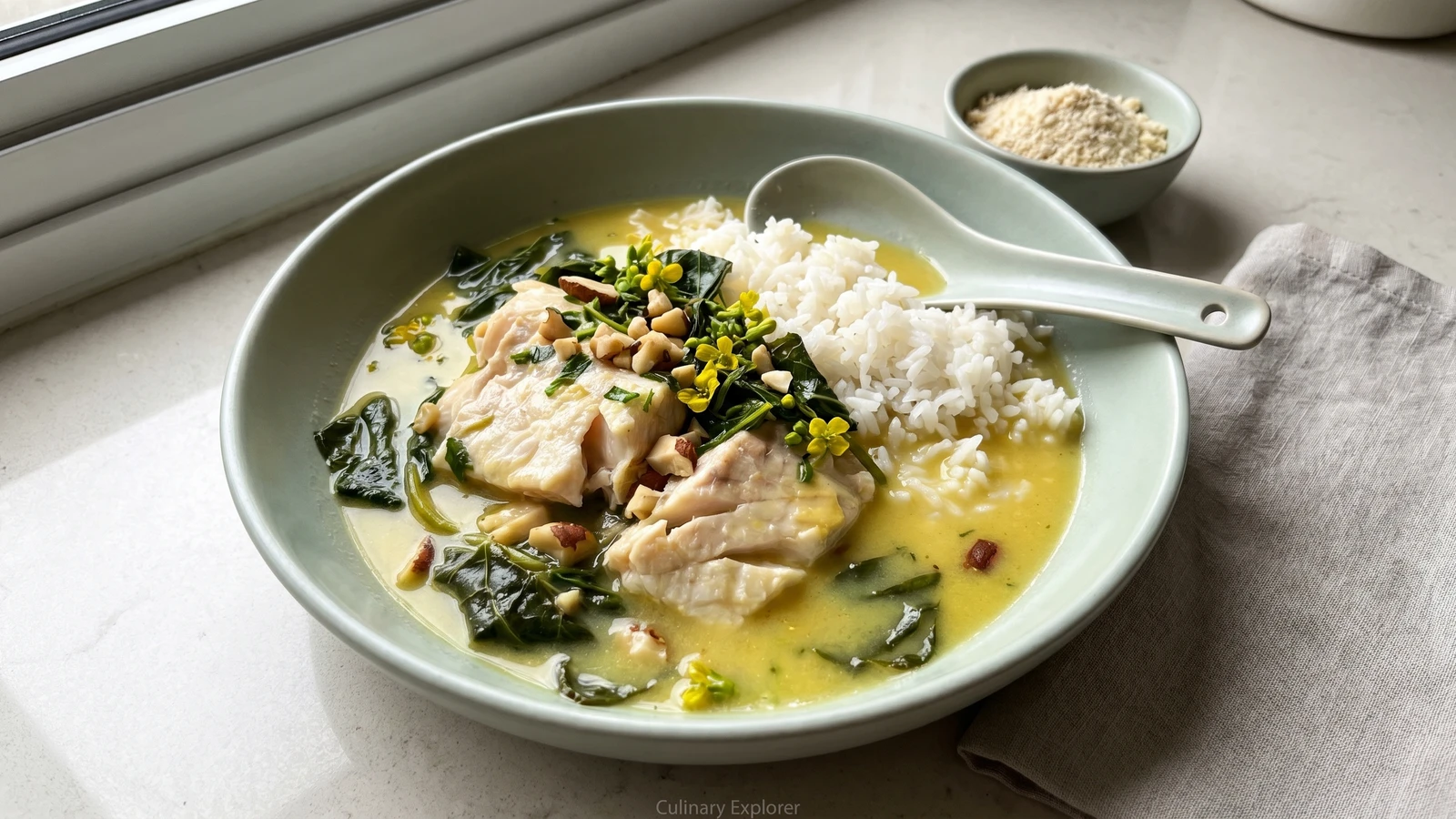
Pour the tucupi into the refogado, add the bay leaf and the whole pierced pepper if using, and bring it to a lively simmer. Lower the heat and cook uncovered for 20 minutes, until the tucupi smells rounded instead of sharp and the yellow broth looks lightly glossy. This is not wasted time. The refogado and tucupi need to become one base before the fish goes in, or the dish tastes like ingredients standing in separate corners.
Slide the pirarucu pieces into the simmering tucupi in one layer. Add up to 1 cup water only if the liquid does not almost cover the fish. Keep the heat low and cook for 12 to 18 minutes, turning once, until the fish flakes in thick, moist layers when pressed with a spoon. Do not boil hard. Pirarucu is generous, but if you bully it, it dries out and makes you think the fish was difficult. It wasn't. The heat was.
Add the blanched jambu and the remaining 1/4 cup chicória-do-pará. Simmer for 3 to 5 minutes, just until the leaves relax into the broth and the mouth-tingle wakes up. Taste the tucupi now, after the fish has given back some salt, and add salt only if it truly needs it. Seasoning before tasting salted fish is how a cook learns regret. I have met regret. It's salty.
Spoon arroz soltinho into shallow bowls or deep plates, set the pirarucu beside it, and ladle the yellow tucupi and jambu over the top. Scatter the castanha-do-pará and a little cilantro or chicória if using. Put farinha or farofa on the table so each person can thicken the broth at the plate. The rice catches, the fish flakes, the jambu tingles, and dinner is solved.
1 serving (about 600g)
Culinary guides, cultural storytelling, and the editorial depth that makes cooking meaningful.
Discover Culinary ExplorerChef Juliana
You think açaí belongs with banana and granola because that's the version that traveled. In Pará, thick unsweetened açaí sits beside shrimp, rice, and farinha. Anota aí: same fruit, different meal.

Chef Juliana
You think savory açaí is not for you. I understand. Then you taste the cold, dark bowl beside hot fried fish, rice, greens, and farinha, and dinner gets very quiet.

Chef Juliana
You think salted beef and rice sound like trouble. Anota aí: soak the charque, brown it properly, build the refogado, and this one pot resolves dinner.

Chef Juliana
You think a Maranhão green rice belongs to somebody else's clever hands. It doesn't. Wilt the vinagreira, build the refogado, fold it through arroz soltinho, and dinner gets bright, coastal, and yours.