
Chef Juliana
Ambrosia Baiana
You think curdled milk means you ruined dessert. Good. Tonight you'll do it on purpose, with lemon, yolks, cravo, and sugar, until the pot turns into golden gruminhos.
A cooking platform built around craft, culture, and the stories behind what we eat.
Created by
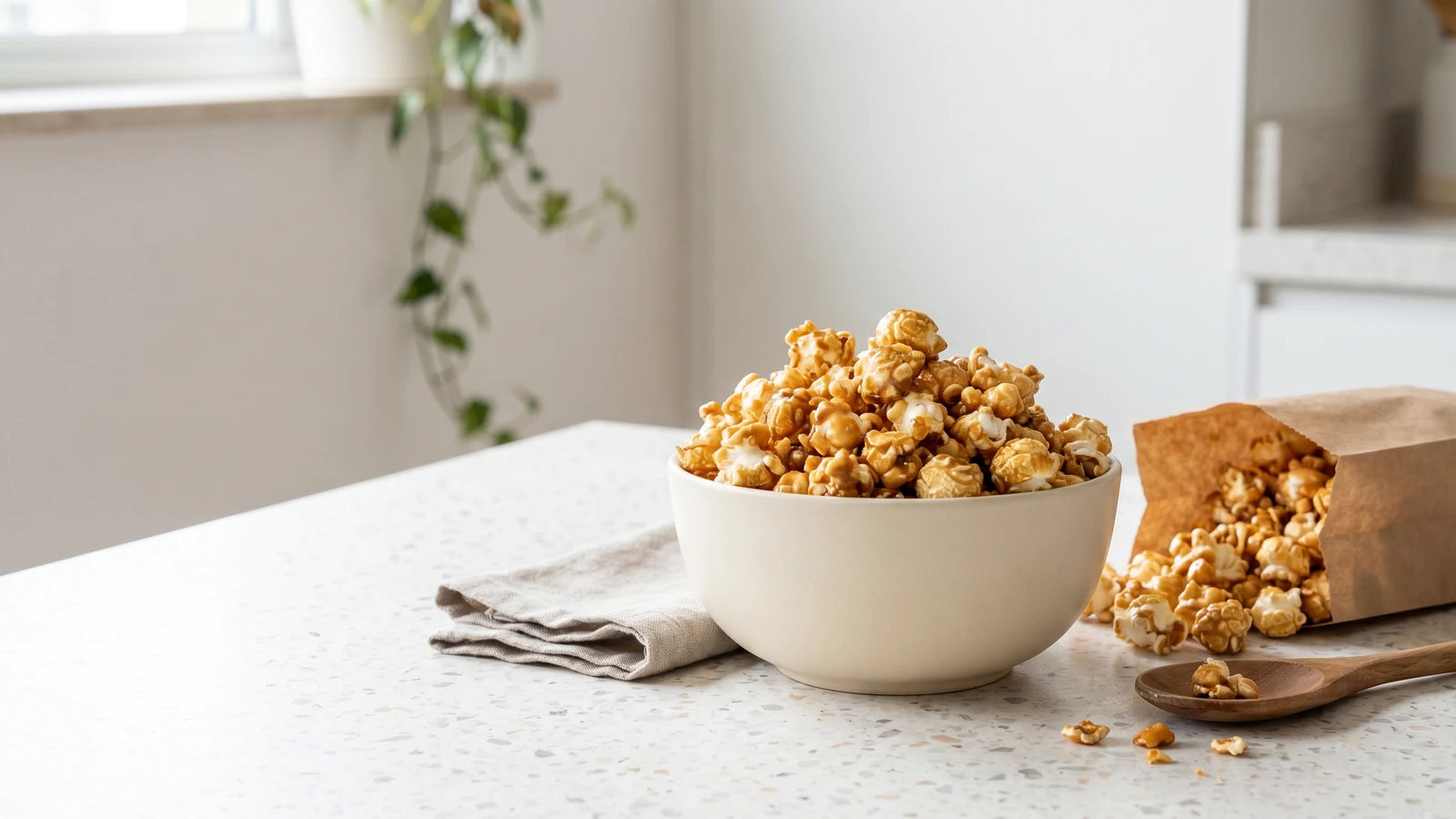
You ruined a batch once and blamed yourself. Don't. Sugar has a ponto, popcorn has a rhythm, and once you learn both, this festa sweet becomes yours.
You hear the sugar start to hiss and your hand freezes. I know. The quiet voice says, isso não é pra mim, and suddenly a pot of popcorn looks like a university exam. Take a breath. Cozinhar não é dom, é um aprendizado. Sugar only looks mysterious because nobody told you what to watch for.
Pipoca doce belongs to celebration, festa junina, children's parties, a movie on the sofa, that paper bag bought warm from a cart. It isn't the everyday pê-efe, rice, beans, something from the pan, something green. But it's part of the same kitchen culture: a gente eats real meals, then a sweet made from real things, not powder pretending to be happiness.
The method is simple and exact. Pop the corn first so you don't burn sugar waiting for kernels to open. Melt sugar with a little water so it dissolves evenly, cook until it smells caramelized and turns amber, then stir the popcorn off the heat until every kernel goes glossy. That's the whole secret. Not magic. Ponto.
By the end, you'll have crisp, shiny clusters that taste like festa, and you won't be standing there blaming yourself for one burned pan from 2016. Anota aí: the pan taught you something.
Sweet popcorn is strongly tied to Brazilian festas juninas, the June celebrations built around corn, peanuts, cassava, and cane sugar after the harvest season. In many cities it also became street food, sold in paper bags from carts near squares, schools, and cinemas. The bright red version is common, but the caramelized brown version is older in spirit: corn, sugar, heat, and attention.
Quantity
1/2 cup
Quantity
2 tablespoons
divided
Quantity
1 cup
Quantity
1/4 cup
Quantity
1 tablespoon
Quantity
1/4 teaspoon
| Ingredient | Quantity |
|---|---|
| popcorn kernels | 1/2 cup |
| neutral oildivided | 2 tablespoons |
| granulated sugar | 1 cup |
| water | 1/4 cup |
| unsalted butter (optional) | 1 tablespoon |
| salt | 1/4 teaspoon |
Warm 1 tablespoon of oil in a heavy 4-liter pot over medium heat. Add 3 kernels, cover, and wait until they pop. Those little test kernels tell you the oil is ready, so the rest of the corn opens fast instead of sitting there soaking up oil.
Add the remaining kernels, cover the pot, and shake it every few seconds. Listen. When the popping slows to 2 or 3 seconds between pops, take the pot off the heat and pour the popcorn into a large bowl. Stop before the last stubborn kernels burn the whole batch, because burnt corn is loud in the mouth and rude to everyone.
Put the sugar, water, remaining 1 tablespoon oil, butter if using, and salt in the same pot. Stir just until the sugar is wet, then set it over medium heat and leave it alone. The water helps the sugar melt evenly at the start; too much stirring later can make it grainy.
Cook the syrup until the bubbles get thicker, the surface looks glossy, and the color turns light amber, about 6 to 8 minutes. Smell it: it should be sweet and toasty, not sharp or smoky. Too pale and the coating tastes like plain sugar; too dark and it goes bitter. This is the point where a cook is made, one watched pan at a time.
Turn off the heat. Add the popped corn to the pot and stir with a long spoon until the kernels are coated and glassy. Work firmly but don't crush everything. Off the heat, the caramel thickens around the popcorn instead of racing from amber to burnt while you panic.
Spread the coated popcorn onto a lightly oiled baking tray or parchment paper. Let it cool for 10 minutes, then break it into loose clusters with your hands. It should be crisp, shiny, and dry to the touch. If it feels sticky, it needed another minute in the syrup before the popcorn went in.
1 serving (about 60g)
Culinary guides, cultural storytelling, and the editorial depth that makes cooking meaningful.
Discover Culinary ExplorerChef Juliana
You think curdled milk means you ruined dessert. Good. Tonight you'll do it on purpose, with lemon, yolks, cravo, and sugar, until the pot turns into golden gruminhos.

Chef Juliana
You are not ruining the milk. You're curdling it on purpose, slowly, until sugar, eggs, cinnamon, and patience turn cheap ingredients into dessert.

Chef Juliana
You think curdled milk means failure. Not here. Milk, yolks, sugar, and lemon cook into golden curds in amber whey, a Minas sweet where the ponto teaches the whole recipe.

Chef Juliana
You already trust rice for dinner. Trust it for dessert: cook it gently with milk, coconut, and canela until each grain turns soft, creamy, and impossible to blame on lack of talent.