
Chef Makoa
Spam Musubi (Hawaiʻi Local Rice and Nori Wrap)
Hawaiʻi's Local grab-and-go: a warm block of rice, salty-sweet shoyu-glazed Spam, and crisp nori, built from sugar-camp hands, wartime tins, and the rice cooker on the counter.
A cooking platform built around craft, culture, and the stories behind what we eat.
Created by
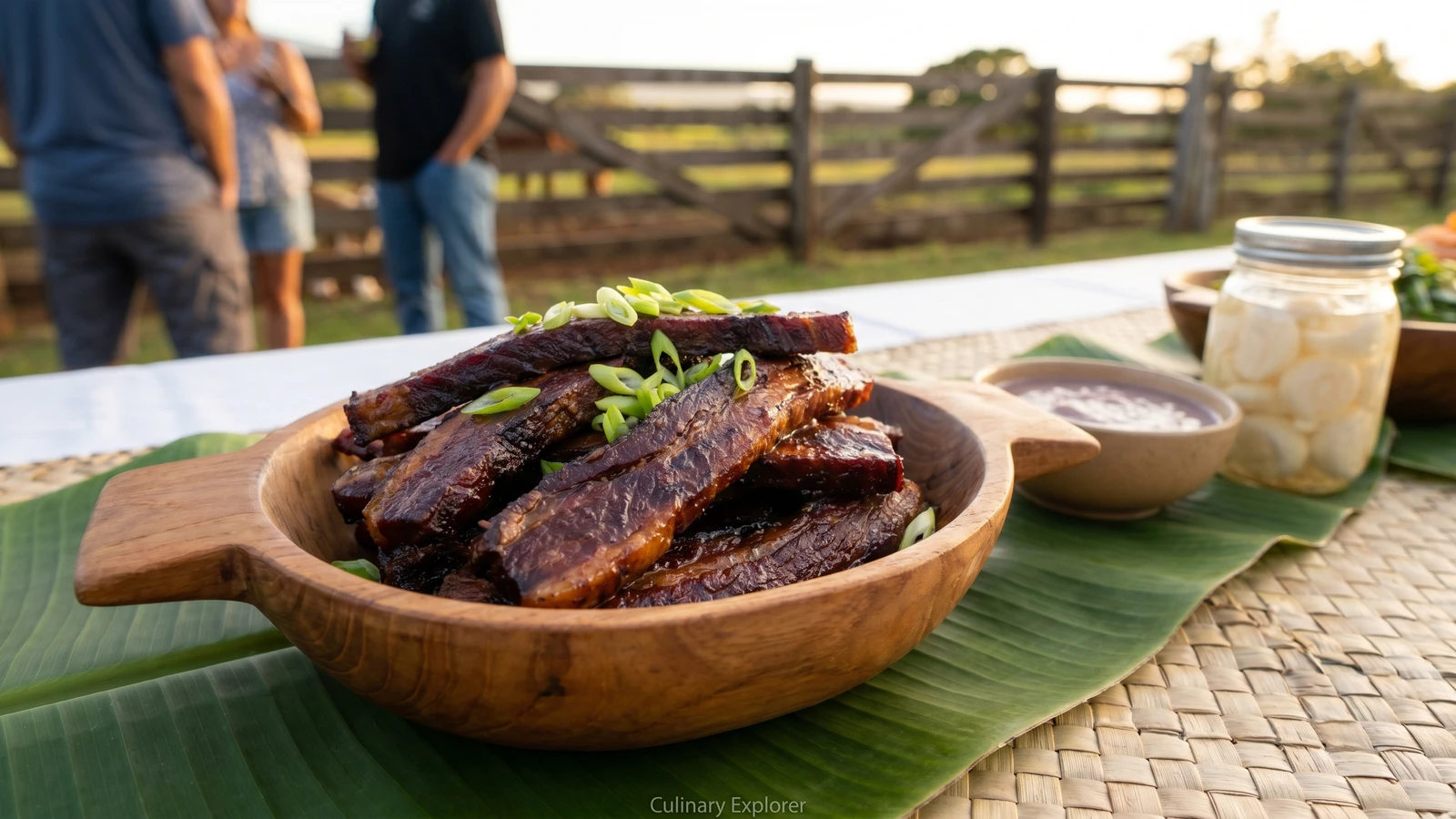
Hawaiʻi's paniolo beef, salted and dried until chewy, then glossed with shoyu, sugar, ginger, and garlic and broiled for the lūʻau table.
The first time I understood pipikaula, it wasn't on a fancy board. It was on a plate beside poi, poke, and laulau, cut into chewy strips with that salty-sweet shine, the kind you keep reaching for while somebody's auntie tells you to leave some for everybody else. This one belongs to Hawaiʻi, to the ranch lands and the paniolo, the Hawaiian cowboys who learned cattle work and made it their own.
Pipikaula means something close to rope beef: pipi for beef, kaula for rope, because the strips were salted and hung to dry like little lines of meat in the mountain air. This isn't one of the old canoe-crop foods like kalo, ʻulu, or ʻuala. It's later, after cattle came, after shoyu entered the islands' pantry, after ranch hands and home cooks made a food that could travel, keep, and feed people without fuss.
Across the Triangle, every island has its way of stretching meat and fish through salt, sun, smoke, and time, but this hand is Hawaiian. Sāmoa has its own Sunday table, Tonga its own feast, Tahiti its own lagoon fish, Aotearoa its own kai. Same ocean, different bowl. Here the beef takes salt, patience, and a little modern pantry kindness, then comes forward into a broiler or dehydrator so you can cook it in the kitchen you actually have.
Eat it with poi if you can. That soft sour poi and the chewy salty beef, that's the conversation. Deep food beside everyday ranch food. ʻĀina, kānaka, meaʻai: land, people, food, all keeping each other honest.
Cattle arrived in Hawaiʻi in the late 1700s, and by the 1830s Mexican vaqueros were teaching riding and roping in the islands, giving rise to the paniolo ranching tradition on Hawaiʻi Island and beyond. Pipikaula grew from that ranch world: salted, air-dried beef that kept well, later folded into local kitchens with shoyu and sugar as those pantry staples became part of everyday Hawaiʻi food. Its place at the lūʻau shows how Hawaiian tables hold both the deep pre-contact foods, like poi and laulau, and the later ranch and plantation foods without pretending they came from the same moment.
Quantity
2 pounds
trimmed and cut with the grain into 1/2-inch-thick strips
Quantity
1/3 cup
Quantity
2 tablespoons
Quantity
2 tablespoons
Quantity
1 tablespoon
grated
Quantity
3 cloves
finely grated
Quantity
1 teaspoon
Quantity
1 teaspoon
Quantity
1 tablespoon
for broiling or searing
Quantity
for serving
sliced
| Ingredient | Quantity |
|---|---|
| beef flank steak or London broiltrimmed and cut with the grain into 1/2-inch-thick strips | 2 pounds |
| shoyu | 1/3 cup |
| Hawaiian salt or coarse sea salt | 2 tablespoons |
| brown sugar | 2 tablespoons |
| fresh gingergrated | 1 tablespoon |
| garlicfinely grated | 3 cloves |
| cracked black pepper | 1 teaspoon |
| toasted sesame oil (optional) | 1 teaspoon |
| neutral oilfor broiling or searing | 1 tablespoon |
| green onion (optional)sliced | for serving |
Slice the beef with the grain into long strips about a half-inch thick. Against the grain makes a tender bite, but pipikaula wants chew, so follow the muscle. That's the rope in the name, yeah, not tough for no reason, but meat you can bite and work at.
Mix the shoyu, Hawaiian salt, brown sugar, ginger, garlic, black pepper, and sesame oil if using. Coat the beef well, pressing the seasoning into the strips, then cover and chill 12 to 24 hours. The salt firms the meat, the sugar rounds the edge, and the ginger keeps the whole thing bright.
Lift the beef from the marinade and pat it dry. Set the strips on racks over a tray, leaving space between them, and refrigerate uncovered 8 to 12 hours until the surface feels tacky and darker, not wet. That dry skin is what helps the broiler give you the right chew instead of just steaming the meat in its own juice.
Heat the broiler. Brush the strips lightly with neutral oil, then broil 4 to 6 inches from the heat for 4 to 6 minutes per side, until the edges darken, the surface shines, and the beef is cooked through but still bends before it tears. You want smoky, salty, chewy. Not jerky-hard. Not soft steak.
Rest the beef 5 minutes, then slice into shorter pieces across the strip for serving. Taste before you add anything. Pipikaula should be salty enough to pull you toward poi or rice, with a little sweet edge and garlic-ginger warmth behind it.
Pile the pipikaula on banana leaf or in a wooden bowl, scatter green onion only if you like, and serve warm or room temperature with poi, rice, poke, pickled onion, or whatever the table has. Eat what you have. The good plate is the one that feeds the people in front of you.
1 serving (about 85g)
Culinary guides, cultural storytelling, and the editorial depth that makes cooking meaningful.
Discover Culinary ExplorerChef Makoa
Hawaiʻi's Local grab-and-go: a warm block of rice, salty-sweet shoyu-glazed Spam, and crisp nori, built from sugar-camp hands, wartime tins, and the rice cooker on the counter.

Chef Makoa
Firm Hawaiian ʻulu sliced thin, brushed with oil, and baked crisp with paʻakai ʻalaea, carrying the old canoe crop into a snack bowl for potluck, picnic, or game day.

Chef Makoa
Hawaiʻi's ʻulu, the breadfruit carried by canoe, mashed with onion and herbs, shaped into small patties, and fried golden for a potluck table that still remembers the tree.

Chef Juliette
Tiny éperlans, lightly floured and fried until their tails stand crisp, arrive in a generous heap on a napkin with fried parsley and grooved lemon, a weeknight lesson in heat and restraint.