Chef Isabel
Acedías Fritas de Cádiz
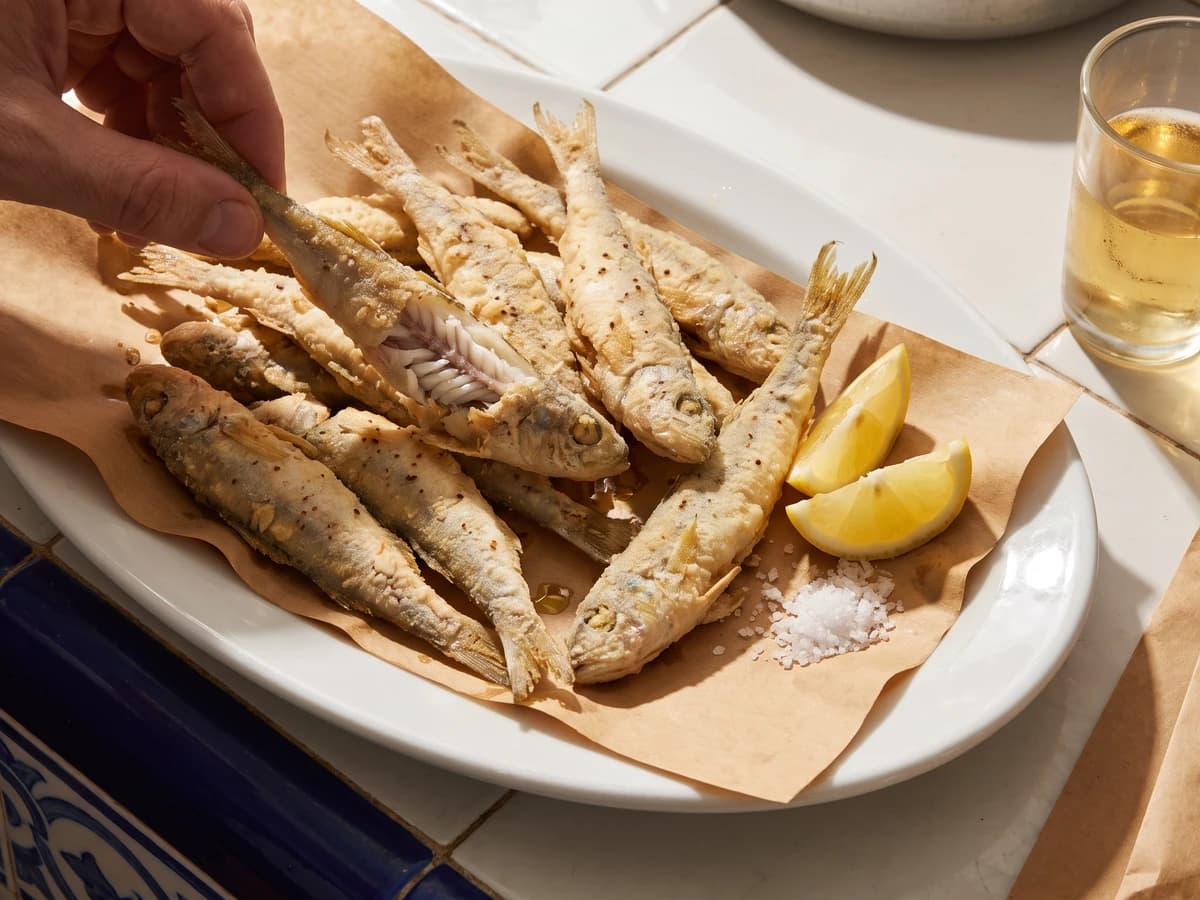
Acedías fritas belong to Cádiz: tiny wedge sole, salted, dusted in frying flour, and dropped into very hot olive oil so the rims crisp while the fish stays tender.
A cooking platform built around craft, culture, and the stories behind what we eat.
Created by
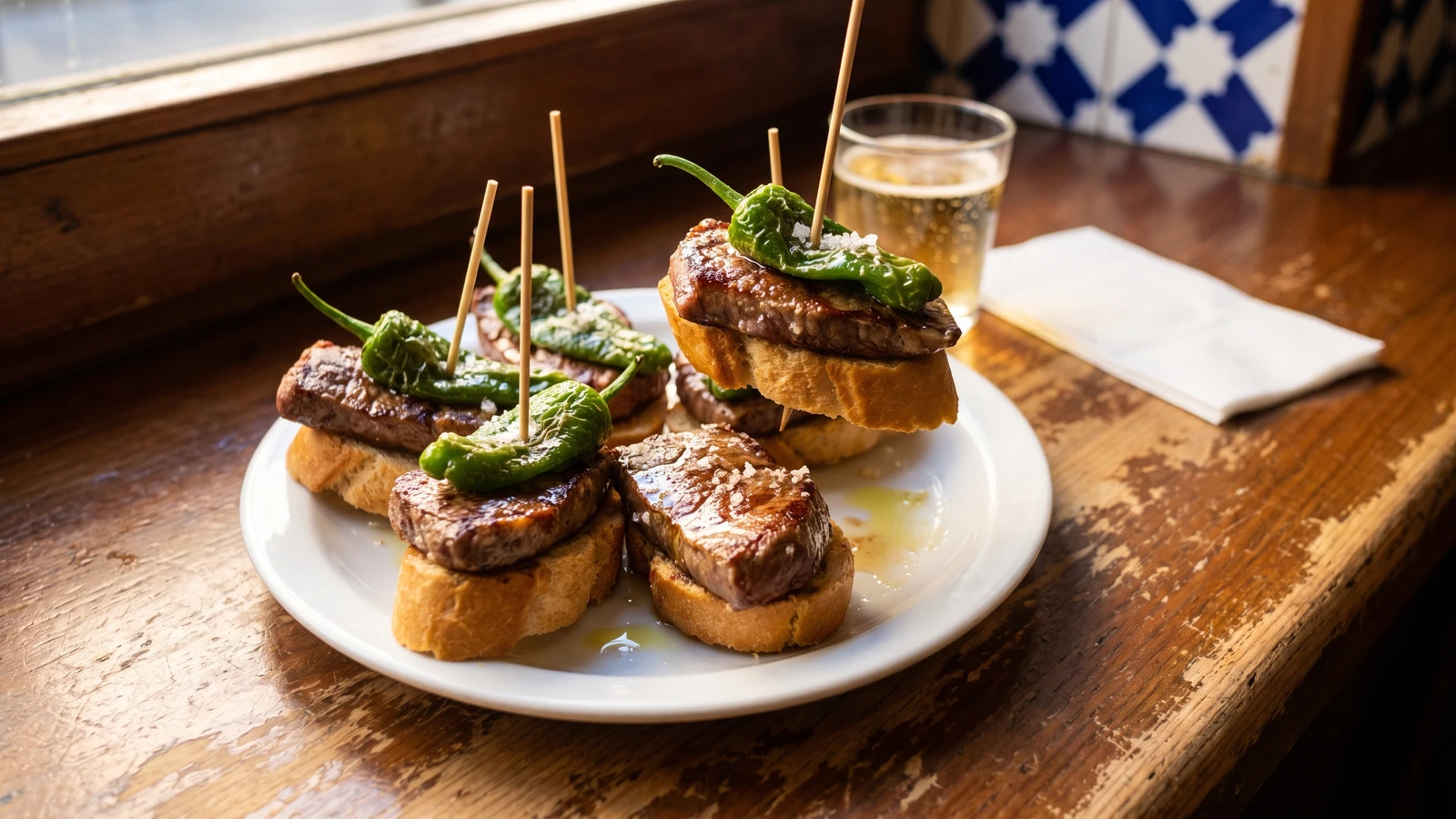
A Basque pintxo of solomillo seared hard on the plancha, set on bread with fried green pepper and coarse salt. The whole dish depends on a hot pan and a short rest.
Pintxo Vasco de solomillo a la plancha belongs to the Basque bar counter: a small piece of beef, seared hot, set on bread with a fried green pepper and coarse salt. That is the dish. Not a pile of sauces, not a decoration project. The bread catches the juices, the pepper gives its green bitterness, and the salt wakes the meat up.
The method that decides it is the heat. The plancha, or a heavy skillet if that's what you have, must be properly hot before the beef touches it. Solomillo is tender and lean, so it wants a hard sear and little time. Cook it too gently and it sweats. Cook it too long and you paid for tenderness only to chew through it.
In Spain, solomillo means beef tenderloin. If you're far from a Basque market, use filet mignon, or a very tender top sirloin or strip steak cut into small thick pieces. The sirloin will have more chew, so slice it against the grain after resting. No hace falta haber pisado España. With good beef, green peppers, bread, and a hot pan, it comes out. Siempre sale, si lo sigues.
Pintxos belong especially to the Basque Country, where small bar-counter bites are often held together with a pincho, the little skewer that gives them their name. In Donostia, Bilbao, and the towns between them, meat pintxos sit beside gildas, tortillas, croquetas, and seafood bites as part of a way of eating that moves from bar to bar rather than sitting down to one large plate. The solomillo pintxo reflects the Basque fondness for plain, well-sourced meat cooked over fierce heat, with little more than bread, pepper, and salt to carry it.
Quantity
400g
cut into 8 thick pieces
Quantity
8 small slices, about 35g each
cut thick enough to hold the juices
Quantity
8
stems left on if small
Quantity
3 tablespoons
divided
Quantity
1
peeled and halved
Quantity
1 teaspoon, plus more to taste
Quantity
to taste
| Ingredient | Quantity |
|---|---|
| beef solomillo, tenderloin or very tender sirloincut into 8 thick pieces | 400g |
| rustic breadcut thick enough to hold the juices | 8 small slices, about 35g each |
| green frying peppers, preferably pimientos de Gernikastems left on if small | 8 |
| extra virgin olive oildivided | 3 tablespoons |
| garlic clovepeeled and halved | 1 |
| coarse sea salt | 1 teaspoon, plus more to taste |
| freshly ground black pepper (optional) | to taste |
Take the beef out of the refrigerator 20 minutes before cooking. Pat it very dry and cut it into 8 pieces, each about 50g and 2.5cm thick. Salt it just before it goes on the plancha, not long before, so the surface stays dry enough to sear.
Set a heavy skillet or plancha over medium-high heat with 1 tablespoon of olive oil. Add the green peppers and cook, turning often, until the skins blister and soften in places, 4 to 6 minutes. Salt them lightly and lift them to a plate. They should slump a little but still taste green.
Brush the bread with 1 tablespoon of olive oil and toast it on the same plancha until the cut sides are golden and firm enough to hold the meat juices. Rub each slice once with the cut side of the garlic. Once is enough; this is a pintxo, not garlic bread.
Raise the heat until the plancha is properly hot. Film it with the remaining 1 tablespoon of olive oil. Salt the beef, add it to the pan with space between pieces, and sear 60 to 75 seconds per side for medium-rare, or 90 seconds per side if the pieces are thicker. The outside should be browned and glossy, the middle still tender. If the meat gives off water instead of browning, the pan was not hot enough.
Move the beef to a warm plate and rest it for 1 minute. That short rest is what keeps the juice in the meat instead of soaking the bread before you eat. Put one piece of solomillo on each toast, lay a fried green pepper over it, finish with coarse salt, and pin each pintxo with a small skewer.
1 serving (about 100g)
Culinary guides, cultural storytelling, and the editorial depth that makes cooking meaningful.
Discover Culinary ExplorerChef Isabel
Acedías fritas belong to Cádiz: tiny wedge sole, salted, dusted in frying flour, and dropped into very hot olive oil so the rims crisp while the fish stays tender.
Chef Isabel
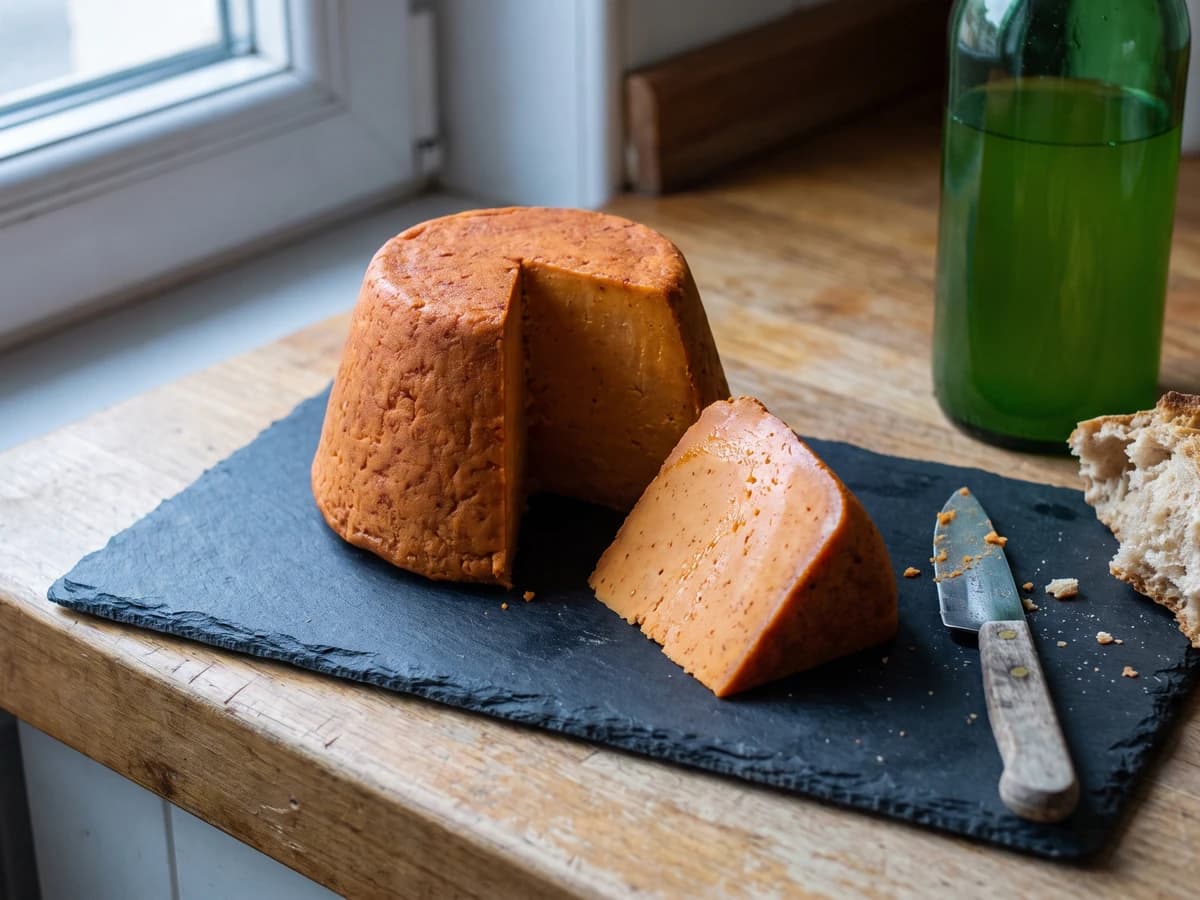
Afuega'l Pitu Roxu is Asturias in a small cheese: cow's milk set slowly to a dense curd, drained without squeezing, then kneaded with pimentón until it turns orange and grips the throat.
Chef Isabel
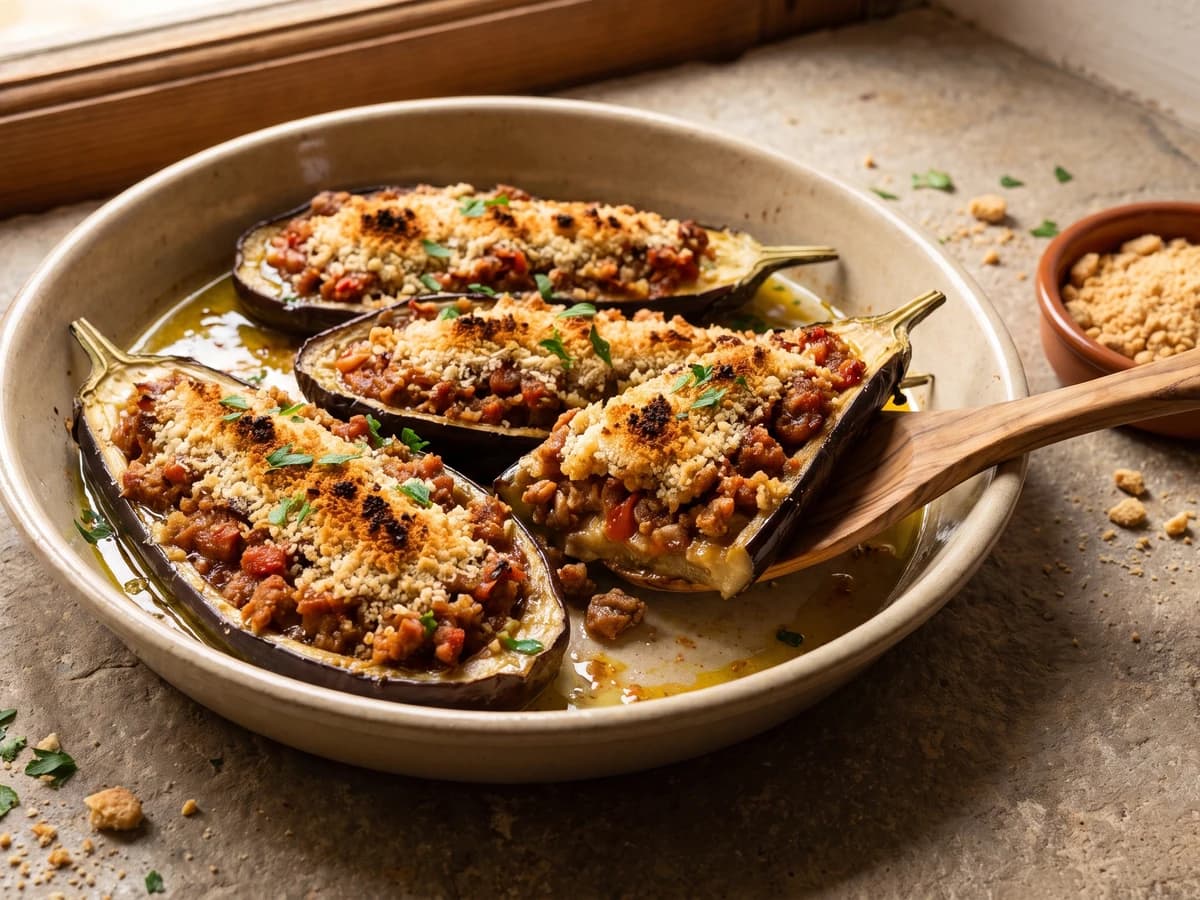
Albergínies farcides are Mallorca's summer stuffed aubergines: tender boiled shells, a slow pork sofrito with moraduix, and a plain breadcrumb cap baked until the top turns crisp and golden.

Chef Isabel
Carxofes farcides are Catalan stuffed artichokes: tender hearts filled with jamón, slow sweet onion, and breadcrumbs, then baked in a light creamy sauce until the tops turn golden.