Culinary Explorer
A cooking platform built around craft, culture, and the stories behind what we eat.
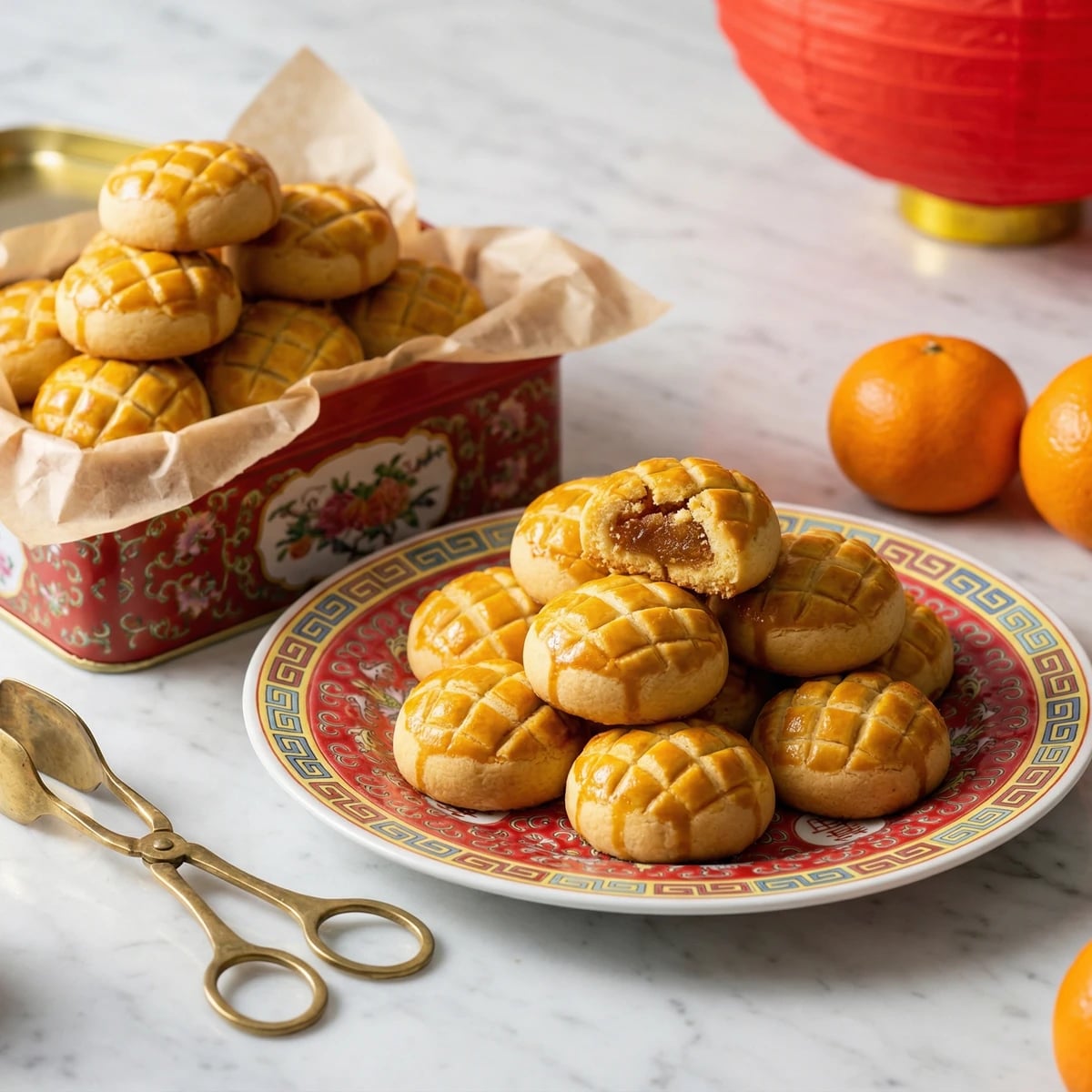
Pineapple Tarts
Created by Chef Dean
Impossibly tender butter pastry embracing spiced pineapple jam cooked low and slow until it gleams like amber. These traditional Chinese New Year treasures carry centuries of meaning in every bite.
In kitchens across Malaysia, Singapore, Indonesia, and southern China, the arrival of pineapple tarts signals that the Lunar New Year approaches. The Hokkien call them 'ong lai,' a phrase that sounds identical to 'fortune comes.' To serve these golden pastries is to offer your guests prosperity itself. No Chinese New Year spread is complete without them.
The jam demands your patience. Fresh pineapple, grated and cooked for an hour or more, transforms from pale shreds into a deep golden paste that holds its shape when cooled. Rush this step and you'll have wet, weeping tarts. Honor the process and you'll produce jam so intensely flavored it barely tastes like fruit anymore. It tastes like intention.
The pastry descends from European butter cookie traditions, adapted by Peranakan and Nyonya bakers who married Portuguese and Dutch techniques with local tastes. Milk powder gives it that distinctive melt-on-the-tongue quality found throughout Southeast Asian bakeries. The dough is rich, tender, and unforgiving of warm hands. Work quickly. Keep everything cold.
I've watched grandmothers in Penang shape hundreds of these tarts in a single afternoon, their fingers moving with decades of muscle memory. You'll be slower at first. That's fine. The tarts don't care how long they took to make. They only care that you made them with attention.
Ingredients
ripe pineapple
Quantity
1 large (about 3 lbs / 1.4 kg)
peeled and cored
granulated sugar
Quantity
1 cup (200g)
cinnamon stick
Quantity
1
| Ingredient | Quantity |
|---|---|
| ripe pineapplepeeled and cored | 1 large (about 3 lbs / 1.4 kg) |
| granulated sugar | 1 cup (200g) |
| cinnamon stick | 1 |
Where cooking meets culture.
Culinary guides, cultural storytelling, and the editorial depth that makes cooking meaningful.
Discover Culinary Explorer