
Chef Makoa
Kānga Pirau (Māori Fermented Corn Porridge from Aotearoa)
Māori kānga pirau from Aotearoa, corn kept in cool water until it turns sharp and strong, then boiled soft into a plain porridge that tastes like patience, river, and whānau.
A cooking platform built around craft, culture, and the stories behind what we eat.
Created by
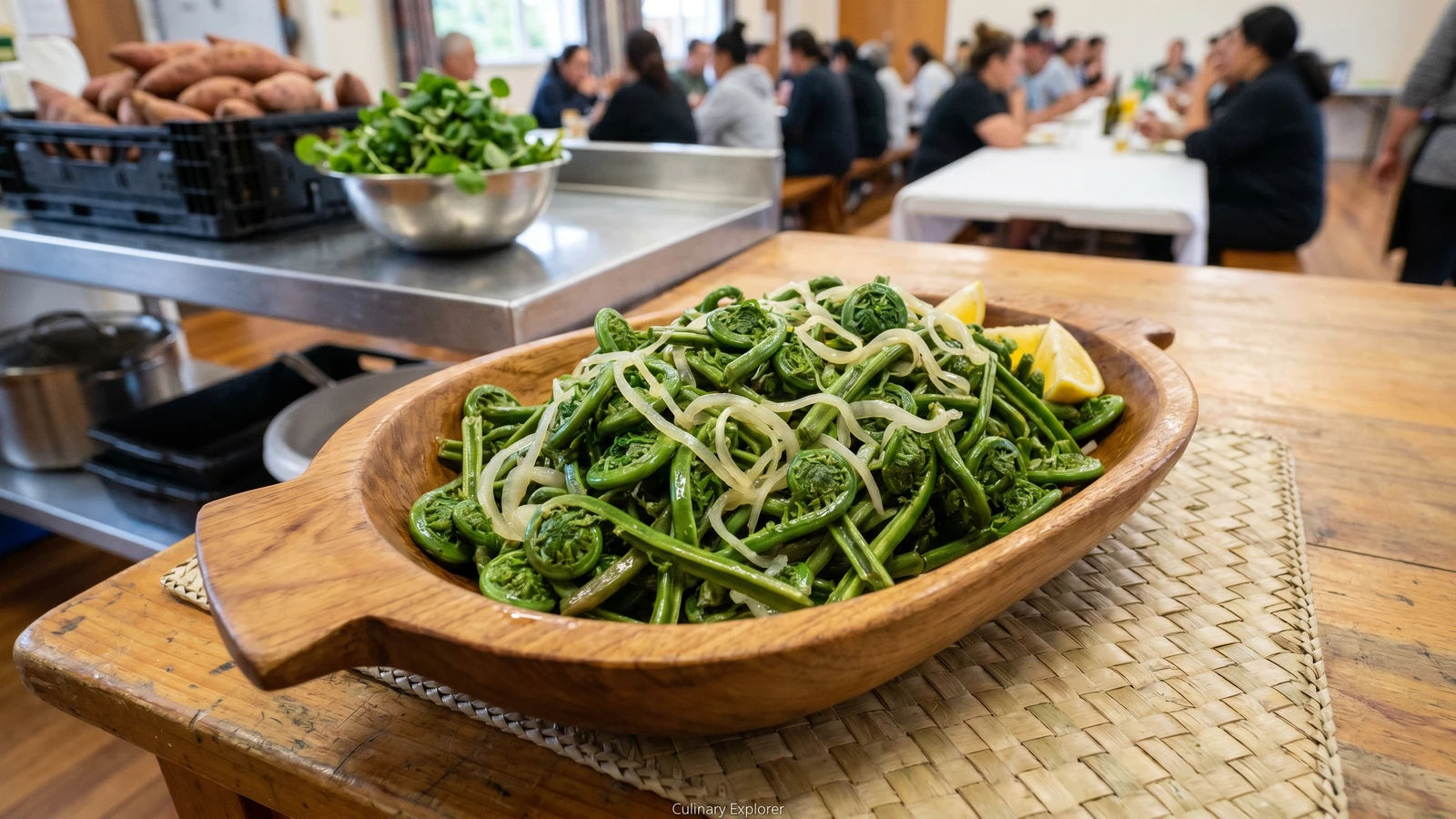
Young curled fern shoots from Aotearoa, blanched safe and sautéed simply until glossy, green, and grassy. Māori kai whenua, gathered from the bush and brought to the whānau table.
The cold green of Aotearoa teaches a different pantry than the islands I was raised in. Back home, my hands go to kalo. In Māori country, the hand reaches for kūmara, for pūhā, for watercress, for kaimoana off the rocks, and for pikopiko, the young curled fern shoot gathered from the bush. Same ocean family, different whenua, different land.
This is Māori kai whenua, food of the land, and I cook it open-handed because the deep tikanga, the protocols and meanings, belong to Māori elders and whānau to teach. What I can show you is the kitchen part: choose the young curl, wash it well, blanch it properly, then dress it simply so it still tastes like the place it came from. No need make it fancy. Green food should taste green.
Across the Triangle the cousins have their own leaf wisdom. Sāmoa folds taro leaf into palusami, Tonga into lū, the Cooks into rukau, Hawaiʻi into laulau and lūʻau leaf. Aotearoa gives you this temperate hand, fern shoots from the bush, not breadfruit from the tropics, not the same table wearing another name.
So keep the dish plain and honest. A little onion if your house likes it, butter or oil from today's pantry, lemon at the end. The old knowledge doesn't get weaker because it walks into a modern kitchen. It stays alive because people still cook it, feed each other, and remember whose island the food belongs to.
When Polynesian voyagers reached Aotearoa around the late thirteenth century, the cooler southern whenua changed the food system: kūmara could be grown and stored with care, while breadfruit did not grow and tropical taro became far less central than it was in Hawaiʻi, Sāmoa, Tonga, and Tahiti. Pikopiko, often the young edible fronds of native ferns such as hen and chicken fern, belongs to Māori gathered kai alongside pūhā, watercress, shellfish, birds, and river foods. The modern boil-up pot came later with iron pots, pork, and colonial-era foods, but gathered greens like pikopiko reach deeper into the older relationship between people, bush, and season.
Quantity
1 pound
tightly curled tips and tender stems only, rinsed well
Quantity
2 teaspoons
for blanching, plus more to taste
Quantity
2 tablespoons
Quantity
1/2 small
very thinly sliced
Quantity
1
lightly crushed
Quantity
1 tablespoon
or to taste
Quantity
to taste
| Ingredient | Quantity |
|---|---|
| fresh edible pikopiko (young curled fern shoots)tightly curled tips and tender stems only, rinsed well | 1 pound |
| sea saltfor blanching, plus more to taste | 2 teaspoons |
| butter or mild cooking oil | 2 tablespoons |
| onion (optional)very thinly sliced | 1/2 small |
| garlic clove (optional)lightly crushed | 1 |
| lemon juiceor to taste | 1 tablespoon |
| freshly ground black pepper (optional) | to taste |
Use only pikopiko gathered or sold by somebody who knows the plant. No guessing with ferns. Trim away woody stems, loose brown chaff, and any fronds that have opened flat. What you want is the young curl, tight and green, still tender when you bend it.
Rinse the pikopiko in two or three changes of cold water, rubbing gently with your fingers so grit loosens from the curled heads. Lift them out of the water instead of pouring the grit back over them. The bowl should smell green, clean, and a little like rain on bush soil.
Bring a wide pot of water to a full boil and salt it well. Add the pikopiko and boil 6 to 8 minutes, until the curls brighten and the stems bend without snapping. Drain and throw away the blanching water, then spread the shoots on a clean towel so they dry off. Wet greens will stew in the pan, and that's not what we came for.
Set a wide skillet over medium heat and add the butter or oil. If you're using onion, cook it 2 to 3 minutes until it turns sweet and soft at the edges. Add the garlic for the last 30 seconds only, just long enough to scent the fat, not brown hard and bitter.
Add the drained pikopiko and toss for 2 to 3 minutes, coating every curl in the glossy fat. Keep the pan moving. The shoots should stay fern-green and grassy, with a light sheen, not collapse into a heap. Taste one stem: it should give gently under your teeth.
Take the pan off the heat, squeeze in the lemon, and season with salt and pepper if you want it. Serve warm, family-style, beside kūmara, fish, mussels, boil-up, or whatever is on the whānau table. Eat what you have, but name what it is. This is Aotearoa's hand.
1 serving (about 115g)
Culinary guides, cultural storytelling, and the editorial depth that makes cooking meaningful.
Discover Culinary ExplorerChef Makoa
Māori kānga pirau from Aotearoa, corn kept in cool water until it turns sharp and strong, then boiled soft into a plain porridge that tastes like patience, river, and whānau.
Chef Makoa
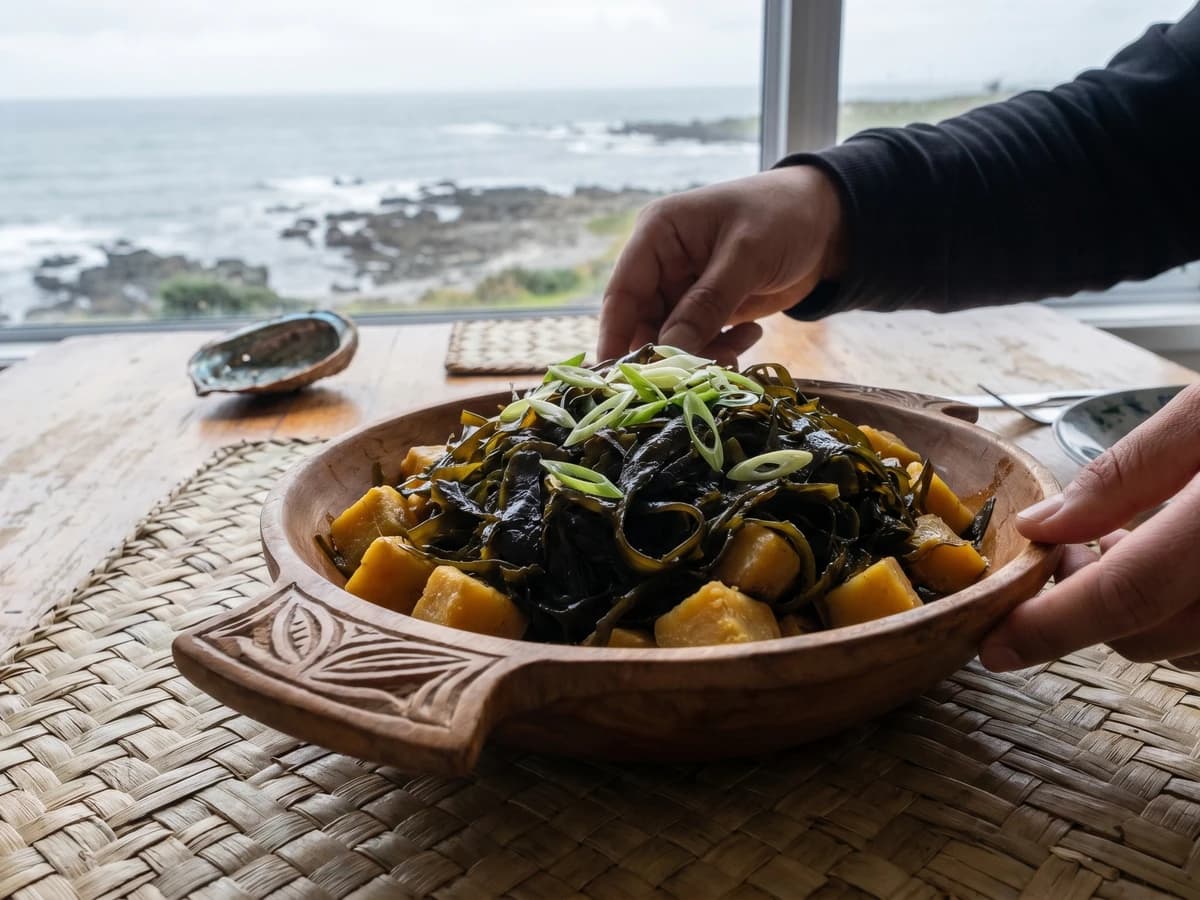
Aotearoa's karengo, native seaweed gathered from the cold rocks, dried for keeping, then rehydrated and pan-simmered until dark, tender, salty, and shining.
Chef Juliette
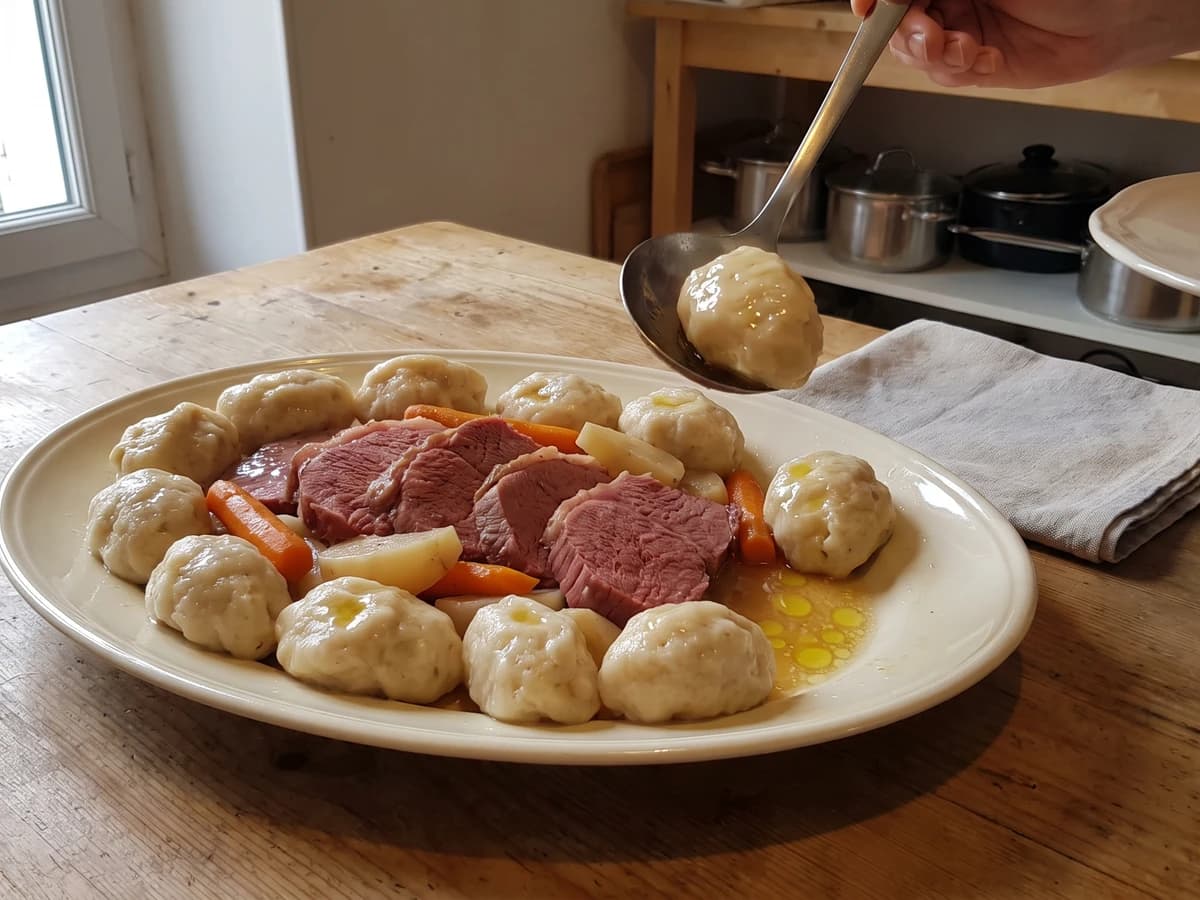
Boulettes au suif, poached beside salt beef, turn equal weights of flour and finely chopped suet into tender, rich dumplings. Keep the beef liquor at a bare tremble and the old garnish works beautifully at home.

Chef Juliette
Bread, flour, frangipane, and rice become four cool, supple panades for binding forcemeats, each changing body and flavor while preserving tenderness. The finest Mousselines need none, and knowing that distinction is the lesson.