
Chef Lupita
Acambaritas de Acámbaro
Guanajuato's daily bread from Acámbaro, a small glazed roll built on pata, enriched with manteca de cerdo, and baked until the top shines lightly for merienda.
A cooking platform built around craft, culture, and the stories behind what we eat.
Created by
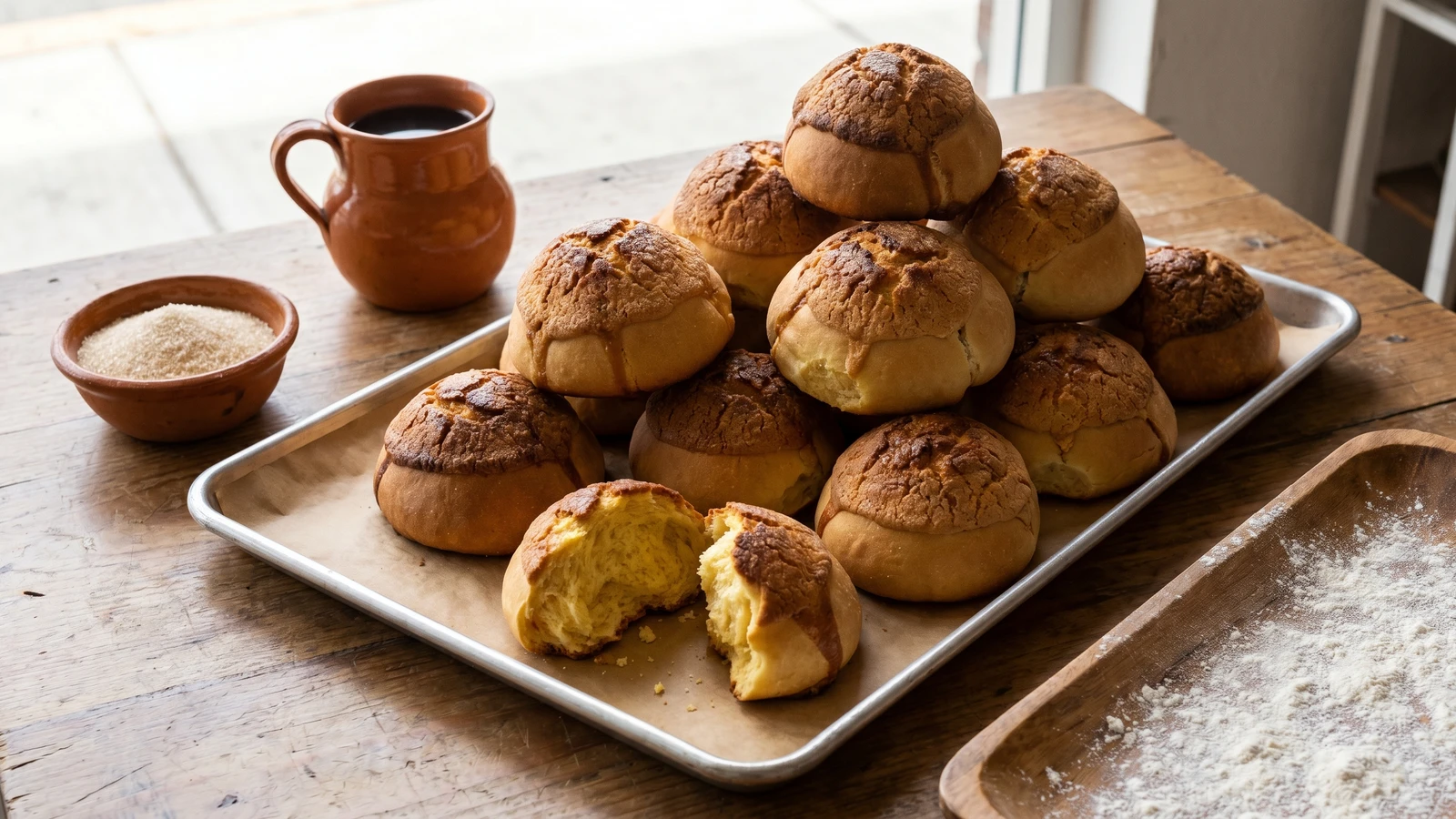
Guanajuato and Querétaro's secular picón is a conical pan dulce with a tender egg dough, a light perfume of anís, and a rough sugar crown baked dark at the edges.
Guanajuato and Querétaro share this bread across the Bajío, especially in old panaderías where the horno de bóveda still decides the color better than any timer. Picón is not a cake and it is not a bolillo with sugar. It is pan dulce de oficio: enriched dough, egg, butter, a little anís, shaped into a cone and crowned with sugar so the top breaks unevenly under your fingers.
In Acámbaro and the towns along the old Bajío routes, the women and panaderos who perfected these breads understood fermentation before anyone sold them a packet of instant yeast. The old pata was masa madre, not baking powder. For a home kitchen, I use a small preferment because it gives the crumb character without pretending your electric oven is a wood-fired vault oven. No me vengas con atajos, but I will give you the tool that works.
This bread belongs at merienda with café de olla, on a charola lechera or a wooden tray, not dressed up like pastry from another country. The defining thing is restraint: enough sugar to make it generous, enough anís to announce itself and then step back. Cada estado, su propia cocina, and the Bajío knows how to make bread that feeds a table without making noise.
The Bajío's wheat breads grew from colonial-era milling and bakery guild systems after Spanish wheat cultivation expanded through Guanajuato and Querétaro in the 16th and 17th centuries. Picones belong to the secular panadería register, not the conventual sweet breads claimed elsewhere, and their form reflects the working bakery: enriched wheat dough shaped by hand, proofed on trays, and baked in hornos de bóveda. Acámbaro became one of the region's best-known bread towns in the 19th and 20th centuries, with masa madre, called pata, anchoring its older fermentation practice.
Quantity
1/2 cup
warmed until just warm to the touch
Quantity
2 teaspoons
Quantity
1 tablespoon
for the preferment
Quantity
1/2 cup
for the preferment
Quantity
3 1/2 cups, plus more for shaping
Quantity
1/2 cup
Quantity
1 teaspoon
Quantity
1/2 teaspoon
lightly crushed
Quantity
3
at room temperature
Quantity
1/3 cup
softened
Quantity
2 tablespoons
softened
Quantity
1 teaspoon
Quantity
1 egg yolk plus 1 tablespoon milk
beaten for brushing
Quantity
1/3 cup
for crowning
| Ingredient | Quantity |
|---|---|
| whole milkwarmed until just warm to the touch | 1/2 cup |
| active dry yeast | 2 teaspoons |
| granulated sugarfor the preferment | 1 tablespoon |
| bread flourfor the preferment | 1/2 cup |
| bread flour | 3 1/2 cups, plus more for shaping |
| granulated sugar | 1/2 cup |
| fine sea salt | 1 teaspoon |
| anís seedlightly crushed | 1/2 teaspoon |
| large eggsat room temperature | 3 |
| unsalted buttersoftened | 1/3 cup |
| manteca de cerdosoftened | 2 tablespoons |
| vanilla extract | 1 teaspoon |
| egg yolk mixed with milkbeaten for brushing | 1 egg yolk plus 1 tablespoon milk |
| granulated sugarfor crowning | 1/3 cup |
Stir the warm milk, yeast, 1 tablespoon sugar, and 1/2 cup bread flour in a bowl until thick and smooth. Cover and let it stand 30 to 40 minutes, until swollen and bubbly. This is a quick home-kitchen pata. In Acámbaro, the old bakeries keep a mother dough alive from batch to batch. That flavor comes from time, not from chemical leavener.
In the bowl of a stand mixer, combine 3 1/2 cups bread flour, 1/2 cup sugar, salt, and crushed anís. Add the bubbly preferment, eggs, vanilla, butter, and manteca de cerdo. Mix with the dough hook on low until the flour disappears, then knead on medium-low for 10 to 12 minutes. The dough should pull from the sides but stay soft and slightly tacky. Do not bury it in flour. Heavy dough makes heavy picón.
Scrape the dough into a lightly greased bowl. Cover and let it rise in a warm place for 1 1/2 to 2 hours, until doubled and airy. Press one floured finger into the dough. If the mark slowly fills halfway, it is ready. If it springs back fast, wait. Bread teaches patience better than sermons.
Turn the dough onto a lightly floured table and divide it into 10 equal pieces, about 90 grams each if you use a scale. Roll each piece into a tight ball, then cup your hand over one side and press gently to form a low cone with a rounded base and a small peak. The shape should look handmade, not machine-perfect. Place the picones on parchment-lined baking sheets, leaving space between them.
Cover the shaped picones with a clean cloth and let them rise 45 to 60 minutes, until puffy and light. They should tremble a little when you move the tray. If your kitchen is cold, give them time. The Bajío panaderos read the dough with their hands, not with impatience.
Heat the oven to 375F. Brush each picón gently with the egg yolk and milk mixture. Sprinkle the tops generously with granulated sugar, concentrating it over the peak so it bakes into a rough crown. Do not smooth it. The irregular top is part of the bread's face.
Bake 18 to 22 minutes, rotating the trays halfway through, until the picones are deep golden with darker caramelized edges and the sugar crown is set. The bottom should sound hollow when tapped. If they are pale, they are not finished. Pan de horno needs color.
Move the picones to a rack and let them cool at least 20 minutes before serving. Eat them warm or at room temperature with café de olla or plain milk. The crumb should pull apart in tender strands, lightly sweet, with butter, manteca, and anís working quietly together. Así se hace y punto.
1 serving (about 95g)
Culinary guides, cultural storytelling, and the editorial depth that makes cooking meaningful.
Discover Culinary ExplorerChef Lupita
Guanajuato's daily bread from Acámbaro, a small glazed roll built on pata, enriched with manteca de cerdo, and baked until the top shines lightly for merienda.

Chef Lupita
Michoacan's Tinguindin aguacatas are flat, leaf-scored sweet breads made with harina de trigo, piloncillo, anise, and manteca de cerdo, shaped by hand for the wood oven.

Chef Lupita
From Ajijic on Lake Chapala, Pan Tachihual is a lightly sweet wedding loaf built with harina de trigo, harina de maiz, piloncillo, manteca, anise, and the old Guadalajara pata.

Chef Lupita
Comitán's pan de yema shaped into little pigs, birds, and rabbits, a Chiapas bakery bread rich with egg yolks, manteca de cerdo, and anís, baked golden on hoja de plátano.