
Chef Juliana
Açaí com Camarão do Pará
You think açaí belongs with banana and granola because that's the version that traveled. In Pará, thick unsweetened açaí sits beside shrimp, rice, and farinha. Anota aí: same fruit, different meal.
A cooking platform built around craft, culture, and the stories behind what we eat.
Created by
Everyone wants the picanha and nobody trusts themselves with it. Fat cap up, coarse salt, hot coals, and the discipline to leave space on the fire.
You might be the person standing beside the churrasqueira thinking, isso não é pra mim, because everyone has an opinion about picanha and half of them are shouting. Good. Let them shout. A gente is going to cook the meat, not audition for the barbecue committee.
I learned to cook as an adult, with a cheap caderno and a lot of food that came out less proud than I was. So I don't treat picanha like a secret kept by men near the fire. Cozinhar não é dom, é um aprendizado. Here the learning is plain: dry meat, coarse salt, hot coals, fat cap up, space on the grate, rest before slicing.
Picanha isn't the cheapest cut, which is exactly why the method has to be calm and reproducible. The fat cap stays on because it melts, protects the lean side, and bastes the meat while it cooks. The salt is coarse because it seasons the surface without turning the whole piece harsh and salty. The coals are hot but not flaming because fire should dourar the beef, not scorch the fat into bitterness.
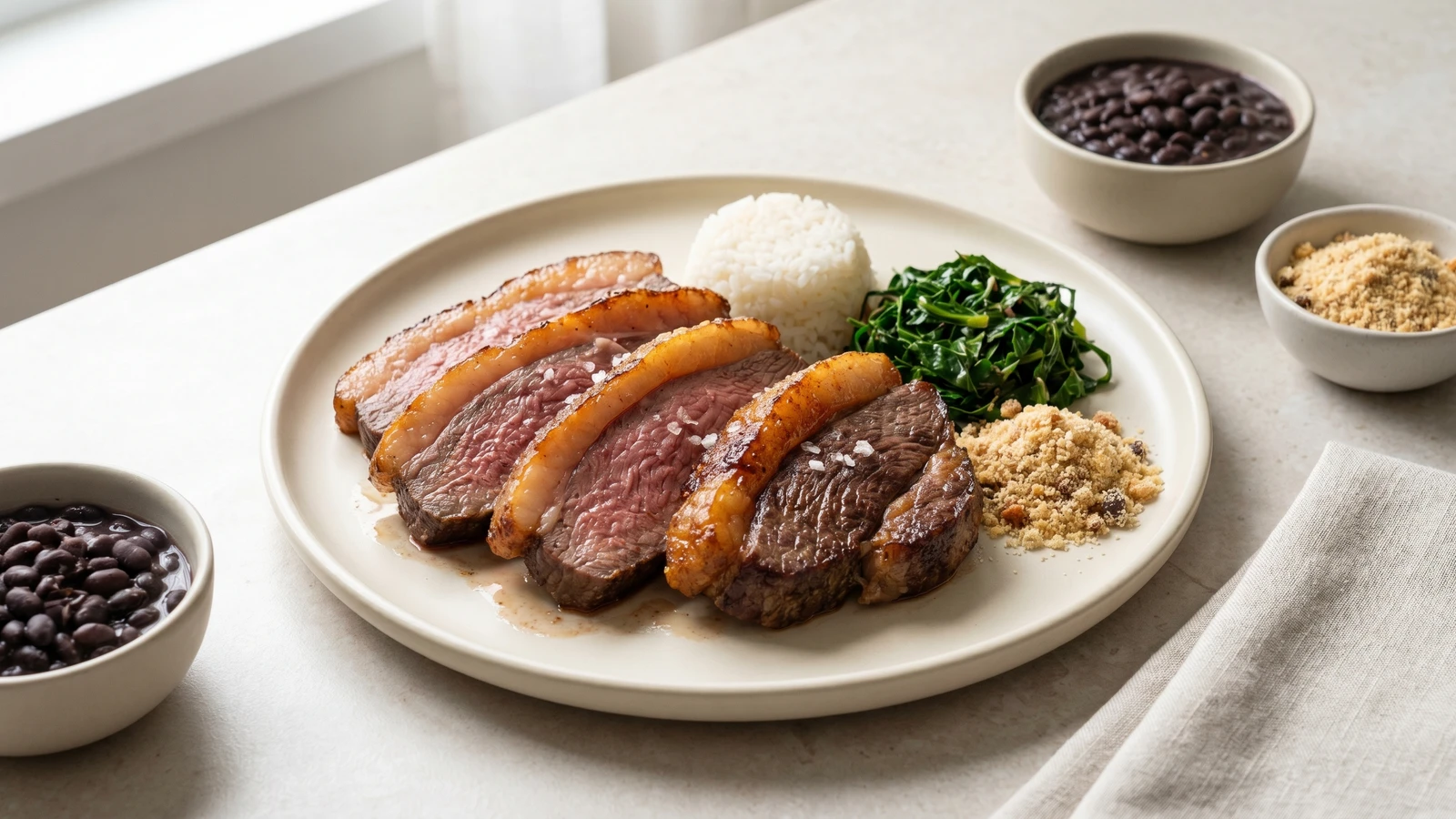
Put those slices beside arroz soltinho, feijão with a creamy caldo, couve refogada, and a spoon of farofa, and you have the celebration version of the same pê-efe that holds Brazil together. Rice, beans, meat, something green. Comida de verdade, no packet, no powder, no drama. Just dinner that looks braver than it is.
Picanha is the Brazilian name for the rump cap, a triangular cut from the top sirloin with a fat cover that protects the meat on the fire. In older Brazilian butchery it was often treated as part of the alcatra, but churrascarias in São Paulo and the south helped make the named cut famous in the second half of the twentieth century. The word is commonly linked to the picana, a cattle-herding pole, and that origin story is still repeated by butchers even while the exact path of the name remains debated.
Quantity
1 piece, 2 1/2 to 3 1/4 pounds (1.2 to 1.5 kg)
fat cap intact
Quantity
2 to 3 tablespoons
Quantity
1 teaspoon
for wiping the grate
Quantity
as needed
for serving
Quantity
as needed
for serving
Quantity
as needed
for serving
Quantity
as needed
for serving
| Ingredient | Quantity |
|---|---|
| whole picanha (top sirloin cap or rump cap)fat cap intact | 1 piece, 2 1/2 to 3 1/4 pounds (1.2 to 1.5 kg) |
| coarse salt (sal grosso) | 2 to 3 tablespoons |
| neutral oil (optional)for wiping the grate | 1 teaspoon |
| arroz branco soltinho (optional)for serving | as needed |
| feijão caseiro (optional)for serving | as needed |
| couve refogada (optional)for serving | as needed |
| farofa (optional)for serving | as needed |
Set the picanha on a tray, fat cap up. Leave the fat on. Trim only hard, waxy bits or any cap thicker than 1/2 inch, and remove silver skin from the meat side if you see it. The fat is not decoration. It protects the lean meat and gives you that glossy, rich edge everyone reaches for first.
Pat the meat dry with paper towels. Sprinkle 2 tablespoons coarse salt over the meat side and edges, then use up to 1 tablespoon more over the fat cap. Press the salt on with your fingers, but don't grind it into the meat. Let the picanha sit at room temperature for 20 minutes while the coals heat. Dry meat browns. Wet meat steams, goes grey, and then you blame yourself instead of the towel.
Light the charcoal and wait until the coals glow red under a thin coat of ash, with no tall flames. Bank more coals on one side for a hot side and leave a smaller cooler side. Hold your hand 4 inches above the grate: over the hot side you should last 2 to 3 seconds. Wipe the grate with a little oil if it needs it. This gives you heat for dourar and a place to run when the fat drips.
Knock off any loose piles of salt, then lay the picanha over the hot side, fat cap up and meat side down. Leave it alone for 8 to 10 minutes, until the underside is deeply browned and releases from the grate. Don't poke it and don't slide it around. The first still minutes build the crust; fussing only tears the surface and wastes heat.
Turn the picanha fat cap down for 4 to 6 minutes, just until the fat turns golden in spots and starts to bubble at the edges. If flames climb up, move the meat to the cooler side until they calm down. You're browning fat, not letting the fire eat dinner before you do.
Move the picanha to the cooler side, fat cap up again. Cover the grill if it has a lid and cook 15 to 25 minutes more, depending on thickness. Pull it at 52°C (125°F) for rare, 54°C (130°F) for medium-rare, or 58°C (136°F) for medium. The thickest part should still have spring when pressed, not feel stiff. A thermometer is not cheating. It's how a beginner becomes the person who repeats the result.
Set the picanha on a tray, fat cap up, and rest it 10 to 15 minutes. Scrape off any big salt crystals. Slice across the grain into 1/2-inch slices, turning the piece when the grain changes direction. Resting keeps the juices in the meat instead of all over the board, and slicing across the grain makes each bite tender instead of chewy.
Serve the slices with arroz branco, feijão, couve refogada, and farofa if you're making the full pê-efe. Keep the meat slices loose, not piled into a hot mound, so the fat stays glossy and the slices don't keep cooking each other. This is the everyday plate dressed for a barbecue: simple, balanced, and very much awake.
1 serving (about 165g)
Culinary guides, cultural storytelling, and the editorial depth that makes cooking meaningful.
Discover Culinary ExplorerChef Juliana
You think açaí belongs with banana and granola because that's the version that traveled. In Pará, thick unsweetened açaí sits beside shrimp, rice, and farinha. Anota aí: same fruit, different meal.

Chef Juliana
You think savory açaí is not for you. I understand. Then you taste the cold, dark bowl beside hot fried fish, rice, greens, and farinha, and dinner gets very quiet.

Chef Juliana
You think salted beef and rice sound like trouble. Anota aí: soak the charque, brown it properly, build the refogado, and this one pot resolves dinner.

Chef Juliana
You think a Maranhão green rice belongs to somebody else's clever hands. It doesn't. Wilt the vinagreira, build the refogado, fold it through arroz soltinho, and dinner gets bright, coastal, and yours.