
Chef Juliana
Açaí com Camarão do Pará
You think açaí belongs with banana and granola because that's the version that traveled. In Pará, thick unsweetened açaí sits beside shrimp, rice, and farinha. Anota aí: same fruit, different meal.
A cooking platform built around craft, culture, and the stories behind what we eat.
Created by
You don't need a tender cut. You need small dice, a hot pan, and the patience to let the molho do its quiet work.
You might be looking at a cheap cut of beef and hearing that little voice: isso não é pra mim. Too tough. Too much trouble. Better order something. No. Anota aí: cooking isn't a gift, it's something you learn, and picadinho is one of the kindest teachers in the Brazilian kitchen.
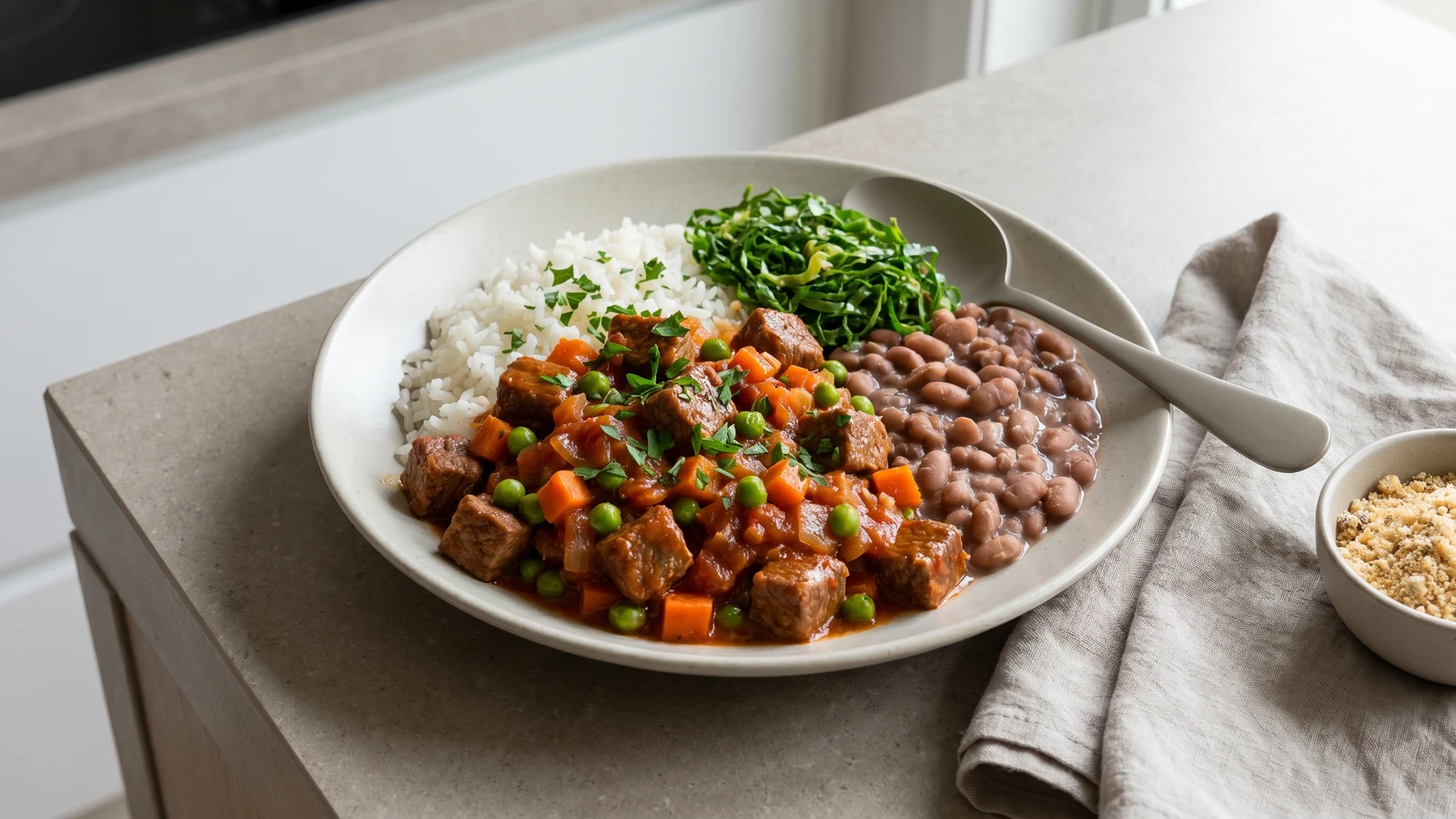
This is the apartment Tuesday dinner of São Paulo. Little cubes of beef, browned until they mean business, then softened in a tomato-onion molho that slips right over arroz soltinho. Put feijão beside it, add couve quickly refogada, and there it is: the pê-efe, rice and beans and a protein and something green. Not a formula from a chart. A plate that a gente has been using to resolver o jantar for generations.
The method matters more than the cut. Cut the beef small so it cooks evenly. Brown it in batches so it sears instead of steaming grey and sad. Build the refogado with onion and garlic in real fat, because a packet will never taste like a pan that did its job. Then simmer until the meat gives when pressed with a spoon.
If your beans are already cooked and frozen, good. That's not cheating, that's household intelligence. If you're starting from dried beans, soak them so they cook evenly and sit easier, then mash a ladle into the refogado so the caldo turns creamy instead of watery. By the end, you have comida de verdade on the table, and the stove looks much less frightening than it did an hour ago.
Picadinho became a familiar urban Brazilian dish in the twentieth century, especially in São Paulo and Rio de Janeiro, where lunch counters and home kitchens turned tougher beef cuts into quick, saucy meals over rice. The name comes from picar, to chop, and the small dice are the practical trick: more surface for browning, shorter cooking, and a cheaper cut made tender. Its most Brazilian form is not lonely in a bowl, but on the prato feito beside rice, beans, greens, and often a fried egg or farofa.
Quantity
1 1/2 pounds
cut into 1/2-inch cubes
Quantity
1 1/2 teaspoons
divided
Quantity
1/2 teaspoon
Quantity
3 tablespoons
divided
Quantity
1 medium
finely chopped
Quantity
4 cloves
minced
Quantity
2 tablespoons
Quantity
2 medium
chopped, or use 1 cup canned crushed tomatoes
Quantity
1 tablespoon
Quantity
1
Quantity
1 1/2 cups
Quantity
1 medium
cut into small cubes
Quantity
1 cup
Quantity
2 tablespoons
chopped
Quantity
2 cups
Quantity
4 cups
Quantity
2 tablespoons
Quantity
2 cloves
minced
Quantity
1 teaspoon
Quantity
3 cups
homemade or thawed from frozen
Quantity
1 bunch
stems removed and sliced very thin
Quantity
1 tablespoon
Quantity
1 clove
minced
Quantity
1/4 teaspoon
| Ingredient | Quantity |
|---|---|
| beef chuck or top sirloincut into 1/2-inch cubes | 1 1/2 pounds |
| saltdivided | 1 1/2 teaspoons |
| black pepper | 1/2 teaspoon |
| oildivided | 3 tablespoons |
| onionfinely chopped | 1 medium |
| garlicminced | 4 cloves |
| tomato paste | 2 tablespoons |
| ripe tomatoeschopped, or use 1 cup canned crushed tomatoes | 2 medium |
| Worcestershire sauce | 1 tablespoon |
| bay leaf | 1 |
| hot water or unsalted beef broth | 1 1/2 cups |
| carrotcut into small cubes | 1 medium |
| frozen peas (optional) | 1 cup |
| parsleychopped | 2 tablespoons |
| long-grain white rice | 2 cups |
| water for the rice | 4 cups |
| oil for the rice | 2 tablespoons |
| garlic for the riceminced | 2 cloves |
| salt for the rice | 1 teaspoon |
| cooked feijão with caldohomemade or thawed from frozen | 3 cups |
| collard greensstems removed and sliced very thin | 1 bunch |
| oil for the collards | 1 tablespoon |
| garlic for the collardsminced | 1 clove |
| salt for the collards | 1/4 teaspoon |
Cut the beef into 1/2-inch cubes, then season with 1 teaspoon salt and the black pepper. Keep the pieces small and close in size. Small cubes brown fast, cook evenly, and let a cheaper cut become tender without making you wait all afternoon.
Heat 2 tablespoons oil in a wide heavy pot over medium-high heat until it looks loose and shiny. Add half the beef in one layer and leave it alone until the underside goes deep brown, about 3 minutes, then turn and brown the other sides. Pull it out and repeat with the rest. Crowd the pan and the meat releases water, the heat drops, and you're steaming grey cubes instead of building flavor.
Lower the heat to medium and add the remaining 1 tablespoon oil. Add the onion and cook, scraping the browned bits from the bottom, until the onion murcha, softens, and turns see-through, about 5 minutes. Add the garlic for 1 minute, just until you smell it. The onion sweetens the molho; the garlic perfumes it. Burn the garlic and it turns bitter, and then it follows you around the whole pot like a bad decision.
Stir in the tomato paste and cook for 1 minute, until it darkens slightly and sticks a little to the bottom. Add the chopped tomatoes and cook until they slump and release their juice, about 4 minutes. This takes the raw edge off the tomato and gives the molho body instead of that thin red water pretending to be sauce.
Return the beef and its juices to the pot. Add the Worcestershire sauce, bay leaf, carrot, hot water or broth, and the remaining 1/2 teaspoon salt. Bring to a lively bubble, then lower to a gentle simmer, lid slightly open, for 45 to 55 minutes. Stir now and then. The meat is ready when a cube gives under a spoon and the molho coats it instead of running off.
While the picadinho simmers, rinse the rice until the water runs mostly clear and drain well. Warm 2 tablespoons oil in a pot, add 2 minced garlic cloves, and stir for 30 seconds, just until fragrant. Add the rice and stir for 1 minute, until the grains look glossy, then add 4 cups water and 1 teaspoon salt. Boil until little holes appear on the surface, lower the heat, cover, and cook 12 minutes. Turn off the heat and rest 10 minutes before fluffing. Don't stir while it cooks. Stirring breaks the grains and wakes up the starch, and then arroz soltinho becomes rice paste.
Warm the cooked feijão with its caldo in a small pot over medium-low heat, stirring now and then. If it's thick from the fridge, add a splash of water. If you're making beans from dried, soak them overnight first so they cook evenly and sit easier, then cook until tender. Build a refogado with onion and garlic, mash a ladle of cooked beans into it, and stir that back into the pot. That mashed ladle is what makes the caldo creamy instead of watery. No packet. The bean already knows how to be a bean.
Heat 1 tablespoon oil in a wide pan over medium-high heat. Add 1 minced garlic clove for 20 seconds, then add the sliced collards and 1/4 teaspoon salt. Toss until the greens turn brighter and just wilt, 2 to 3 minutes. Stop there. Couve should stay green and tender, not collapse into a sad dark pile.
Stir the peas into the picadinho, if using, and cook 3 minutes, just until hot and bright. Taste the molho and adjust salt. Pull out the bay leaf and stir in the parsley. The final molho should be glossy and spoonable, thick enough to sit on rice but loose enough to soak into it.
Spoon arroz soltinho onto each plate, ladle the picadinho and molho over part of the rice, and add feijão and couve beside it. Keep the portions honest and connected, not precious little islands. This is a prato feito: rice catching sauce, beans giving caldo, greens cutting through, dinner solved.
1 serving (about 820g)
Culinary guides, cultural storytelling, and the editorial depth that makes cooking meaningful.
Discover Culinary ExplorerChef Juliana
You think açaí belongs with banana and granola because that's the version that traveled. In Pará, thick unsweetened açaí sits beside shrimp, rice, and farinha. Anota aí: same fruit, different meal.

Chef Juliana
You think savory açaí is not for you. I understand. Then you taste the cold, dark bowl beside hot fried fish, rice, greens, and farinha, and dinner gets very quiet.

Chef Juliana
You think salted beef and rice sound like trouble. Anota aí: soak the charque, brown it properly, build the refogado, and this one pot resolves dinner.

Chef Juliana
You think a Maranhão green rice belongs to somebody else's clever hands. It doesn't. Wilt the vinagreira, build the refogado, fold it through arroz soltinho, and dinner gets bright, coastal, and yours.