Chef Klaus
Allgäuer Kaspressknödel
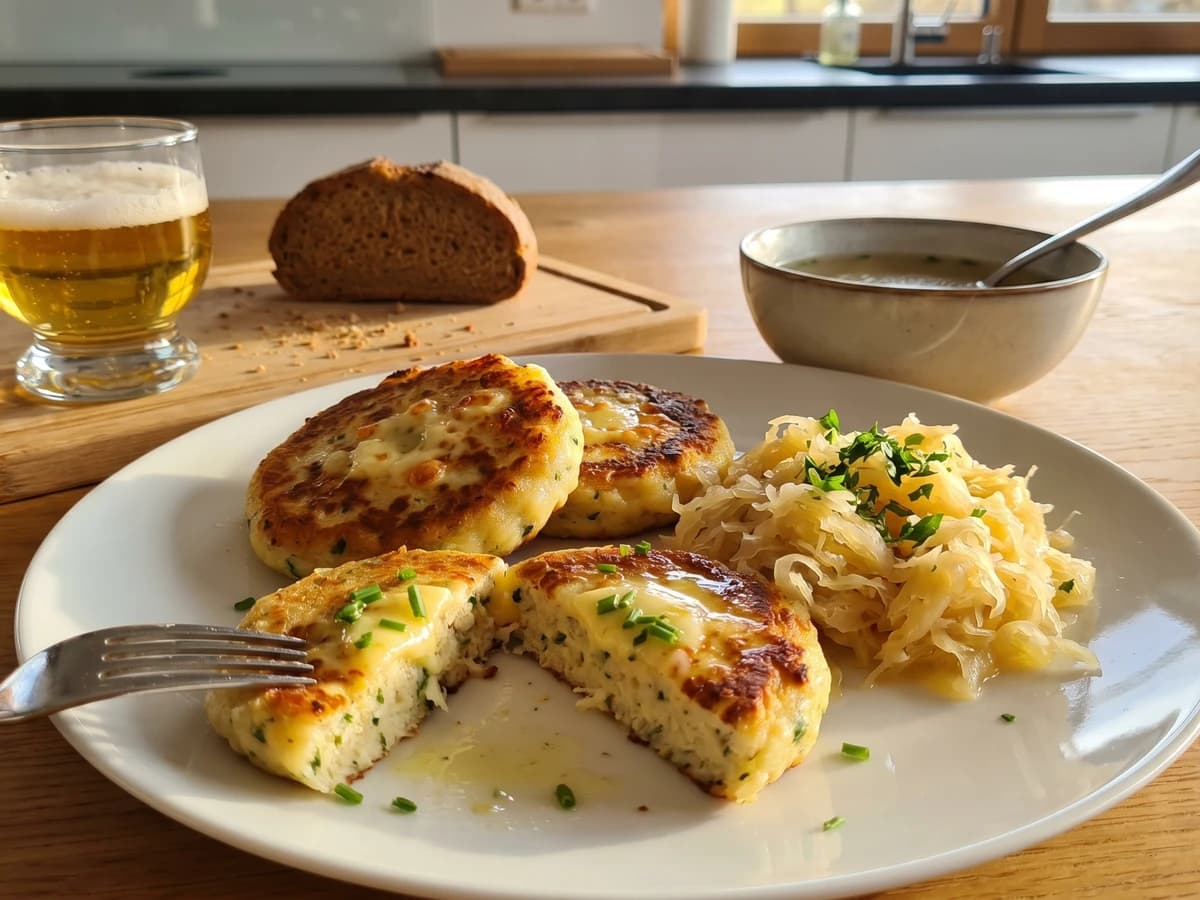
Pressed bread dumplings from the Alpine south, fried until the cheese catches at the edges and the middle stays soft enough for broth, kraut, or a weekday plate.
A cooking platform built around craft, culture, and the stories behind what we eat.
Created by
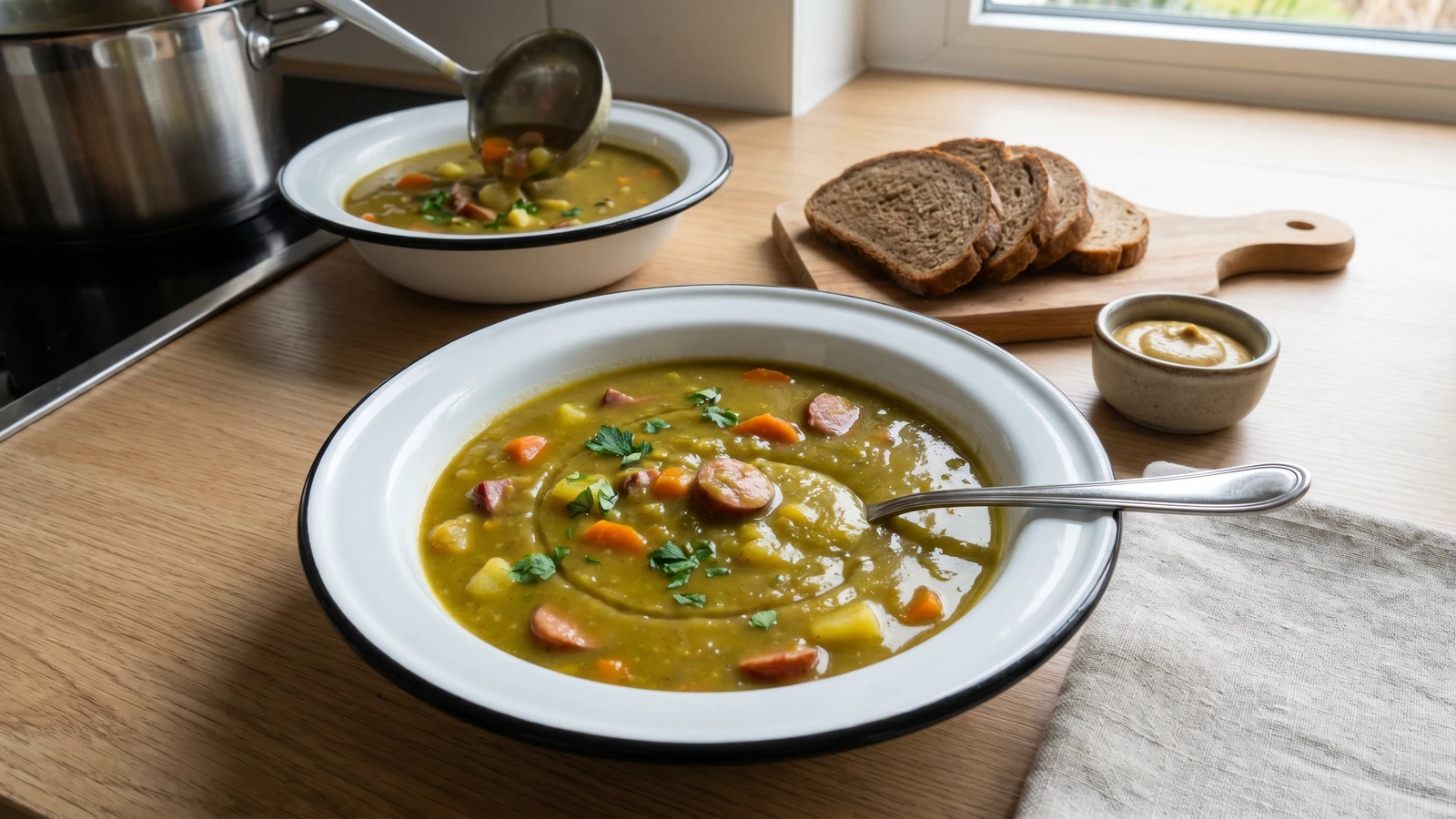
The Palatinate pea soup that thickens because the peas collapse, not because flour went in, with smoked pork, potatoes, and the slow hour the pot needs.
Pfälzer Erbsensuppe belongs to the Palatinate winter table, where a pot of dried peas, roots, potato, and smoked pork feeds more people than the shopping bill suggests. It is weeknight food if you've planned the soak, Sunday food if the pot is big enough, and proper Hausmannskost, honest home cooking, when the spoon stands up a little.
Im Norden anders, im Süden anders. In the north, pea soup often leans on Speck, Mettenden, or a cleaner broth; in the Palatinate it likes smoked pork, floury potato, leek, carrot, and sometimes a sausage slipped in near the end. The argument is not about elegance. It is about whether the peas cook down on their own. They must.
The rule is simple: simmer, don't storm-boil, and don't thicken with flour. A hard boil knocks the peas around before their starch has relaxed, so you get skins and sludge instead of a creamy pot. Low heat lets the peas fall apart slowly while the potato gives body and the smoked rind gives salt, fat, and backbone. Weggeworfen wird nichts.
Salt late and taste around the pork. Smoked meat brings its own salt, and a cook who seasons early often has no way back. Das braucht seine Zeit. Not much of it, but the right kind.
Dried peas were a staple of the German winter larder long before refrigeration, because they kept through the cold months and gave protein when fresh meat was scarce. The Palatinate version reflects a wine-growing and farming region where root vegetables, potatoes after their eighteenth-century spread in German fields, and smoked pork from the household slaughter met in one practical pot. Across Germany, Erbsensuppe also became tied to field kitchens and public feeding in the nineteenth and twentieth centuries, which is why many regions claim their own version with real conviction.
Quantity
500g
rinsed and soaked overnight
Quantity
250g
in one piece
Quantity
1 piece
Quantity
2 tablespoons
Quantity
2
diced
Quantity
1
washed and sliced
Quantity
2
diced
Quantity
150g
diced
Quantity
500g
peeled and diced
Quantity
1.7 litres
Quantity
2
Quantity
1 teaspoon
Quantity
1 teaspoon
Quantity
4
Quantity
to taste
Quantity
2 tablespoons
chopped
| Ingredient | Quantity |
|---|---|
| dried green split peasrinsed and soaked overnight | 500g |
| smoked pork belly or smoked pork neckin one piece | 250g |
| smoked pork rind or bacon rind (optional) | 1 piece |
| lard or neutral oil | 2 tablespoons |
| onionsdiced | 2 |
| leekwashed and sliced | 1 |
| carrotsdiced | 2 |
| celeriacdiced | 150g |
| floury potatoespeeled and diced | 500g |
| water or unsalted pork stock | 1.7 litres |
| bay leaves | 2 |
| dried marjoram | 1 teaspoon |
| mild mustard | 1 teaspoon |
| smoked sausages, such as Mettwurst or Wiener (optional) | 4 |
| salt and black pepper | to taste |
| flat-leaf parsleychopped | 2 tablespoons |
Rinse the split peas until the water runs mostly clear, then soak them overnight in plenty of cold water. The soak isn't ceremony; it lets the peas cook evenly, so the middle softens before the outside breaks into meal. Drain them before they go in the pot.
Warm the lard in a heavy pot and cook the onions, leek, carrots, and celeriac for 8 to 10 minutes, until they smell sweet but have not browned hard. Browning is not the point here; the vegetables should give body and sweetness to the peas, not turn the soup dark.
Add the drained peas, smoked pork, rind if you have it, bay leaves, marjoram, and water or unsalted stock. Bring it just to a boil, skim the grey foam, then runter mit der Temperatur, down with the temperature, to a low simmer. A hard boil makes the pot cloudy and ragged; a steady simmer pulls smoke and gelatine from the pork while the peas soften.
After 45 minutes, add the diced floury potatoes and keep simmering for another 35 to 45 minutes, stirring now and then so the thickening peas don't catch on the bottom. Floury potatoes are the right kind because they crumble into the soup and help it go creamy; waxy potatoes sit there like little stones.
Lift out the smoked pork and rind. Discard the bay leaves, chop the pork into bite-size pieces, and return the meat to the pot. Mash a few ladles of soup against the side if you want it thicker, but don't reach for flour. The peas and potato have already done the work, Nicht aus dem Glas, and not from a packet either.
Stir in the mustard and warm the sausages in the soup for 8 to 10 minutes if you're using them; they only need heating through, and boiling them hard makes them split. Taste, then salt and pepper at the end because smoked pork can fool you early. Scatter parsley over the bowls and serve with rye bread. Schön ist, was schmeckt.
1 serving (about 600g)
Culinary guides, cultural storytelling, and the editorial depth that makes cooking meaningful.
Discover Culinary ExplorerChef Klaus
Pressed bread dumplings from the Alpine south, fried until the cheese catches at the edges and the middle stays soft enough for broth, kraut, or a weekday plate.

Chef Klaus
The Bavarian potato salad that works because warm waxy slices drink hot broth first, then oil last, until the bowl turns glossy without mayonnaise.

Chef Klaus
White cabbage shaved thin, wilted with hot caraway vinegar, and finished with crisp Speck fat: the Bavarian salad that belongs beside bread, sausages, and roast pork.

Chef Klaus
The south's sweet-sour white cabbage, cooked from fresh Kraut rather than sauerkraut, soft enough for roast pork and sharp enough to wake the plate.