Chef Thomas
All-Butter Shortbread Fingers
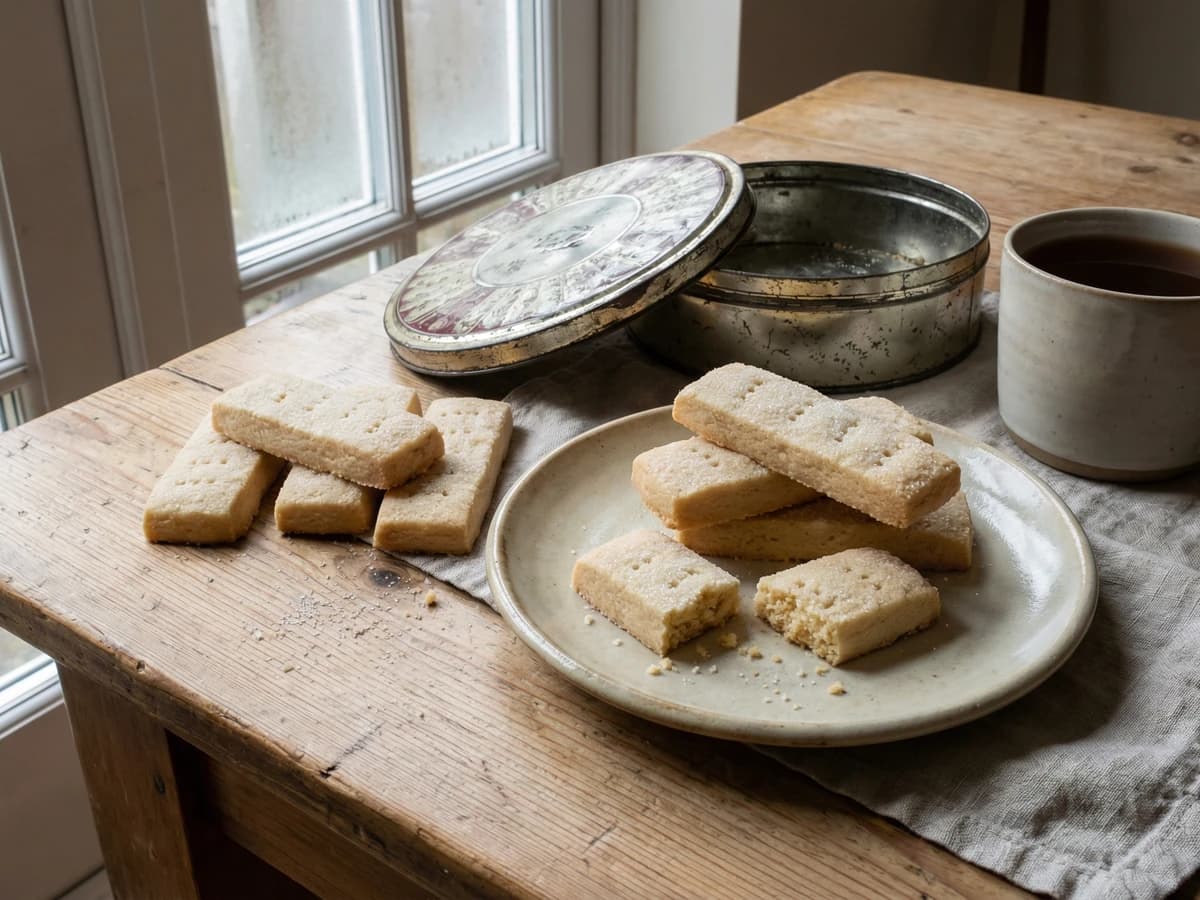
The plainest biscuit in the tin and the hardest one to stop eating, three ingredients and a slow oven turning good butter into something quietly perfect with a cup of tea.
A cooking platform built around craft, culture, and the stories behind what we eat.
Created by Chef Thomas
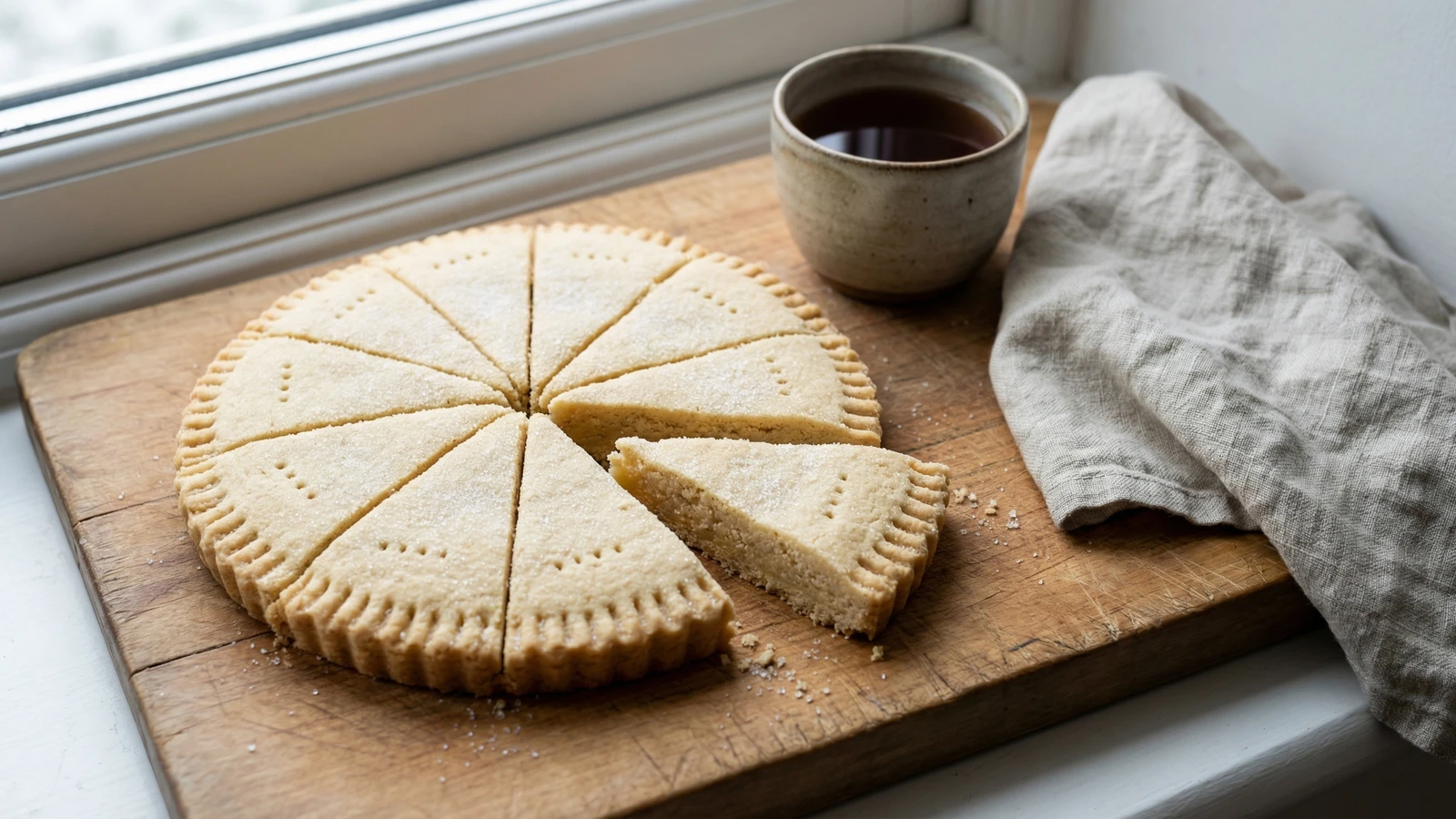
A single round of buttery Scottish shortbread, scored into eight slender wedges and baked pale gold, the kind of biscuit that belongs beside a cup of tea on a December afternoon.
There's a kind of biscuit that doesn't try to be anything more than itself. Petticoat tails are exactly that. Butter, sugar, flour, a little rice flour for the crumb. Pressed into a round, scored into wedges, baked until the kitchen smells of nothing but warm butter and the faintest toast. Nothing more.
This is a December biscuit, or thereabouts. The kind of thing you make when the afternoons go dark at four and the oven becomes the warmest room in the house. Shortbread doesn't need an occasion, but it earns its keep at Christmas, alongside a bowl of clementines and a pot of tea you keep meaning to drink before it goes cold. The name, so the story goes, comes from the shape: a round skirt scored into the panels of an old petticoat. I don't know if that's true. I like that it might be.
The trick, if there is one, is restraint. Don't overwork the dough. Don't over-bake the round. Don't crowd it with vanilla or lemon zest or chocolate chips, all of which I've seen people do and none of which it asks for. Three ingredients (four, if you count the rice flour, which you should) and a hot oven. That's the whole conversation.
I wrote this one down in the notebook years ago after a Christmas afternoon when I'd run out of ideas for what to take to a friend's house. Shortbread. Tea. A walk afterwards. The note next to it just says: enough.
Quantity
175g
softened to room temperature
Quantity
75g
plus extra for dusting
Quantity
200g
Quantity
50g
Quantity
pinch
| Ingredient | Quantity |
|---|---|
| unsalted buttersoftened to room temperature | 175g |
| caster sugarplus extra for dusting | 75g |
| plain flour | 200g |
| rice flour or cornflour | 50g |
| fine sea salt | pinch |
The butter needs to be properly soft. Not melted, not greasy, just yielding when you press a thumb into it. Beat it with the sugar in a bowl until pale and a little fluffy. Three or four minutes by hand, less with a wooden spoon and conviction. You're not trying to whip air into it the way you would for a sponge. You just want the sugar to stop feeling gritty.
Sift the plain flour and rice flour together with the salt. Tip them into the butter mixture and work them in gently with a spatula or your hands. The rice flour is what gives shortbread its particular sandy crumb, that quiet crispness that turns to dust on the tongue. Cornflour will do if you haven't got rice flour, but if you can find it, use it. Stop the moment the dough comes together. Overworked shortbread goes tough, and there's no rescuing it.
Tip the dough onto a sheet of baking parchment and bring it together with your hands. Pat it gently into a disc, then roll or press it into a round about 22cm across and roughly the thickness of a pound coin. Don't agonize over the shape. Use a plate as a guide if it helps, then trim the edges with a knife. Crimp the edge with your fingers if you want it to look like the petticoat it's named after, or leave it plain. Your kitchen, your rules.
Lift the parchment and the round onto a baking tray. Mark a small circle in the centre with the rim of a glass, about 4cm across, pressing down lightly without cutting through. Then score the round into eight wedges with a sharp knife, going from the central circle out to the edge. Prick each wedge a few times with a fork. Slide the tray into the fridge for fifteen minutes while the oven heats. Cold shortbread holds its shape; warm shortbread spreads.
Heat the oven to 160C/140C fan. Bake the shortbread for thirty to thirty-five minutes. You're looking for a pale, even biscuit colour, the colour of straw or sand. Not browned. Not blonde. Somewhere quietly between. Trust your nose. When the kitchen starts to smell of warm butter and toasted flour, look in. If the edges are taking on the faintest gold, it's done.
Take the tray out and dust the top generously with caster sugar while the shortbread is still warm. The sugar catches and clings, giving that fine crystalline crackle when you bite in. Now, while it's still warm and pliable, run a knife along the scored lines and cut all the way through into eight wedges. Leave them on the tray to cool completely. They firm up as they cool. A warm wedge will fall apart in your hand; a cool one snaps cleanly.
1 serving (about 60g)
Culinary guides, cultural storytelling, and the editorial depth that makes cooking meaningful.
Discover Culinary ExplorerChef Thomas
The plainest biscuit in the tin and the hardest one to stop eating, three ingredients and a slow oven turning good butter into something quietly perfect with a cup of tea.
Chef Thomas
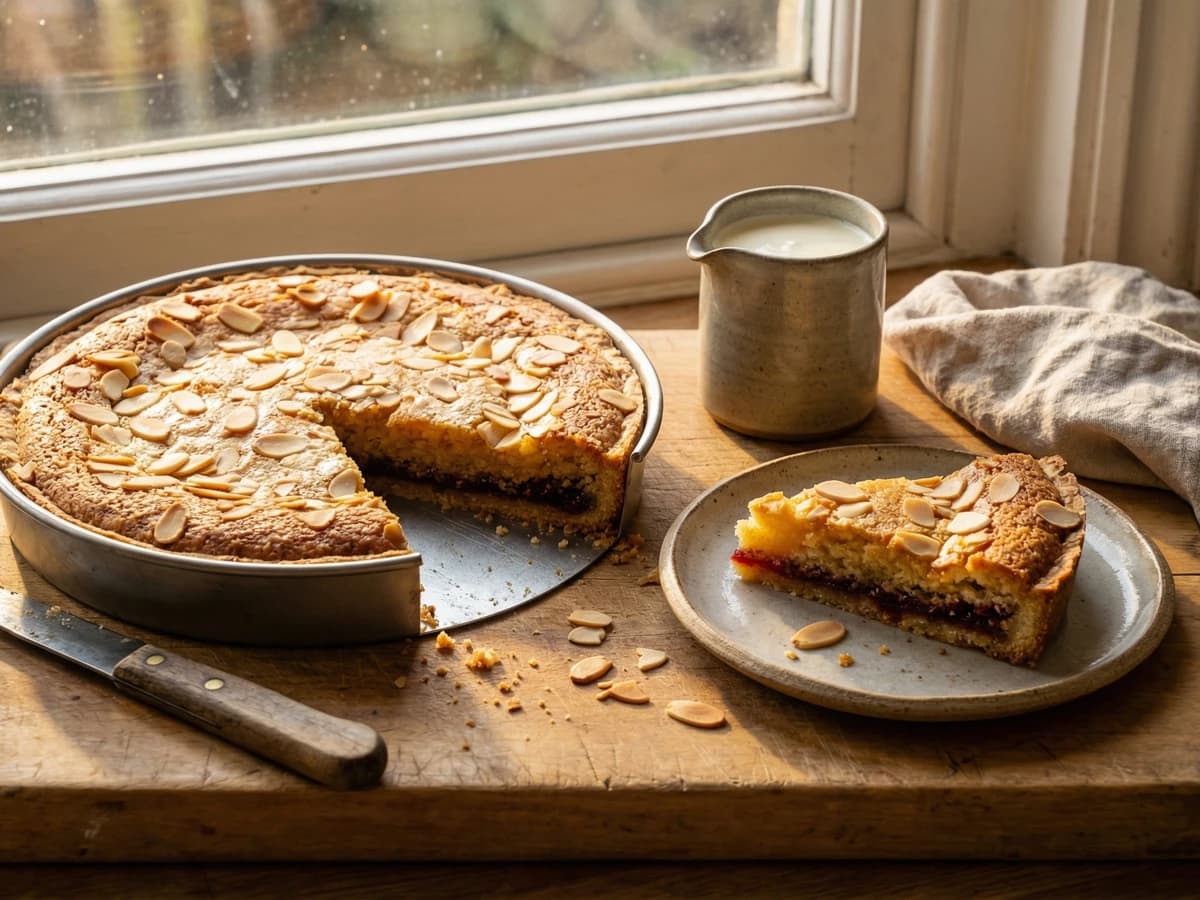
A proper Bakewell tart with buttery shortcrust, a thick layer of raspberry jam, and almond frangipane baked golden under a scattering of flaked almonds. No icing. No nonsense.
Chef Thomas
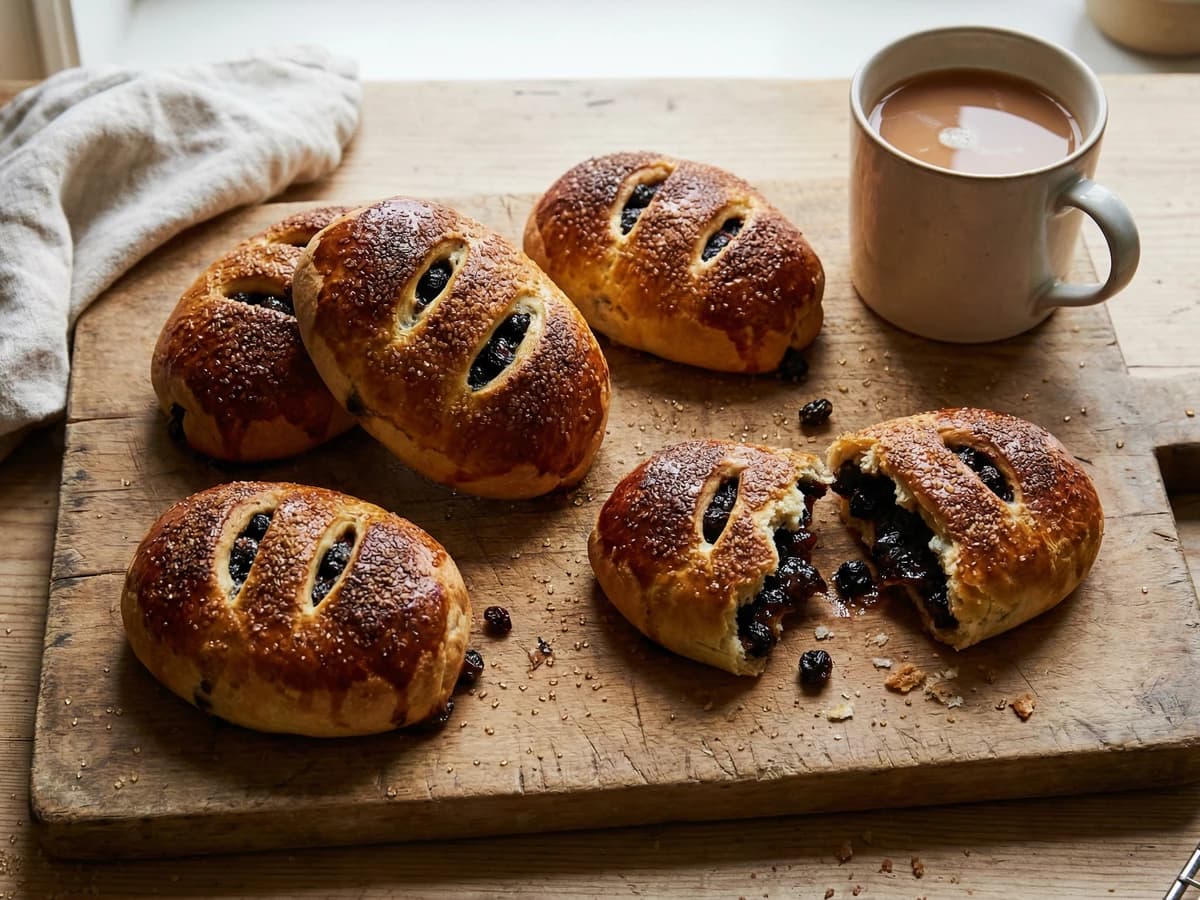
Oval pastries filled with rum-soaked currants and spice, baked until the tops crackle with sugar. The kind of thing to make on a wet Sunday afternoon when you want the kitchen to smell of something.
Chef Thomas
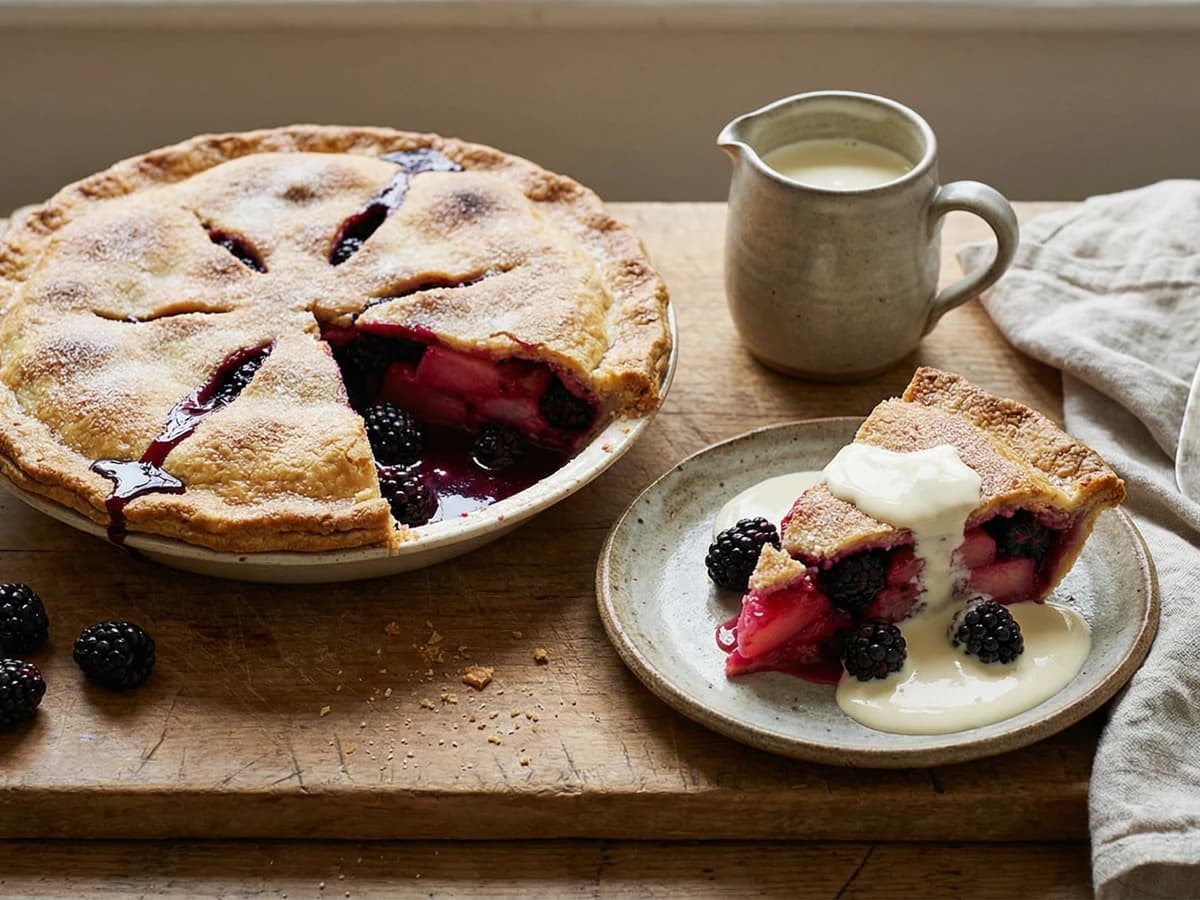
A proper hedgerow pie of Bramley apples and blackberries under a sugar-crusted pastry lid, the kind of pudding that turns a Sunday in September into something you'll remember.