
Chef Freja
Æblegelé
Tart autumn apples, slow-boiled and strained clear overnight, then cooked with sugar to a trembling pale amber jelly that belongs on the cheese board, on morning toast, and in the kitchen of anyone who respects the season.
A cooking platform built around craft, culture, and the stories behind what we eat.
Created by Chef Freja
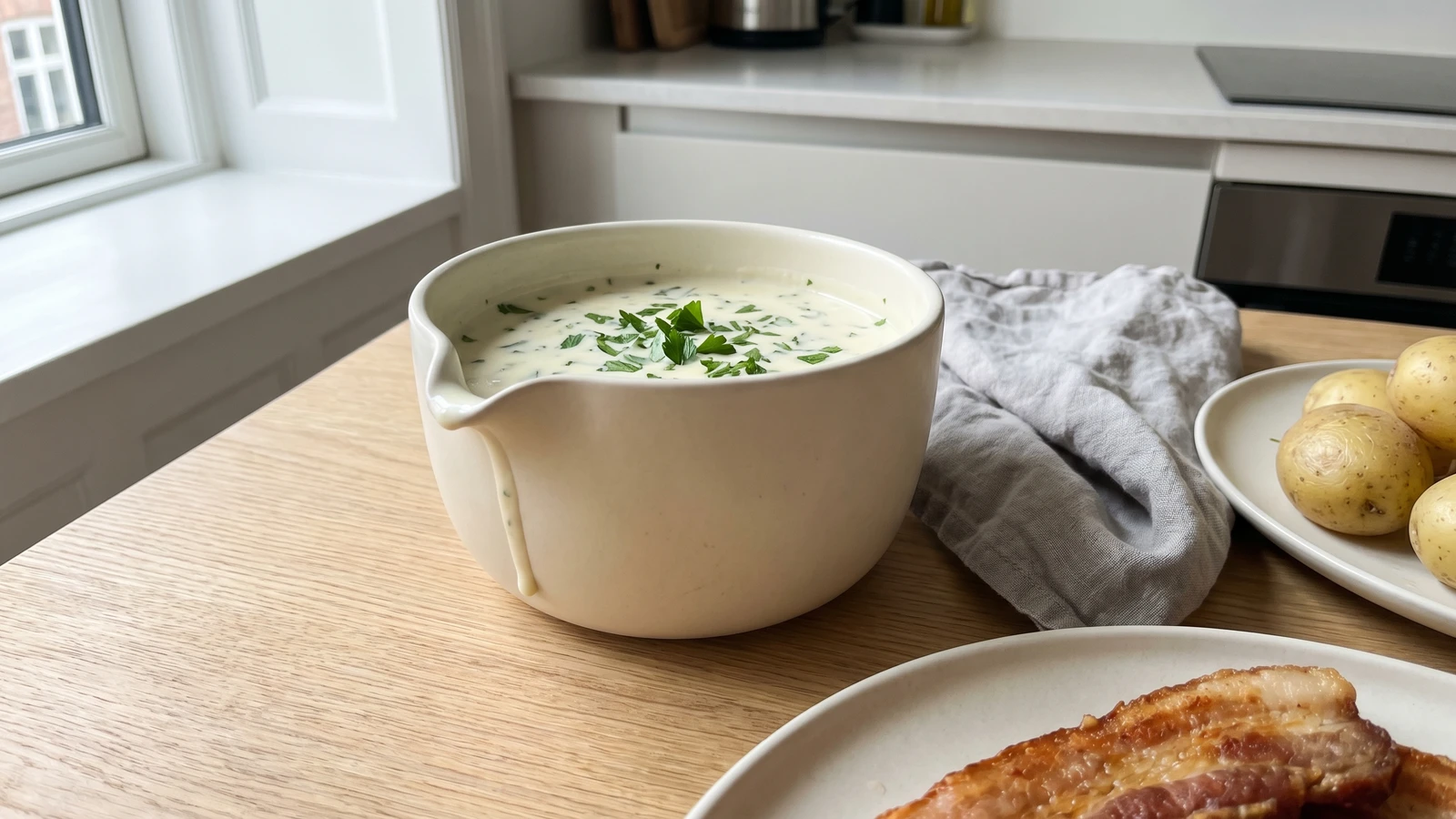
The creamy white parsley sauce that belongs beside stegt flaesk and boiled potatoes, Denmark's national dish. Fifteen minutes, one pan, a full bunch of flat-leaf parsley stirred in at the very end.
Every country has a dish that means home. In Denmark it's stegt flaesk med persillesovs: thick slices of pork belly, fried until the fat turns to glass, served with boiled potatoes and a white sauce so full of parsley it's practically green. The Danes voted it their national dish, which surprised nobody who grew up eating it on a Wednesday evening in October with the rain against the kitchen window.
The sauce is the quiet half of that partnership, and it's the half that holds the whole plate together. Persillesovs is a hvid sovs, a white sauce built from butter, flour, and milk, the same mother sauce the French call bechamel. But in a Danish kitchen it becomes something else entirely, because you stir a full bunch of chopped flat-leaf parsley into it at the very end, off the heat, so the herbs stay bright and alive instead of turning dull and khaki.
Pay attention to two things and you'll have this for life. First, cook the roux properly: two minutes over a gentle heat, stirring constantly, so the raw flour taste disappears but the color stays pale. Second, and this is the one that matters most, take the pan off the heat before you add the parsley. The residual warmth softens the herbs just enough. Any more and you lose the color and the fresh flavor that makes this sauce worth making from scratch. You'll know when it's right. The sauce will be ivory and green and smell like a garden in June, and the first spoonful over a hot potato will tell you why the Danes chose this dish above everything else.
Hvid sovs, the Danish white sauce, descends from the French bechamel that entered Scandinavian kitchens through the royal courts of the 18th century. By the 19th century it had shed its aristocratic origins entirely and become a fixture of the Danish household kitchen, thickening and enriching the meals of working families who could not afford cream. In 2014, stegt flaesk med persillesovs was voted Denmark's national dish by popular ballot, a choice that said something true about the country: the food that matters most isn't what impresses visitors, it's what you cook on a dark evening for the people already at your table.
Quantity
40g
Quantity
40g
Quantity
500ml
at room temperature
Quantity
1 large bunch, approximately 40g
finely chopped
Quantity
to taste
Quantity
to taste
Quantity
pinch
freshly grated
| Ingredient | Quantity |
|---|---|
| unsalted butter | 40g |
| plain flour | 40g |
| whole milkat room temperature | 500ml |
| flat-leaf parsleyfinely chopped | 1 large bunch, approximately 40g |
| fine sea salt | to taste |
| white pepper | to taste |
| nutmeg (optional)freshly grated | pinch |
Wash and dry the parsley thoroughly. Strip the leaves from the stems and chop them finely with a sharp knife. You want the pieces small enough that they disappear into the sauce as green flecks, not so coarse that you're chewing leaf. A full bunch looks like too much on the board. It isn't. The sauce needs all of it. Set the chopped parsley aside. It goes in at the very end.
Melt the butter in a heavy saucepan over medium-low heat. When it foams, add all the flour at once and stir it in with a wooden spoon. Keep stirring. The flour and butter will come together into a thick, smooth paste. Cook this roux for two full minutes, stirring constantly. You want the raw flour taste to disappear, but the color to stay pale, blond, not brown. If it starts to turn golden, pull the pan off the heat. A white sauce needs a white roux. That's the rule, and it exists because a browned roux tastes of hazelnuts and changes the character of the sauce entirely.
Take the pan off the heat. Pour in about a quarter of the milk and whisk vigorously. The roux will seize up and turn into a thick paste. That's exactly right. Keep whisking until the paste is smooth and there are no lumps. Return the pan to medium-low heat and add the rest of the milk in three additions, whisking well between each one. The reason you add the milk in stages is simple: a small amount of liquid mixes into a thick paste without lumps. A large amount of liquid poured into a roux turns into a lumpy disaster that no amount of whisking can fully rescue.
Bring the sauce to a gentle simmer, stirring frequently with the whisk. Let it cook for five to seven minutes at this low bubble. The sauce will thicken as the flour cooks and the starch swells. You'll know when it's right: dip a spoon in and run your finger across the back. If the line holds and the sauce doesn't run back together, it's done. It should coat the spoon like thick cream. Too thin, and it will slide off the pork. Too thick, and it sits on the plate like paste. Season now with salt, white pepper, and a small grating of nutmeg. Taste it. Adjust. The sauce should taste of milk and butter first, with warmth from the pepper and a whisper of nutmeg underneath.
Take the pan off the heat and stir in all the chopped parsley at once. The residual heat of the sauce is enough to soften the herbs slightly without cooking them out. This is the single most important moment in the recipe. If you add the parsley while the sauce is still simmering, the heat turns it dull and army-green and the fresh flavor disappears. Off the heat, the parsley stays bright and vivid and carries its own flavor into every spoonful. Stir it through, look at the color, and you'll understand why the timing matters.
Pour the persillesovs into a warm sauceboat or straight over the stegt flaesk and boiled potatoes. Serve at once. The sauce thickens as it sits, so if it waits on the counter, whisk in a splash of warm milk to bring it back. This sauce doesn't wait well and it doesn't need to. It takes fifteen minutes. Make it last.
1 serving (about 130g)
Culinary guides, cultural storytelling, and the editorial depth that makes cooking meaningful.
Discover Culinary ExplorerChef Freja
Tart autumn apples, slow-boiled and strained clear overnight, then cooked with sugar to a trembling pale amber jelly that belongs on the cheese board, on morning toast, and in the kitchen of anyone who respects the season.

Chef Freja
Autumn apples simmered slowly with vanilla until they collapse into a rough, golden sauce. The condiment that waits on the shelf for flaeskesteg, for roast duck, for the meals that carry you through the Danish winter.

Chef Freja
The pan sauce that holds the Danish Christmas plate together. Duck drippings, good stock, cream, and a spoonful of red currant jelly for the tart brightness that makes juleaften taste like itself.

Chef Freja
September plums slow-cooked with onion, ginger, vinegar, and warm spice into a dark, glossy chutney that belongs beside aged cheese on a cold evening. The joy of waiting, sealed in a jar.