
Chef Juliana
Açaí com Camarão do Pará
You think açaí belongs with banana and granola because that's the version that traveled. In Pará, thick unsweetened açaí sits beside shrimp, rice, and farinha. Anota aí: same fruit, different meal.
A cooking platform built around craft, culture, and the stories behind what we eat.
Created by
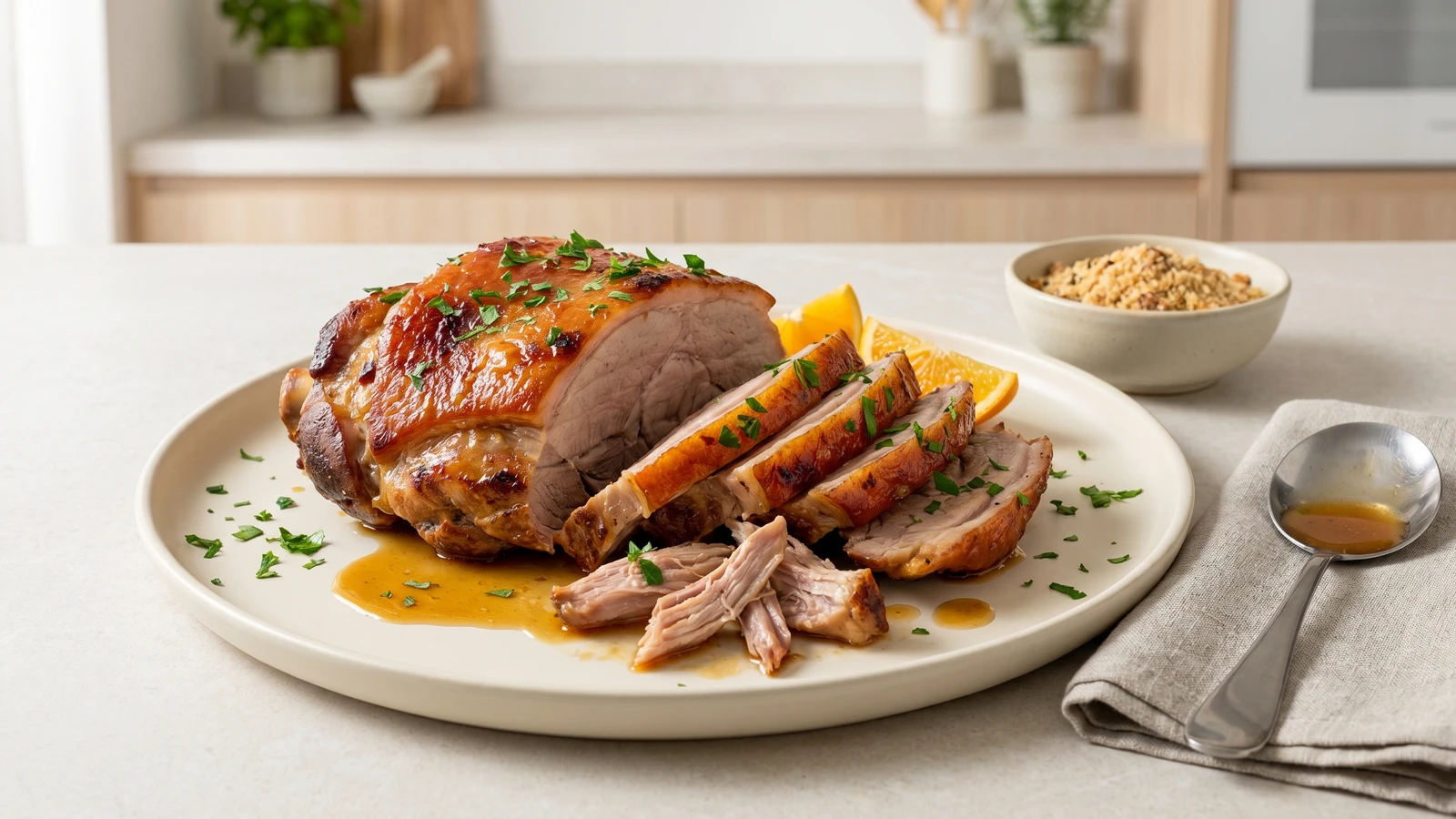
You don't need courage for pernil. You need salt, garlic, time, and the discipline to let the oven work while you solve the rice, beans, and couve.
You look at a whole pork leg and hear that little voice: isso não é pra mim. I know the voice. Mine used to show up around any pot bigger than my confidence. But pernil isn't a secret reserved for the aunt who was born knowing things. Cozinhar não é dom, é um aprendizado. Anota aí: big meat is often easier than little meat, because time does half the work.
Christmas pernil belongs to the table with rice, beans, farofa, something green, and people reaching across each other for the crispy bits. It may be a holiday dish, but the logic is the same as the pê-efe: comida de verdade, built from a foundation you can repeat. Garlic, onion, citrus, wine, salt, fat, heat. No packet pretending to be flavor. No powder doing the job of a real refogado and a day of marinating.
The method is plain. You season the meat deeply because a thick leg needs time for the salt and aromatics to travel. You roast it low so the tough parts soften without drying out. You finish hot so the skin turns crisp and golden. That's the whole trick, and it is a trick a home cook can learn.
Make it once and you'll understand why people ask for pernil again before the plates are cleared. The oven does the grand part. A gente just has to set it up properly and stop bothering it.
Pernil assado became a Brazilian Christmas table favorite through Portuguese pork cookery, Catholic holiday feasts, and the practical habit of roasting a large cut that feeds many people at once. In Brazil it is commonly marinated with garlic, citrus or vinegar, wine, onions, herbs, and sometimes cachaça, then served with rice, farofa, salads, and fruit on the side. Regional tables vary in the marinade and accompaniments, but the slow-roasted pork leg as a festive centerpiece is shared widely across the country.
Quantity
7 to 8 pounds (3.2 to 3.6 kg)
skin on
Quantity
2 tablespoons
Quantity
12 cloves
minced
Quantity
1 large
finely grated or blended
Quantity
1 cup
Quantity
1/2 cup
Quantity
1/4 cup
Quantity
3 tablespoons
Quantity
2 tablespoons
Quantity
2
Quantity
1 tablespoon
chopped
Quantity
1 tablespoon
Quantity
1 teaspoon
Quantity
1 teaspoon
Quantity
2 cups
for the roasting pan
Quantity
1 tablespoon
for the skin
Quantity
1 teaspoon
for the skin
Quantity
1/2 cup
chopped, for finishing
Quantity
as needed
for serving
| Ingredient | Quantity |
|---|---|
| bone-in pork legskin on | 7 to 8 pounds (3.2 to 3.6 kg) |
| coarse salt | 2 tablespoons |
| garlicminced | 12 cloves |
| onionfinely grated or blended | 1 large |
| dry white wine | 1 cup |
| fresh lime juice | 1/2 cup |
| orange juice | 1/4 cup |
| olive oil | 3 tablespoons |
| cachaça (optional) | 2 tablespoons |
| bay leaves | 2 |
| fresh rosemary leaveschopped | 1 tablespoon |
| fresh thyme leaves | 1 tablespoon |
| black pepper | 1 teaspoon |
| ground cumin | 1 teaspoon |
| waterfor the roasting pan | 2 cups |
| oilfor the skin | 1 tablespoon |
| saltfor the skin | 1 teaspoon |
| parsleychopped, for finishing | 1/2 cup |
| orange wedges (optional)for serving | as needed |
Pat the pork leg dry, then use a small sharp knife to make deep little cuts all over the meat side, stopping before you tear the skin to pieces. These cuts are not decoration. They give the salt, garlic, and citrus a path into the thick meat, so the center tastes seasoned instead of forgotten.
Mix the coarse salt, garlic, onion, wine, lime juice, orange juice, olive oil, cachaça if using, bay leaves, rosemary, thyme, black pepper, and cumin. Rub it all over the pork, pushing the garlic mixture into the cuts. It should smell sharp, salty, and alive. That's the marinade doing its job before the oven even appears.
Put the pork in a large covered container or a deep roasting pan covered tightly, skin side up, and refrigerate for 24 hours. Turn it once if you remember. If you forget, the kitchen police will not arrive. The long rest matters because salt moves slowly through a big cut, and rushing it leaves you with a beautiful outside and a bland middle.
Take the pork out of the fridge 1 hour before roasting so the chill eases off. Heat the oven to 160°C (325°F). Put the pork skin side up in a roasting pan, pour the marinade around it, add the water to the pan, and cover tightly with foil. Roast for 3 1/2 hours. Low heat gives the tough parts time to soften before the outside dries out.
Uncover the pan carefully and spoon the pan juices over the meat. The pork should be starting to soften, and a fork should meet less resistance than it did at the start. If the pan is dry, add another 1/2 cup water. Dry pan juices burn, and burnt garlic in the bottom of the pan will bully the whole roast.
Cover again and roast for 1 to 1 1/2 hours more, until the meat pulls apart under a fork in the thickest tender spots. Don't cook by pride, cook by the fork. A big pernil has moods, and yours is done when it gives in.
Raise the oven to 230°C (450°F). Remove the foil, brush the skin with the oil, sprinkle it with the teaspoon of salt, and roast uncovered for 20 to 30 minutes, until the skin is deep golden, blistered in places, and crisp under a tap of the spoon. This hot finish is what dries and crisps the surface after the slow roast has tenderized the meat.
Move the pork to a board and let it rest 20 minutes before slicing or pulling. Resting keeps the juices in the meat instead of running all over the board while you panic. Spoon off excess fat from the pan juices, taste the sauce, scatter parsley over the pork, and serve with orange wedges, arroz soltinho, feijão, farofa, and couve.
1 serving (about 225g)
Culinary guides, cultural storytelling, and the editorial depth that makes cooking meaningful.
Discover Culinary ExplorerChef Juliana
You think açaí belongs with banana and granola because that's the version that traveled. In Pará, thick unsweetened açaí sits beside shrimp, rice, and farinha. Anota aí: same fruit, different meal.

Chef Juliana
You think savory açaí is not for you. I understand. Then you taste the cold, dark bowl beside hot fried fish, rice, greens, and farinha, and dinner gets very quiet.

Chef Juliana
You think salted beef and rice sound like trouble. Anota aí: soak the charque, brown it properly, build the refogado, and this one pot resolves dinner.

Chef Juliana
You think a Maranhão green rice belongs to somebody else's clever hands. It doesn't. Wilt the vinagreira, build the refogado, fold it through arroz soltinho, and dinner gets bright, coastal, and yours.