
Chef Dean
American Goulash
A Midwestern one-pot supper of seasoned ground beef, tender elbow macaroni, and tomatoes simmered into a thick, soul-satisfying stew. This is the dish that fed factory workers and farm families alike.
A cooking platform built around craft, culture, and the stories behind what we eat.
Created by
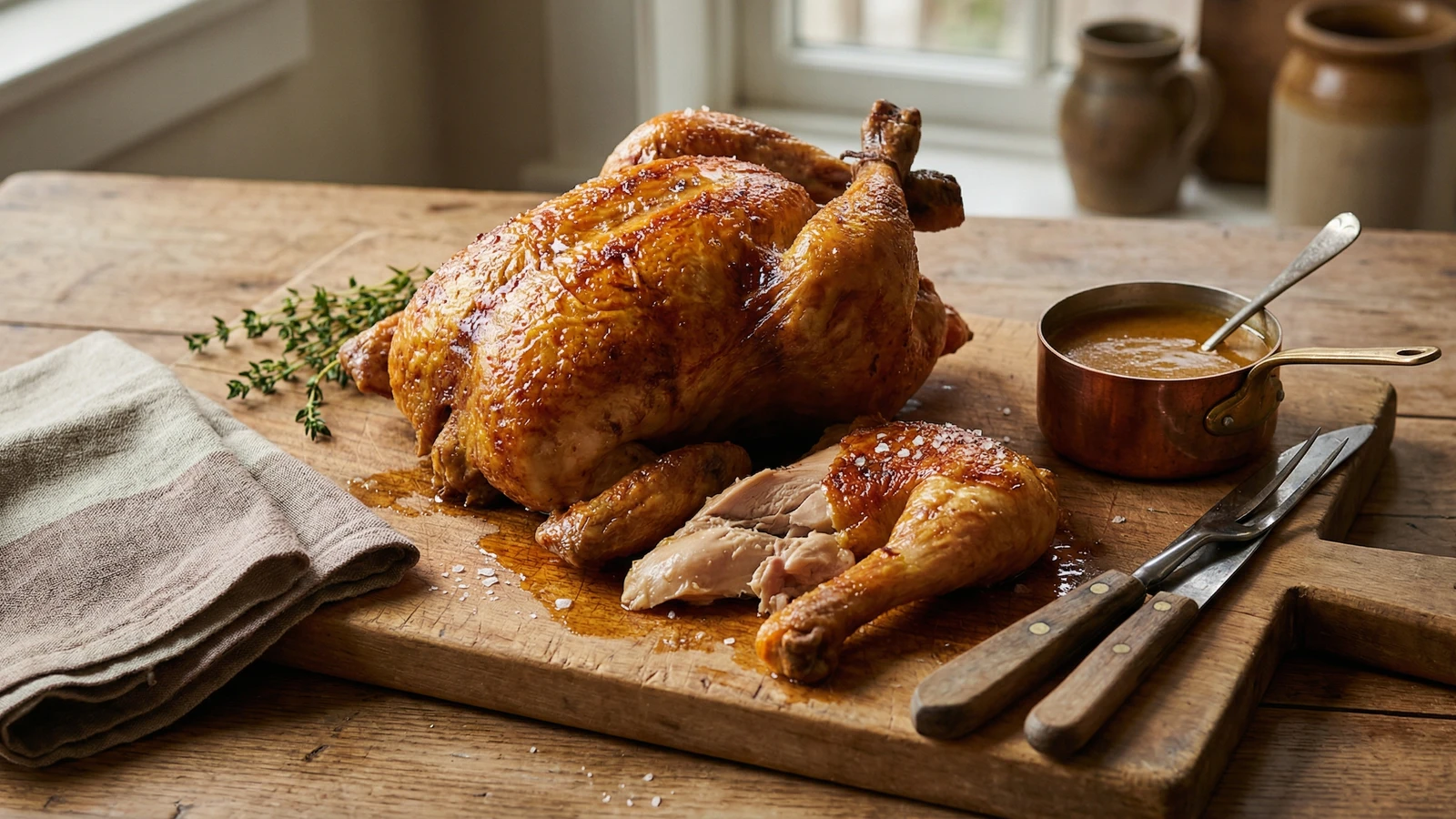
A well-raised chicken, simply seasoned with salt and good butter, roasted until the skin shatters and the meat stays impossibly juicy, with a pan gravy made from what the bird leaves behind.
Start with the chicken. This matters more than anything you do in the kitchen afterward. Find a bird that was raised well, one that scratched in dirt and ate what chickens are supposed to eat. You will taste the difference the moment you take your first bite.
Roasting a chicken is the simplest thing in the world and the most revealing. There is nowhere for a mediocre bird to hide. A factory chicken, pumped with water and raised in confinement, will never achieve the depth of flavor that comes from a pastured hen. Ask your farmer. Visit the market. This is the kind of choice that shapes the food system, one Sunday dinner at a time.
The technique here is deliberately minimal. Salt the bird generously, rub it with good butter, and let heat do the rest. High temperature creates crisp skin. Resting allows the juices to redistribute. The drippings in your pan contain everything you need for gravy: rendered fat, caramelized fond, and concentrated flavor. A splash of wine, a bit of stock, and you have something that tastes like it took hours.
Every meal is a meaningful choice. When you roast a chicken from a farmer you trust, you are keeping that farm alive. The connection matters. And the chicken tastes better for it.
Quantity
1 (3 1/2 to 4 1/2 pounds)
preferably pastured
Quantity
4 tablespoons
softened
Quantity
1 1/2 tablespoons
Quantity
1 teaspoon
freshly ground
Quantity
1
halved
Quantity
1
halved crosswise
Quantity
6 sprigs
Quantity
3 sprigs
Quantity
1 medium
quartered
Quantity
2 tablespoons
Quantity
1 1/2 cups
preferably homemade
Quantity
1/4 cup
Quantity
for finishing
| Ingredient | Quantity |
|---|---|
| whole chickenpreferably pastured | 1 (3 1/2 to 4 1/2 pounds) |
| unsalted buttersoftened | 4 tablespoons |
| kosher salt | 1 1/2 tablespoons |
| black pepperfreshly ground | 1 teaspoon |
| lemonhalved | 1 |
| head of garlichalved crosswise | 1 |
| fresh thyme | 6 sprigs |
| fresh rosemary | 3 sprigs |
| yellow onionquartered | 1 medium |
| all-purpose flour | 2 tablespoons |
| chicken stockpreferably homemade | 1 1/2 cups |
| dry white wine | 1/4 cup |
| flaky sea salt | for finishing |
Remove your chicken from the refrigerator one hour before roasting. A cold bird shocks in the oven and cooks unevenly. Pat the skin thoroughly dry with paper towels. Moisture is the enemy of crisp skin. The surface should feel papery, almost tacky.
Set your oven to 425 degrees. Position a rack in the lower third where the heat radiates most intensely. Place a 12-inch cast iron skillet or roasting pan inside to heat while the oven comes to temperature. A hot pan jump-starts the cooking from below.
Combine the softened butter with half the kosher salt and all the pepper in a small bowl. Gently loosen the skin over the breasts and thighs by sliding your fingers beneath it, being careful not to tear. Spread most of the butter directly onto the meat under the skin. Rub the remainder over the outside. Season the cavity and exterior with the remaining salt.
Squeeze the lemon halves gently over the chicken, then tuck them inside the cavity along with the garlic head, half the thyme, and half the rosemary. The aromatics perfume the meat from within as steam builds during roasting. They will not make the chicken taste of lemon, only of itself, but better.
Cross the drumsticks and tie them together with kitchen twine. Tuck the wing tips behind the shoulders. This compact shape ensures even cooking and presents beautifully at the table. Scatter the onion quarters and remaining herbs in the hot pan, then set the chicken on top, breast side up.
Roast the chicken for 50 minutes to 1 hour and 10 minutes, depending on size. Do not open the oven door for the first 45 minutes. The skin should be deeply golden, almost burnished, and the juices should run clear when you pierce the thigh at its thickest point. An instant-read thermometer inserted into the thigh should register 165 degrees.
Transfer the chicken to a cutting board and tent loosely with foil. Let it rest for 15 to 20 minutes. This is not optional. Resting allows the juices to redistribute throughout the meat. Cut too soon and those juices spill onto your board instead of staying where they belong.
Pour the pan drippings through a fine-mesh strainer into a measuring cup, pressing on the aromatics to extract their flavor. Discard the solids. Skim off all but two tablespoons of the fat (save the rest for roasting potatoes). Return the fat to the pan over medium heat.
Whisk the flour into the fat, scraping up the fond from the bottom of the pan. Cook for one to two minutes until the raw flour smell disappears and the mixture turns slightly golden. This is where the gravy gets its body and sheen.
Pour in the wine and let it bubble for 30 seconds, scraping any remaining browned bits. Add the stock in a steady stream while whisking constantly. Simmer until the gravy coats the back of a spoon, about 5 minutes. Taste. Adjust salt. The gravy should taste like the essence of the chicken itself, concentrated and silky.
Remove the twine. Separate the legs from the body, then divide each into thigh and drumstick. Slice the breast meat against the grain. Arrange on a warm platter, scatter a few thyme leaves over the top, and finish with flaky sea salt. Serve the gravy alongside in a warm pitcher or boat.
1 serving (about 220g)
Culinary guides, cultural storytelling, and the editorial depth that makes cooking meaningful.
Discover Culinary ExplorerChef Dean
A Midwestern one-pot supper of seasoned ground beef, tender elbow macaroni, and tomatoes simmered into a thick, soul-satisfying stew. This is the dish that fed factory workers and farm families alike.

Chef Dean
A golden-crusted casserole of tender elbow macaroni swaddled in velvety cheese sauce, this is the macaroni and cheese that defines American comfort cooking. No boxed shortcuts. No apologies.

Chef Dean
Silky strips of seared beef and earthy mushrooms draped in a tangy sour cream sauce, ladled generously over buttery egg noodles. This is the dish that warmed a thousand American kitchens.

Chef Dean
A magnificent whole-roasted tenderloin crowned with a glossy red wine reduction, the kind of centerpiece that makes guests fall silent when it arrives at the table. This is holiday cooking at its honest best.