
Chef Graziella
Bruschetta al Pomodoro Fresco
Grilled bread rubbed with garlic, crowned with ripe tomatoes, anointed with your finest oil. This is bruschetta as it exists in Italy, not the soggy appetizer Americans invented.
A cooking platform built around craft, culture, and the stories behind what we eat.
Created by
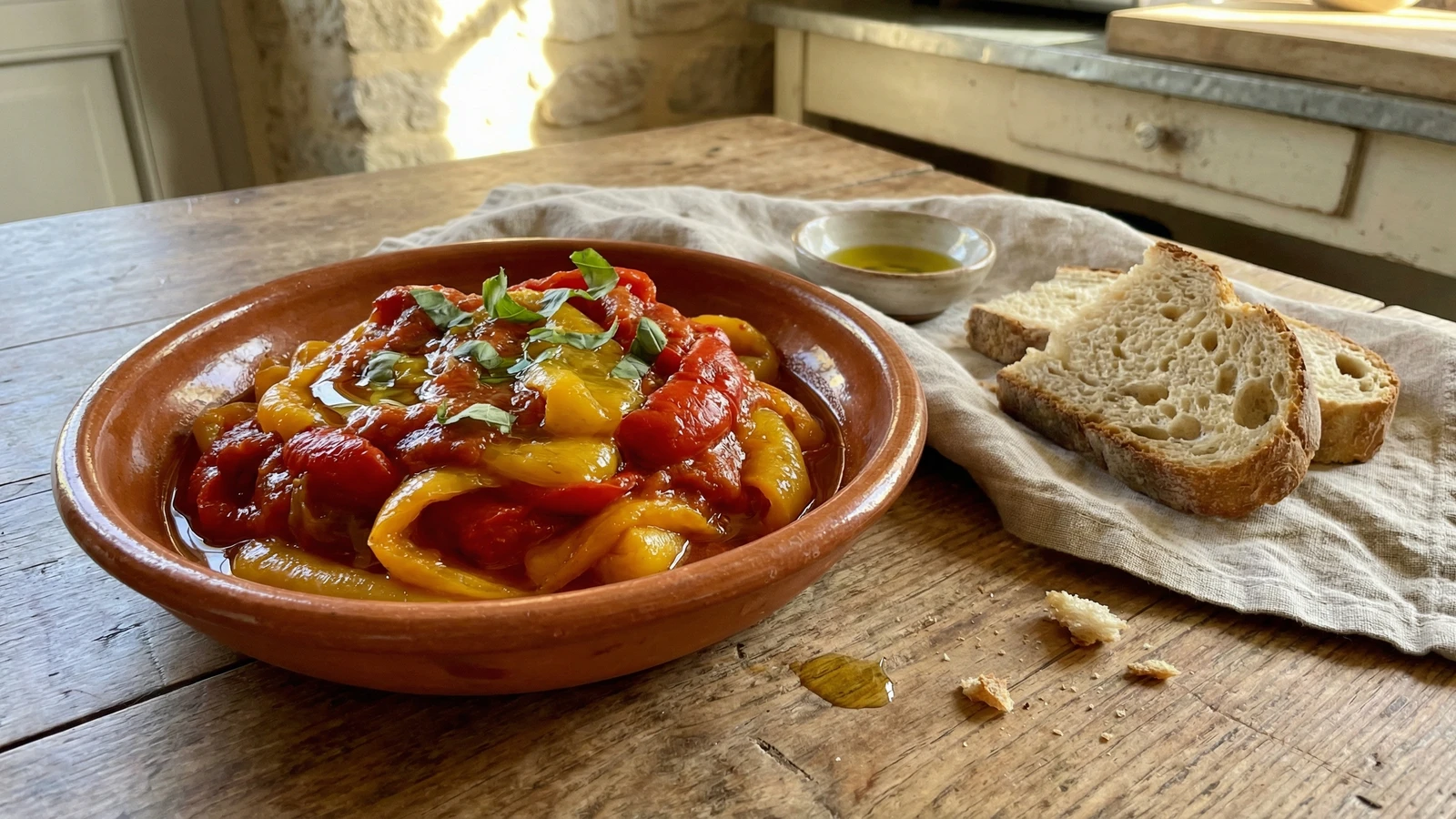
Sweet peppers stewed slowly with tomato until silky and collapsed. A dish that proves patience creates depth, and that the best summer cooking requires the least interference.
Peperonata is what happens when you leave sweet peppers alone with good olive oil, a little tomato, and time. The peppers surrender completely. They become silky, almost jammy, their natural sugars concentrated by slow evaporation. This is not a quick sauté. This is gentle persuasion.
The dish belongs to the south of Italy, where peppers grow fat in the summer sun and cooks have learned that the best way to honor them is restraint. You do not need herbs fighting for attention. You do not need excessive garlic turning everything acrid. You need peppers, tomato, oil, and the patience to let them become what they want to become.
Peperonata improves as it sits. Make it in the morning for dinner. Make it Saturday for Sunday. The flavors deepen, the textures meld. This is summer preserved in a jar, wonderful at room temperature when you need something that required effort but demands none from your guests.
Peperonata emerged in southern Italy after Spanish traders introduced peppers from the New World in the 16th century. The dish became a staple of Campanian and Calabrian home cooking, where summer's abundance of peppers needed preserving. Families would make large batches to eat throughout the week, discovering that the dish only improved with time.
Quantity
2 pounds (about 4 large)
red and yellow
Quantity
1/3 cup
Quantity
1 medium
sliced thin
Quantity
1 can (14 ounces)
crushed by hand
Quantity
2
peeled and lightly crushed
Quantity
to taste
Quantity
1 tablespoon
Quantity
for serving
| Ingredient | Quantity |
|---|---|
| mixed bell peppersred and yellow | 2 pounds (about 4 large) |
| extra virgin olive oil | 1/3 cup |
| yellow onionsliced thin | 1 medium |
| San Marzano tomatoescrushed by hand | 1 can (14 ounces) |
| garlic clovespeeled and lightly crushed | 2 |
| kosher salt | to taste |
| red wine vinegar | 1 tablespoon |
| fresh basil leaves | for serving |
Wash the peppers and cut them in half lengthwise. Remove the stems, seeds, and white ribs. Cut each half into strips about one inch wide. Do not fuss over uniformity. They will collapse into one another as they cook.
In a wide, heavy skillet or braiser, warm the olive oil over medium heat. Add the sliced onion and the crushed garlic cloves. Cook slowly, stirring occasionally, until the onion is soft and translucent, about 8 minutes. The garlic perfumes the oil. You will remove it later.
Add all the pepper strips to the pan. They will seem like too much. They are not. Stir to coat them with the oil. Season with salt. Cook over medium heat, stirring occasionally, until the peppers begin to soften and release their juices, about 15 minutes.
Add the crushed tomatoes to the pan. Stir everything together. The tomato should coat the peppers, not drown them. Reduce the heat to medium-low. Let the peperonata simmer gently, uncovered, stirring from time to time.
Continue cooking until the peppers are completely tender and have collapsed into the tomato, the liquid has reduced to a thick, clinging consistency, and the oil has begun to separate and glisten on the surface. This takes 35 to 45 minutes. The peppers should be silky, not al dente. Fish out and discard the garlic cloves.
Remove the pan from heat. Stir in the red wine vinegar. Taste and adjust salt. The vinegar brightens the sweetness of the peppers. Let the peperonata cool to room temperature before serving. This is when it tastes best.
Transfer to a serving dish and scatter fresh basil leaves over the top. Serve at room temperature with good bread for scooping. Peperonata is also excellent spooned over grilled bread that has been rubbed with garlic, or alongside grilled meats and fish.
1 serving (about 220g)
Culinary guides, cultural storytelling, and the editorial depth that makes cooking meaningful.
Discover Culinary ExplorerChef Graziella
Grilled bread rubbed with garlic, crowned with ripe tomatoes, anointed with your finest oil. This is bruschetta as it exists in Italy, not the soggy appetizer Americans invented.
Chef Graziella
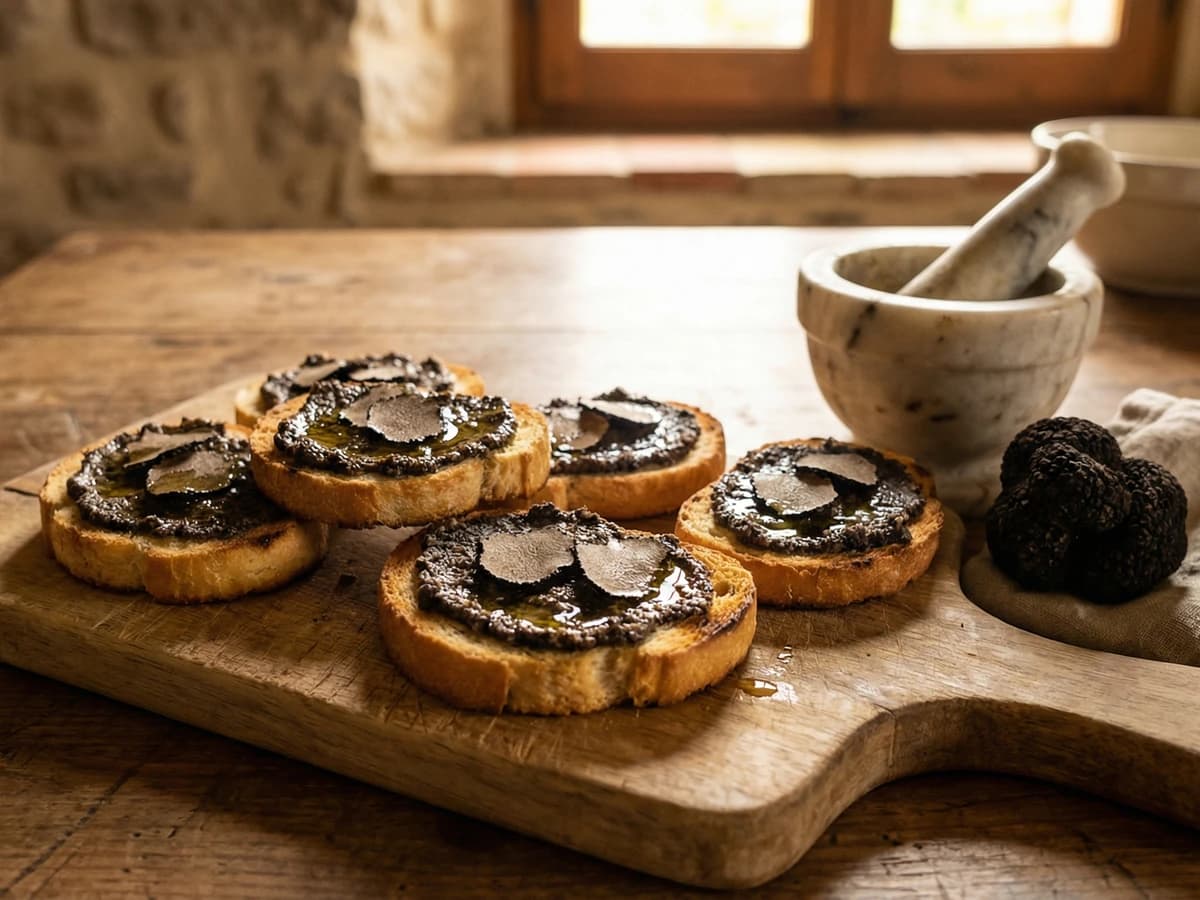
The black truffles of Norcia, pounded to a paste with nothing but olive oil and restraint, spread on warm bread. This is Umbrian luxury in its purest form.

Chef Graziella
Fire-charred peppers wrapped around a filling of tuna, capers, and anchovy. Made a day ahead, the flavors marry into something greater than their parts. This is antipasto as it should be.

Chef Graziella
Thin ribbons of summer zucchini, kissed by flame and wrapped around fresh goat cheese brightened with herbs. An antipasto that proves restraint creates elegance.