
Chef Dimitra
Chios Nerantzi Glyko Koutaliou (Νεράντζι Γλυκό Κουταλιού)
Chios bitter orange peel rolled into tight coils, blanched through clean waters, then preserved in a clear fragrant syrup for the spoon-sweet tray.
A cooking platform built around craft, culture, and the stories behind what we eat.
Created by
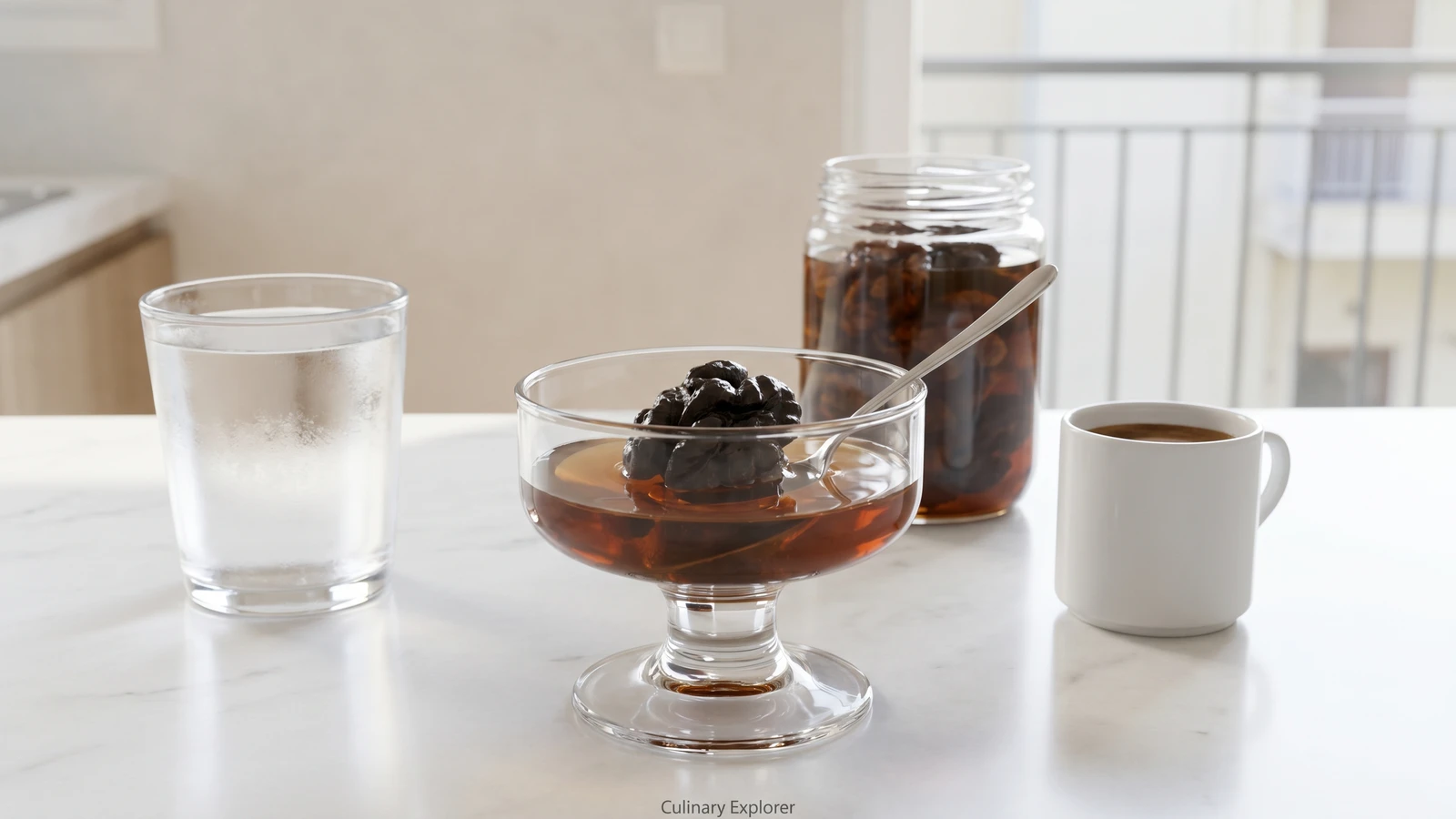
Pelion's early-summer walnuts become a glossy spoon sweet only after patient soaking, fresh water, and a dark syrup scented with clove, cinnamon, and lemon for guests.
Karydaki glyko koutaliou belongs beautifully to Pelion, where walnut trees climb the mountain villages above the Pagasetic Gulf and early summer is measured by whether the green nuts are still tender enough to pierce. The region is the dish's surname. These are whole unripe walnuts, soaked for days, blanched, then held in a dark syrup scented with clove, cinnamon, and lemon until they turn glossy and almost black.
The patience is not decoration here. Green walnuts are full of bitterness, and sugar cannot fix that once it has been trapped inside the fruit. You soak them, change the water, and let the bitterness leave quietly. After that, the syrup can do its work. Good olive oil and patience run half the Greek kitchen; here it is sugar and patience.
I like this sweet because it asks you to obey the calendar. You have a short window, late May into early June, before the shell forms. Miss it and you wait a year. A recipe written down is a recipe saved, but this one still begins on the tree.
In Pelion and other walnut-growing parts of Thessaly, green walnuts are picked in late May or early June, before the inner shell hardens, and preserved as a glyko koutaliou for the visiting tray. Spoon sweets grew from the old Greek habit of offering a guest one preserved fruit or nut with cold water, a small sign that the house was awake to hospitality. Older household recipes sometimes used limewater to firm the walnuts; many contemporary home cooks rely instead on long soaking and repeated blanching, which keeps the method safer and still faithful to the dish.
Quantity
1kg
about 35-45, picked before the inner shell hardens
Quantity
as needed
for soaking, changed twice daily
Quantity
60ml
divided
Quantity
1.2kg
Quantity
900ml
for the syrup
Quantity
1
Quantity
8
Quantity
2 wide strips
yellow part only
| Ingredient | Quantity |
|---|---|
| very young green walnuts (καρυδάκια)about 35-45, picked before the inner shell hardens | 1kg |
| cold waterfor soaking, changed twice daily | as needed |
| fresh lemon juicedivided | 60ml |
| granulated sugar | 1.2kg |
| waterfor the syrup | 900ml |
| cinnamon stick | 1 |
| whole cloves | 8 |
| lemon peelyellow part only | 2 wide strips |
Wear gloves. Green walnuts stain the hands brown for days, and no amount of scrubbing makes you look innocent. Push a wooden skewer through one walnut from side to side. If it passes cleanly, the walnuts are ready; if you feel a hard shell inside, the season has gone. Trim a thin slice from the stem and blossom ends of each walnut, then pierce each one in 3 or 4 places with the skewer.
Put the pierced walnuts in a large nonreactive bowl or pot and cover them with cold water by at least 5cm. Soak for 8 days, changing the water every morning and evening. This is the step that decides the sweet: the long soak pulls out the green walnut bitterness before the sugar seals it in. Rush it, and the finest syrup in Pelion will still taste harsh.
Drain the walnuts and put them in a wide pot. Cover with fresh water, bring to a boil, and simmer for 10 minutes. Drain. Repeat twice more with fresh water each time. After the third blanch, the skewer should pass through the walnuts easily, but they should still hold their shape.
Put the drained walnuts back into cold water with 30ml of the lemon juice and leave them for 2 hours. This sharp little rest freshens the taste after all that boiling. Drain well before the syrup.
In a clean wide pot, combine the sugar, 900ml water, cinnamon stick, cloves, and lemon peel. Bring to a steady boil, then simmer for 5 minutes until the sugar is fully dissolved and the syrup looks clear. Add the drained walnuts and simmer gently for 20 minutes, turning them now and then so every walnut drinks the syrup. Take the pot off the heat, cover it, and leave it overnight.
The next day, bring the pot back to a gentle boil and simmer for 25-35 minutes, until the walnuts are deep brown-black and glossy. The syrup should fall from a spoon in a heavy drop, or read 105C on a sugar thermometer. Add the remaining 30ml lemon juice during the last 5 minutes. It keeps the syrup bright and helps stop crystals forming in the jar.
Pack the hot walnuts into sterilized jars and cover completely with hot syrup, leaving 1cm headspace. Seal the jars. For pantry storage, process them in a boiling-water bath for 10 minutes; otherwise, cool and refrigerate. Let the sweet rest at least 1 week before serving, because the walnut and syrup need time to become one thing.
Serve one walnut with a spoonful of syrup on a small plate, with cold water and Greek coffee. One is enough. Glyko koutaliou means spoon sweet, not bowl sweet, and restraint is part of the hospitality.
1 serving (about 40g)
Culinary guides, cultural storytelling, and the editorial depth that makes cooking meaningful.
Discover Culinary ExplorerChef Dimitra
Chios bitter orange peel rolled into tight coils, blanched through clean waters, then preserved in a clear fragrant syrup for the spoon-sweet tray.

Chef Dimitra
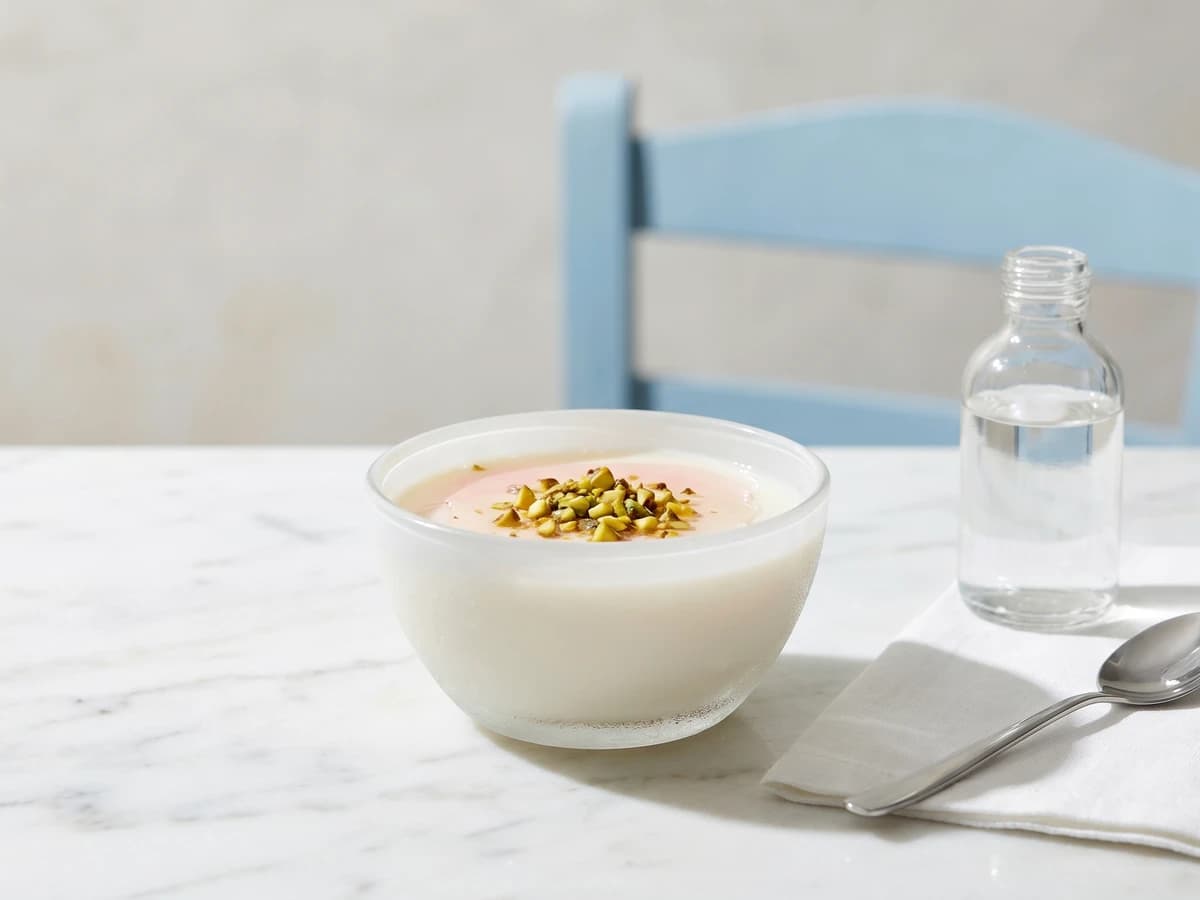
Chios gives vanilla submarine its mastic breath: a pearly spoon sweet stirred stiff, served cold in water, and offered as the simplest kerasma.
Chef Dimitra
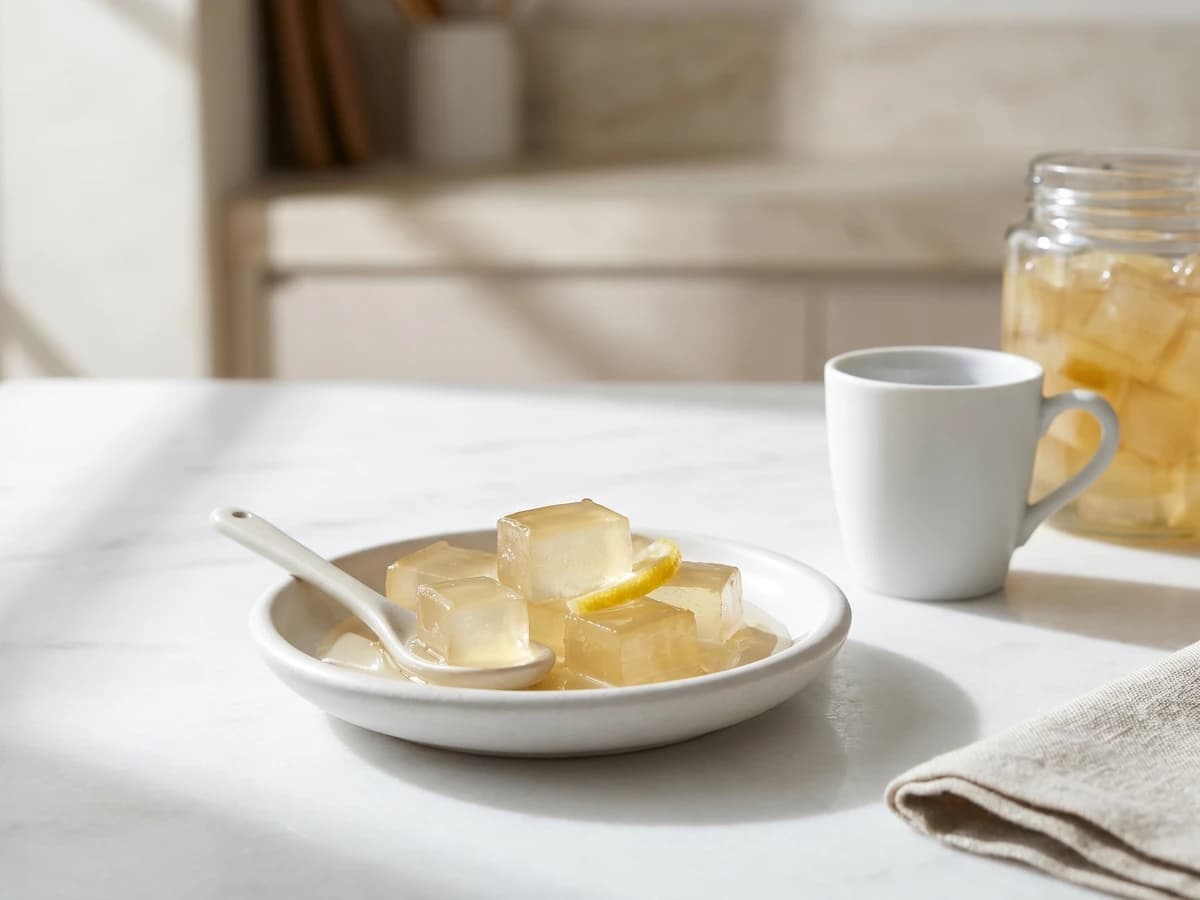
Mahalepi is the cooling milk pudding of Cyprus and the Politiki table: pale, trembling, and loosened at the spoon with cold rosewater syrup.
Chef Dimitra
Cyprus keeps the watermelon after the red flesh is gone: firm white rind, lime-soaked for snap, simmered slowly in lemon syrup until each piece shines on the spoon.