Culinary Explorer
A cooking platform built around craft, culture, and the stories behind what we eat.
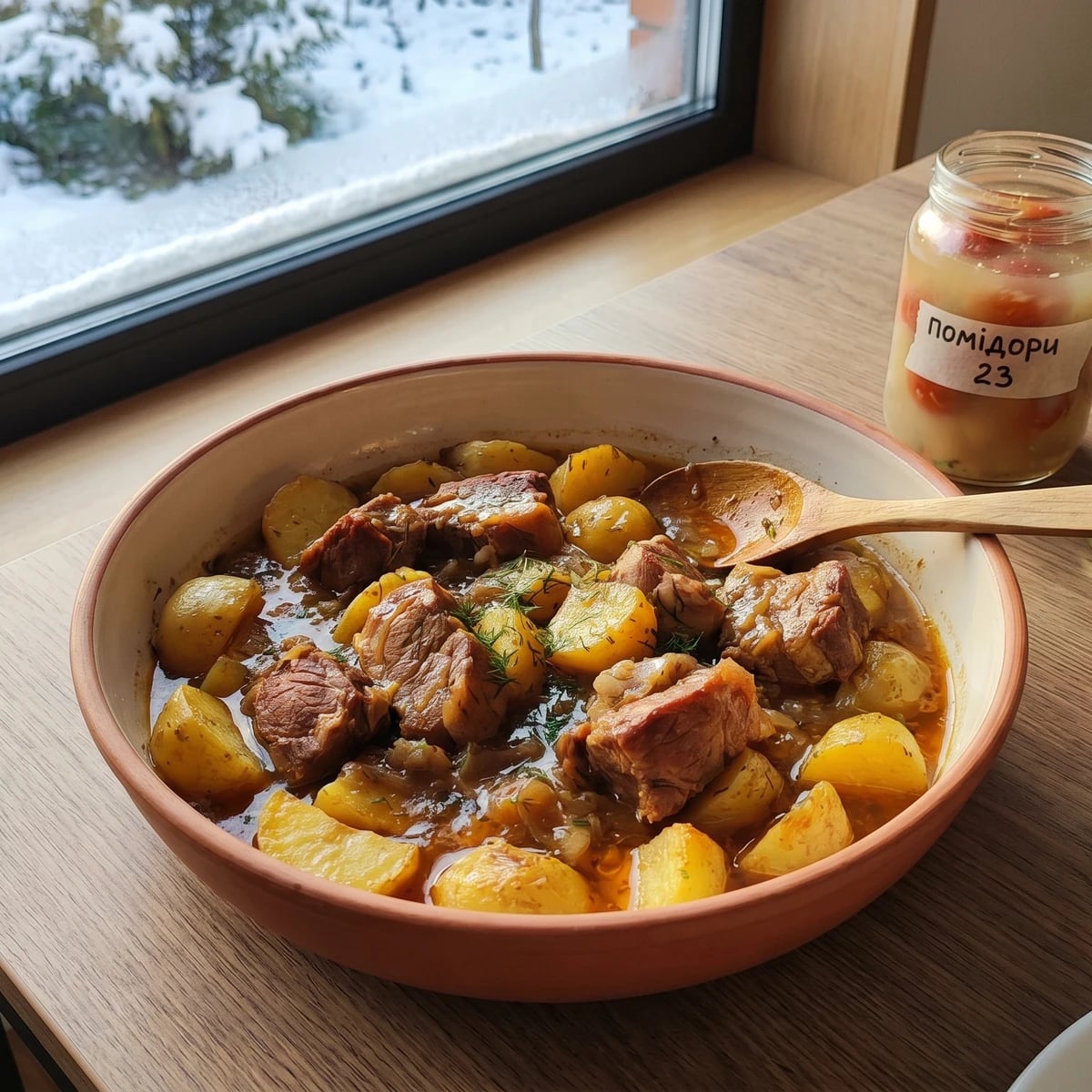
Pechenia po-Domashniomu (печеня по-домашньому, home-style pork roast)
Created by Chef Lesia
The best part of pechenia is not the pork but the bottom of the pot: potatoes collapsing into onion-dark gravy, sweet carrot fat shining over everything, enough for eight guests or one hungry Ukrainian.
The best part is the bottom of the pot. Pork fat, onion juice, potato starch, and sunflower oil cook down into a gravy so dark and clingy that you start scraping before the bowls are even full. This is pechenia po-domashniomu, home-style roast, though roast is a shy English word for it. It braises, slumps, thickens, and feeds the room.
On the Kherson steppe this is cold-weather practical cooking: potatoes from the sack, pork shoulder with enough fat to forgive you, onions that have stored all winter without complaint. In London I make it when the day has been too long for cleverness. One pot, one spoon, dill on the board, smetana cold from the fridge, and a jar of fermented tomatoes waiting because richness needs something sour beside it.
The step that decides the dish is the zasmazhka, the slow-sweated onion and carrot. I cook it first, scoop it out, then return it near the end, because if it sits under the pork for the whole braise the sweetness disappears into the stock. Add it late and it shines in the gravy, orange and sweet, exactly where your spoon can find it.
Make a big pot. Aunt Nadia would have called this enough for eight guests or one hungry Ukrainian, and she'd be right. Leftovers thicken overnight until the potatoes and pork have stopped pretending they are separate things.
Ingredients
boneless pork shoulder
Quantity
1.2 kg
cut into 4 cm chunks
fine sea salt
Quantity
2 teaspoons, plus more to taste
coarsely ground black pepper
Quantity
1 teaspoon
| Ingredient | Quantity |
|---|---|
| boneless pork shouldercut into 4 cm chunks | 1.2 kg |
| fine sea salt | 2 teaspoons, plus more to taste |
| coarsely ground black pepper | 1 teaspoon |
Where cooking meets culture.
Culinary guides, cultural storytelling, and the editorial depth that makes cooking meaningful.
Discover Culinary Explorer