
Chef Thomas
Apple Charlotte
Buttered bread baked to a deep mahogany around a filling of spiced Bramley apples, turned out at the table in a small moment of drama, cold cream poured from a jug alongside.
A cooking platform built around craft, culture, and the stories behind what we eat.
Created by Chef Thomas
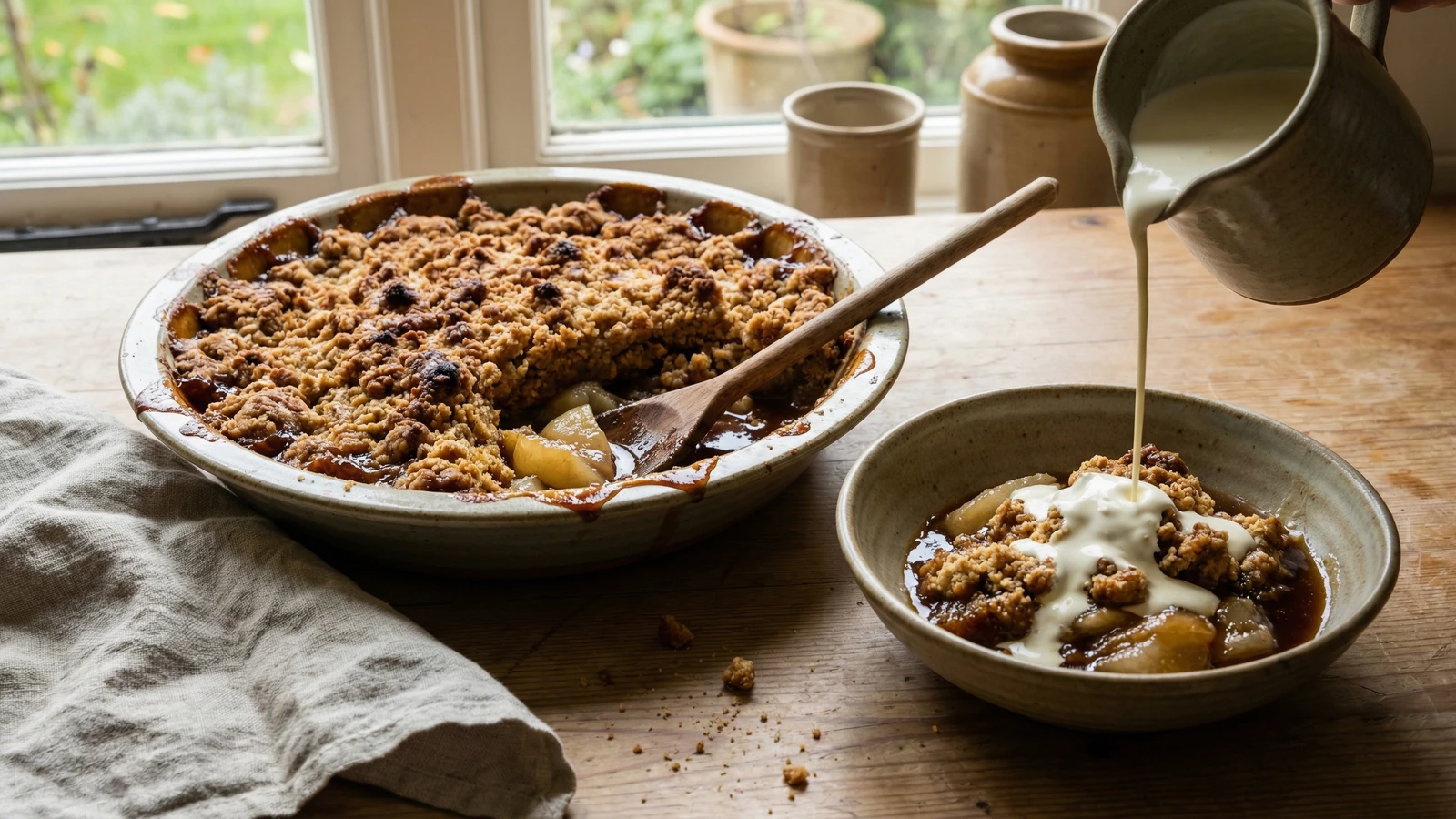
A warm October crumble of Conference pears and stem ginger under a brown sugar topping, the kind of pudding that makes a Sunday evening feel like somewhere you want to be.
October is pear weather. The apples have had all of September and they'll come back round when you want them, but for a few weeks now the pears are the thing. Conference, mostly. Knobbly, greenish-brown, unbeautiful in the way that the best fruit often is. I bring them home from the market on Saturday and sit them on the windowsill until they give just slightly when I press the neck with my thumb. That's when they're ready.
This is the pudding I make with them. Not the only one, but the one I come back to. The pears go into the dish with chopped stem ginger and a bit of its syrup, something sharp from the lemon, and then the whole thing disappears under a crumble topping that crisps up over forty minutes in a moderate oven. The smell, about halfway through, is what sells it. Brown sugar, warm ginger, the slightly floral note that cooked pears give off. The kitchen starts to feel occupied.
Serve it warm with cold cream. Or custard. I don't mind which. What I do mind is rushing it. A crumble needs to sit for ten minutes after it comes out of the oven so the juices thicken into that dark, sticky syrup at the bottom. If you spoon it out straight away, you'll get a good pudding. If you wait, you'll get a quietly splendid one.
I wrote it down in the notebook after the first time: "Pears. Ginger. October. Rain against the window." We're only making dinner, but some dinners mark themselves.
Quantity
6
ripe but still firm, peeled, cored and cut into thick wedges
Quantity
3 balls
finely chopped
Quantity
2 tablespoons
Quantity
1 tablespoon
Quantity
½
juiced
Quantity
150g
Quantity
100g
cubed
Quantity
75g
Quantity
50g
Quantity
50g
Quantity
1 teaspoon
Quantity
pinch
Quantity
to serve
| Ingredient | Quantity |
|---|---|
| Conference pearsripe but still firm, peeled, cored and cut into thick wedges | 6 |
| stem ginger in syrupfinely chopped | 3 balls |
| ginger syrup (from the jar) | 2 tablespoons |
| light brown sugar (for the fruit) | 1 tablespoon |
| lemonjuiced | ½ |
| plain flour | 150g |
| cold unsalted buttercubed | 100g |
| light brown sugar (for the crumble) | 75g |
| rolled oats | 50g |
| flaked almonds | 50g |
| ground ginger | 1 teaspoon |
| fine sea salt | pinch |
| double cream or custard (optional) | to serve |
Set the oven to 180C/160C fan. Peel the pears, quarter them lengthways, and cut out the cores. Cut each quarter into two or three thick wedges. You want proper pieces that will hold their shape, not slices that collapse into mush. Tip them into a baking dish, something shallow and wide, ceramic if you've got it, about 25cm across.
Scatter the chopped stem ginger over the pears along with its syrup, the tablespoon of brown sugar, and the lemon juice. Give it all a gentle toss with your hands so every piece is coated. Don't be precious about it. The lemon keeps the pears from going brown and brightens the ginger. Taste a bit of the syrup that pools at the bottom. It should be sweet, warm, a little sharp. That's what the crumble is going to hide, so it needs to be worth finding.
In a wide bowl, tip together the flour, ground ginger, and a pinch of salt. Add the cold cubed butter. Rub it in with your fingertips, lifting the mixture as you go so the butter gets cool air through it. Stop when it looks like rough breadcrumbs with a few larger pebbles of butter still visible. Those are the bits that will go properly crisp in the oven. Stir in the brown sugar, the oats, and the flaked almonds. A good crumble topping should feel slightly clumpy in your hand, not powdery.
Scatter the crumble over the pears in an even, generous layer. Don't press it down. Keep it loose so the steam from the fruit can work its way through. Put the dish on a baking tray (the juices will bubble up and you'll thank yourself for not having to scrub the oven). Bake for thirty-five to forty minutes, until the top is deep golden, the edges are bubbling up through the crumble in dark, sticky patches, and the kitchen smells of ginger and brown sugar and the kind of afternoon you don't want to end.
Let it sit for ten minutes before you take it to the table. The juices need a moment to settle, otherwise you'll get a runny puddle on the plate instead of the thick, dark syrup you're after. Spoon it out while still warm into bowls, and pour cold double cream over the top so it melts a little at the edges. Custard is the other honest answer. Either is correct. Both is not out of the question.
1 serving (about 205g)
Culinary guides, cultural storytelling, and the editorial depth that makes cooking meaningful.
Discover Culinary ExplorerChef Thomas
Buttered bread baked to a deep mahogany around a filling of spiced Bramley apples, turned out at the table in a small moment of drama, cold cream poured from a jug alongside.

Chef Thomas
Whole Bramley apples cored and stuffed with butter, brown sugar and plump dried fruit, baked until they collapse and the kitchen fills with the smell of autumn getting on with itself.

Chef Thomas
A proper baked rice pudding, slow-cooked in whole milk with butter and nutmeg until the top sets into a freckled golden skin. The kind of pudding that makes January feel like less of a long haul.

Chef Thomas
Wild blackberries and Bramley apples collapsed together under a thick, sandy crumble, the pudding that makes September feel like it's worth staying in for.