
Chef Juliana
Ambrosia Baiana
You think curdled milk means you ruined dessert. Good. Tonight you'll do it on purpose, with lemon, yolks, cravo, and sugar, until the pot turns into golden gruminhos.
A cooking platform built around craft, culture, and the stories behind what we eat.
Created by
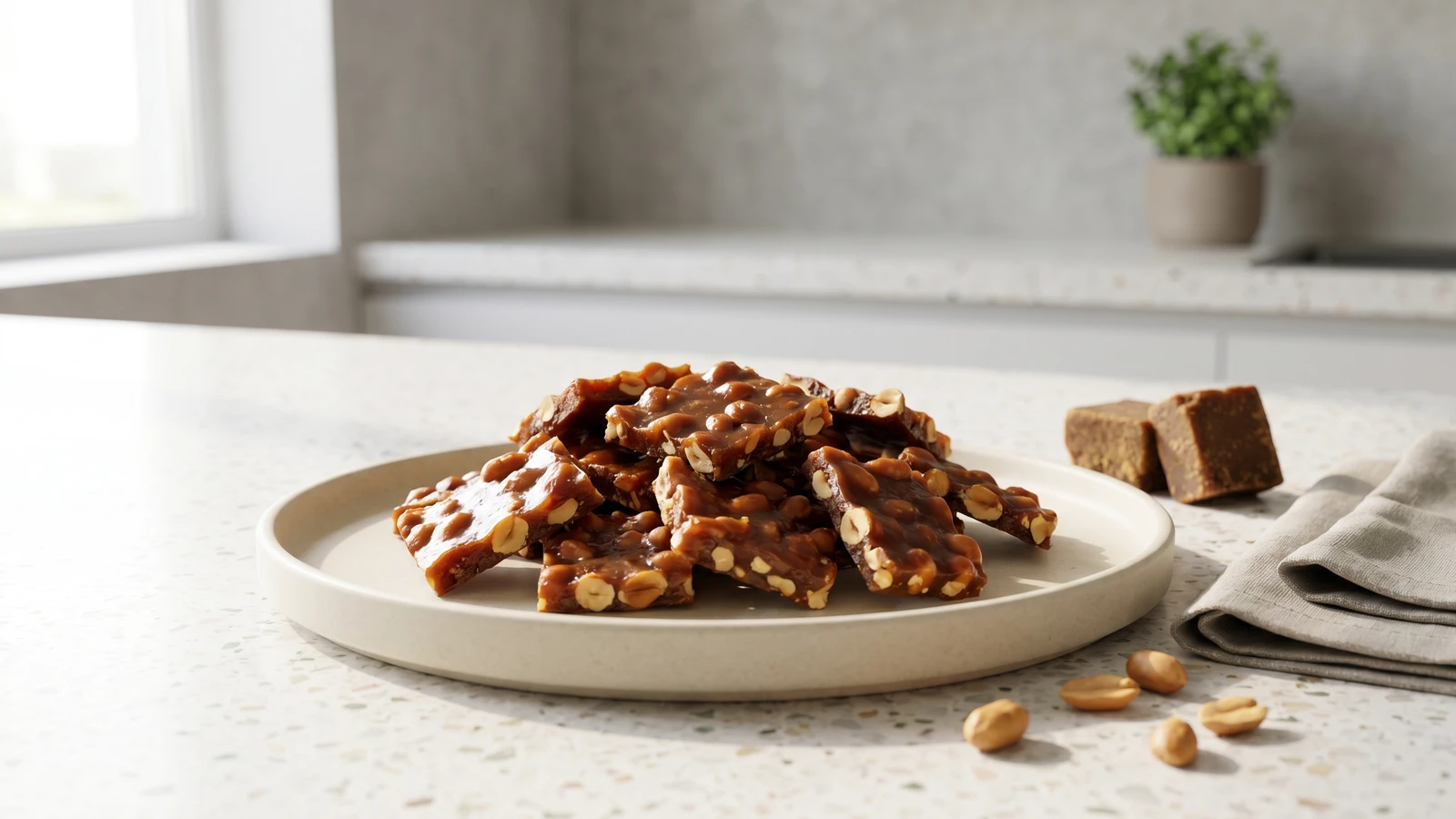
You think sugar work is not for you. Good. We start there, then melt rapadura slowly, watch the bubbles, fold in peanuts, and learn the ponto with our own eyes.
You look at a pan of bubbling sugar and hear that little voice: "isso não é pra mim." I know. Hot syrup sounds like a thing for people born with calm hands and a grandmother whispering secrets. Nonsense. Cozinhar não é dom, é um aprendizado, and candy is just another page in the caderno: heat, color, smell, ponto.
Pé-de-moleque belongs to celebration, yes, but it still comes from the same kitchen sense as the everyday plate. The pê-efe keeps a country fed, rice, beans, an egg or a piece of meat, something green. Then, when June arrives or the house asks for a sweet bite after lunch, a gente makes this: peanuts, rapadura, sugar, a pinch of salt. Comida de verdade can be dinner and it can be candy. The enemy is not joy. The enemy is being sold a packet and told you couldn't possibly make the real thing.
The method is simple, but it wants your attention. Chop the rapadura small so it melts evenly. Use a heavy pan so the heat doesn't bully the syrup. Watch the bubbles go from fast and watery to slower and thick, watch the color deepen, then test a drop in cold water until it turns hard and snaps. That test is not decoration. It tells you the candy will set crisp instead of bending like tired caramel.
Have the tray ready before the pan goes on the stove, because once the peanuts go in, this sweet waits for no one. Pour, spread, cool, break. Anota aí: patience is the whole recipe, and you have it.
Rapadura has been made in Brazil since the colonial sugarcane mills of the sixteenth century, when boiling cane juice into solid blocks was a practical way to store sweetness without refining it. Pé-de-moleque became one of the classic Festa Junina sweets by joining that cane sweetness with roasted peanuts, a crop native to South America and long used in Brazilian cooking. The name is debated: one common explanation ties it to the candy's bumpy surface, compared to the irregular stone paving also called pé-de-moleque in old towns.
Quantity
2 cups
Quantity
1 1/2 cups
finely chopped or grated
Quantity
1/2 cup
Quantity
1/4 cup
Quantity
1 tablespoon, plus more for greasing
Quantity
1/4 teaspoon
Quantity
1/2 teaspoon
| Ingredient | Quantity |
|---|---|
| roasted unsalted peanuts | 2 cups |
| rapadurafinely chopped or grated | 1 1/2 cups |
| granulated sugar | 1/2 cup |
| water | 1/4 cup |
| unsalted butter | 1 tablespoon, plus more for greasing |
| fine salt | 1/4 teaspoon |
| baking soda (optional) | 1/2 teaspoon |
Butter a rimmed baking tray or line it with parchment, then set it near the stove with a spatula ready. Do this before the sugar starts, because hot syrup moves from obedient to stubborn in seconds. If the tray is not ready, you'll be fighting a pan of peanut cement, and nobody needs that little drama.
Put the peanuts in a dry skillet over low heat for 3 to 4 minutes, shaking the pan, until they smell roasted and feel warm to the touch. Warm peanuts fold into the syrup without shocking it cold, which gives you a little more time to spread the candy before it sets.
Put the chopped rapadura, sugar, water, butter, and salt in a heavy medium saucepan. Set it over medium-low heat and stir until the rapadura dissolves into a dark, glossy syrup with no dry chunks at the bottom. Chopping matters here: big pieces melt unevenly, and uneven sugar burns in one corner while another corner is still sulking.
Stop stirring once the syrup is smooth and let it boil steadily, swirling the pan only if one side colors faster. Watch the bubbles: they start loose and noisy, then turn thicker, slower, and shinier. Cook until the syrup smells deep and caramelized, reaches 150°C or 300°F on a candy thermometer, or a drop in cold water hardens and cracks between your teeth instead of bending. That's the ponto. Too early and the candy stays chewy; too late and it turns bitter.
Turn the heat to low and stir in the warm peanuts quickly until every peanut is shiny and coated. If using baking soda, sprinkle it in now and stir just until the mixture foams slightly and lightens. The soda makes the brittle a little less tooth-breaking, but too much stirring after it goes in knocks the air back out.
Immediately pour the mixture onto the prepared tray and spread it into an even layer about 1 cm thick with the buttered spatula. Work from the center outward and stop fussing once it starts to resist. The more you poke cooling sugar, the rougher and grainier it gets.
Let the pé-de-moleque cool completely, about 30 minutes, until the surface is firm, matte-glossy, and no longer warm underneath. Break it into pieces with your hands or cut it while still barely warm if you want cleaner squares. Store it only when fully cool, because trapped warmth turns crisp candy sticky.
1 serving (about 28g)
Culinary guides, cultural storytelling, and the editorial depth that makes cooking meaningful.
Discover Culinary ExplorerChef Juliana
You think curdled milk means you ruined dessert. Good. Tonight you'll do it on purpose, with lemon, yolks, cravo, and sugar, until the pot turns into golden gruminhos.

Chef Juliana
You are not ruining the milk. You're curdling it on purpose, slowly, until sugar, eggs, cinnamon, and patience turn cheap ingredients into dessert.

Chef Juliana
You think curdled milk means failure. Not here. Milk, yolks, sugar, and lemon cook into golden curds in amber whey, a Minas sweet where the ponto teaches the whole recipe.

Chef Juliana
You already trust rice for dinner. Trust it for dessert: cook it gently with milk, coconut, and canela until each grain turns soft, creamy, and impossible to blame on lack of talent.