Chef Makoa
Kuru Salad (Cook Islands Breadfruit Salad)
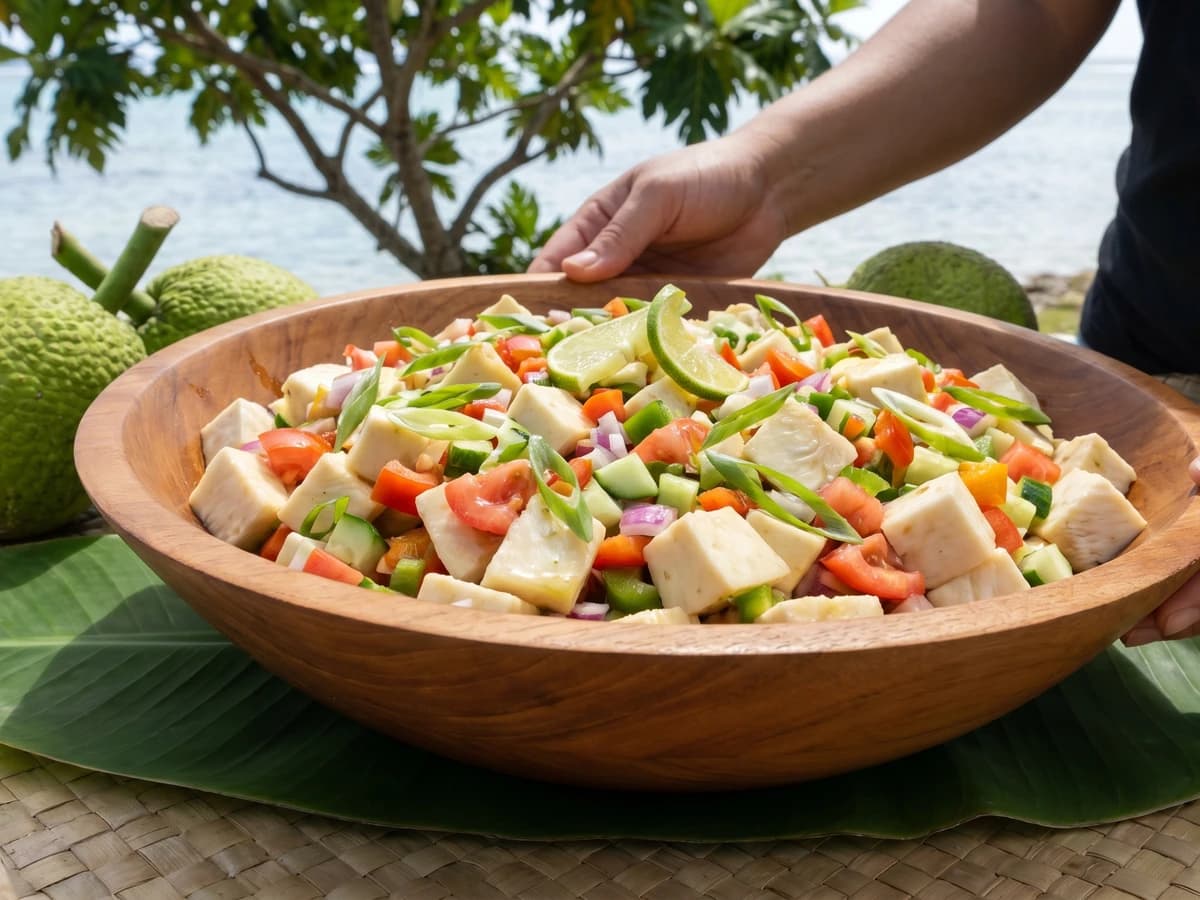
Cook Islands kuru, breadfruit boiled tender, cooled, and tossed with crisp vegetables and a clean lime dressing. The canoe crop comes to the picnic table, unfussy and still full of mana.
A cooking platform built around craft, culture, and the stories behind what we eat.
Created by
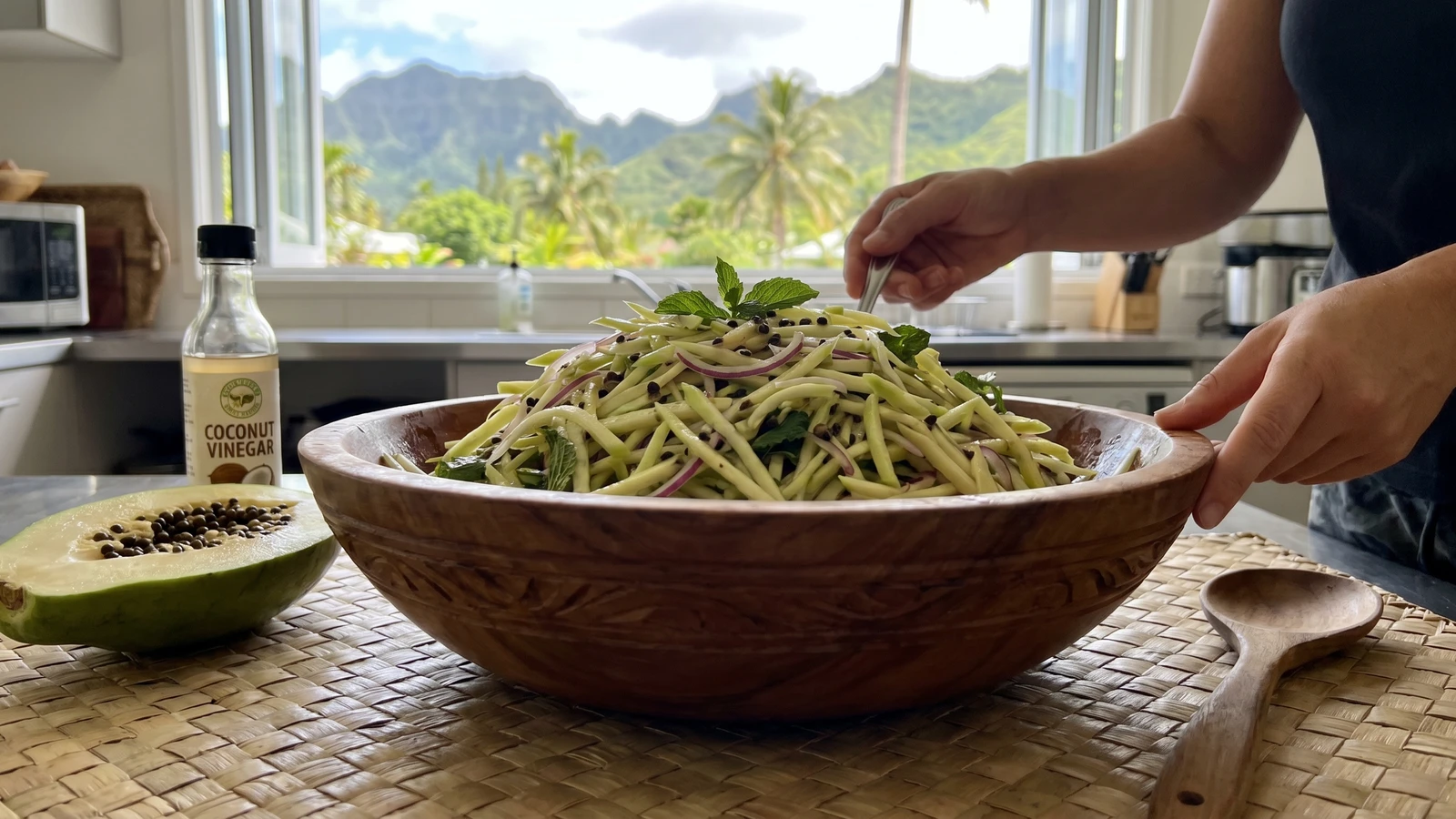
Crisp green pawpaw cut fine, red onion sliced thin, mint bruised in the hand, and a peppery dressing made from the seeds. This is Cook Islands salad, Raro style, bright enough for any picnic table.
The aunties in the Cook Islands can make a whole table feel cared for with one firm pawpaw from the yard. Not ripe and perfume-sweet, but green, crisp, still holding itself together. This is Raro style, from Rarotonga, one of the everyday Cook Islands bowls that sits beside fish, rice, taro, rukau (taro leaves cooked with coconut), and whatever else the family brought.
I come to this as a Hawaiian cousin, so I keep my hands open. Back home we talk about ʻāina, kānaka, meaʻai, land, people, food. In the Cooks you hear that same truth through their own ground and their own tables. The pawpaw is not the elder brother like kalo, but it still teaches the same law: use what the place gives, waste little, and let sharp, green food wake up the heavy things beside it.
The clever part is the seed. Most people throw it away, but the old hands crush those peppery pawpaw seeds into the dressing with vinegar and oil, then bruise the mint so the smell comes alive. Same ocean habit, different bowl: Tahiti has its raw-fish salads by the lagoon, Sāmoa has oka, Tonga has ʻota ʻika, the Cooks have ika mata, and here the garden gives you a slaw that cuts clean through a plate lunch or a picnic spread.
So cut it fine, dress it close to the table, and don't overwork it. You want crisp pawpaw, sharp onion, mint in the nose, and that little pepper-bite from the seeds. Deep food is not fancy. Everyday food is not lesser. Both keep people fed.
Pawpaw arrived in the Pacific after European contact, but Cook Islands families made it local by treating green, underripe fruit the way island cooks have always treated abundance: sliced fine, sharpened with acid, and served beside fish, starch, and coconut-rich dishes. On Rarotonga, this salad belongs to the modern everyday table rather than the older canoe-crop line of taro, breadfruit, and coconut, which is why it can sit comfortably beside rukau, ika mata, grilled fish, or a picnic plate. The crushed pawpaw-seed dressing is the quiet lesson here, a no-waste Cook Islands move that turns the part many kitchens discard into peppery seasoning.
Quantity
1 large, about 2 pounds
peeled and seeded
Quantity
1/2 small
very thinly sliced
Quantity
1/2 cup
lightly bruised
Quantity
2 tablespoons
rinsed
Quantity
3 tablespoons
Quantity
2 tablespoons
Quantity
1 tablespoon
Quantity
1 teaspoon
or to taste
Quantity
3/4 teaspoon
plus more to taste
Quantity
to taste
| Ingredient | Quantity |
|---|---|
| firm underripe pawpaw (green papaya)peeled and seeded | 1 large, about 2 pounds |
| red onionvery thinly sliced | 1/2 small |
| fresh mint leaveslightly bruised | 1/2 cup |
| fresh pawpaw seedsrinsed | 2 tablespoons |
| neutral oil | 3 tablespoons |
| white vinegar or coconut vinegar | 2 tablespoons |
| fresh lime juice | 1 tablespoon |
| sugaror to taste | 1 teaspoon |
| sea saltplus more to taste | 3/4 teaspoon |
| freshly cracked black pepper | to taste |
Pick a pawpaw that is still firm and green to yellow-green, not ripe and soft. It should cut clean and hold a crisp shred. If the fruit has gone orange and sweet, eat what you have, but save it for breakfast or dessert because it will slump in this salad.
Peel the pawpaw, split it, scrape out the seeds, and keep two tablespoons of those seeds for the dressing. Julienne the flesh into long, thin strips with a mandoline, julienne peeler, or sharp knife. The shred should bend but still snap under your teeth.
Put the red onion in a bowl of cold water for 5 minutes if it is biting too hard, then drain it well. This is picnic food and family-table food, so the onion should sharpen the pawpaw, not take over the whole bowl.
Crush the rinsed pawpaw seeds with the salt until they break down into a coarse black-green paste, peppery and a little mustardy. Whisk in the vinegar, lime juice, sugar, oil, and black pepper until the dressing looks glossy and loose.
Toss the shredded pawpaw with the onion and dressing, using your hands if you cook that way. Bruise the mint lightly between your fingers, then fold it through last so it gives its smell without turning black. Taste for salt, vinegar, and sweetness.
Let the salad sit 10 minutes so the pawpaw softens just enough while staying crisp. Serve cool or at room temperature, piled high and glossy, with grilled fish, chicken, rice, taro, or whatever the table already has. No need make it precious.
1 serving (about 170g)
Culinary guides, cultural storytelling, and the editorial depth that makes cooking meaningful.
Discover Culinary ExplorerChef Makoa
Cook Islands kuru, breadfruit boiled tender, cooled, and tossed with crisp vegetables and a clean lime dressing. The canoe crop comes to the picnic table, unfussy and still full of mana.
Chef Makoa
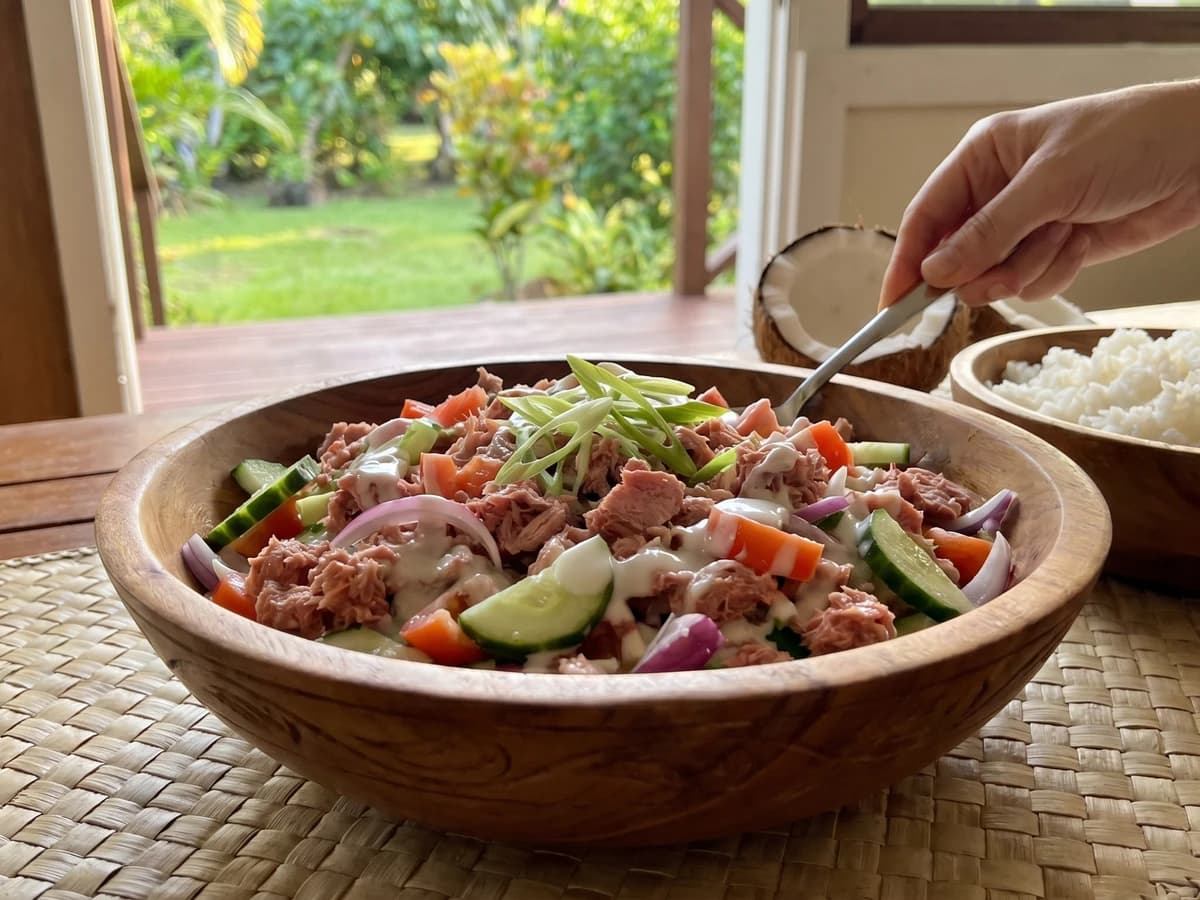
From a Cook Islands table in Rarotonga: crisp cucumber, tomato, onion, and pisupo corned beef folded under coconut cream, chilled cold, and spooned over rice for the potluck spread.
Chef Juliette
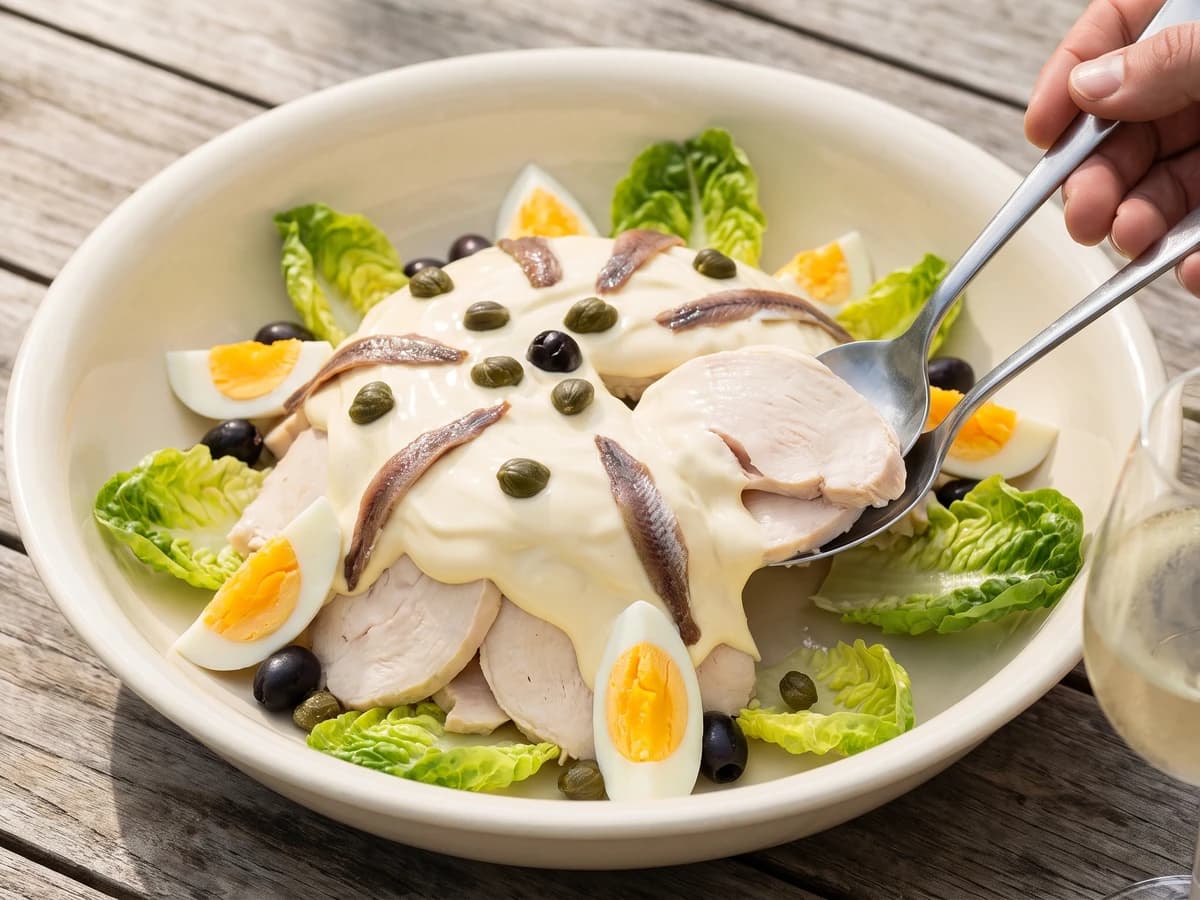
Cold roast chicken, ciseled lettuce, and a shining coat of homemade mayonnaise, arranged with capers, olives, anchovies, eggs, and lettuce hearts, then tossed at the table as the canon intends.

Chef Juliette
Cold roast or poached chicken with fine ribbons of lettuce, dressed at the final moment with oil and vinegar: a composed salad whose freshness depends entirely on timing.