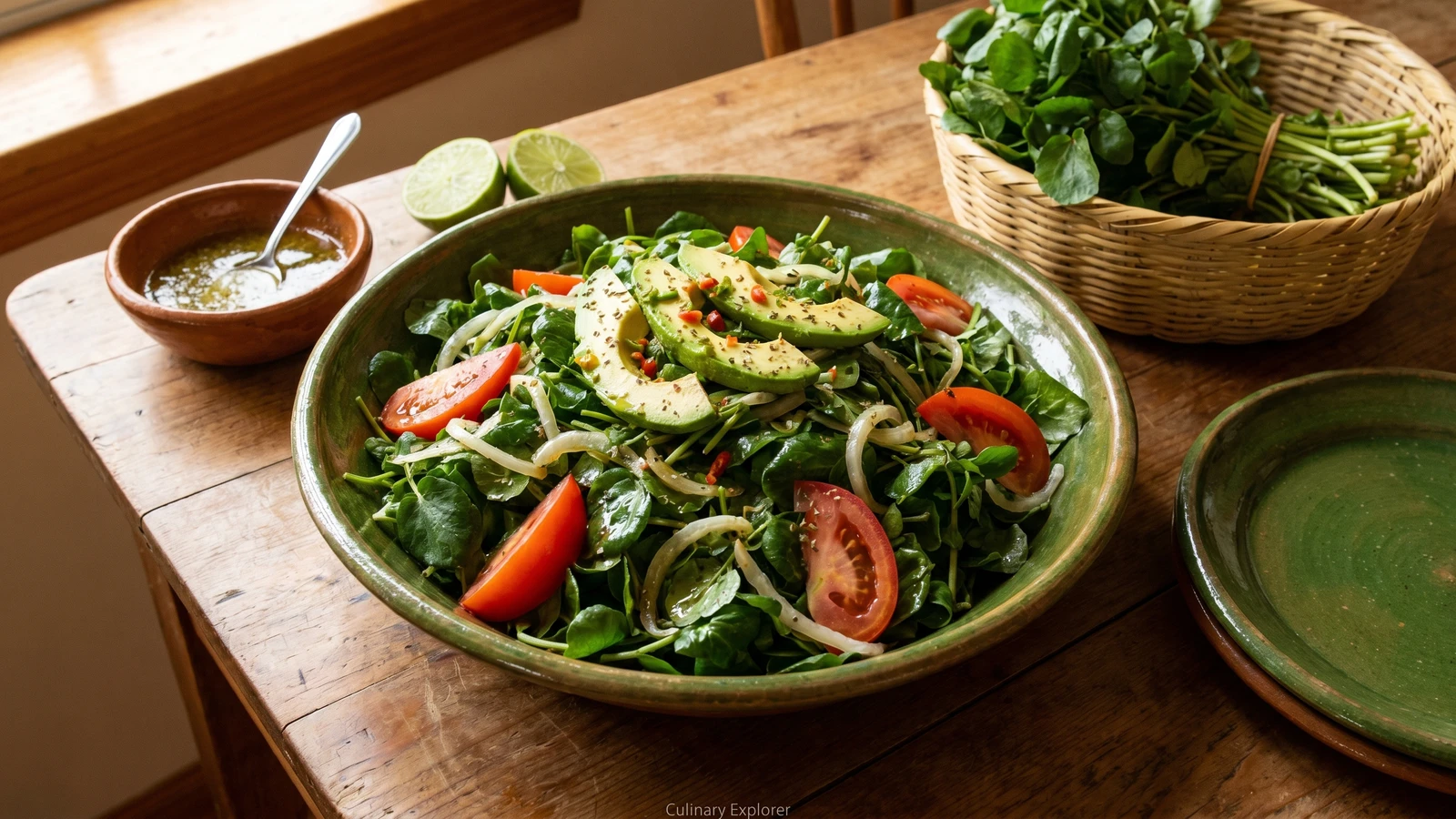
Michoacán's Pátzcuaro lake-region salad of peppery berros, white onion, tomato, serrano, lime, and local avocado, the clean green plate that cuts through carnitas and grilled freshwater fish.
Salads
Mexican
Weeknight
Quick Meal
Budget Friendly
20 min
Active Time
0 min cook•20 min total
Yield4 servings
Michoacán, the Lake Pátzcuaro region, is where this salad belongs. Berros grow where the water runs cold and clean around the highland springs, and in the Pátzcuaro markets you see them tied in wet bundles, darker and more peppery than the polite supermarket greens.
This is not a decorative salad. It is the bright thing on the table next to carnitas from Quiroga, corundas wrapped in fresh corn leaves, or grilled trucha from the lake towns. The chile serrano gives a clean bite. The white onion gets softened with lime. The avocado should be Michoacán avocado, because this state knows that fruit better than anyone. Cada estado, su propia cocina.
I learned this kind of salad from women who did not call it a recipe. They washed the berros three times, tasted the lime with salt before dressing, and added the avocado only at the end so it stayed whole. My mother wrote in her notebook, 'berros bien secos.' She was right. Wet leaves make weak salad. Saber cocinar es saber vivir.
Watercress arrived in Mexico through European colonial foodways, but it adapted quickly to cool highland regions with clean running water, including the Lake Pátzcuaro basin in Michoacán. The Pátzcuaro region is historically Purépecha, and its table combines pre-Columbian staples like corn, beans, squash, and lake fish with later ingredients such as watercress, citrus, and onions. Michoacán's avocado belt around Uruapan and Tancítaro became nationally important in the 20th century, which is why avocado moved from local abundance into the identity of many everyday Michoacán dishes.
The technique, the tradition, and the story behind every dish.
tough stems removed, washed in several changes of cold water
ripe Roma tomatoes
Quantity
2
cut into wedges
small white onion
Quantity
1/2
sliced very thin
ripe Michoacán avocado
Quantity
1
preferably from Uruapan or Tancítaro, sliced
fresh chile serrano
Quantity
1
stemmed and minced
fresh lime juice
Quantity
3 tablespoons
mild olive oil or avocado oil
Quantity
2 tablespoons
dried Mexican oregano
Quantity
1/2 teaspoon
crushed between your fingers
sea salt
Quantity
3/4 teaspoon, plus more to taste
freshly ground black pepper
Quantity
to taste
lime halves (optional)
Quantity
for serving
Ingredient
Quantity
fresh watercresstough stems removed, washed in several changes of cold water
2 large bunches
ripe Roma tomatoescut into wedges
2
small white onionsliced very thin
1/2
ripe Michoacán avocadopreferably from Uruapan or Tancítaro, sliced
1
fresh chile serranostemmed and minced
1
fresh lime juice
3 tablespoons
mild olive oil or avocado oil
2 tablespoons
dried Mexican oreganocrushed between your fingers
1/2 teaspoon
sea salt
3/4 teaspoon, plus more to taste
freshly ground black pepper
to taste
lime halves (optional)
for serving
Equipment Needed
•Large bowl for washing greens
•Clean cotton kitchen towel or salad spinner
•Small clay bowl for the lime dressing
•Wide green-glazed Michoacán barro serving bowl
Instructions
1
Clean the berros
Trim away the thick lower stems from the watercress. Keep the tender stems and leaves. Wash the berros in a large bowl of cold water, lift them out with your hands, and repeat until no grit stays at the bottom of the bowl. Watercress grows close to water and mud. If you rinse it once under the tap, you're pretending. Dry it well in a clean towel or salad spinner so the dressing clings instead of sliding off.
2
Tame the onion
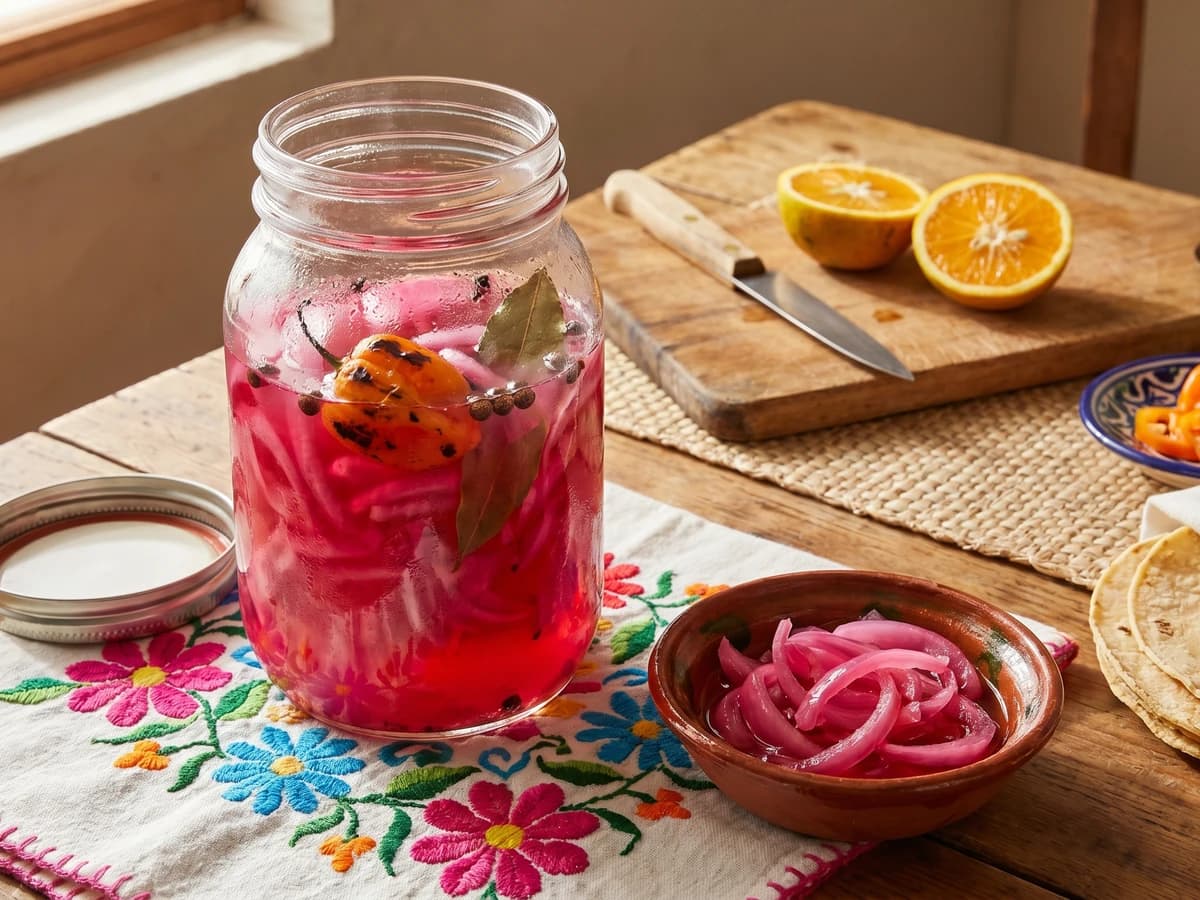
Put the thinly sliced white onion in a small bowl with a pinch of salt and one tablespoon of the lime juice. Rub it lightly with your fingers and let it sit for 10 minutes. This keeps the onion sharp but not rude. The women in the market know this without measuring. You should know it too.
3
Make the dressing
In a small clay bowl, whisk the remaining lime juice with the oil, minced chile serrano, crushed dried Mexican oregano, sea salt, and black pepper. Taste it before it touches the salad. It should be bright, salty, and clean, with a little bite from the serrano. This is not a creamy dressing. No me vengas con atajos. The watercress already has character.
4
Dress the salad
Place the dried watercress in a wide bowl. Add the tomato wedges and the drained onion. Pour over the dressing and toss gently with your hands, lifting from the bottom so the leaves do not bruise. The berros should look glossy, not drowned. If there is a pool of dressing at the bottom, you used too much or failed to dry the leaves.
5
Add the avocado
Lay the avocado slices over the top after tossing. Do not mash them into the greens. Michoacán avocado is rich enough to act like part of the dressing once it meets the lime and salt. Serve immediately with lime halves at the table, beside carnitas, grilled trucha, or pescado blanco if you can still find it from the lake.
Chef Tips
•Buy watercress from a vendor who keeps it cold and wet, with dark green leaves and crisp stems. Yellow leaves mean it is tired. Slimy stems mean it is finished. Ask the women at the market.
•Do not dress this salad ahead. The lime will wilt the berros and the tomato will leak water. Wash the greens ahead if you must, but dress at the last minute.
•If you cannot find good Michoacán avocado, use the best ripe Hass avocado you can buy. That is a compromise, not an upgrade. The avocado should be creamy, not stringy, and it should taste like something before you add salt.
•One serrano is enough for balance. This salad is peppery and bright, not a test of pain. Not all Mexican food is about heat. Anyone who tells you that has not eaten across all 32 states.
Advance Preparation
•The watercress can be trimmed, washed, dried, wrapped in a clean towel, and refrigerated up to 6 hours ahead.
•The onion can sit with lime and salt for up to 30 minutes before serving.
•Slice the avocado only at the end. Lime slows browning, but it does not stop time.
Frequently Asked Questions
Nutrition Information
1 serving (about 145g)
Calories
145 calories
Total Fat
12 g
Saturated Fat
2 g
Trans Fat
0 g
Unsaturated Fat
10 g
Cholesterol
0 mg
Sodium
460 mg
Total Carbohydrates
7 g
Dietary Fiber
4 g
Sugars
2 g
Protein
2 g
Where cooking meets culture.
Culinary guides, cultural storytelling, and the editorial depth that makes cooking meaningful.