
Chef Lupita
Agua de Alfalfa
Ciudad de México's highland market agua fresca, fresh alfalfa blended with pineapple and lime until bright green, strained clean, and poured cold from the vitrolero.
A cooking platform built around craft, culture, and the stories behind what we eat.
Created by
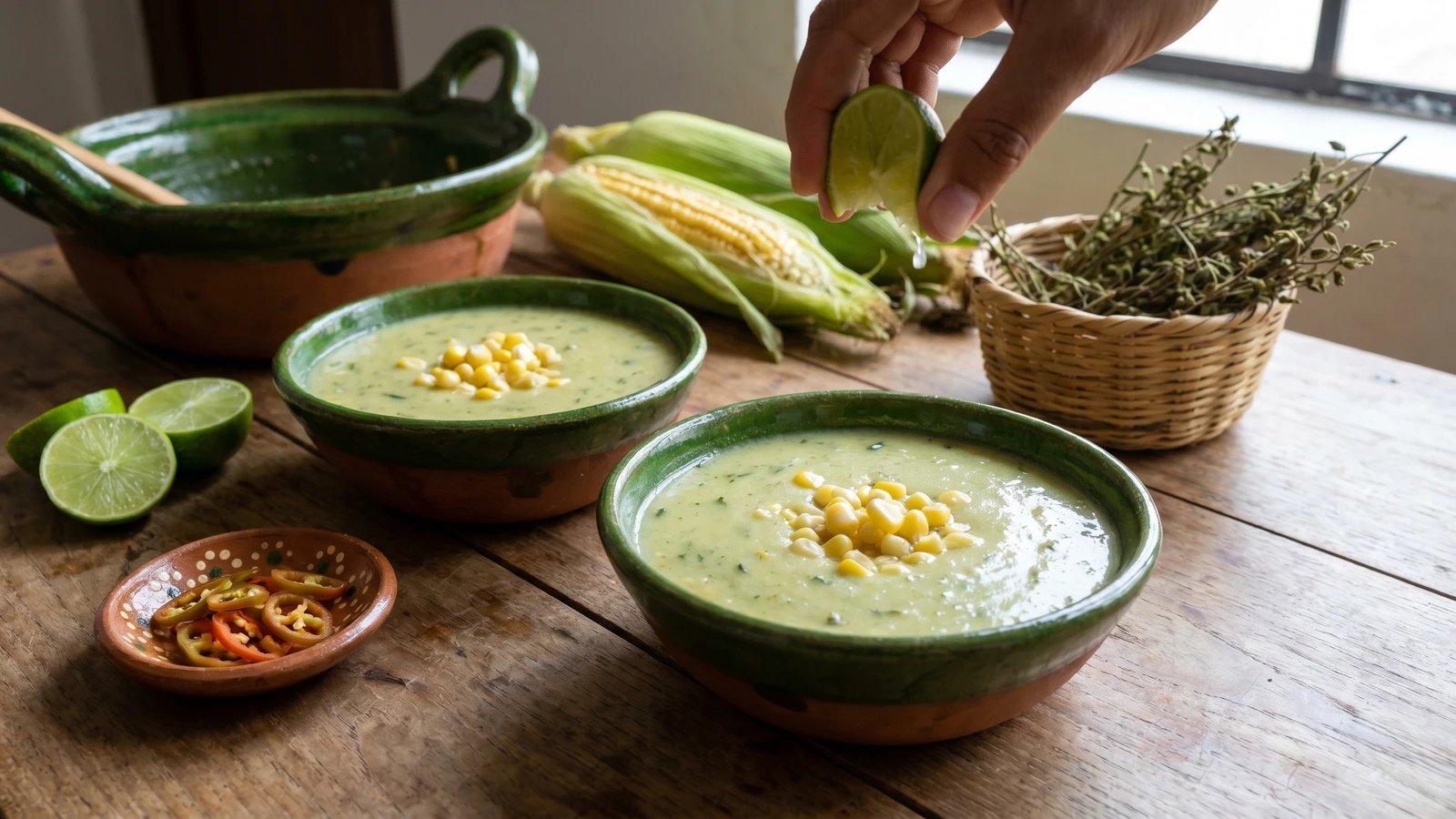
Michoacán's lake-region savory atole, built from tender corn kernels, masa, anisillo, and serrano, then finished at the table with lime and fresh chile perón.
This comes from Michoacán, from the Purépecha lake region around Pátzcuaro, where corn is not background. It is the meal, the drink, the calendar, and the work. Atole de grano is a savory green atole with whole tender kernels suspended in a masa-thickened broth. Not cinnamon. Not piloncillo. Not a sweet one.
The herb that marks it is anisillo, that fine-leaved anise-scented plant you find in Michoacán markets when the vendor knows what she is selling. Serrano gives the green bite. Chile perón, also called chile manzano in some markets, comes at the table with lime. That last squeeze matters. It sharpens the corn and wakes up the masa.
I first drank this near Pátzcuaro from a green-glazed clay bowl, hot enough to hold with both hands, with the señora watching to see whether I added enough lime. She was right to watch. This dish is built on balance: sweet corn, salty masa, anisillo, chile, acid. Miss one and the bowl goes quiet.
Cada estado, su propia cocina. Michoacán has carnitas, yes, but it also has these corn dishes that tell you where the real architecture of the cuisine lives. Saber cocinar es saber vivir.
Atole comes from the Nahuatl word 'atolli,' a corn-based drink prepared throughout Mesoamerica before the Spanish conquest. Michoacán's savory atole de grano reflects Purépecha corn cookery, where fresh kernels, masa, herbs, and chile are treated as a complete food rather than a sweet breakfast drink. The use of anisillo, Tagetes filifolia, ties the dish to central and western Mexican herb traditions that rarely appear in national restaurant versions of Mexican food.
Quantity
8 ears
kernels cut from the cob, cobs reserved
Quantity
8 cups
Quantity
1/2 cup
or 1/3 cup masa harina mixed with 1/2 cup water
Quantity
3
stemmed and chopped
Quantity
1 packed cup
rinsed
Quantity
1/2 cup
Quantity
1 small
quartered
Quantity
2
Quantity
2 teaspoons, plus more to taste
Quantity
2
thinly sliced
Quantity
for serving
| Ingredient | Quantity |
|---|---|
| fresh white cornkernels cut from the cob, cobs reserved | 8 ears |
| water | 8 cups |
| fresh corn masaor 1/3 cup masa harina mixed with 1/2 cup water | 1/2 cup |
| fresh chile serranostemmed and chopped | 3 |
| fresh anisillo leaves and tender stemsrinsed | 1 packed cup |
| fresh cilantro leaves and tender stems | 1/2 cup |
| white onionquartered | 1 small |
| garlic cloves | 2 |
| kosher salt | 2 teaspoons, plus more to taste |
| fresh chile perón or chile manzano (optional)thinly sliced | 2 |
| lime halves (optional) | for serving |
Put the reserved corn cobs in a heavy pot with 8 cups water. Bring to a simmer and cook for 20 minutes, until the water smells sweet and green. This is not stock from a box. The cobs give the atole its corn backbone. Remove and discard the cobs.
Add the fresh corn kernels to the corn broth. Simmer over medium heat for 15 to 20 minutes, until the kernels are tender but still whole. They should pop lightly under your teeth, not collapse into mush. Atole de grano means the grain matters.
Scoop 1 cup of the cooked corn kernels and 1 cup of hot broth into a blender. Add the chile serrano, anisillo, cilantro, onion, garlic, and salt. Blend until smooth and bright green. The anisillo should smell like anise from the hillside, not candy. That herb is the signature here.
Whisk the fresh masa with 1/2 cup warm broth until smooth. If using masa harina, use the hydrated mixture you already made. Pour the masa slurry through a fine strainer into the pot while stirring. Keep the heat at a steady simmer. The atole will thicken in 8 to 10 minutes and coat the spoon lightly. Stir often so the masa does not catch on the bottom.
Pour the blended green base into the pot and stir well. Simmer 5 minutes more, just long enough for the raw onion and serrano edge to settle. Do not boil hard after the herbs go in, or the green color will dull and the anisillo will turn harsh. Taste for salt. Savory atole needs enough salt to wake up the corn.
Ladle the atole into warm clay bowls or jarritos. Set sliced chile perón and lime halves on the table. Each person adds lime and chile to taste. This is a spoon drink, thick enough to feed you and loose enough to sip from the edge. Así se hace y punto.
1 serving (about 460g)
Culinary guides, cultural storytelling, and the editorial depth that makes cooking meaningful.
Discover Culinary ExplorerChef Lupita
Ciudad de México's highland market agua fresca, fresh alfalfa blended with pineapple and lime until bright green, strained clean, and poured cold from the vitrolero.

Chef Lupita
Aguascalientes' Lenten agua fresca, jewel-red from cooked beet and full of apple, banana, orange, lettuce, and ground peanuts, served cold when Holy Week meets the Feria de San Marcos.

Chef Lupita
Sonora and Sinaloa's creamy malted barley water, built on toasted cebada perla, Mexican canela, vanilla from Papantla, and evaporated milk. Pink-beige, rich, and served cold over heavy ice in a heavy glass tumbler. Liquid cookie comfort the northwest way.

Chef Lupita
Yucatán's everyday tonic of boiled chaya leaves blended with lima agria, sugar, and ice. The bright green jarra that sits on every Peninsula table from Mérida to Valladolid.