Chef Lupita
Acúmara Tatemada al Comal
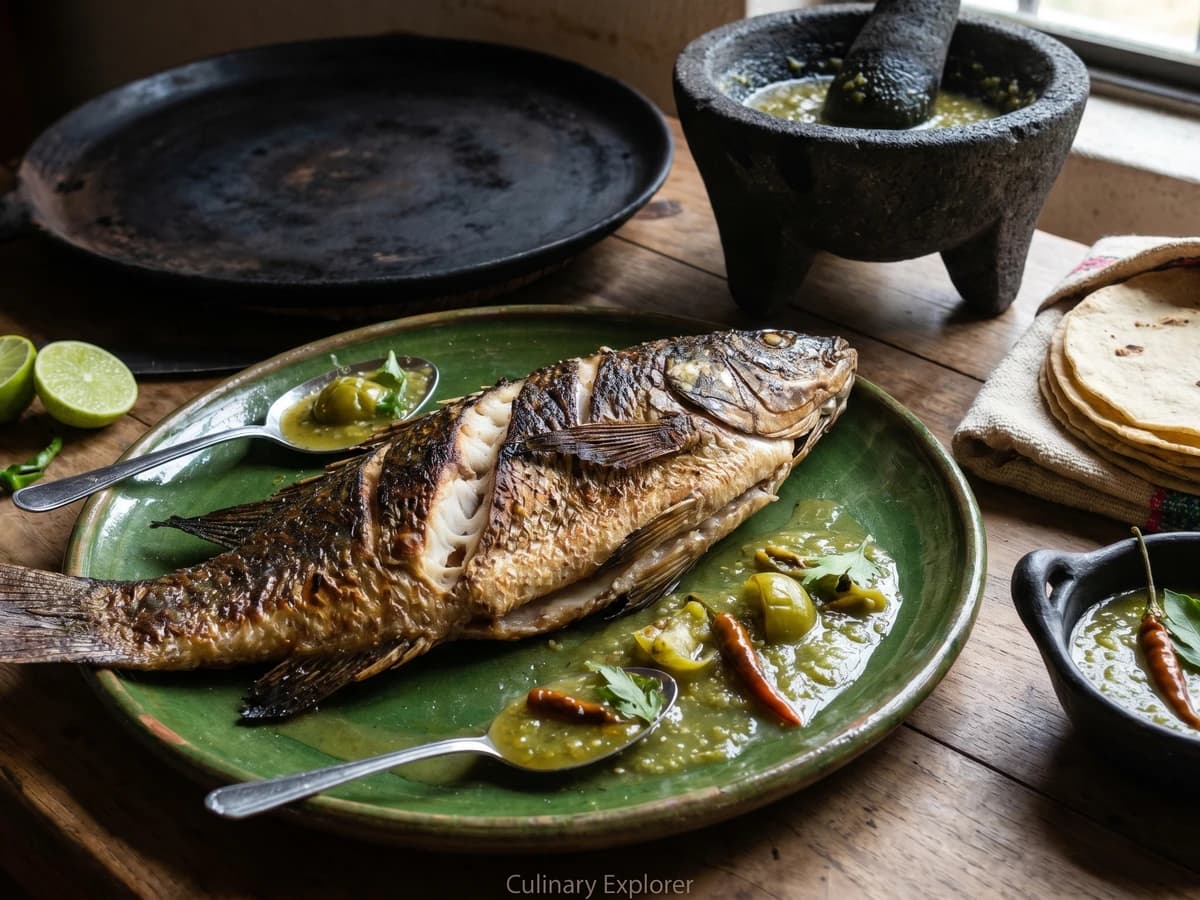
Michoacán's Lake Pátzcuaro acúmara, a whole kurucha from the lago tatemada on a comal de leña and served with chile perón atápakua, corn tortillas, and P'urhépecha discipline.
A cooking platform built around craft, culture, and the stories behind what we eat.
Created by
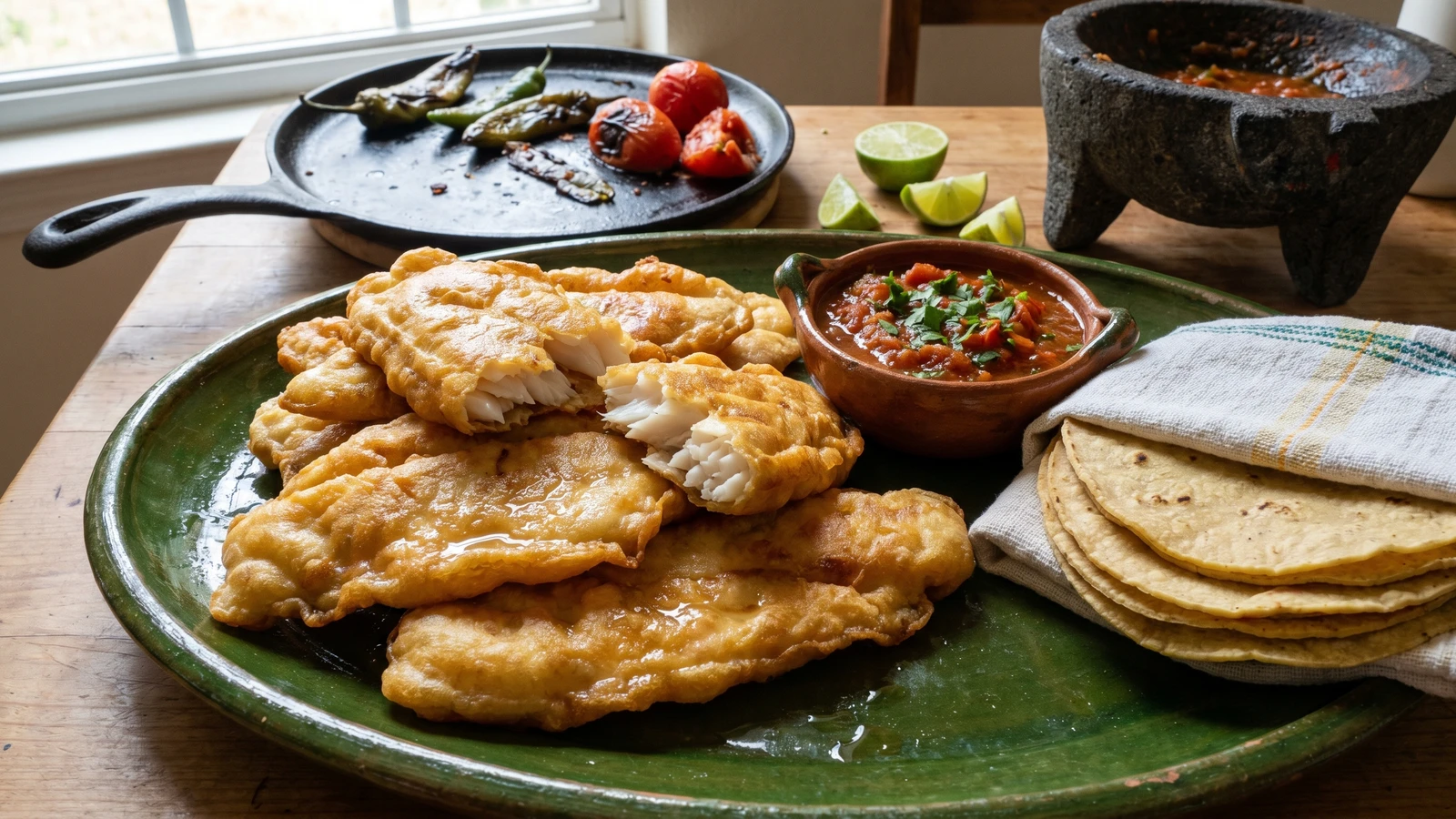
Michoacán's Lake Pátzcuaro white fish, dipped in a fluffy egg capeado and pan-fried in manteca until golden, served with roasted chile perón salsa from the lake-region table.
Michoacán, the Lake Pátzcuaro basin, is where this dish lives. Not the coast. Not a tourist menu with anonymous fried fish. Pátzcuaro, Janitzio, Tzintzuntzan, the Purépecha lake country where pescado blanco was once the pride of the water and the table.
The fish is the point. Pescado blanco from Lake Pátzcuaro has a fine, delicate flesh, and you do not bury it under heavy seasoning. The technique is capeado, egg whites beaten until they stand, yolks folded back in, a little flour for structure, then shallow-fried in manteca de cerdo. The batter should puff around the fish like a thin golden blanket, crisp at the edges and tender where it touches the flesh. No me vengas con atajos. If you make a thick pancake batter, the fish disappears.
I learned this version from a woman near the Pátzcuaro market who corrected my hand three times before she let me fry a piece. Too much flour. Too much lime. Too much confidence. She served it on green-glazed barro with a roasted salsa of chile perón, jitomate, onion, and garlic, and a stack of corn tortillas under a servilleta. That is how a regional dish teaches you its limits. Cada estado, su propia cocina.
The lake's catch is not what it was. Overfishing, pollution, and introduced species have made true pescado blanco harder to find, and that should make you cook it with more care, not less. If your fishmonger cannot get it, use a thin, fresh local white fish and say honestly what you are doing. A compromise is not shameful. Pretending it is the same is the problem.
Pescado blanco de Pátzcuaro commonly refers to Chirostoma estor, an endemic silverside from Lake Pátzcuaro that has been central to Purépecha lake cuisine for centuries. The famous butterfly nets of Janitzio became a 20th-century symbol of Michoacán, but the fishery itself declined sharply because of habitat degradation, overharvesting, and introduced species such as carp and tilapia. Conservation and aquaculture projects have tried to protect the species, which makes the dish both a regional delicacy and a record of a lake under pressure.
Quantity
1 1/2 pounds
skin on if possible, pin bones removed
Quantity
1 teaspoon, plus more to taste
Quantity
1/2 teaspoon
Quantity
2 tablespoons
Quantity
4
separated
Quantity
1/2 teaspoon
Quantity
1/3 cup, plus 1/2 cup
divided for batter and dredging
Quantity
1/4 teaspoon
Quantity
1 1/2 cups
for shallow frying
Quantity
4
Quantity
2
stemmed
Quantity
1
stemmed
Quantity
1/4 medium
Quantity
1
unpeeled
Quantity
2 tablespoons
chopped
Quantity
1 teaspoon
Quantity
for serving
Quantity
for serving
Quantity
for serving
| Ingredient | Quantity |
|---|---|
| Lake Pátzcuaro pescado blanco filletsskin on if possible, pin bones removed | 1 1/2 pounds |
| kosher salt | 1 teaspoon, plus more to taste |
| freshly ground black pepper | 1/2 teaspoon |
| fresh lime juice | 2 tablespoons |
| large eggsseparated | 4 |
| fine sea salt | 1/2 teaspoon |
| all-purpose flourdivided for batter and dredging | 1/3 cup, plus 1/2 cup |
| baking powder | 1/4 teaspoon |
| pork lard (manteca de cerdo)for shallow frying | 1 1/2 cups |
| ripe Roma tomatoes | 4 |
| fresh chile perón or chile manzanostemmed | 2 |
| fresh chile serranostemmed | 1 |
| white onion | 1/4 medium |
| garlic cloveunpeeled | 1 |
| fresh cilantrochopped | 2 tablespoons |
| fresh lime juice for salsa | 1 teaspoon |
| warm corn tortillas (optional) | for serving |
| cooked white rice or corundas (optional) | for serving |
| lime wedges (optional) | for serving |
Pat the pescado blanco very dry. Sprinkle both sides with kosher salt and black pepper, then touch it with the lime juice. Do not drown it. This fish is delicate, and the lime is there to clean the flavor, not cook the flesh. Let it stand 10 minutes while you heat the comal.
Heat a dry comal over medium-high. Roast the tomatoes, chile perón, chile serrano, onion, and unpeeled garlic until the skins blister and blacken in patches. Turn them with tongs. The tomatoes should slump, the chiles should soften, and the garlic should smell sweet under its skin. This is the lake-region table salsa, not decoration.
Peel the garlic. Grind the garlic and a pinch of salt in a molcajete first, then add the chiles, onion, and tomatoes. Leave the salsa a little rough. Stir in the cilantro and the teaspoon of lime juice. Taste for salt. If you use a blender, pulse only a few times. A smooth sauce is not what belongs beside this fish.
In a very clean bowl, beat the egg whites with the fine sea salt until they hold firm peaks. This is the capeado. The women around Pátzcuaro perfected this with a whisk and a strong arm, not with a culinary-school lecture. The whites should look glossy and stand up when you lift the beaters.
Beat the egg yolks lightly in a small bowl. Fold them into the whites with a gentle hand. Sift in 1/3 cup flour and the baking powder, then fold again just until no dry streaks remain. Do not beat the air out of it. The batter should be thick, pale yellow, and light enough to cling to the fish without crushing it.
Melt the manteca de cerdo in a wide heavy skillet over medium heat until it reaches 350F. You need enough lard to come about 1/2 inch up the pan. Yes, lard. La manteca es el sabor, and it fries the egg batter cleanly when the temperature is right. If the fat is too cool, the capeado drinks it. If it is too hot, the outside browns before the fish cooks.
Spread the remaining 1/2 cup flour on a plate. Dredge each piece of fish lightly, shaking off every excess bit. Dip into the egg batter, coating both sides. The flour gives the batter something to hold. Without it, the capeado slides off and you blame the fish. The fish did nothing wrong.
Lay the battered fish into the hot lard without crowding the pan. Fry 2 to 3 minutes per side, depending on thickness, until the batter is puffed and golden with lightly crisp edges. Turn once with a thin spatula. Pescado blanco cooks quickly. When the center just flakes and still looks moist, take it out.
Drain the fish on a rack, not on a stack of paper towels where the bottom turns soft. Serve immediately on a green-glazed Michoacán barro platter with the roasted chile perón salsa, warm corn tortillas, rice or corundas, and lime wedges. This is not a dish that waits. Así se hace y punto.
1 serving (about 405g)
Culinary guides, cultural storytelling, and the editorial depth that makes cooking meaningful.
Discover Culinary ExplorerChef Lupita
Michoacán's Lake Pátzcuaro acúmara, a whole kurucha from the lago tatemada on a comal de leña and served with chile perón atápakua, corn tortillas, and P'urhépecha discipline.

Chef Lupita
Puebla's weekday adobo of pork shoulder braised in a thick guajillo and ancho sauce sharpened with vinegar, cumin, and clove. The deep red of a market spice stall, the dish a poblana cooks without thinking.

Chef Lupita
Loreto's pit-roasted clams, planted hinge-up in beach sand and tatemadas under a fast fire of dried romerillo brush, the resinous Baja desert shrub that gives this dish its smoke.

Chef Lupita
Oaxaca's eighth mole, the silky, almond-and-cinnamon almendrado, served over poached chicken. Mild, sweet, restrained, and a quiet rebuttal to anyone who thinks Mexican food has to be hot to be Mexican.