Chef Lupita
Acúmara Tatemada al Comal
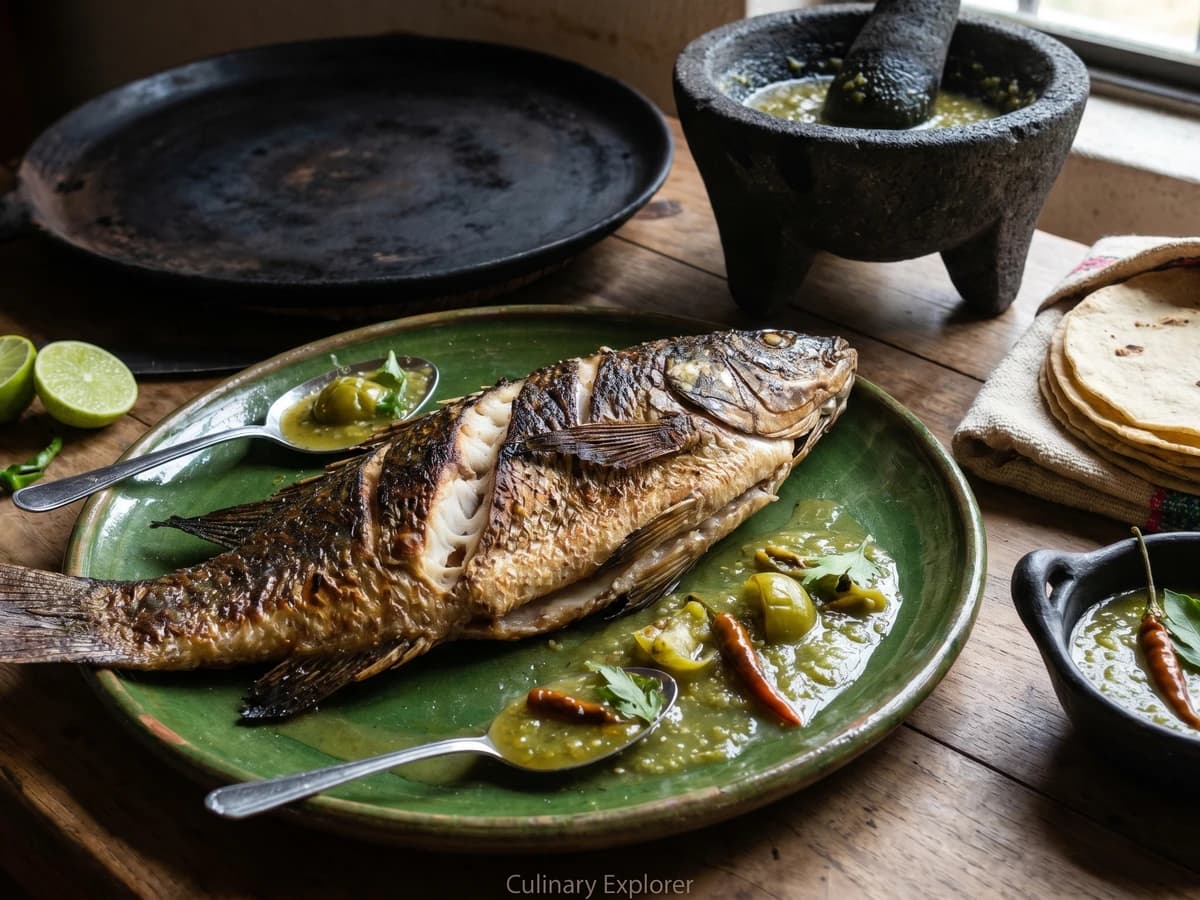
Michoacán's Lake Pátzcuaro acúmara, a whole kurucha from the lago tatemada on a comal de leña and served with chile perón atápakua, corn tortillas, and P'urhépecha discipline.
A cooking platform built around craft, culture, and the stories behind what we eat.
Created by
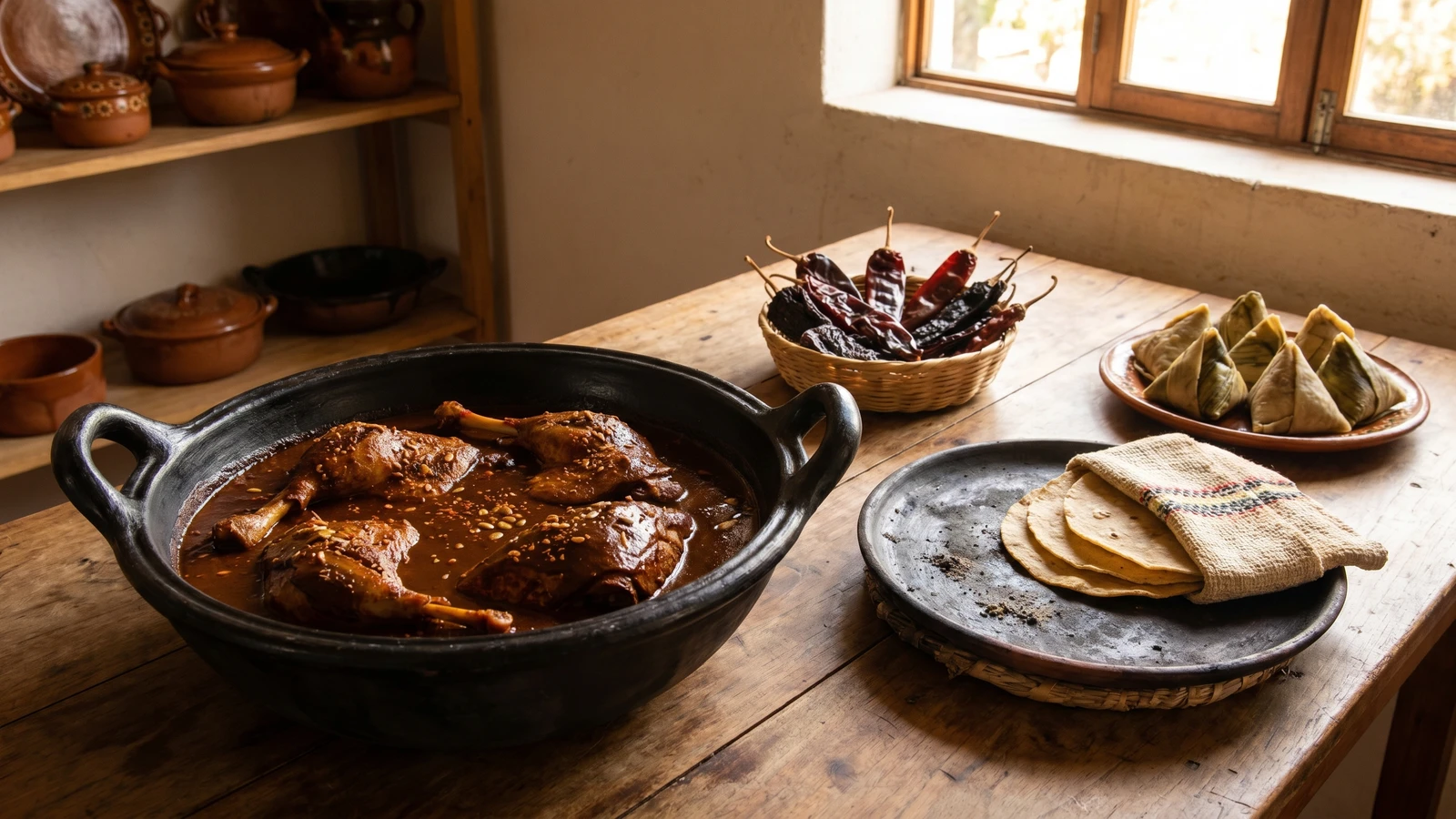
Michoacan's ribera mole for duck, built with chile ancho, guajillo, masa from the milpa, and leña-fired patience, belongs to the Lake Patzcuaro cooks who kept the Cazonci's table alive.
Michoacan, the ribera of Lake Patzcuaro: that is where this pato en mole lives. Not in the north with flour tortillas, not in Puebla with its sweet spice and chocolate argument. This belongs to the P'urhepecha kitchens around Tzintzuntzan, Janitzio, Ihuatzio, and the lake towns where the lago has always fed people: kurucha, acumara, charales, and, when the season and the law allow it, duck.
The sauce is closer to an atapakua than to the mole most outsiders imagine. Chile ancho for depth, chile guajillo for color, chile pasilla for darkness, pepita de calabaza from the milpa, and fresh nixtamal masa to give the sauce its body. The monte gives epazote and nurite. The comal gives the char. The cazuela does the slow work. If you add chocolate because you think all mole needs chocolate, the senora who taught this would take the spoon away from you.
I learned the discipline of these sauces from cocineras tradicionales who carry the public memory of Michoacan: Zacán, Janitzio, Cocucho, Cherán, Uruapan. They do not teach by decorating a plate. They teach by making you listen to the sauce when it fries, by making you smell the chile before it burns, by making you understand that a fiesta patronal dish has obligations. La cocina no es decoración, es trabajo.
Serve it in barro, preferably a dark cazuela like the ones from Patamban or old loza de barro from Tzintzuntzan. The mole should shine with duck fat at the edge and cling to the meat. Cada estado, su propia cocina. This is Michoacan, and it does not need to pretend to be anywhere else.
The Cazonci was the title of the P'urhepecha ruler at Tzintzuntzan, and Lake Patzcuaro's waterfowl, fish, corn, squash, and chiles formed part of the pre-Hispanic food system that supported the capital. The modern dish preserves the native structure of a chile and masa-thickened sauce, while onion, garlic, pork lard, and some table customs entered after the Spanish conquest. UNESCO's 2010 inscription of Traditional Mexican Cuisine used the Michoacan paradigm, especially the work of P'urhepecha cocineras tradicionales, as evidence that Mexican cooking is an ancestral, ongoing community system.
Quantity
1, 5 to 6 pounds
preferably legally hunted wild duck from Lake Patzcuaro in season or mature farm duck, cut into 8 pieces
Quantity
2 teaspoons, plus more to taste
Quantity
2 tablespoons
Quantity
1
half sliced and half left whole
Quantity
1
halved crosswise
Quantity
3 sprigs
Quantity
1 sprig
optional but correct for the P'urhepecha monte
Quantity
6
stemmed and seeded
Quantity
5
stemmed and seeded
Quantity
3
stemmed and seeded
Quantity
4 medium
roasted on a comal
Quantity
4
husked, rinsed, and roasted on a comal
Quantity
1/2 cup
Quantity
2
torn
Quantity
1/3 cup
Quantity
1 small
peeled, seeded, and chopped
Quantity
6
Quantity
1/2 teaspoon
Quantity
6 cups, or as needed
Quantity
for serving
warmed on a comal
Quantity
for serving
| Ingredient | Quantity |
|---|---|
| whole duckpreferably legally hunted wild duck from Lake Patzcuaro in season or mature farm duck, cut into 8 pieces | 1, 5 to 6 pounds |
| kosher salt | 2 teaspoons, plus more to taste |
| manteca de cerdo | 2 tablespoons |
| large white onionhalf sliced and half left whole | 1 |
| head of garlichalved crosswise | 1 |
| fresh epazote | 3 sprigs |
| fresh nurite (optional)optional but correct for the P'urhepecha monte | 1 sprig |
| dried chile anchostemmed and seeded | 6 |
| dried chile guajillostemmed and seeded | 5 |
| dried chile pasillastemmed and seeded | 3 |
| jitomatesroasted on a comal | 4 medium |
| tomatilloshusked, rinsed, and roasted on a comal | 4 |
| raw pepitas de calabaza | 1/2 cup |
| stale corn tortillastorn | 2 |
| fresh nixtamal masa | 1/3 cup |
| xoconostle (optional)peeled, seeded, and chopped | 1 small |
| black peppercorns | 6 |
| dried Mexican oregano | 1/2 teaspoon |
| duck broth from cooking the duck | 6 cups, or as needed |
| hand-pressed corn tortillas (optional)warmed on a comal | for serving |
| cooked corundas (optional) | for serving |
Pat the duck pieces dry and season them with the salt. If you are using wild duck from the lago, inspect every piece carefully for shot. That is not fussiness, that is being a responsible cook. Let the duck sit while you prepare the comal and the vegetables.
Heat the manteca de cerdo in a heavy cazuela over medium heat. Add the duck pieces skin side down and brown them slowly, 6 to 8 minutes per side, until the skin gives up fat and turns deep gold. Do this in batches. Crowding the pot makes the duck stew before it browns. La manteca es el sabor, and here it works with the duck's own fat.
Return all the browned duck to the cazuela. Add the whole half onion, the halved garlic head, 2 sprigs of epazote, the nurite if you have it, and enough water to cover by one inch. Bring to a gentle simmer, then lower the heat. Cook until the legs are nearly tender, 1 hour 45 minutes to 2 hours for farm duck, longer for wild duck. The broth should taste like lago and fat, not like plain water.
Heat a dry comal over medium, over leña if your kitchen allows it. Toast the ancho, guajillo, and pasilla separately, about 20 to 30 seconds per side, pressing them flat with tongs. They should darken, puff, and smell deep, never burned. Burned chile makes bitter mole. No me vengas con atajos.
Put the toasted chiles in a bowl and cover with hot water. Hot, not boiling. Let them soften for 20 minutes. Boiling water toughens the skins and pulls bitterness forward. Drain the chiles and discard the soaking water.
On the same comal, roast the jitomates, tomatillos, and sliced half onion until the skins blister and blacken in spots. The milpa gives the tomato, tomatillo, corn, and pepita. The monte gives the herbs. The lago gives the duck. Keep those three sources in your head and the dish starts to make sense.
Toast the pepitas in a dry skillet until they puff slightly and smell nutty, 3 to 4 minutes. Toast the torn tortillas until dry and spotted brown. The pepitas give body without making this taste like a Puebla mole. The tortilla and masa thicken the sauce the way an atapakua should be thickened.
Transfer the softened chiles, roasted jitomates, tomatillos, roasted onion, toasted pepitas, toasted tortillas, fresh nixtamal masa, xoconostle if using, peppercorns, oregano, and 2 cups of the duck broth to a blender. Blend until completely smooth. Work in batches if needed. A grainy mole is unfinished work.
Lift the duck pieces from the broth and strain the broth. Wipe the cazuela if there are browned bits that look black. Add 2 tablespoons of the duck fat from the surface of the broth back to the cazuela. Pour in the blended mole carefully. It will sputter. Cook over medium heat, stirring constantly, until the sauce darkens from brick red to deep chestnut and the fat begins to shine at the edges.
Add 3 more cups of strained duck broth and stir until the mole loosens into a pourable sauce. Return the duck pieces to the cazuela, nestling them skin side up. Simmer gently, uncovered, 45 minutes to 1 hour, until the meat is tender and the sauce clings to the spoon. Add more broth if it gets too thick before the duck is done.
Taste for salt. Add the remaining sprig of epazote for the last 5 minutes, then remove it. The sauce should be deep, earthy, and lightly acidic from the tomatillo or xoconostle. It should not taste sweet and it should not taste like chocolate. Mole is not chocolate sauce. Así se hace y punto.
Carry the cazuela to the table and serve the duck in generous pieces with plenty of mole spooned over it. Put warm corn tortillas and corundas beside it. This is celebration food, not individual plating. A ribera table feeds the family first, then talks about whose sauce was darker.
1 serving (about 590g)
Culinary guides, cultural storytelling, and the editorial depth that makes cooking meaningful.
Discover Culinary ExplorerChef Lupita
Michoacán's Lake Pátzcuaro acúmara, a whole kurucha from the lago tatemada on a comal de leña and served with chile perón atápakua, corn tortillas, and P'urhépecha discipline.

Chef Lupita
Puebla's weekday adobo of pork shoulder braised in a thick guajillo and ancho sauce sharpened with vinegar, cumin, and clove. The deep red of a market spice stall, the dish a poblana cooks without thinking.

Chef Lupita
Loreto's pit-roasted clams, planted hinge-up in beach sand and tatemadas under a fast fire of dried romerillo brush, the resinous Baja desert shrub that gives this dish its smoke.

Chef Lupita
Oaxaca's eighth mole, the silky, almond-and-cinnamon almendrado, served over poached chicken. Mild, sweet, restrained, and a quiet rebuttal to anyone who thinks Mexican food has to be hot to be Mexican.