
Chef Dimitra
Aegean Island Kakavia (Κακαβιά)
Aegean kakavia is the fisherman’s soup named for the pot itself: small rockfish, potato, onion, lemon, and enough olive oil to turn a poor catch rich.
A cooking platform built around craft, culture, and the stories behind what we eat.
Created by
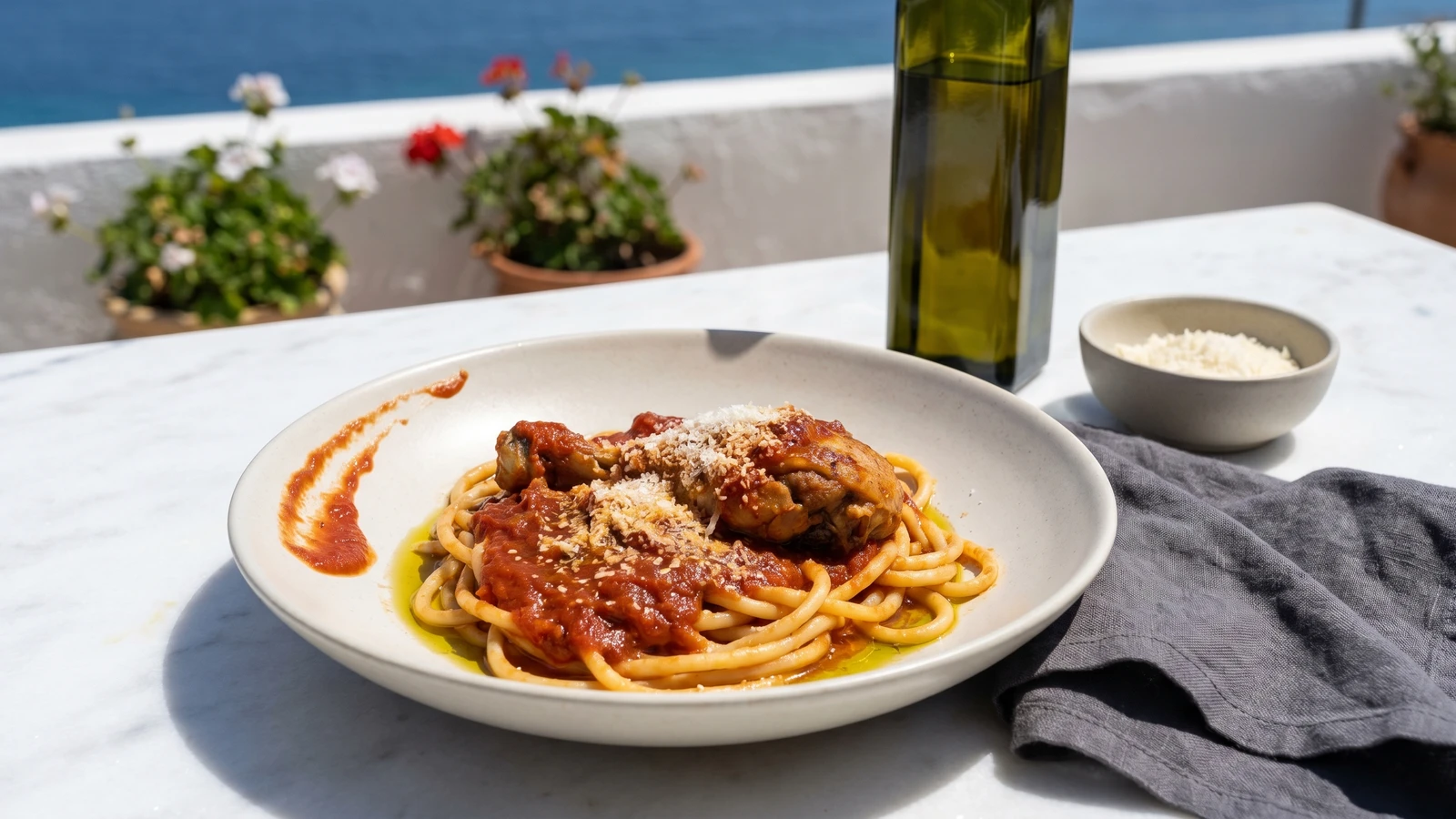
Corfu's Pastitsada is rooster braised red with tomato, wine, cinnamon, clove, and spetseriko, served over thick bucatini so the pasta carries the island's Sunday sauce.
Pastitsada is Corfu's Sunday braise: rooster, tomato, red wine, and the island's spetseriko, a spice mix where cinnamon and clove speak first. It is served over thick bucatini or makaronia hontra, thick macaroni, not beside them, because the pasta has work to do. It carries the dark red sauce into every bite.
The method that decides it is the browning. Give the rooster room in the pan and let it take real color before the tomato goes in. Crowded meat goes pale and watery, and then the sauce tastes of boiled chicken and apology. Brown it well, wake the tomato paste and spices in that oil, and the whole pot turns Corfiot.
I write this one plainly because Pastitsada suffers when it is treated as any red chicken stew with cinnamon. The region is the dish's surname. A Corfiot cook keeps the sauce thick, almost staining, and brings the pasta to the pot just before serving. Good olive oil, and patience. You can make it right the first time.
Pastitsada belongs to Corfu's Ionian kitchen, shaped by Venetian rule from 1386 to 1797 and by the spice trade that moved through the island's grocers and pharmacies. Its name is usually linked to Venetian pastissada, a spiced meat braise, but in Corfu it became rooster or beef in a tomato-red sauce served with thick macaroni. The local spetseriko blend, once mixed by each spice seller, is why the dish tastes Corfiot rather than like a mainland kokkinisto.
Quantity
1.8kg
cut into 8 serving pieces, or use mature free-range chicken legs
Quantity
12g
plus more for pasta water
Quantity
1 tsp
Quantity
80ml
Quantity
300g
finely chopped
Quantity
4
minced
Quantity
70g
Quantity
1 tbsp
or mix 1 tsp sweet paprika, 3/4 tsp ground cinnamon, 1/2 tsp ground allspice, 1/4 tsp ground cloves, 1/4 tsp grated nutmeg, and 1/4 tsp hot red pepper
Quantity
250ml
Quantity
500g
Quantity
300ml
Quantity
1
Quantity
500g
Quantity
60g
to serve
| Ingredient | Quantity |
|---|---|
| rooster (kokoras)cut into 8 serving pieces, or use mature free-range chicken legs | 1.8kg |
| fine sea saltplus more for pasta water | 12g |
| freshly ground black pepper | 1 tsp |
| extra virgin olive oil | 80ml |
| yellow onionsfinely chopped | 300g |
| garlic clovesminced | 4 |
| tomato paste | 70g |
| Corfiot spetseriko (spice mix)or mix 1 tsp sweet paprika, 3/4 tsp ground cinnamon, 1/2 tsp ground allspice, 1/4 tsp ground cloves, 1/4 tsp grated nutmeg, and 1/4 tsp hot red pepper | 1 tbsp |
| dry red wine | 250ml |
| grated ripe tomatoes or tomato passata | 500g |
| warm water or light chicken stock | 300ml |
| bay leaf | 1 |
| bucatini, perciatelli, or thick hollow macaroni (makaronia hontra) | 500g |
| grated kefalotyri or aged graviera (optional)to serve | 60g |
Pat the rooster pieces very dry and season them all over with the salt and black pepper. Let them stand for 20 minutes while you chop the onions and measure the spices. Dry meat takes color properly, and color is the beginning of the sauce.
Heat the olive oil in a heavy wide casserole over medium-high heat. Brown the rooster in two or three batches, skin side down first, about 6 to 8 minutes per batch, until the pieces are deep golden in patches. Do not crowd the pot. This is the step that decides Pastitsada: the sauce must begin with browned meat, not watery meat.
Lift the browned rooster to a plate. Add the onions to the same pot and cook over medium heat for 10 to 12 minutes, stirring often, until soft and lightly golden. Add the garlic for 1 minute, then stir in the tomato paste and spetseriko. Cook for 2 minutes, until the paste darkens and the oil turns brick red.
Pour in the wine and scrape the bottom of the pot, letting it bubble for 3 minutes. Add the tomatoes, 250ml of the warm water or stock, and the bay leaf. Return the rooster and any juices to the pot. The liquid should come about halfway up the meat, not drown it. Cover partly and simmer gently for 1 hour 30 minutes to 2 hours, turning the pieces now and then, until the meat yields easily at the thigh.
When the rooster is tender, uncover the pot and simmer for 10 to 15 minutes, adding the remaining 50ml water or stock only if the sauce tightens before the meat is ready. The finished sauce should be thick, glossy, and red enough to stain the spoon. Taste for salt.
Boil the bucatini or thick macaroni in well-salted water until just shy of tender. Reserve 250ml of the pasta water, then drain. Pastitsada wants thick hollow pasta because it catches the sauce inside and outside. Thin spaghetti will feed you, but it won't give you the same dish.
Return the pasta to its pot with two ladles of the red sauce and a splash of pasta water, tossing until glossy. Pile it generously onto warm plates, set a piece of rooster on top, and spoon over more sauce. Finish with grated kefalotyri if you like it at your table. Serve at once.
1 serving (about 470g)
Culinary guides, cultural storytelling, and the editorial depth that makes cooking meaningful.
Discover Culinary ExplorerChef Dimitra
Aegean kakavia is the fisherman’s soup named for the pot itself: small rockfish, potato, onion, lemon, and enough olive oil to turn a poor catch rich.

Chef Dimitra
Corfu's bourdeto is a red, pepper-hot fish braise, traditionally made with scorpionfish, potatoes, tomato, and enough heat to announce the Ionian table.

Chef Dimitra
Central Macedonia's spring lamb fricassee braises shoulder with romaine, dill, and spring onion, then finishes the pot with avgolemono, the egg-lemon sauce that makes it silk.

Chef Dimitra
In Chania, tsigariasto is goat or lamb browned in olive oil, softened with wine, and left to braise without water until the pot gives back only glossy meat juices.