
Chef Margarida
Areias de Cascais
The sand cookies of Cascais, where three simple ingredients become something that melts on your tongue and sparkles like the beach at sunset. Butter, flour, sugar. That's all. That's enough.
A cooking platform built around craft, culture, and the stories behind what we eat.
Created by
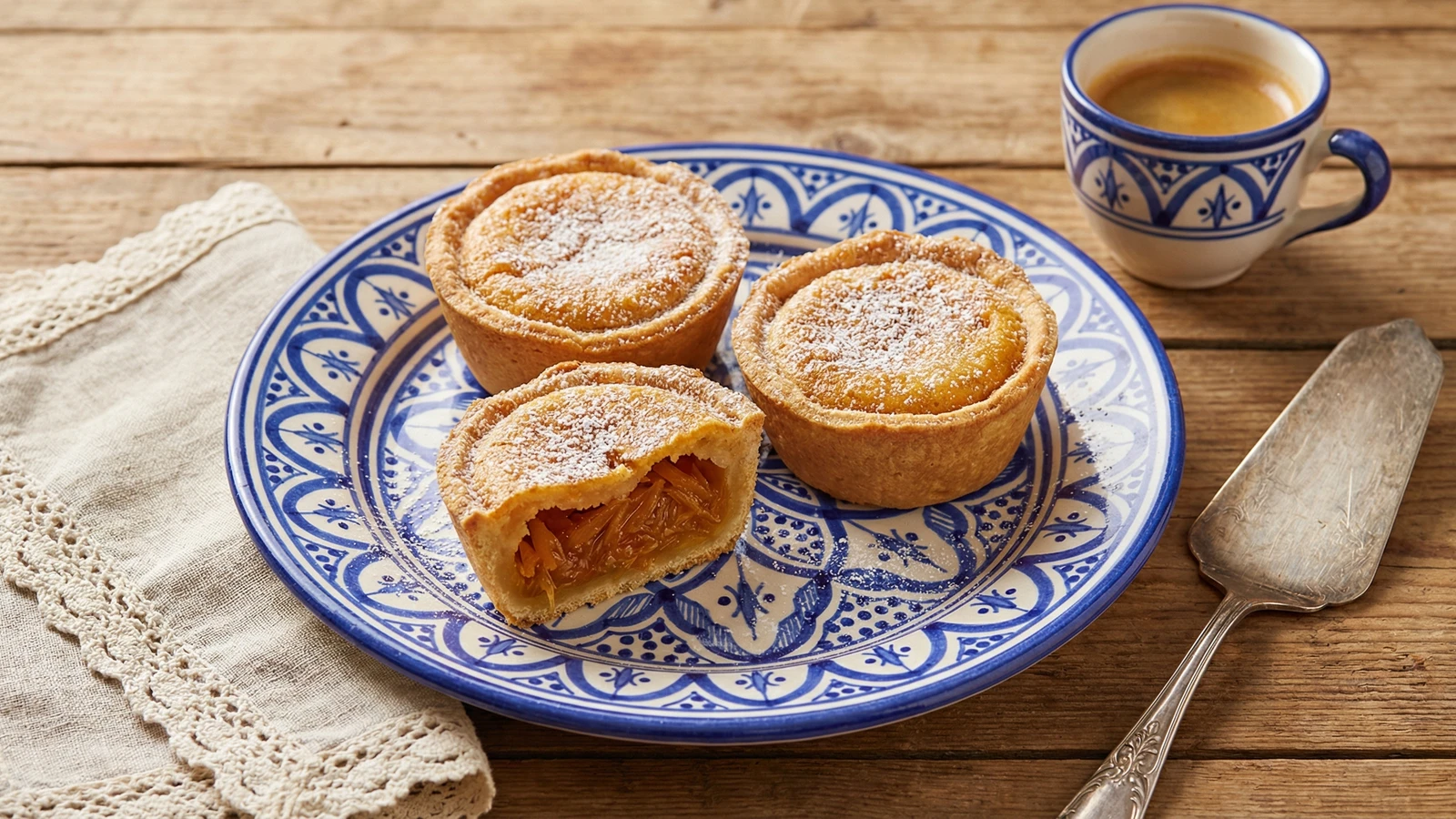
Golden tarts born in convent kitchens, where nuns discovered that an unlikely vegetable could become the most elegant of sweets. The chila's threads shine like captured sunlight.
There's a magic trick at the heart of this tart. A vegetable, transformed. The chila squash, a large pale gourd that looks like nothing special, becomes something extraordinary in the hands of someone who knows its secret.
The nuns figured it out centuries ago. Cook the chila, and its flesh separates into long golden strands, like threads of silk, like angel hair. Add sugar, cook it slowly, and you have doce de chila, one of Portugal's most beautiful preserves. Then fold in egg yolks, as the convents always did with their abundance of yolks, and you have something that makes people stop mid-bite and ask: what is this?
Avó Leonor called these "pastéis de surpresa," surprise tarts, because everyone is surprised when you tell them what's inside. A vegetable? This sweetness, this richness, comes from a squash? It does. This is what Portuguese convent baking understands: transformation. Taking humble things and making them shine.
At Mesa da Avó, when I serve these, I always wait for the moment of revelation. The guests taste something delicate and golden, rich with egg yolk and cinnamon. Then I tell them. A squash. Grown in gardens. The grandmothers knew. They always know.
Pastel de chila belongs to Portugal's doçaria conventual tradition, developed in convents where nuns created elaborate sweets using egg yolks donated by winemakers who used the whites to clarify wine. The chila squash (Cucurbita ficifolia) arrived from the Americas in the 16th century and was quickly adopted into Portuguese confectionery. The Algarve and Alentejo became particularly known for these tarts, where the preserve is still made in home kitchens every autumn.
Quantity
250g
Quantity
100g
cubed
Quantity
80g
Quantity
2 large, plus 1 for egg wash
Quantity
1
zested
Quantity
pinch
Quantity
2-3 tablespoons
Quantity
400g
Quantity
4 large
Quantity
1/2 teaspoon
Quantity
for dusting
| Ingredient | Quantity |
|---|---|
| all-purpose flour | 250g |
| cold unsalted buttercubed | 100g |
| granulated sugar | 80g |
| egg yolks for dough | 2 large, plus 1 for egg wash |
| lemonzested | 1 |
| fine salt | pinch |
| cold water | 2-3 tablespoons |
| doce de chila (chila jam) | 400g |
| egg yolks for filling | 4 large |
| ground cinnamon | 1/2 teaspoon |
| powdered sugar (optional) | for dusting |
In a large bowl, combine the flour, sugar, lemon zest, and salt. Add the cold butter cubes and work with your fingertips, rubbing the butter into the flour until the mixture resembles coarse sand. Make a well in the center. Add the 2 egg yolks and mix with a fork, then bring together with your hands. Add cold water, one tablespoon at a time, just until the dough comes together. It should be smooth but not sticky.
Flatten the dough into a disc, wrap tightly in plastic, and refrigerate for at least 30 minutes. This relaxes the gluten and makes rolling easier. The dough can rest overnight if you're planning ahead.
In a bowl, gently fold the egg yolks into the doce de chila. Add the cinnamon and stir until just combined. Don't overwork it. The golden strands of chila should remain visible, catching light like threads of silk. This is the heart of the tart.
Preheat your oven to 180°C (350°F). Roll the chilled dough to about 3mm thick on a lightly floured surface. Cut circles slightly larger than your tart molds. Press the dough gently into each mold, pushing it into the edges without stretching. Trim any excess. Prick the bottoms lightly with a fork.
Spoon the chila filling into each pastry shell, filling to about three-quarters full. Don't overfill or they'll bubble over. Beat the remaining egg yolk with a splash of water and brush the edges of the pastry. Some families leave them open-faced. Others cut strips of dough to create a lattice or a simple cross on top. Both are traditional. Do what feels right.
Bake for 25 to 30 minutes, until the pastry is golden and the filling is set with just a slight wobble in the center. The tops should have golden patches, almost like a light caramel. Remove from the oven and let cool in the molds for 5 minutes before transferring to a wire rack.
Dust with powdered sugar before serving. Eat them at room temperature, when the pastry is crisp and the filling has settled into its silky texture. These are meant to be shared, passed around a table, eaten with coffee or a small glass of Moscatel.
1 serving (about 80g)
Culinary guides, cultural storytelling, and the editorial depth that makes cooking meaningful.
Discover Culinary ExplorerChef Margarida
The sand cookies of Cascais, where three simple ingredients become something that melts on your tongue and sparkles like the beach at sunset. Butter, flour, sugar. That's all. That's enough.

Chef Margarida
The Christmas turnovers of Alentejo, where humble chickpeas become something miraculous inside a crispy shell. Proof that Portuguese grandmothers could turn anything into celebration.

Chef Margarida
The butter cookies of the Azores, shaped into golden rings by island grandmothers who knew that the best things in life are simple: good butter, fresh eggs, and a cup of strong coffee.

Chef Margarida
The almond cookies of the Algarve, where Moorish orchards still bloom white against blue January skies. Three ingredients, centuries of tradition, the taste of southern Portugal in every tender bite.