Chef Lupita
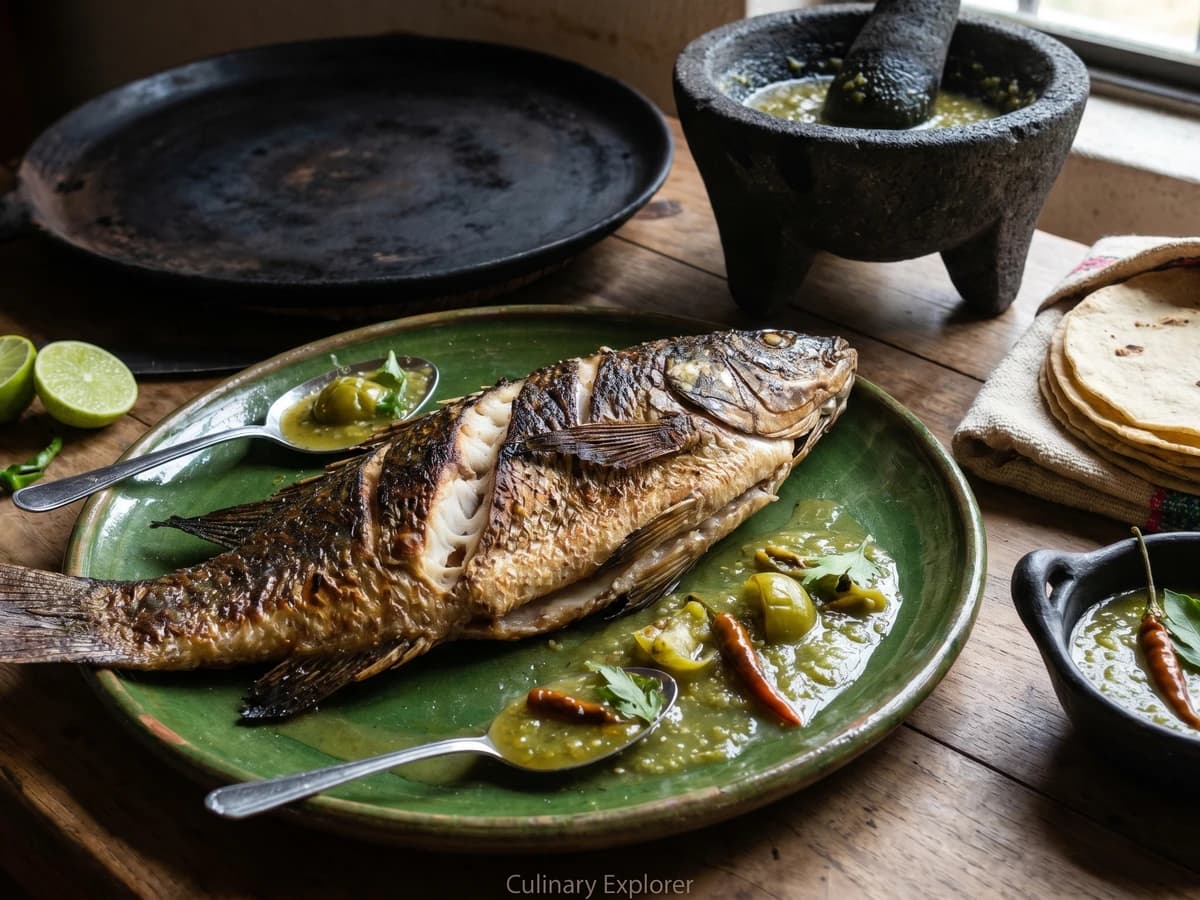
Acúmara Tatemada al Comal
Michoacán's Lake Pátzcuaro acúmara, a whole kurucha from the lago tatemada on a comal de leña and served with chile perón atápakua, corn tortillas, and P'urhépecha discipline.
A cooking platform built around craft, culture, and the stories behind what we eat.

Created by
Puebla's layered casserole of corn tortillas, shredded chicken, and mole poblano, built with crema and queso fresco and baked until the edges bubble and the top turns deep mahogany. The dish a poblana cook makes when the mole is already in the refrigerator and the family is coming Sunday.
This is a poblano dish at heart, even when it shows up on tables across the central altiplano from Tlaxcala to the Valle de Mexico. Pastel azteca is what you make in Puebla when there is mole left over from a fiesta and chicken that needs to be used. It is not a shortcut. It is a second life for a sauce that took two days to build.
The mole is the dish. Everything else, the tortillas, the chicken, the crema, the cheese, exists to carry the mole and let it shine in a different form. If your mole is weak, your pastel azteca is weak. There is no hiding behind cheese. A good mole poblano has chile ancho, mulato, pasilla, and chipotle, plus almonds, sesame, raisins, plantain, bread, spices, and Mexican chocolate. Thirty ingredients minimum. If you are starting from a paste because you do not have two days, buy one from a Puebla maker. Mole Don Pancho and Rogelio Bueno are honest. The ones sold in plastic tubs at the chain supermarket are not.
My mother called this dish her Monday casserole. Sunday was mole day. Monday was pastel azteca with whatever was left, layered into a clay cazuela with day-old tortillas she had been saving in a cloth at the back of the counter. She would scatter sesame seeds across the top before it went in the oven and she would tell me, every time, that the casserole was better than the original mole because it was older. Saber cocinar es saber vivir, and saber cocinar también es saber esperar.
Pastel azteca, sometimes called budin azteca, is a 20th-century mestizo dish that emerged in central Mexican home kitchens as a way to repurpose leftover mole and tortillas into a single oven-baked dish, likely influenced by the increased availability of home ovens in middle-class Mexican households in the 1940s and 1950s. The 'azteca' label is a romantic 20th-century naming convention common in mid-century Mexican cookbooks and has no actual pre-Columbian origin; corn tortillas, mole, and chicken were all eaten in the Mexica era, but the layered casserole format is European in technique, married to Mexican ingredients. The dish remains most associated with Puebla because of the mole, though variations using mole verde, salsa roja, or salsa verde appear across the central highlands.
Quantity
1 (about 4 pounds)
cut into pieces, or 3 pounds bone-in thighs and breasts
Quantity
1 medium
halved
Quantity
1
halved crosswise
Quantity
2
Quantity
1 tablespoon
Quantity
3 cups
homemade or a good Puebla brand like Mole Don Pancho or Rogelio Bueno
Quantity
5 to 6 cups, plus more as needed
Quantity
2 tablespoons
chopped
Quantity
1 tablespoon
Quantity
24
day-old preferred
Quantity
1/4 cup
for softening tortillas
Quantity
2 cups
Quantity
12 ounces
crumbled
Quantity
8 ounces
pulled into thin strands
Quantity
2 tablespoons
Quantity
1/2 medium
sliced into thin rings
Quantity
for serving
| Ingredient | Quantity |
|---|---|
| whole chickencut into pieces, or 3 pounds bone-in thighs and breasts | 1 (about 4 pounds) |
| white onionhalved | 1 medium |
| head of garlichalved crosswise | 1 |
| bay leaves | 2 |
| kosher salt | 1 tablespoon |
| mole poblano pastehomemade or a good Puebla brand like Mole Don Pancho or Rogelio Bueno | 3 cups |
| reserved chicken broth | 5 to 6 cups, plus more as needed |
| Mexican chocolate (such as Ibarra)chopped | 2 tablespoons |
| manteca de cerdo (pork lard) | 1 tablespoon |
| hand-pressed corn tortillasday-old preferred | 24 |
| vegetable oil or additional mantecafor softening tortillas | 1/4 cup |
| Mexican crema | 2 cups |
| queso frescocrumbled | 12 ounces |
| queso Oaxacapulled into thin strands | 8 ounces |
| toasted sesame seeds | 2 tablespoons |
| white onionsliced into thin rings | 1/2 medium |
| fresh cilantro leaves (optional) | for serving |
Place the chicken pieces in a heavy stockpot with the halved onion, halved head of garlic, bay leaves, and salt. Cover with cold water by two inches. Bring to a gentle simmer over medium heat and skim the gray foam that rises in the first fifteen minutes. Lower the heat until the bubbles are lazy and cook for 35 to 40 minutes, until the meat pulls easily from the bone. Cold water start gives you a clean broth. A rolling boil gives you a cloudy one. The broth you make here is what carries the mole. Treat it accordingly.
Lift the chicken out with a slotted spoon and let it cool until you can handle it. Strain the broth and skim the fat off the top, but save that fat. It belongs in the mole. Pull the meat off the bones and shred it into rough pieces with your fingers. Not a food processor. The texture of hand-shredded chicken matters when it sits between layers of tortilla.
Melt the manteca in a wide pot or cazuela over medium-low heat. Add the mole paste and stir constantly for two minutes until it smells deeply of toasted chile and chocolate. Begin adding the warm chicken broth one cup at a time, whisking after each addition. You want a sauce thick enough to coat a tortilla but loose enough to pour, like heavy cream. Stir in the chopped Mexican chocolate and let it melt in. Taste for salt. The mole should taste like itself: dark, layered, faintly sweet, faintly bitter, complex enough that no single ingredient announces itself.
Heat the vegetable oil or manteca in a small skillet over medium-high. Pass each tortilla through the hot fat for about five seconds per side, just until pliable. Drain on paper towels. You are not frying them crisp. You are giving them a thin coat of fat so the mole does not turn them to mush in the oven. Day-old tortillas hold up better than fresh ones because they have lost a little moisture already.
Reserve about three cups of the loosened mole for the layers and the top. Pour the rest over the shredded chicken in a large bowl and toss until every strand is coated. The chicken should look glossy and dark, almost lacquered. This is the filling.
Heat the oven to 375F. Ladle about a half cup of the reserved mole into the bottom of a 9-by-13-inch baking dish or a wide clay cazuela and spread it across the bottom. Lay down eight softened tortillas, overlapping where they need to, covering the whole surface. Spread half of the mole-coated chicken across the tortillas. Drizzle a third of the crema over the chicken. Scatter a third of the queso fresco and a third of the queso Oaxaca across the top.
Lay another eight tortillas across the cheese. Spread the rest of the chicken and mole filling. Drizzle another third of the crema. Scatter another third of each cheese. Press down gently with the back of a spoon so the layers settle into each other.
Cover with the final eight tortillas. Pour the remaining reserved mole evenly across the top, making sure every corner is coated. The casserole should look like a dark, glossy pond. Drizzle the last of the crema in stripes. Scatter the remaining queso fresco and queso Oaxaca. Finish with the toasted sesame seeds. Bake uncovered for 35 to 40 minutes, until the edges are bubbling vigorously and the top has darkened to deep brown with caramelized patches where the cheese met the mole. If the top is browning too fast, tent loosely with foil for the last ten minutes.
Pull the casserole out and let it rest on the counter for at least 15 minutes. Do not skip this. A pastel azteca served straight from the oven slumps onto the plate. A rested one cuts into clean layers that show every level of work you did. Scatter the raw onion rings and cilantro across the top right before serving. Cut into squares and serve directly from the cazuela. Así se hace y punto.
1 serving (about 595g)
Culinary guides, cultural storytelling, and the editorial depth that makes cooking meaningful.
Discover Culinary ExplorerChef Lupita
Michoacán's Lake Pátzcuaro acúmara, a whole kurucha from the lago tatemada on a comal de leña and served with chile perón atápakua, corn tortillas, and P'urhépecha discipline.

Chef Lupita
Puebla's weekday adobo of pork shoulder braised in a thick guajillo and ancho sauce sharpened with vinegar, cumin, and clove. The deep red of a market spice stall, the dish a poblana cooks without thinking.

Chef Lupita
Loreto's pit-roasted clams, planted hinge-up in beach sand and tatemadas under a fast fire of dried romerillo brush, the resinous Baja desert shrub that gives this dish its smoke.

Chef Lupita
Oaxaca's eighth mole, the silky, almond-and-cinnamon almendrado, served over poached chicken. Mild, sweet, restrained, and a quiet rebuttal to anyone who thinks Mexican food has to be hot to be Mexican.