
Chef Graziella
Anguilla Arrosto alla Comacchiese
The legendary roasted eel of Comacchio, where the brackish lagoons of the Po Delta have produced Italy's finest anguilla for two thousand years. Bay leaves, salt, fire. Nothing more.
A cooking platform built around craft, culture, and the stories behind what we eat.
Created by
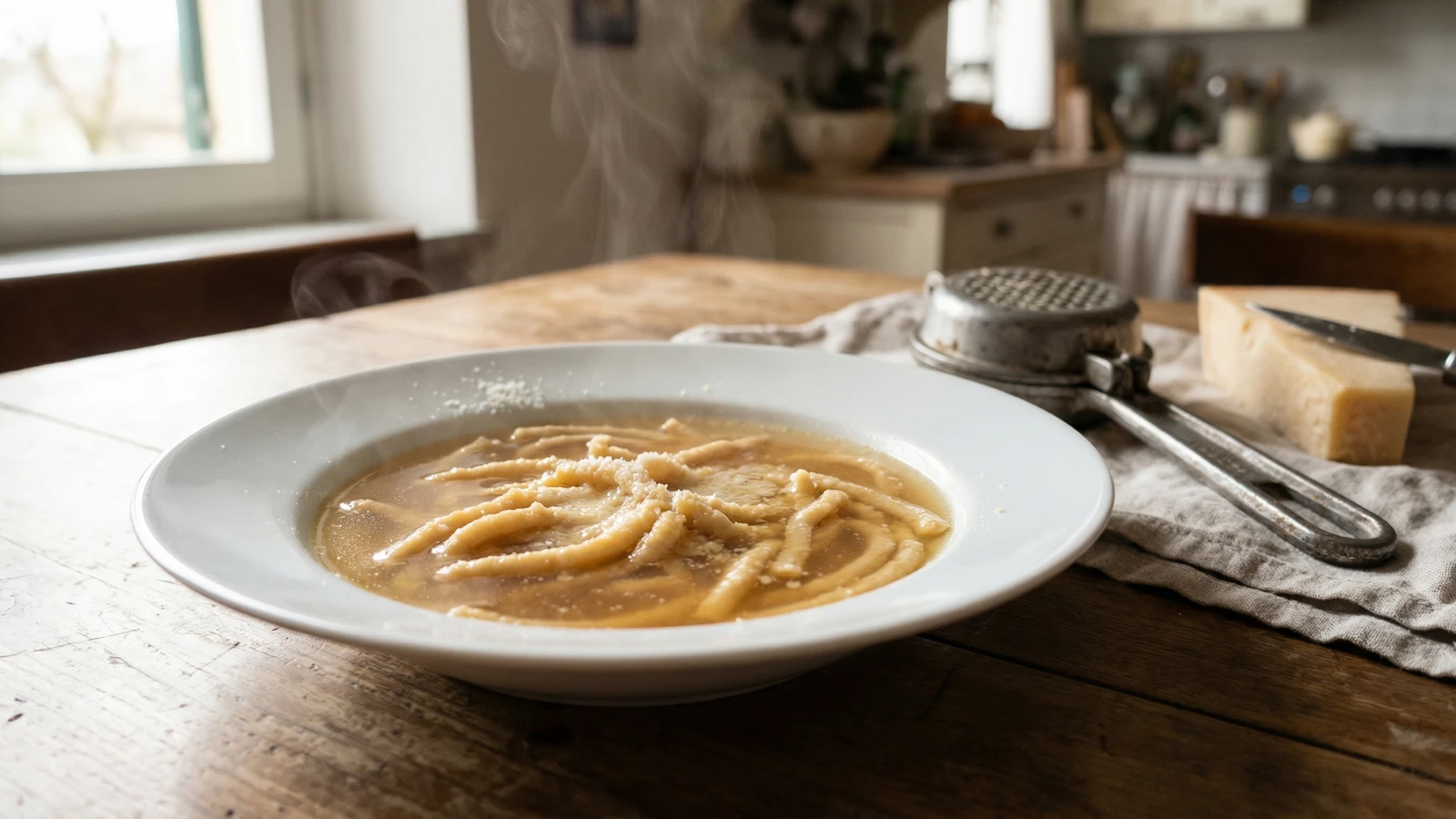
The pride of Romagna: a simple dough of breadcrumbs, aged cheese, and eggs pressed into simmering broth, creating something that defies category. Three ingredients transformed by technique into comfort itself.
Passatelli belongs to Romagna the way tortellini belongs to Bologna. This is my homeland's contribution to the great tradition of pasta in brodo, though calling passatelli pasta is imprecise. They contain no flour. The structure comes entirely from breadcrumbs and Parmigiano-Reggiano bound with egg, pushed through a special iron with holes the size of thick spaghetti.
The result is something that exists nowhere else in Italian cooking. Not a dumpling, which would be dense. Not a pasta, which would require gluten. Passatelli have a texture I can only describe as yielding: they give way under your teeth, releasing the concentrated flavor of aged cheese into the broth that surrounds them.
Every family in Pesaro, in Rimini, in Cesenatico where I was born, has their own iron passed down through generations. Some add a little bone marrow to the dough. Some insist on lemon zest; others consider it heresy. These arguments have continued for centuries and will continue long after we are gone. What no one argues is that the broth must be homemade and the cheese must be real Parmigiano-Reggiano, aged at least 24 months. Without these, you have not made passatelli. You have made something else.
Passatelli originated in the kitchens of Romagna and the Marche during the Renaissance, when cooks discovered that stale bread, mixed with the local aged cheese and eggs, could be pressed into broth to create a substantial first course. The dish remained regional for centuries, virtually unknown outside the Adriatic coast until Italian food writers began documenting regional specialties in the mid-20th century.
Quantity
200 grams (about 2 cups)
Quantity
200 grams (about 2 cups)
finely grated
Quantity
3
Quantity
1/4 teaspoon
freshly grated
Quantity
from 1 lemon
finely grated
Quantity
8 cups
Quantity
for serving
| Ingredient | Quantity |
|---|---|
| fine dry breadcrumbs | 200 grams (about 2 cups) |
| Parmigiano-Reggianofinely grated | 200 grams (about 2 cups) |
| large eggs | 3 |
| nutmegfreshly grated | 1/4 teaspoon |
| lemon zestfinely grated | from 1 lemon |
| homemade meat broth | 8 cups |
| Parmigiano-Reggiano | for serving |
In a large bowl, combine the breadcrumbs and grated Parmigiano-Reggiano. The ratio must be equal by weight. This is not negotiable. Add the nutmeg and lemon zest and mix thoroughly with your hands until the dry ingredients are evenly distributed.
Beat the eggs lightly in a small bowl, then pour them into the center of the dry ingredients. Work the mixture together with your hands, pressing and kneading until you have a cohesive dough. It should be firm but pliable, neither crumbly nor sticky. If too dry, add half a beaten egg. If too wet, add more breadcrumbs, a tablespoon at a time.
Wrap the dough tightly in plastic film and let it rest at room temperature for 30 minutes. This allows the breadcrumbs to absorb moisture from the eggs evenly. The dough will become easier to press.
While the dough rests, bring your broth to a gentle simmer in a large pot. The broth must be homemade. Passatelli absorb the flavor of whatever liquid they cook in, and bouillon cubes will announce themselves in every bite. Taste the broth and adjust the salt now.
Fill your passatelli iron or potato ricer with a portion of dough. Hold it directly over the simmering broth and press firmly. The dough will extrude in thick strands. When they reach about two inches in length, cut them off with a knife or let them break naturally and fall into the broth. Work in batches, filling the iron as needed.
The passatelli cook quickly. Within one to two minutes after all the strands have been pressed into the broth, they will float to the surface. Let them simmer for one minute more. They are done when they have swelled slightly and feel tender but not mushy when pressed with a spoon. Do not overcook them. Mushy passatelli are a disappointment.
Ladle the passatelli and broth into warm soup bowls immediately. They wait for no one. As they sit, they absorb broth and lose their texture. Pass additional grated Parmigiano-Reggiano at the table for those who want it, though the passatelli themselves contain so much cheese that restraint is advisable.
1 serving (about 370g)
Culinary guides, cultural storytelling, and the editorial depth that makes cooking meaningful.
Discover Culinary ExplorerChef Graziella
The legendary roasted eel of Comacchio, where the brackish lagoons of the Po Delta have produced Italy's finest anguilla for two thousand years. Bay leaves, salt, fire. Nothing more.
Chef Graziella
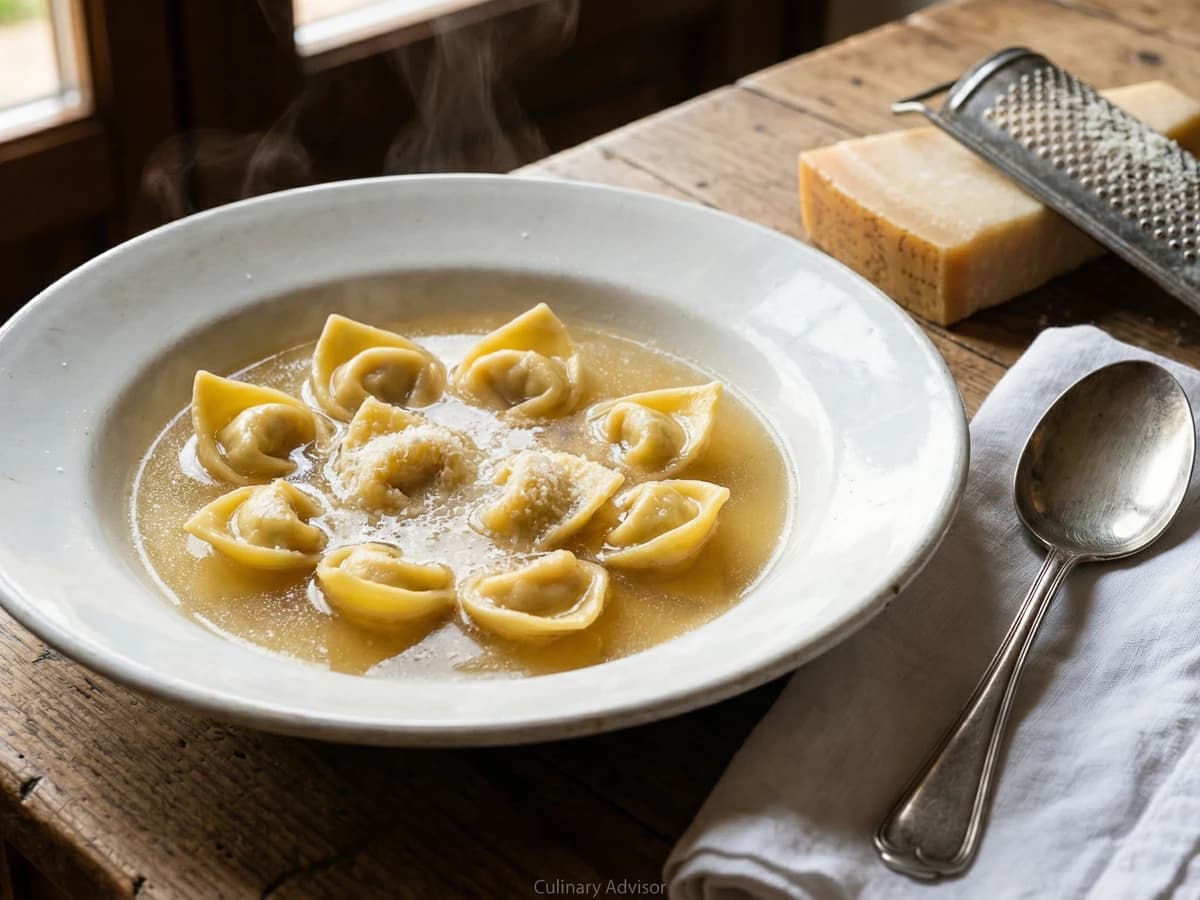
The cheese-filled pasta of Romagna, folded into little hats and floated in golden capon broth. This is Christmas dinner along the Adriatic, where the distinction between tortellini and cappelletti is a matter of regional pride.

Chef Graziella
The mixed seafood fry of the Adriatic, where shrimp, squid, and small fish wear only a whisper of flour before meeting hot oil. Served immediately with lemon wedges. Nothing more.
Chef Graziella
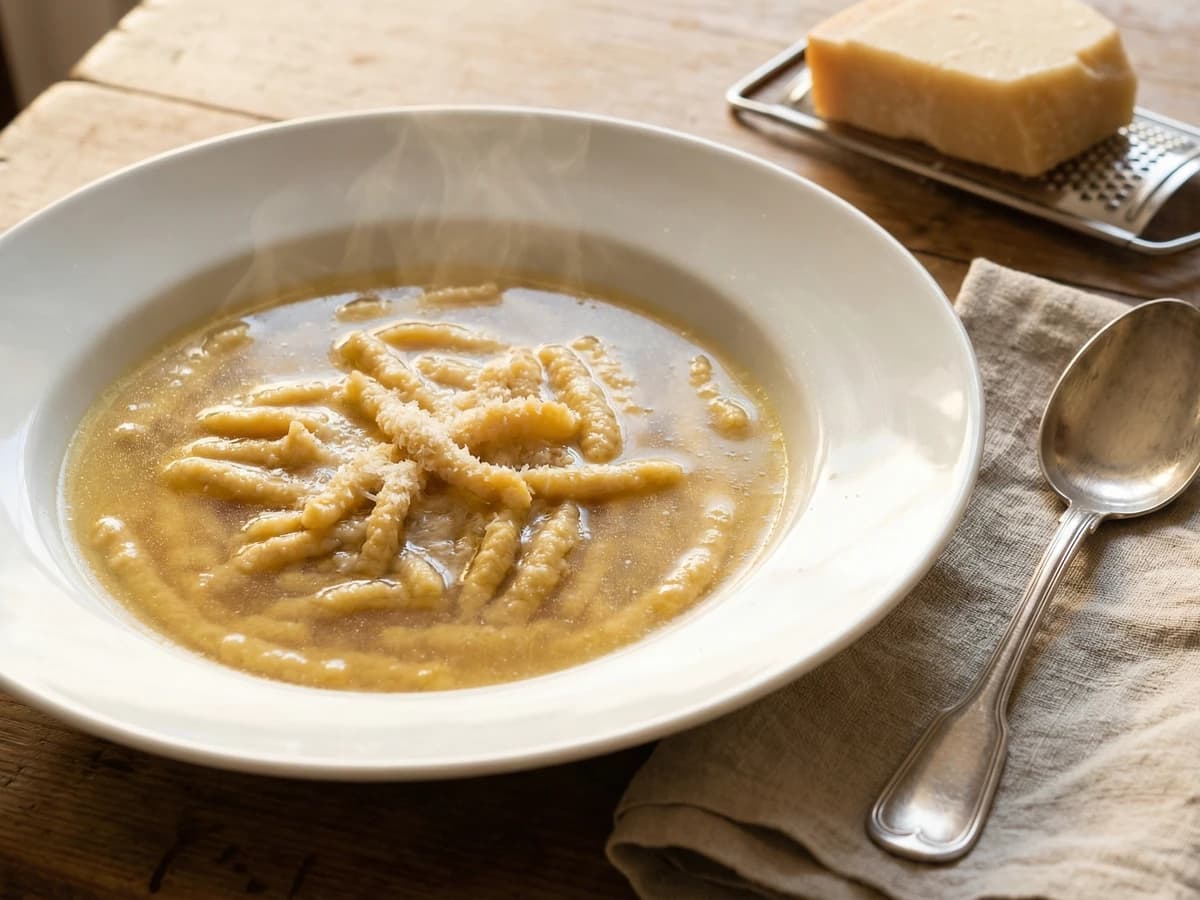
Breadcrumbs, aged Parmigiano, and eggs pressed directly into simmering broth. The first food of my childhood in Romagna, and the last food I would give up.