
Chef Lupita
Aceite de Chiltepin Bajacaliforniano
Baja California's wild chiltepin steeped in olive oil with garlic, orejon, and lime peel, until the oil turns ruby-amber and carries the slow, sneaky burn of the desert coast.
A cooking platform built around craft, culture, and the stories behind what we eat.
Created by
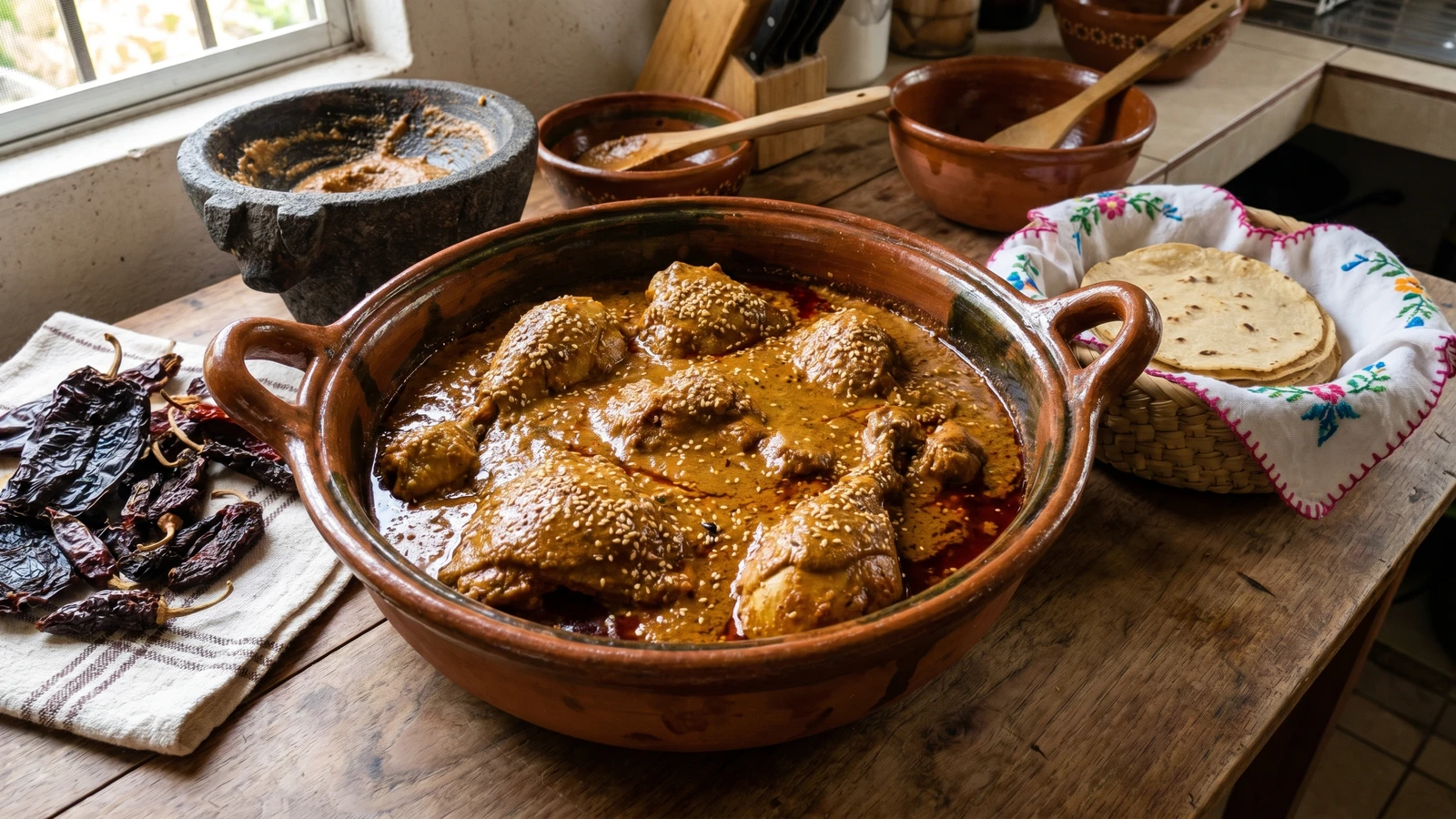
Veracruz Huasteca's holiday seed sauce, toasted ajonjoli and pepita ground thick with chile ancho, chipotle seco, epazote, and lard, then spooned over chicken or turkey for the table.
Veracruz, in the Huasteca Alta, is where this version of pascal lives: Tantoyuca, Chicontepec, Tempoal, the northern Gulf country where Teenek and Nahua kitchens know what a seed sauce is before anyone tries to call it mole poblano. This is not chocolate sauce. Mole is not chocolate sauce either, but that is another argument for another pot.
Pascal, also written as paskal in parts of the Huasteca, belongs to the seed-sauce family that predates the national idea of 'Mexican food' and is still cooked in Teenek and Nahua communities across northern Veracruz, San Luis Potosi, and Hidalgo. Pumpkin seed sauces are pre-Columbian, while sesame arrived after 1521 through Spanish trade routes and was absorbed into older grinding techniques. In the Huasteca, pascal is strongly tied to Xantolo, weddings, patron-saint meals, and family tables where chicken or turkey is covered in the thick sauce and served from clay, not plated like a restaurant sample.
Quantity
4
wiped clean, stemmed, and seeded
Quantity
2
stemmed and seeded if you want less heat
Quantity
1 cup
Quantity
3/4 cup
Quantity
1
toasted until spotted and torn
Quantity
1/2 medium
sliced into thick pieces
Quantity
4
unpeeled
Quantity
3 tablespoons
Quantity
4 to 5 cups
preferably homemade
Quantity
2
Quantity
1 1/2 teaspoons, plus more to taste
Quantity
3 pounds
warm, for serving
Quantity
2 tablespoons
for serving
Quantity
for serving
| Ingredient | Quantity |
|---|---|
| dried chile anchowiped clean, stemmed, and seeded | 4 |
| dried chile chipotle secostemmed and seeded if you want less heat | 2 |
| raw white sesame seeds (ajonjoli) | 1 cup |
| raw hulled pumpkin seeds (pepitas de calabaza) | 3/4 cup |
| thick corn tortillatoasted until spotted and torn | 1 |
| white onionsliced into thick pieces | 1/2 medium |
| garlic clovesunpeeled | 4 |
| pork lard (manteca de cerdo) | 3 tablespoons |
| warm chicken or turkey stockpreferably homemade | 4 to 5 cups |
| fresh epazote sprigs | 2 |
| kosher salt | 1 1/2 teaspoons, plus more to taste |
| cooked chicken or turkey pieces (optional)warm, for serving | 3 pounds |
| toasted sesame seeds (optional)for serving | 2 tablespoons |
| warm hand-pressed corn tortillas (optional) | for serving |
Heat a dry comal over medium. Toast the chile ancho one at a time, about 20 to 30 seconds per side, just until the skin softens, darkens slightly, and smells like raisins and tobacco. Toast the chipotle seco more gently because it is already smoked and can turn bitter fast. Do not blacken the chiles. Burned chile will bully the whole sauce.
Put the toasted chiles in a bowl and cover them with hot water. Hot, not boiling. Let them soften for 20 minutes, then drain them and discard the soaking water. This sauce is built with stock, not with bitter chile water. The ancho should feel leathery and pliable between your fingers.
Toast the sesame seeds in the dry comal or a heavy skillet over medium-low heat, stirring constantly, until they turn pale gold and smell nutty. Pour them out immediately. Toast the pepitas separately until they puff, deepen to green-gold, and begin to make small popping sounds. Seeds burn from one breath to the next. Watch them like the senora who taught you is standing beside the stove.
On the same comal, char the onion pieces and unpeeled garlic until they have dark spots and smell sweet. Peel the garlic. Toast the corn tortilla until it is firm with brown freckles, then tear it into pieces. The tortilla gives body without making the sauce taste like flour. Flour tortillas belong to the north. This is Veracruz Huasteca.
In a blender, combine the soaked chiles, toasted sesame, toasted pepitas, charred onion, peeled garlic, toasted tortilla, salt, and 2 cups warm stock. Blend longer than you think you need, stopping to scrape the sides, until the mixture becomes a thick, smooth paste. A metate gives better texture, yes, but a blender works if you respect the grinding. No me vengas con atajos that leave gritty seeds in the sauce.
Heat the manteca de cerdo in a wide cazuela or heavy pot over medium heat. Add the blended seed paste carefully. It will sputter and thicken like wet masa. Stir with a wooden spoon or pala for 8 to 10 minutes, scraping the bottom so the seeds do not scorch. The color will deepen from tan to ocher-brown and the lard will start to shine at the edges. La manteca es el sabor.
Whisk in 2 more cups warm stock until the sauce loosens and moves like heavy cream. Add the epazote sprigs and simmer gently for 20 to 25 minutes, stirring often. The sauce should coat the spoon thickly but still pour. If it tightens too much, add more stock. Taste for salt. Epazote cuts the richness of the seeds. Leave it out and the pascal tastes heavy.
Remove the epazote sprigs. If serving with chicken or turkey, nestle the warm pieces into the sauce and simmer 8 to 10 minutes so the meat takes the flavor. Spoon into a glazed barro cazuela and finish with toasted sesame seeds. Serve with warm corn tortillas. This is a table dish, not a little decorative drizzle. Asi se hace y punto.
1 serving (about 410g)
Culinary guides, cultural storytelling, and the editorial depth that makes cooking meaningful.
Discover Culinary ExplorerChef Lupita
Baja California's wild chiltepin steeped in olive oil with garlic, orejon, and lime peel, until the oil turns ruby-amber and carries the slow, sneaky burn of the desert coast.

Chef Lupita
Puebla's Lenten convent adobo, a brick-red vinegar chile paste of ancho, guajillo, garlic, oregano, and comino made to dress fish for the meatless calendar.
Chef Lupita
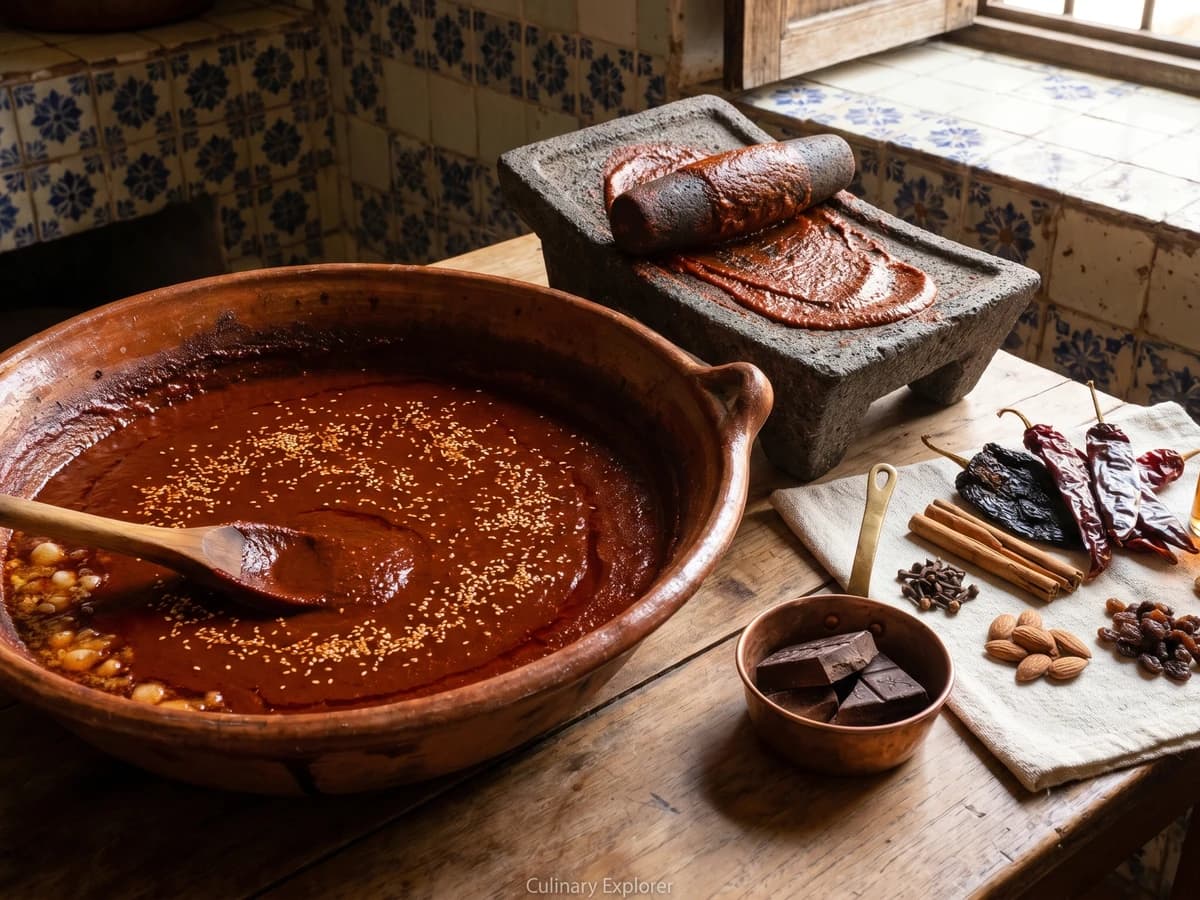
Zacatecas' wedding-table adobo, built from toasted guajillo and ancho, piloncillo, sour orange, chocolate, canela, clavo, almonds, sesame, and lard.

Chef Lupita
Puebla's convent kitchens built this adobo with ancho, guajillo, jerez, almonds, raisins, clove, and lard, a baroque marinade that stains pork loin and finishes as the sauce.