Culinary Explorer
A cooking platform built around craft, culture, and the stories behind what we eat.
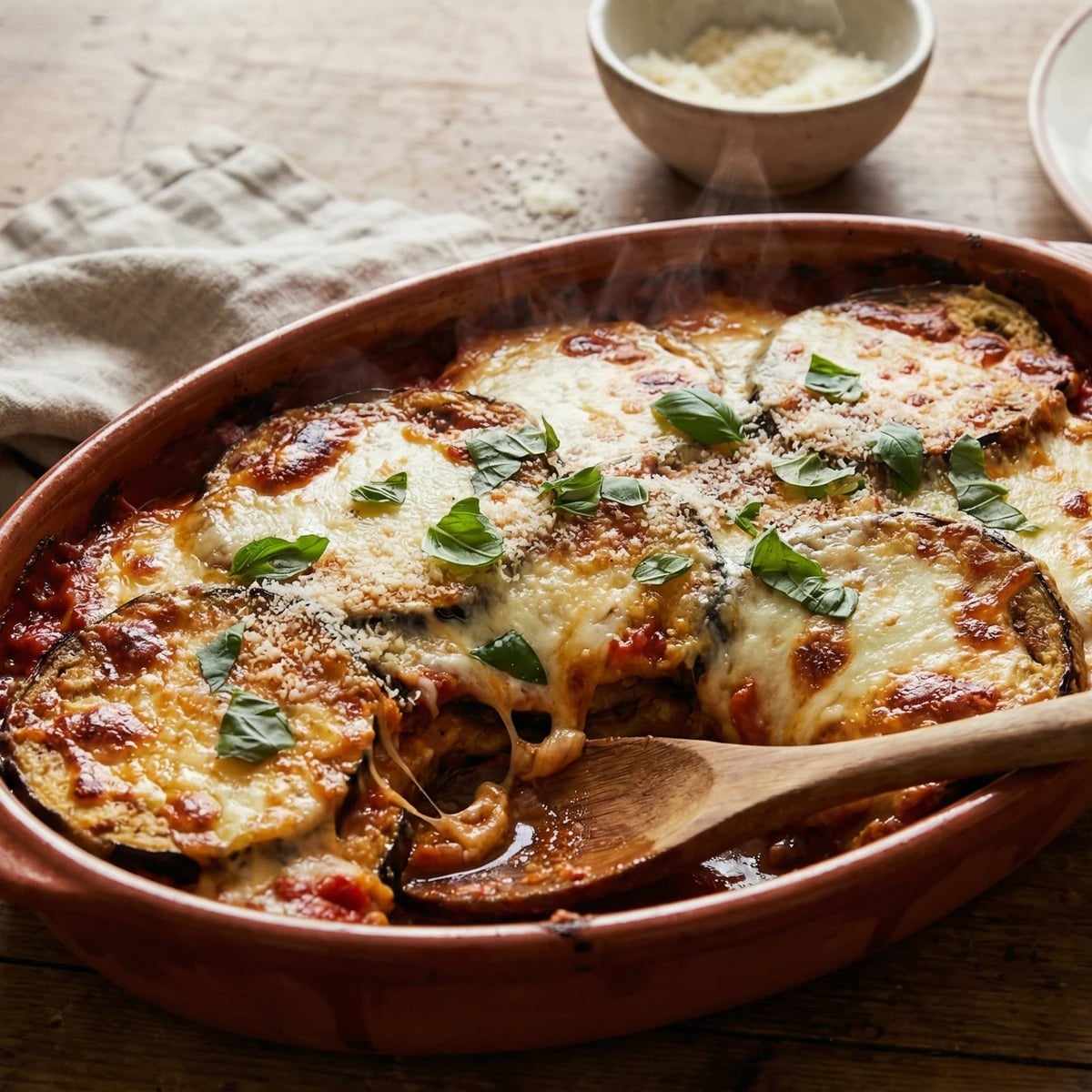
Parmigiana di Melanzane
Created by Chef Graziella
The great layered eggplant dish of Naples and Sicily, where golden fried slices meet simple tomato sauce and fresh mozzarella. This is not eggplant parmesan. This is something far better.
Americans call it eggplant parmesan, but the name misleads. Parmigiana does not mean 'with Parmesan cheese,' though Parmesan does appear. The word likely comes from 'palmigiana,' the Sicilian word for the overlapping wooden slats of a shutter, which the layered eggplant resembles. Or perhaps from Parma, though this is disputed. What matters is this: the dish belongs to the South, to Naples and Sicily, where eggplants grow fat in the summer heat and tomatoes ripen to sweetness.
The eggplant must be salted. This is not optional. Salt draws out the bitter juices that would otherwise make the dish acrid and wet. An hour is sufficient. Two hours is better. Then you rinse, you dry, and you fry. Not bake, not grill, not roast. Fry. The golden crust that forms in hot oil creates the foundation of the dish.
I have seen recipes that skip the frying, that bake the eggplant instead to save calories or effort. These recipes produce something edible but not parmigiana. The fried slices have a texture and flavor that no oven can replicate. If you are unwilling to fry, make something else. What you keep out is as significant as what you put in, but what you put in must be done correctly.
Ingredients
globe eggplants
Quantity
3 pounds (about 3 medium)
kosher salt
Quantity
for salting eggplant
vegetable oil
Quantity
about 2 cups
for frying
| Ingredient | Quantity |
|---|---|
| globe eggplants | 3 pounds (about 3 medium) |
| kosher salt | for salting eggplant |
| vegetable oilfor frying | about 2 cups |
Where cooking meets culture.
Culinary guides, cultural storytelling, and the editorial depth that makes cooking meaningful.
Discover Culinary Explorer