
Chef Takumi
Arare (あられ, small mochi rice crackers)
Arare begins as firm mochi, cut small and dried until patient enough to puff. Brush it with soy at the end, and the little hailstones turn crisp and savory.
A cooking platform built around craft, culture, and the stories behind what we eat.
Created by
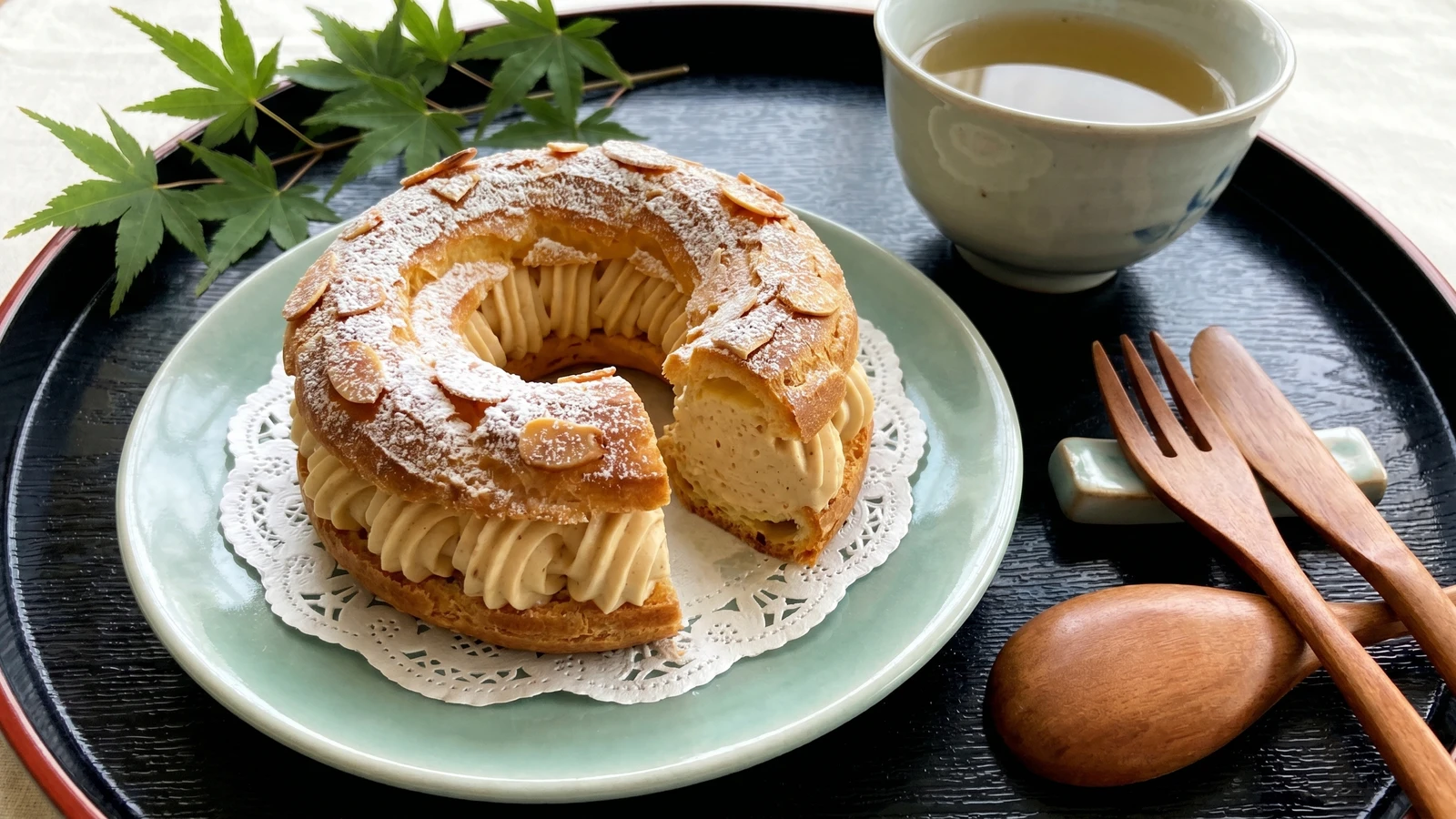
A Paris-Brest looks grand because it is round, split, and generously piped. The work is simpler than the display case suggests: dry the dough, trust the steam, and let the praline speak.
This is the pastry that makes sensible cooks suddenly whisper. A ring of choux, split cleanly, filled with praline cream, dusted with sugar. It looks like the sort of thing that belongs behind glass in a depato basement, where the cakes sit in perfect rows and everyone pretends not to be choosing with their eyes first.
The fear is mostly air. Choux is hollow because water in the dough turns to steam in a hot oven and pushes the paste outward before the flour-and-egg structure sets. That means the first work happens in the saucepan. Dry the dough over the flame until it pulls from the pot and leaves a thin film behind, because excess water makes a soft, collapsed shell instead of a clean one. Then add the eggs only until the dough falls from the spoon in a thick ribbon. Not stiff. Not runny. That ribbon is the quiet judge.
The cream must wait for a cold shell. Pipe praline cream into warmth and it loosens, losing the ridges that make the cut face so handsome. Let the shell cool, split it with a serrated knife, and fill it without bullying it. The praline does the talking here: toasted nuts, caramel, butter, cream, nothing hidden. On a Japanese tea table I serve it restrained, one ring for sharing or small individual rings, with space around the plate. Leave it room. Even a French-born pastry has to behave at the table.
Paris-Brest was created in 1910 by the pastry chef Louis Durand to honor the Paris-Brest-Paris bicycle race, and its ring shape refers to a bicycle wheel. In Japan it entered the yōgashi tradition, Western-style confectionery, through the same bakery culture that made choux cream, shortcake, and Mont Blanc familiar sights in department-store food halls. The Japanese name, パリブレスト, keeps the French origin visible while placing the pastry in the careful, portioned world of the depachika display case.
Quantity
120ml
Quantity
120ml
Quantity
100g
cut into pieces
Quantity
1 teaspoon
Quantity
1/2 teaspoon
Quantity
140g
sifted
Quantity
4
beaten, plus more as needed
Quantity
1
beaten, for egg wash
Quantity
35g
Quantity
for finishing
Quantity
100g
Quantity
300ml
cold
Quantity
180g
cold
Quantity
35g
Quantity
1 teaspoon
Quantity
1 pinch
| Ingredient | Quantity |
|---|---|
| whole milk | 120ml |
| water | 120ml |
| unsalted buttercut into pieces | 100g |
| granulated sugar | 1 teaspoon |
| fine sea salt | 1/2 teaspoon |
| all-purpose floursifted | 140g |
| large eggsbeaten, plus more as needed | 4 |
| eggbeaten, for egg wash | 1 |
| sliced almonds | 35g |
| powdered sugar (optional) | for finishing |
| hazelnut praline paste | 100g |
| heavy creamcold | 300ml |
| mascarponecold | 180g |
| powdered sugar | 35g |
| vanilla extract | 1 teaspoon |
| fine sea salt | 1 pinch |
Heat the oven to 200C. Line a baking sheet with parchment and draw an 18cm circle on the underside as a guide. The circle keeps the piping honest, which matters because an uneven ring bakes unevenly and splits where it is thin.
Put the milk, water, butter, sugar, and salt in a saucepan and bring it to a full boil. The butter must be fully melted before the flour goes in, or pockets of fat will weaken the paste. When the surface rises and the pot smells sweet and buttery, move at once.
Add the flour all at once and stir hard with a wooden spoon until the mixture gathers into a smooth ball. Return it to medium heat and cook, pressing and turning, for 2 to 3 minutes, until it pulls cleanly from the sides and leaves a thin film on the bottom of the pan.
Transfer the dough to a bowl and beat for a minute so the harsh heat passes. Add the beaten eggs a little at a time, mixing well after each addition. Stop when the dough is glossy and falls from the spoon in a thick V-shaped ribbon. You may not need every drop, and on a dry day you may need a spoonful more.
Fit a piping bag with a large star tip and pipe one ring on the guide, then a second ring just inside it, touching. Pipe a third ring on top, centered over the join. Brush lightly with egg wash and scatter with sliced almonds. The stacked shape gives height, and the almonds toast into the first scent you notice.
Bake for 15 minutes at 200C, then lower the oven to 180C and bake 20 to 25 minutes more, until deeply golden, dry to the touch, and light when lifted. Do not open the door early. The oven must set the outside before the steam escapes, or the hollow you earned will collapse.
Turn off the oven, crack the door, and leave the shell inside for 10 minutes. Move it to a rack and cool completely. Warm choux carries trapped moisture, and if you fill it too soon the cream softens and the shell loses its bite.
Beat the mascarpone, praline paste, powdered sugar, vanilla, and salt until smooth. Add the cold cream and whip until the cream holds firm, clean ridges. Stop there. Overwhipped cream turns grainy, and the praline should taste round and nutty, not greasy.
Use a serrated knife to cut the cold ring horizontally. Lift off the top gently, keeping the almond side intact. Pipe the praline cream in generous rosettes around the base, then set the top back on without pressing. The clean seam shows the work, so let it show.
Dust lightly with powdered sugar just before serving. Cut with a serrated knife in a gentle sawing motion so the shell stays proud and the cream remains visible. Serve the same day, while the choux still has its crisp edge.
1 serving (about 145g)
Culinary guides, cultural storytelling, and the editorial depth that makes cooking meaningful.
Discover Culinary ExplorerChef Takumi
Arare begins as firm mochi, cut small and dried until patient enough to puff. Brush it with soy at the end, and the little hailstones turn crisp and savory.

Chef Takumi
Chocolate shu cream is judged twice: first by the hollow shell, then by the custard. Dry the dough properly, choose chocolate with backbone, and the little puff behaves.

Chef Takumi
Start with the lightest choux: tiny unfilled puffs, properly dried over heat, loosened with eggs, and baked until the shell lifts hollow under a coat of pearl sugar.

Chef Takumi
Zarame senbei is not a cookie wearing a Japanese coat. It is a rice cracker, dried well, baked crisp, brushed with soy, then caught while hot with coarse sugar.