
Chef Graziella
Acquacotta Maremmana
The humblest soup in Tuscany, born from the wild Maremma where shepherds and charcoal burners transformed water, onions, stale bread, and an egg into sustenance. Proof that poverty teaches better than plenty.
A cooking platform built around craft, culture, and the stories behind what we eat.

Created by
Tuscan bread soup stripped to its essentials: stale bread, ripe tomatoes, basil, and olive oil. Four ingredients that prove restraint is the highest form of cooking.
Pappa al pomodoro is what Tuscan farmers ate when they had nothing but stale bread, a few tomatoes, and olive oil from the family trees. It is not a recipe born of abundance. It is a recipe born of necessity, and this is precisely why it succeeds.
The bread must be stale. I cannot say this strongly enough. Fresh bread turns the soup into wallpaper paste. Stale bread, dry and stubborn, softens gradually, absorbs the tomato and broth, and becomes something silken. Tuscan bread has no salt, which helps it hold its structure even as it dissolves. If you cannot find saltless bread, ciabatta will do, but reduce your seasoning.
What you keep out is as significant as what you put in. There is no onion here, no celery, no carrot. The garlic is infused into the oil and then discarded. What remains is the pure conversation between tomato and bread, mediated by good olive oil and fresh basil. Americans want to add things. They think more ingredients mean more flavor. The opposite is true.
This soup is correct at any temperature from warm to room temperature. In Tuscany, it is often served barely lukewarm on hot summer days. Do not apologize for serving it this way. You are serving it as intended.
Pappa al pomodoro emerged in Tuscany as cucina povera, the cooking of poverty, where nothing could be wasted. Stale bread that could no longer be eaten directly found new life in this soup. The dish predates the tomato's acceptance in Italian cooking, originally made with whatever vegetables were at hand, but the tomato version became definitive by the 19th century.
Quantity
1 pound
crusts removed, torn into rough chunks
Quantity
2 pounds, or 1 can (28 ounces) San Marzano
Quantity
1/2 cup, plus more for finishing
Quantity
4
lightly crushed
Quantity
1 large bunch (about 1 ounce)
leaves only
Quantity
4 cups
preferably homemade
Quantity
to taste
Quantity
to taste
freshly ground
| Ingredient | Quantity |
|---|---|
| stale Tuscan bread or ciabattacrusts removed, torn into rough chunks | 1 pound |
| ripe tomatoes | 2 pounds, or 1 can (28 ounces) San Marzano |
| extra virgin olive oil | 1/2 cup, plus more for finishing |
| garlic cloveslightly crushed | 4 |
| fresh basilleaves only | 1 large bunch (about 1 ounce) |
| chicken brothpreferably homemade | 4 cups |
| kosher salt | to taste |
| black pepperfreshly ground | to taste |
If using fresh tomatoes, bring a large pot of water to a boil. Cut a small X in the bottom of each tomato. Blanch for 30 seconds, then transfer to ice water. The skins will slip off easily. Core and chop roughly, saving all the juices. If using canned tomatoes, crush them by hand in a bowl. Do not use a blender. You want texture, not baby food.
In a heavy pot, warm the olive oil over medium-low heat. Add the crushed garlic cloves. Let them cook gently, turning once or twice, until they are pale gold and fragrant, about 3 minutes. Remove and discard the garlic. What remains is perfume, not presence. This is the difference between Italian cooking and what Americans imagine it to be.
Add the tomatoes with their juices to the garlic-infused oil. Raise the heat to medium. Cook, stirring occasionally, until the tomatoes break down and the mixture thickens slightly, about 15 minutes. The raw edge should disappear. Season with salt.
Pour in the chicken broth and bring to a gentle simmer. Tear half the basil leaves and add them to the pot. Add the bread chunks, stirring to submerge them. The bread will seem reluctant at first, floating stubbornly. Keep stirring. Within minutes it will begin to absorb the liquid and fall apart. This is correct.
Reduce heat to low and cook, stirring frequently with a wooden spoon, until the bread has dissolved completely into the soup and the texture is thick and porridge-like, about 20 minutes. The spoon should leave a trail when dragged across the bottom of the pot. If the soup becomes too thick, add a splash more broth. Taste and adjust salt.
Remove from heat and let the soup rest for at least 10 minutes. Pappa al pomodoro is not served piping hot. It should be warm, even room temperature in summer. Ladle into bowls. Tear the remaining basil over each serving. Drizzle generously with your finest olive oil. The oil is not optional. It is the point. Add black pepper if you like, and serve.
1 serving (about 365g)
Culinary guides, cultural storytelling, and the editorial depth that makes cooking meaningful.
Discover Culinary ExplorerChef Graziella
The humblest soup in Tuscany, born from the wild Maremma where shepherds and charcoal burners transformed water, onions, stale bread, and an egg into sustenance. Proof that poverty teaches better than plenty.
Chef Graziella
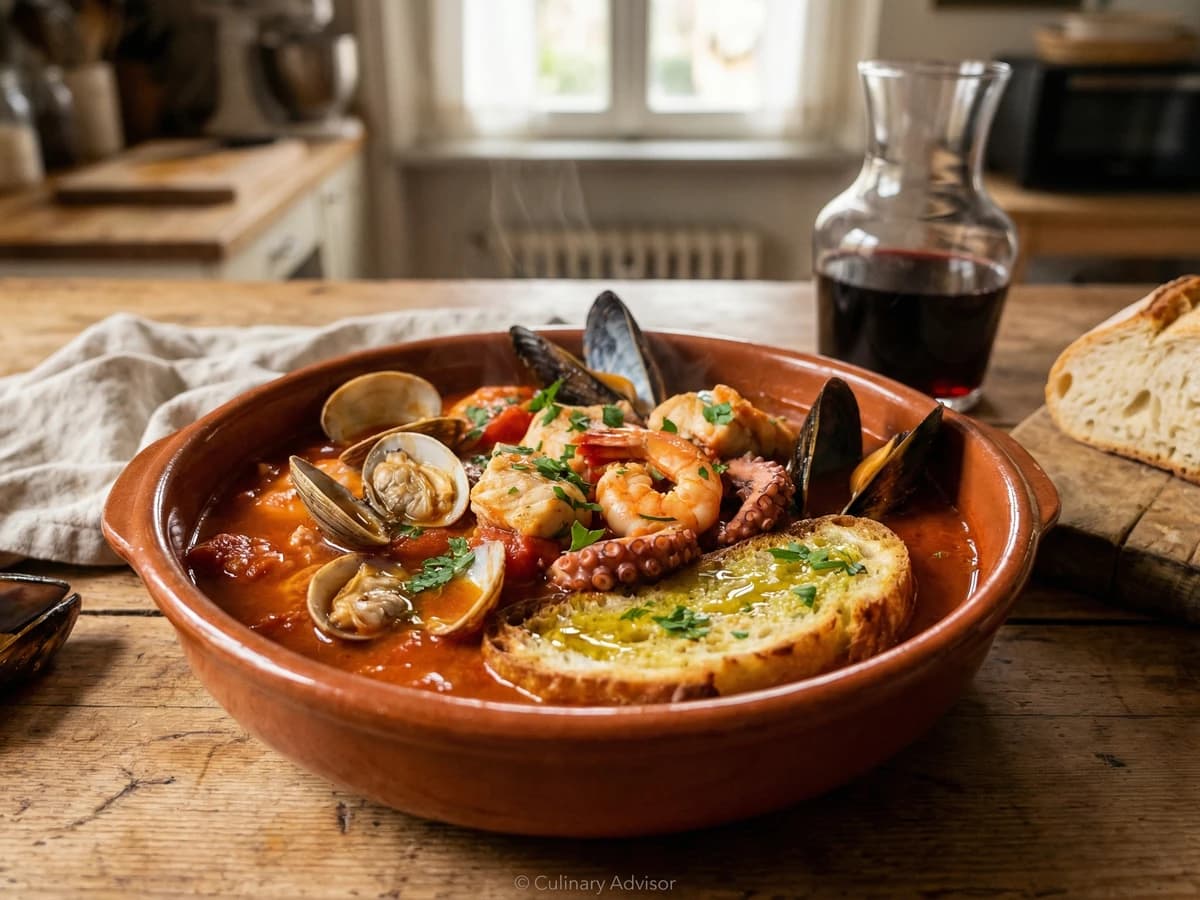
The great fish stew of Livorno, where fishermen transformed the unsellable catch into something magnificent. Five types of seafood minimum, one for each 'c' in the name, swimming in a spicy tomato broth and served over bread rubbed raw with garlic.
Chef Graziella
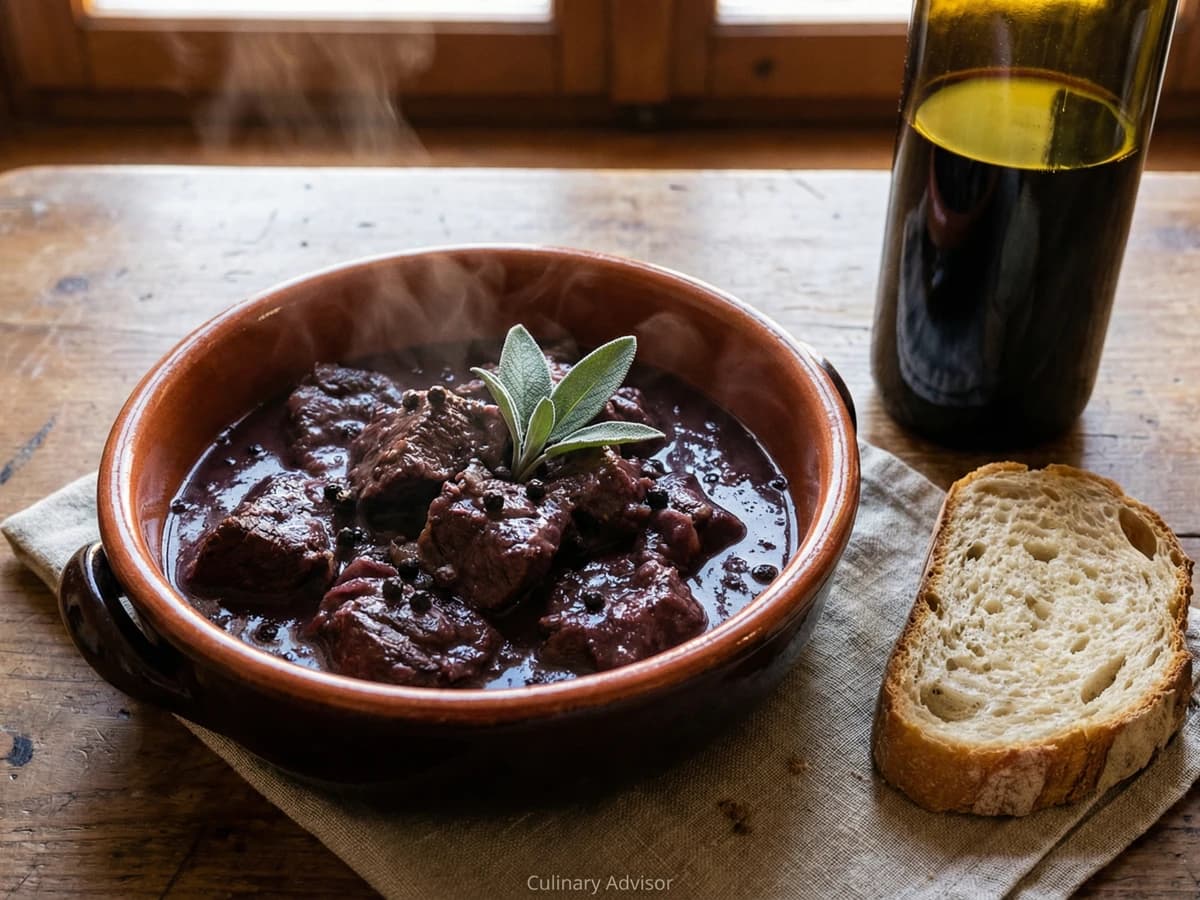
Beef braised in a river of Chianti with a startling quantity of black pepper. The dish that Brunelleschi's workers ate while building the dome of Florence. Five ingredients. Five hours. Nothing else.
Chef Graziella
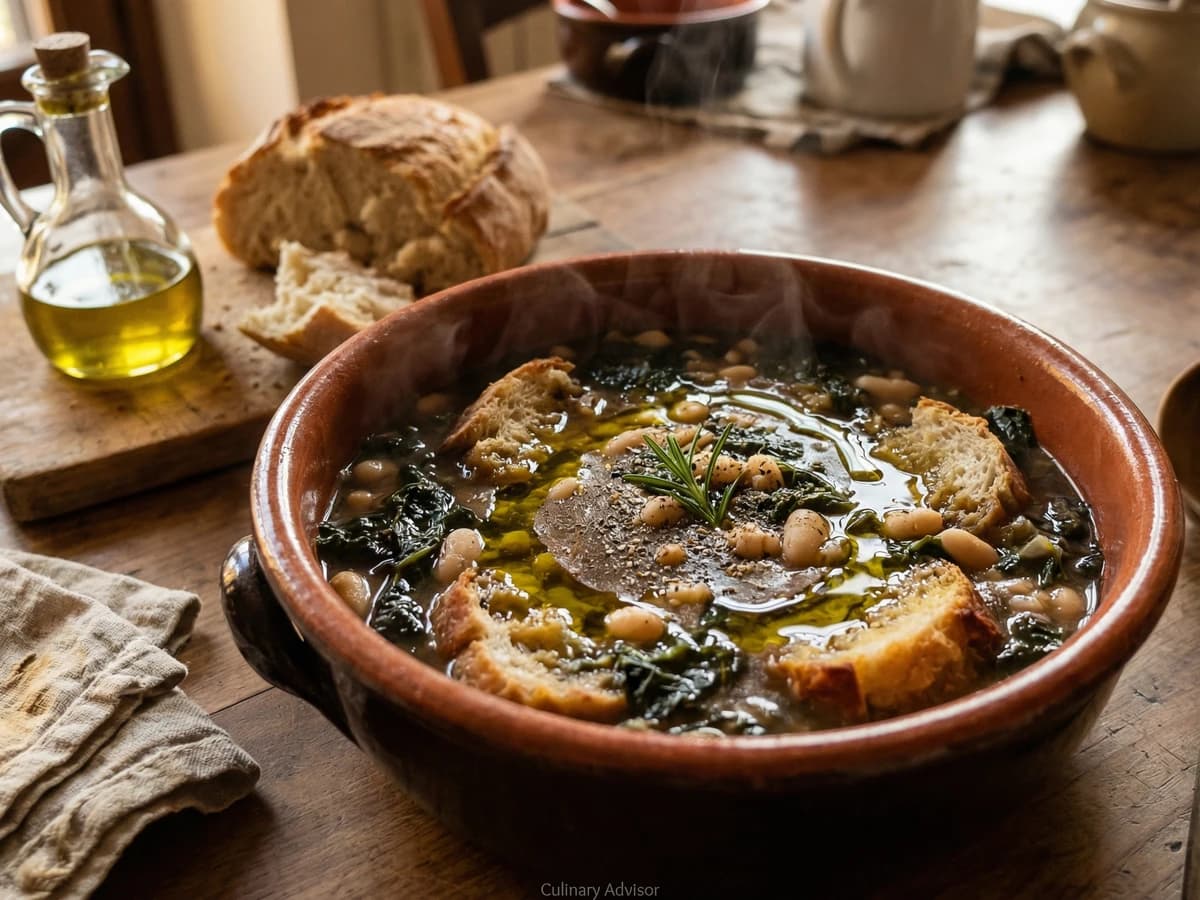
The great bread soup of Tuscany, where yesterday's bread, dark winter greens, and humble white beans prove that poverty creates genius. The name means reboiled. Follow that instruction.