
Chef Lupita
Arroz a la Oaxaqueña
Oaxaca's red rice, stained with tomato and fried in lard, steamed with carrots, ejotes, black beans, and epazote. The side that anchors a Oaxacan family meal and earns its place beside the main.
A cooking platform built around craft, culture, and the stories behind what we eat.

Created by
Estado de México potatoes cooked in a sharp green tomatillo salsa, bright with chile serrano and cilantro, the kind of weeknight cazuela that stretches a few pesos into dinner.
Estado de México, the central highlands around Toluca and Texcoco, is where I place this version. Potatoes grow well in the cool altitude, tomatillos fill the mercado baskets, and chile serrano gives the salsa its clean bite. This is not a party dish. This is what you cook when the week is long and the money is tight.
The salsa verde is the dish. Tomatillos are boiled just until they turn olive green, not until they collapse into sour water. Serrano, white onion, garlic, and cilantro go into the blender, then the salsa is fried in a little manteca de cerdo until it darkens and smells cooked. No me vengas con atajos. Raw blender salsa poured over potatoes tastes thin and nervous.
I learned this kind of cazuela from women who cooked at market fondas, where every ingredient had to earn its place. Potatoes stretch the meal. Salsa gives them character. A clay cazuela on the table, warm corn tortillas beside it, maybe frijoles de la olla if there is time. Saber cocinar es saber vivir.
Potatoes are native to the Andes, not Mexico, but they became part of central Mexican home cooking after colonial trade routes carried them north and cooks adapted them to local sauces. Salsa verde built on tomatillo, a pre-Columbian ingredient cultivated in Mesoamerica for centuries, is one of the clearest examples of an indigenous base surviving inside everyday mestizo cooking. In the central highlands, tomatillo and serrano salsa became a practical way to season inexpensive vegetables, eggs, chicken, and pork without turning every meal into a costly stew.
Quantity
1 1/2 pounds
peeled if thick-skinned and cut into 1-inch pieces
Quantity
1 pound
husked and rinsed
Quantity
2 to 3
stemmed
Quantity
1/4 medium
Quantity
2
peeled
Quantity
1/2 cup, packed
Quantity
1 teaspoon, plus more to taste
Quantity
2 tablespoons
Quantity
1/2 cup
Quantity
for serving
| Ingredient | Quantity |
|---|---|
| small waxy potatoespeeled if thick-skinned and cut into 1-inch pieces | 1 1/2 pounds |
| tomatilloshusked and rinsed | 1 pound |
| fresh chile serranostemmed | 2 to 3 |
| white onion | 1/4 medium |
| garlic clovespeeled | 2 |
| fresh cilantro leaves and tender stems | 1/2 cup, packed |
| kosher salt | 1 teaspoon, plus more to taste |
| manteca de cerdo | 2 tablespoons |
| potato cooking water or warm water | 1/2 cup |
| warm corn tortillas (optional) | for serving |
Put the potatoes in a saucepan and cover with cold water by one inch. Add a generous pinch of salt. Bring to a simmer and cook 10 to 12 minutes, until a knife enters easily but the pieces still hold their shape. Drain, saving 1/2 cup of the cooking water. Do not cook them until they fall apart. The potatoes still need to finish in the salsa.
Place the tomatillos and chile serrano in a small pot and cover with water. Simmer 6 to 8 minutes, just until the tomatillos turn olive green and soften. Pull them out before they burst. Overcooked tomatillo gives you a dull, sour salsa, and then you will blame the recipe. The recipe is not the problem.
Transfer the tomatillos and serranos to a blender with the white onion, garlic, cilantro, salt, and 1/4 cup of the saved potato water. Blend until smooth but still alive with green flecks. Taste for salt. The salsa should be bright and sharp because the potatoes will soften it.
Heat the manteca de cerdo in a 10-inch clay cazuela or heavy skillet over medium heat. Pour in the salsa carefully. It will sputter. Cook 5 to 7 minutes, stirring often, until the color deepens and the raw onion smell disappears. La manteca es el sabor. This frying step gives the salsa body so it clings to the potatoes instead of sliding off like green water.
Add the drained potatoes to the fried salsa and fold gently so the edges do not break. Add the remaining potato water only if needed. Simmer 6 to 8 minutes, until the potatoes absorb the salsa and the sauce coats them in a glossy green layer. Taste again for salt. Potatoes are greedy. They take more salt than you think.
Serve warm directly from the cazuela with corn tortillas. This is a side dish, yes, but with frijoles de la olla it becomes a meal. Cada estado, su propia cocina, and the central highlands know how to feed a table without wasting anything.
1 serving (about 275g)
Culinary guides, cultural storytelling, and the editorial depth that makes cooking meaningful.
Discover Culinary ExplorerChef Lupita
Oaxaca's red rice, stained with tomato and fried in lard, steamed with carrots, ejotes, black beans, and epazote. The side that anchors a Oaxacan family meal and earns its place beside the main.
Chef Lupita
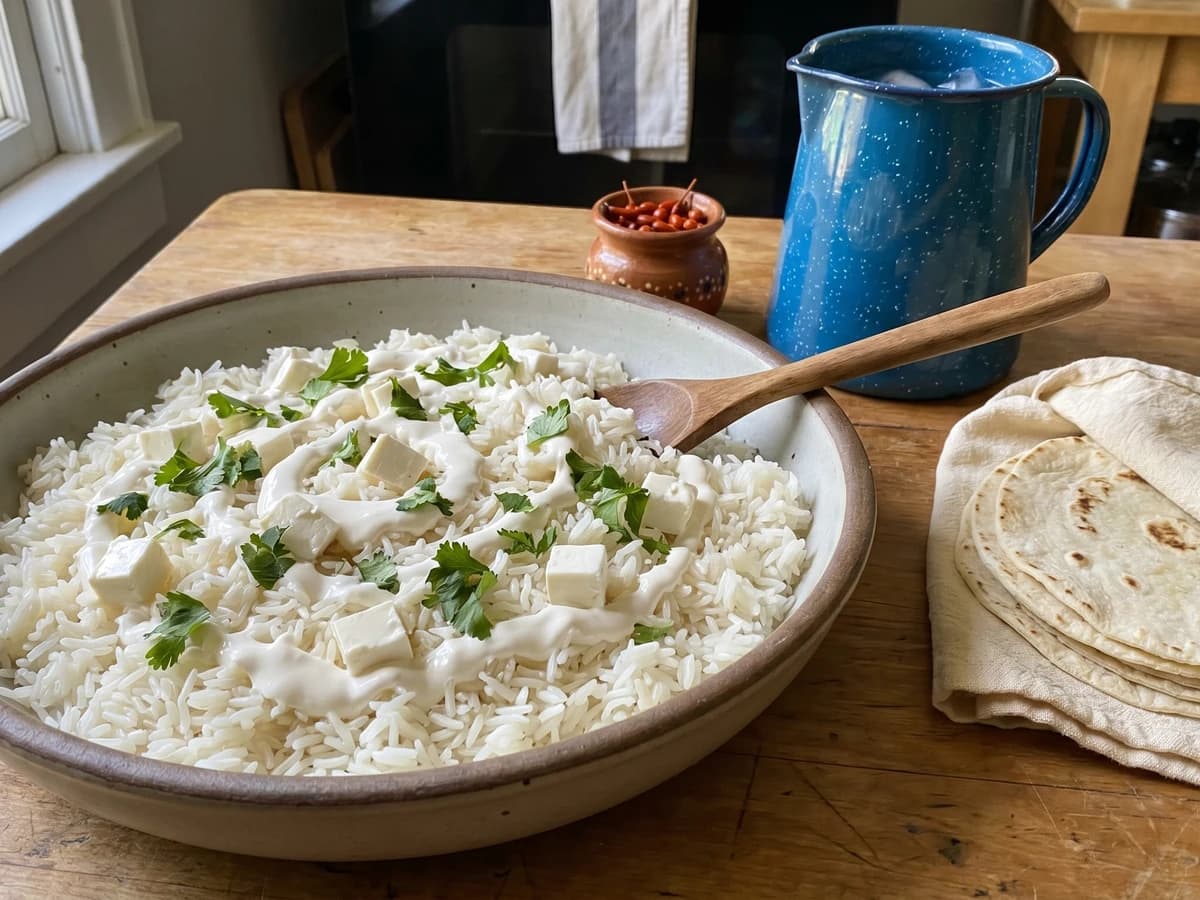
Sinaloa's home-cook white rice topped with cold cubes of cream cheese that soften into the warm grain, finished with crema and a sprinkle of chiltepin at the table. The trick that makes a side dish feel like a small luxury.
Chef Lupita
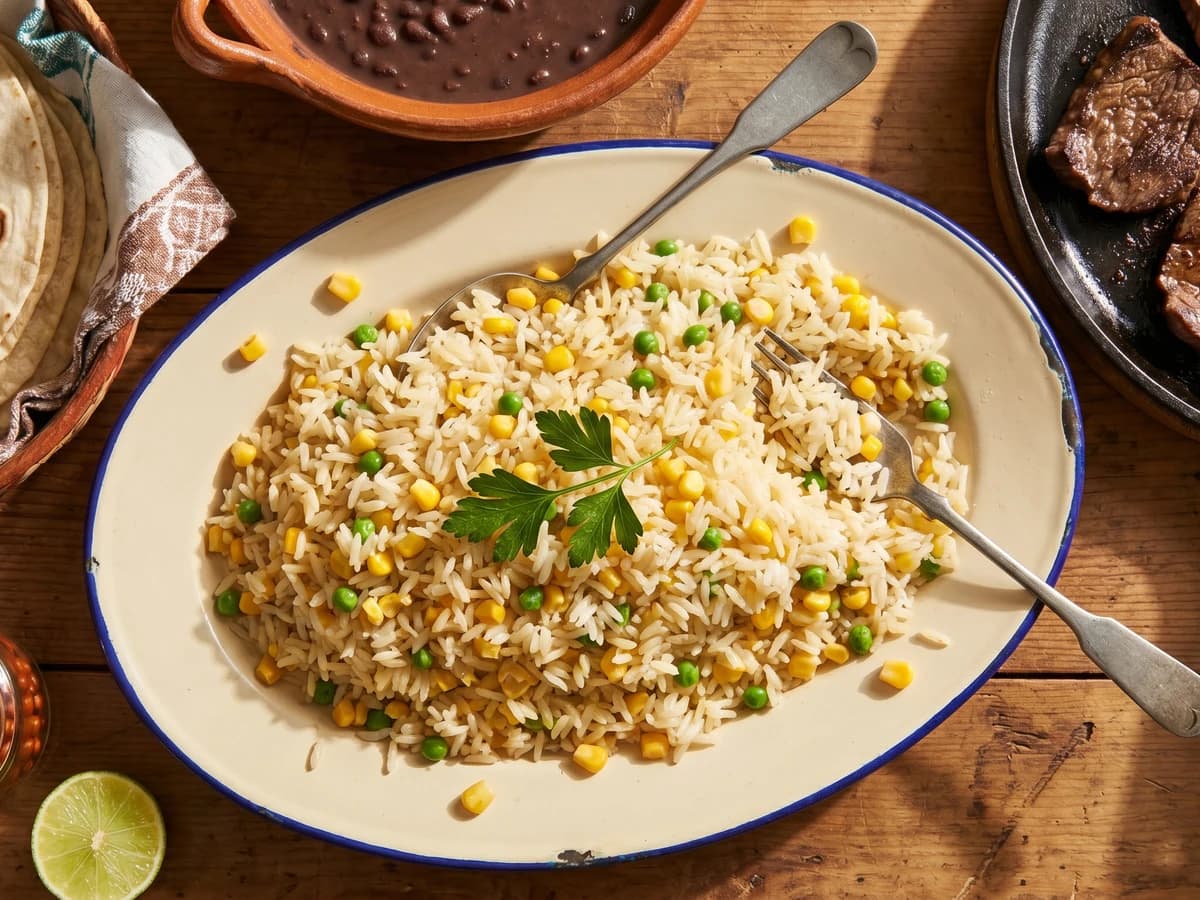
Sonora's white rice, toasted in butter and steamed with sweet corn and tender peas. The clean, quiet partner to a plate of carne asada, not the red rice of central Mexico.

Chef Lupita
Yucatán's white rice with sweet corn kernels, toasted in lard with garlic and onion. The quiet base that holds up against the peninsula's bold achiote-stained stews.