
Chef Lupita
Arroz a la Oaxaqueña
Oaxaca's red rice, stained with tomato and fried in lard, steamed with carrots, ejotes, black beans, and epazote. The side that anchors a Oaxacan family meal and earns its place beside the main.
A cooking platform built around craft, culture, and the stories behind what we eat.
Created by
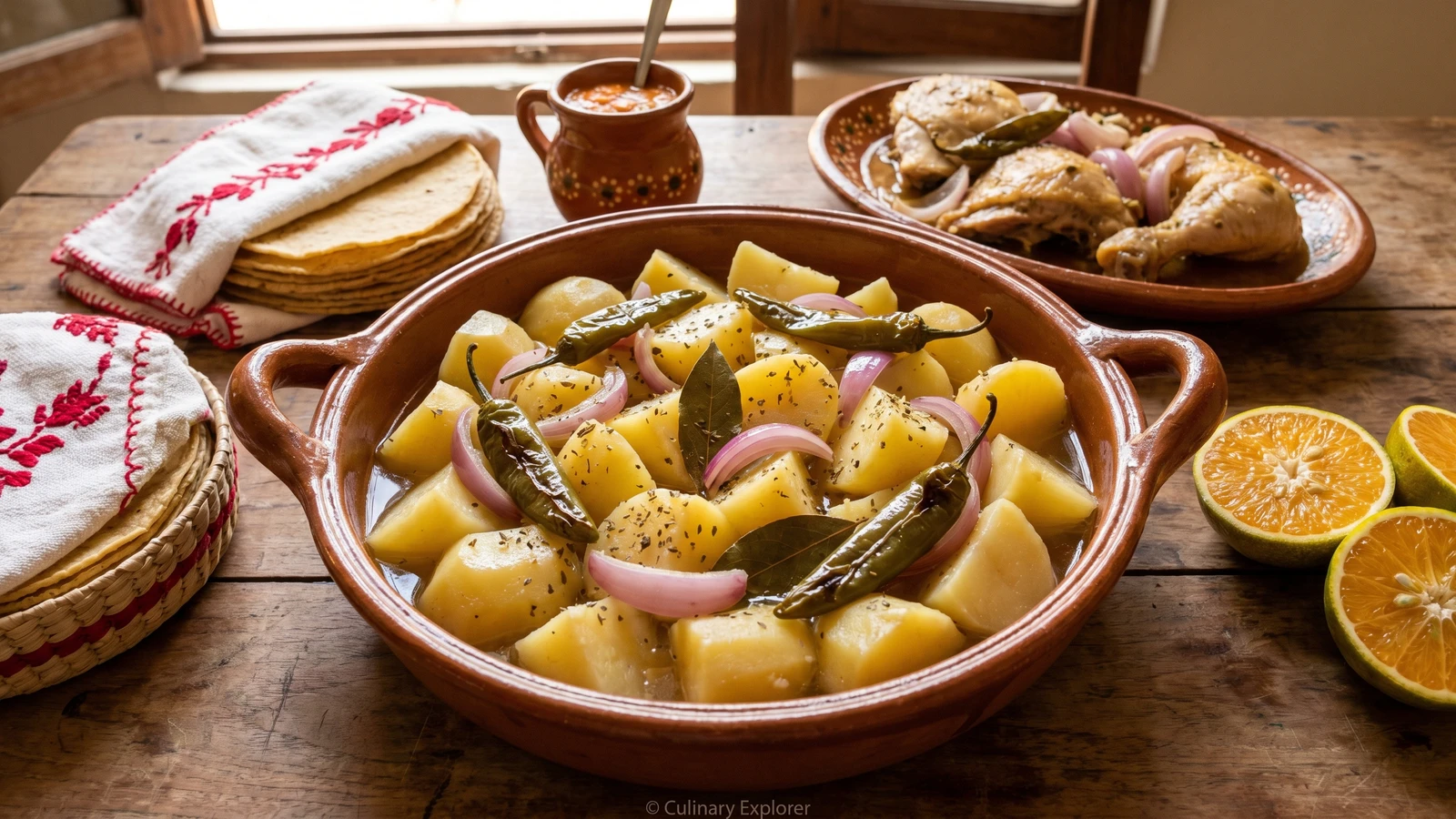
Yucatán's pickled potatoes, simmered with recado blanco, sour orange, and roasted chile xcatik until they drink the escabeche. The side that anchors a Valladolid table.
These potatoes are from Yucatán. More specifically, they come from the eastern part of the peninsula, from Valladolid and the small towns around it, where they sit on the plate next to pollo en escabeche oriental and quietly do half the work of the meal.
Yucatán is not Mexico the way most foreigners imagine Mexico. The peninsula spent centuries with stronger trade ties to Cuba and New Orleans than to Mexico City. The cuisine carries Maya pre-Columbian techniques layered with Lebanese, Spanish, and Caribbean influences, and it tastes nothing like the food of Jalisco or Oaxaca or the north. The chile of choice is the xcatik, pale yellow, slender, smoky when roasted, never crushed into the dish but laid in whole. The acid is naranja agria, the bitter Seville orange that grows in courtyards across the peninsula. The spice paste is recado blanco, peppercorn-and-allspice-forward, descended from Maya practice and refined through the colonial spice trade that ran through the port of Campeche.
I learned this dish from a señora in Valladolid named Doña Cristina who ran a small fonda two blocks from the cathedral. She told me the secret was to roast the chile xcatik until it blistered but not to chop it, to use real manteca de cerdo and not oil, and to let the potatoes rest in the escabeche for the better part of an hour before serving. She also told me that papas en escabeche without pollo en escabeche oriental on the same table was a sad meal. She was right about all of it.
If you cannot find naranja agria or xcatik or recado blanco where you live, I will tell you what to use instead. But understand what you are missing. This is a Yucatecan dish and the Yucatán is its own country in matters of the kitchen. Cada estado, su propia cocina.
Escabeche as a technique arrived in the Americas with the Spanish, who had absorbed it from Persian and Arab cooking traditions during the long centuries of al-Andalus, where the word 'sikbaj' described meat preserved in vinegar. In the Yucatán, the technique merged with Maya recados and the local naranja agria to produce a regional escabeche distinct from anything in central or northern Mexico. The chile xcatik (pronounced 'sh-kah-TEEK,' from the Maya word for 'blond' or 'pale') is endemic to the peninsula and was cultivated by the Maya long before the conquest; its mild heat and grassy aroma make it the defining chile of Yucatecan escabeche, never substituted within the peninsula itself.
Quantity
2 pounds
peeled and cut into 1-inch chunks
Quantity
4
left whole, with stems on (or chiles guero if xcatik is unavailable)
Quantity
1 large
sliced into thin half-moons
Quantity
1
cloves separated and peeled
Quantity
2 tablespoons
Quantity
1/2 cup
or 1/4 cup fresh orange juice mixed with 1/4 cup fresh lime juice
Quantity
1/3 cup
Quantity
1 cup
Quantity
2 tablespoons
Quantity
2
preferably fresh
Quantity
1 teaspoon
Quantity
1/2 teaspoon
Quantity
4
Quantity
1 teaspoon, plus more to taste
| Ingredient | Quantity |
|---|---|
| waxy yellow potatoespeeled and cut into 1-inch chunks | 2 pounds |
| chiles xcatikleft whole, with stems on (or chiles guero if xcatik is unavailable) | 4 |
| red onionsliced into thin half-moons | 1 large |
| head of garliccloves separated and peeled | 1 |
| recado blanco (Yucatecan white spice paste) | 2 tablespoons |
| naranja agria (sour orange juice)or 1/4 cup fresh orange juice mixed with 1/4 cup fresh lime juice | 1/2 cup |
| apple cider vinegar | 1/3 cup |
| chicken broth or water | 1 cup |
| manteca de cerdo (pork lard) | 2 tablespoons |
| bay leavespreferably fresh | 2 |
| dried Mexican oregano, preferably oregano yucateco | 1 teaspoon |
| whole black peppercorns | 1/2 teaspoon |
| whole allspice berries (pimienta gorda) | 4 |
| kosher salt | 1 teaspoon, plus more to taste |
Heat a dry comal or heavy skillet over medium-high. Place the whole chiles xcatik directly on the hot surface. Roast them, turning with tongs, until the pale yellow skin blisters and blackens in patches, about 6 to 8 minutes total. You want char marks, not a uniform burn. Transfer to a plate and leave them whole, stems on. In Valladolid, the chiles go into the escabeche whole and the diner pulls one out if they want the heat. This is a Yucatecan dish, not a Sonoran one. The chile is presence, not punishment.
Place the potato chunks in a pot, cover with cold water by an inch, and add a generous pinch of salt. Bring to a boil and cook for 8 to 10 minutes, until the potatoes are tender at the edges but still firm at the center. A paring knife should meet some resistance. Drain and set aside. They will finish cooking in the escabeche and you do not want them collapsing into the vinegar.
In a small bowl, whisk the recado blanco into the naranja agria until it dissolves into a smooth, slightly cloudy liquid. The recado is the soul of Yucatecan cooking, the pre-Columbian spice technology of the Maya updated with the peppercorns, allspice, cinnamon, and cloves that arrived through the colonial trade routes that ran through Campeche. Use a real Yucatecan brand if you can find one. La Anita and El Yucateco both make a serviceable recado blanco. The homemade version is better but the jarred one is not a compromise you need to apologize for.
In a wide cazuela or heavy skillet, melt the manteca de cerdo over medium heat. Add the sliced red onion and the peeled garlic cloves. Cook, stirring, for 5 to 7 minutes, until the onion turns translucent and the garlic softens but does not brown. La manteca es el sabor. Vegetable oil here gives you a flatter escabeche. The lard carries the spice paste in a way that oil cannot.
Pour the recado-and-sour-orange mixture into the cazuela. Add the vinegar, chicken broth, bay leaves, oregano, peppercorns, allspice, and salt. Bring to a simmer. Let it bubble for 3 minutes so the raw edge of the vinegar softens and the spices wake up. Taste the liquid. It should be sharp, savory, and aromatic, with the lemony note of the recado coming through. Adjust salt now.
Add the parboiled potatoes and the roasted chiles xcatik to the cazuela. Spoon the liquid over them so every piece is dressed. Lower the heat, partially cover, and simmer for 15 to 20 minutes, gently turning the potatoes once or twice. They should absorb the escabeche and turn pale gold from the recado, soft on the outside but still holding shape. The liquid will reduce to a glossy, brothy dressing that coats the potatoes without drowning them.
Pull the cazuela off the heat and let it sit, covered, for at least 15 minutes before serving. The potatoes need this time to drink the escabeche. They can be served warm or at room temperature, which is how they appear next to pollo en escabeche oriental on the tables of Valladolid. The next day, they are better. Recetas probadas y garantizadas.
1 serving (about 230g)
Culinary guides, cultural storytelling, and the editorial depth that makes cooking meaningful.
Discover Culinary ExplorerChef Lupita
Oaxaca's red rice, stained with tomato and fried in lard, steamed with carrots, ejotes, black beans, and epazote. The side that anchors a Oaxacan family meal and earns its place beside the main.
Chef Lupita
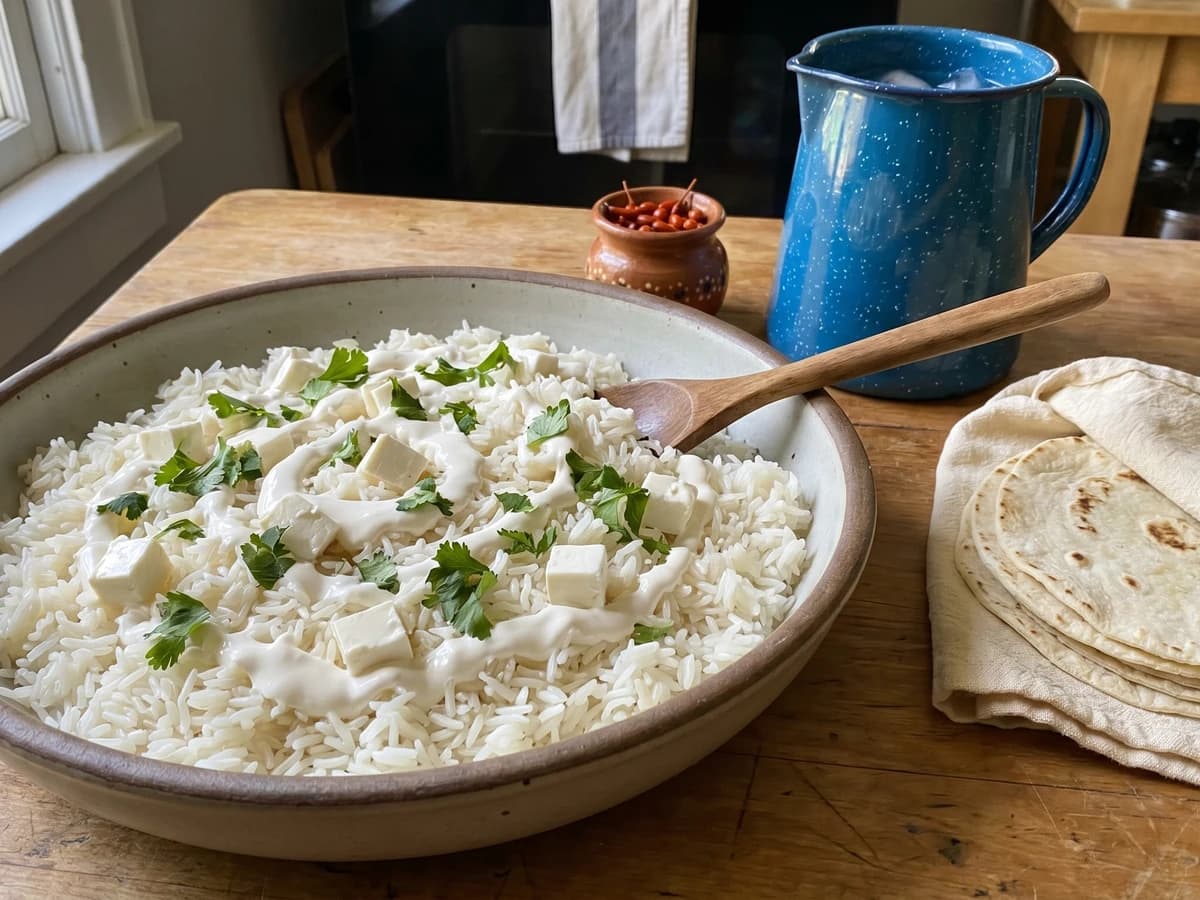
Sinaloa's home-cook white rice topped with cold cubes of cream cheese that soften into the warm grain, finished with crema and a sprinkle of chiltepin at the table. The trick that makes a side dish feel like a small luxury.
Chef Lupita
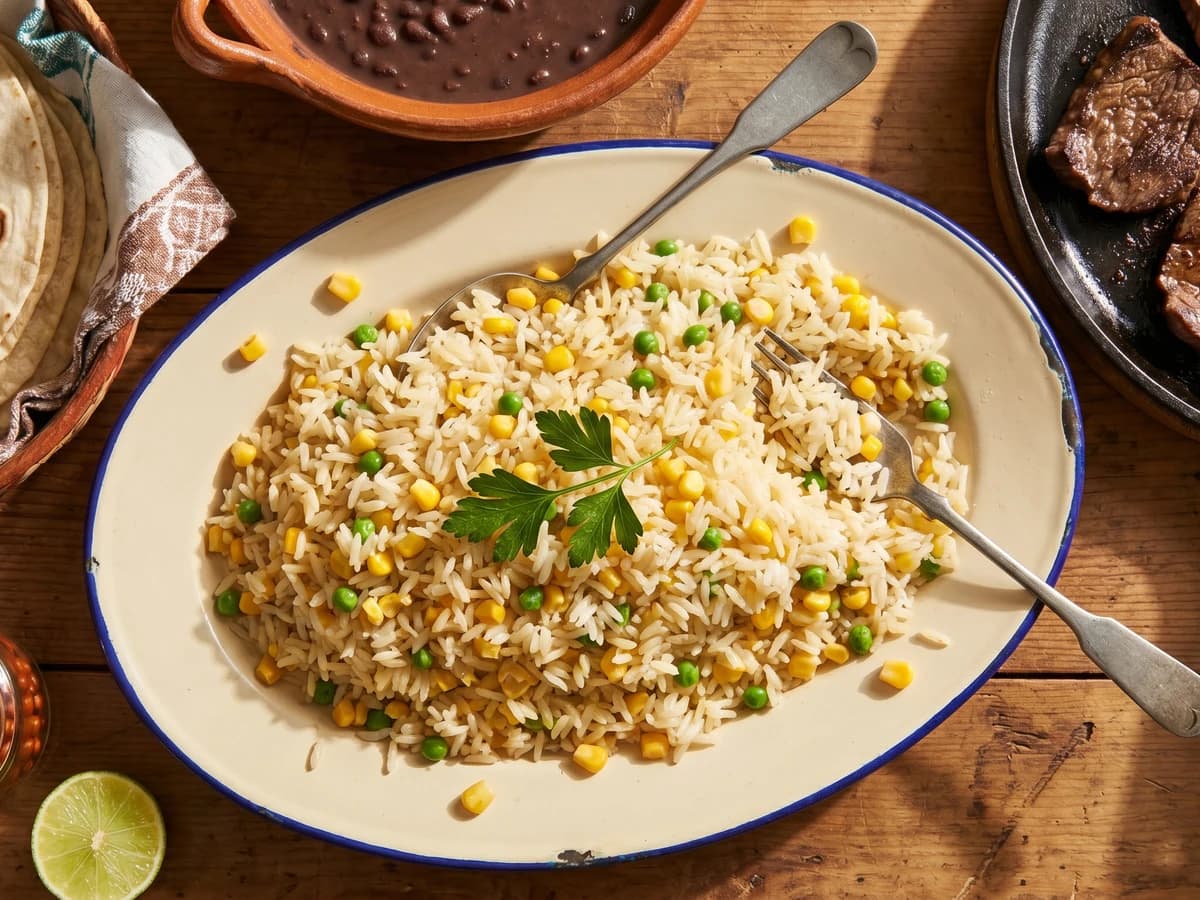
Sonora's white rice, toasted in butter and steamed with sweet corn and tender peas. The clean, quiet partner to a plate of carne asada, not the red rice of central Mexico.

Chef Lupita
Yucatán's white rice with sweet corn kernels, toasted in lard with garlic and onion. The quiet base that holds up against the peninsula's bold achiote-stained stews.