Chef Makoa
Kumara (Rapa Nui Sweet Potato)
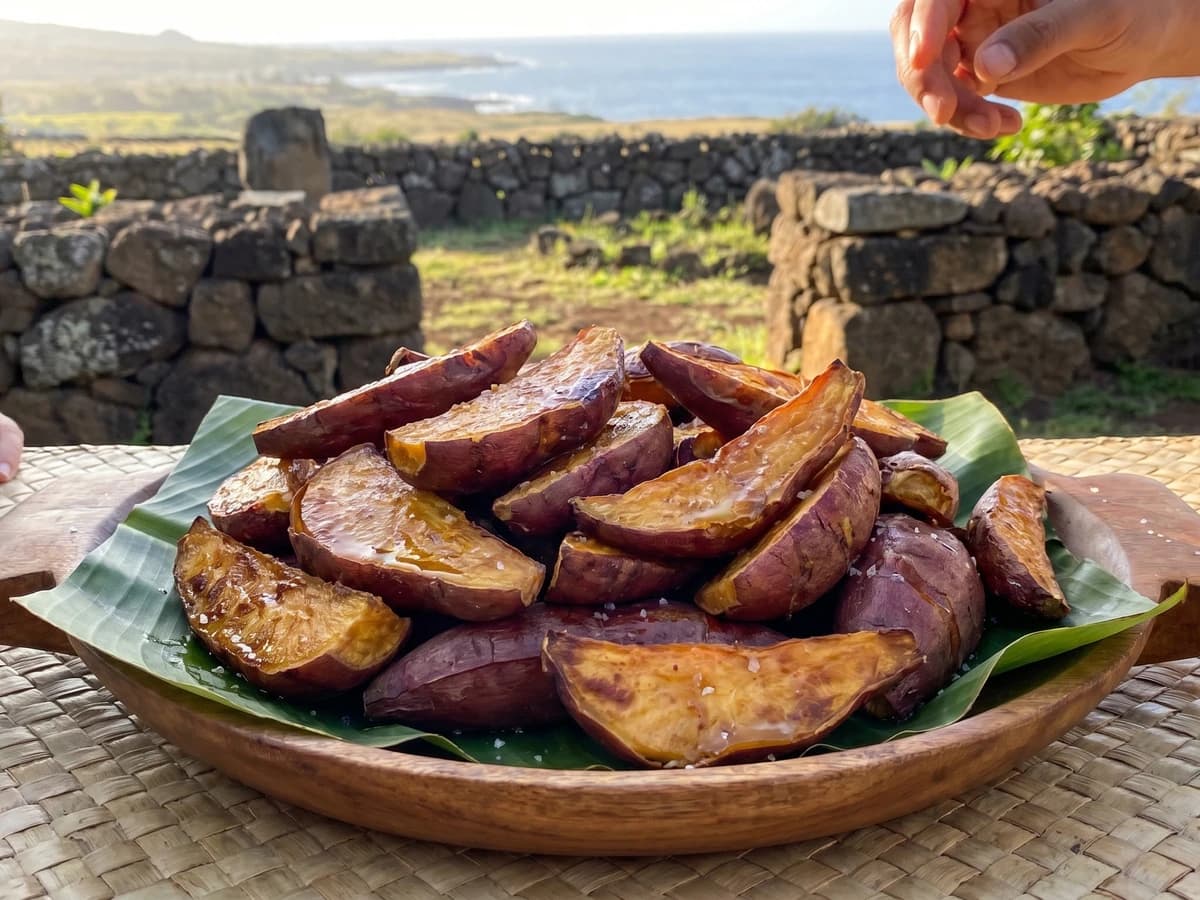
Rapa Nui kumara, the sweet potato of stone gardens and salt wind, roasted tender in a home oven or boiled for the weeknight table, the daily bread of the far corner.
A cooking platform built around craft, culture, and the stories behind what we eat.
Created by
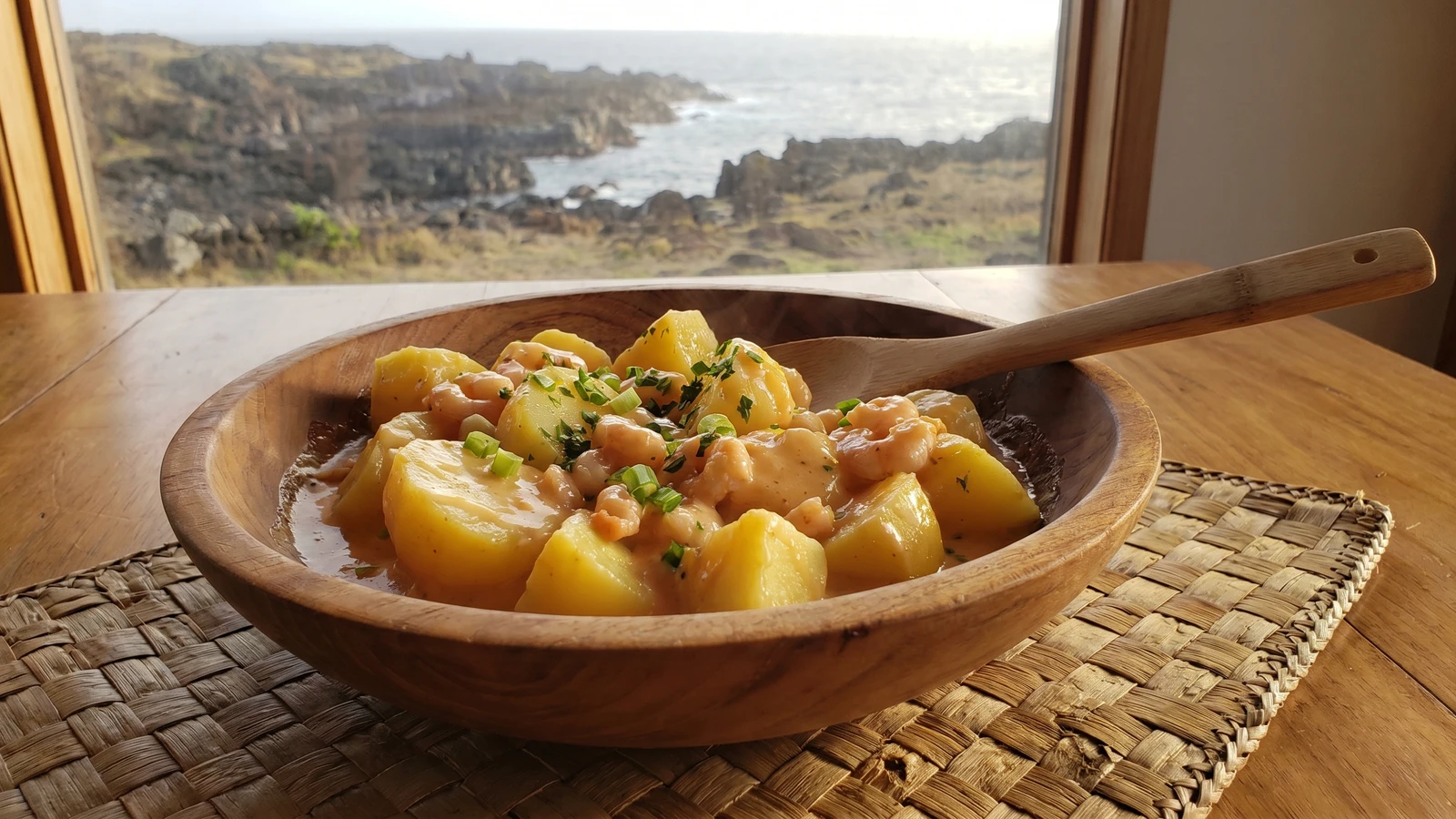
Boiled potatoes under a warm, creamy shrimp sauce, the kind of Rapa Nui comfort plate that tells the truth: old canoe roots beside Chilean overlay, ocean food made weeknight-simple.
At the far corner of the Triangle, Rapa Nui sits alone in a big ocean, but never outside the family. One ocean, one canoe, one root. The old Rapanui table held kumara, the sweet potato, and taro, banana, chicken, fish from rough water, and the umu pae, the Rapa Nui stone earth oven. This dish is not that deep ceremonial food. This is everyday food with a Chilean coat on it: papas, potatoes, with salsa de camarones, shrimp sauce, made into island comfort.
I like that kind of honesty. The islands eat what history put in the pantry, and the people make it feed the family. In Hawaiʻi we know plate lunch and Spam sit beside poi and laulau. In Sāmoa, sapasui sits beside palusami. On Rapa Nui, Spanish names and Chilean groceries sit beside the older ocean knowledge. Keeper, not gatekeeper, yeah?
So cook the potatoes gently, no breaking them to water. Make the shrimp sauce creamy but not heavy, with onion, garlic, a little tomato, and enough stock to taste like the sea came through the pot. This belongs to Rapa Nui's contemporary table, not a blurred island plate. Serve it warm, generous, with chopped parsley or green onion if that's what you have. Eat what you have, and no shame when the food is honest.
Rapa Nui was annexed by Chile in 1888, and the island's modern table carries that history in Spanish names, imported staples, and everyday dishes shaped by Chilean pantry habits. Papas con salsa de camarones is best understood as contemporary Rapa Nui comfort food rather than pre-contact deep food: potatoes and cream sauce layered over an older Polynesian food world of kumara, taro, fish, chicken, and umu pae cooking. That mix is not a failure of tradition; it is how island kitchens survive pressure and keep feeding people.
Quantity
2 pounds
peeled or scrubbed and cut into large chunks
Quantity
1 tablespoon
for the potato water, plus more to taste
Quantity
1 pound
peeled and deveined, shells reserved if available
Quantity
2 cups
Quantity
2 tablespoons
Quantity
1 small
finely diced
Quantity
2
minced
Quantity
1 small
grated or finely chopped
Quantity
1 tablespoon
Quantity
1/2 cup
Quantity
1 tablespoon
Quantity
to taste
Quantity
2 tablespoons
chopped
| Ingredient | Quantity |
|---|---|
| waxy potatoespeeled or scrubbed and cut into large chunks | 2 pounds |
| sea saltfor the potato water, plus more to taste | 1 tablespoon |
| medium shrimppeeled and deveined, shells reserved if available | 1 pound |
| water or light fish stock | 2 cups |
| neutral oil or butter | 2 tablespoons |
| onionfinely diced | 1 small |
| garlic clovesminced | 2 |
| ripe tomatograted or finely chopped | 1 small |
| all-purpose flour | 1 tablespoon |
| evaporated milk or heavy cream | 1/2 cup |
| lemon or lime juice | 1 tablespoon |
| black pepper | to taste |
| parsley or green onion (optional)chopped | 2 tablespoons |
Put the potatoes in a pot, cover with cold water by an inch, and season the water with the tablespoon of sea salt. Bring to a gentle boil, then lower to a steady simmer until a knife slides through clean, 15 to 20 minutes. Don't thrash them around. You want whole, tender pieces that can hold the sauce.
If you have the shrimp shells, put them in a small pot with the water or fish stock and simmer 10 minutes, until the liquid smells clean and sweet like shrimp, not strong. Strain and keep the stock warm. If you bought peeled shrimp, no problem, use light fish stock or water and keep moving.
Warm the oil or butter in a wide pan over medium heat. Add the onion and cook until soft and glossy, about 5 minutes, then add the garlic for 30 seconds. Stir in the tomato and cook until it darkens a little and the pan smells round and savory.
Sprinkle in the flour and stir for a full minute so the raw taste cooks off. Pour in 1 1/2 cups of the warm shrimp stock a little at a time, stirring until the sauce smooths out. Let it bubble softly until it coats the spoon, creamy enough to cling to potato but loose enough to run into the cracks.
Add the shrimp and cook just until they curl and turn pink, 2 to 3 minutes. No punish the shrimp. When they go from glassy to opaque, they are done. Stir in the evaporated milk or cream and keep the heat low so the sauce stays smooth.
Drain the potatoes and lay them in a warm serving bowl. Season the sauce with lemon or lime juice, black pepper, and salt, then spoon it over the potatoes so the glossy shrimp sauce settles over the top and down the sides. Finish with parsley or green onion if using, and serve family-style.
1 serving (about 470g)
Culinary guides, cultural storytelling, and the editorial depth that makes cooking meaningful.
Discover Culinary ExplorerChef Makoa
Rapa Nui kumara, the sweet potato of stone gardens and salt wind, roasted tender in a home oven or boiled for the weeknight table, the daily bread of the far corner.

Chef Makoa
Rapa Nui's quiet taro, boiled whole or roasted after boiling until the edges crisp, served as the old canoe-crop starch beside fish, greens, or the food of the week.

Chef Makoa
Rapa Nui uhi, the old white yam of the far eastern corner, boiled tender, roasted at the edges, and finished simply with coconut, salt, and lime.
Chef Juliette
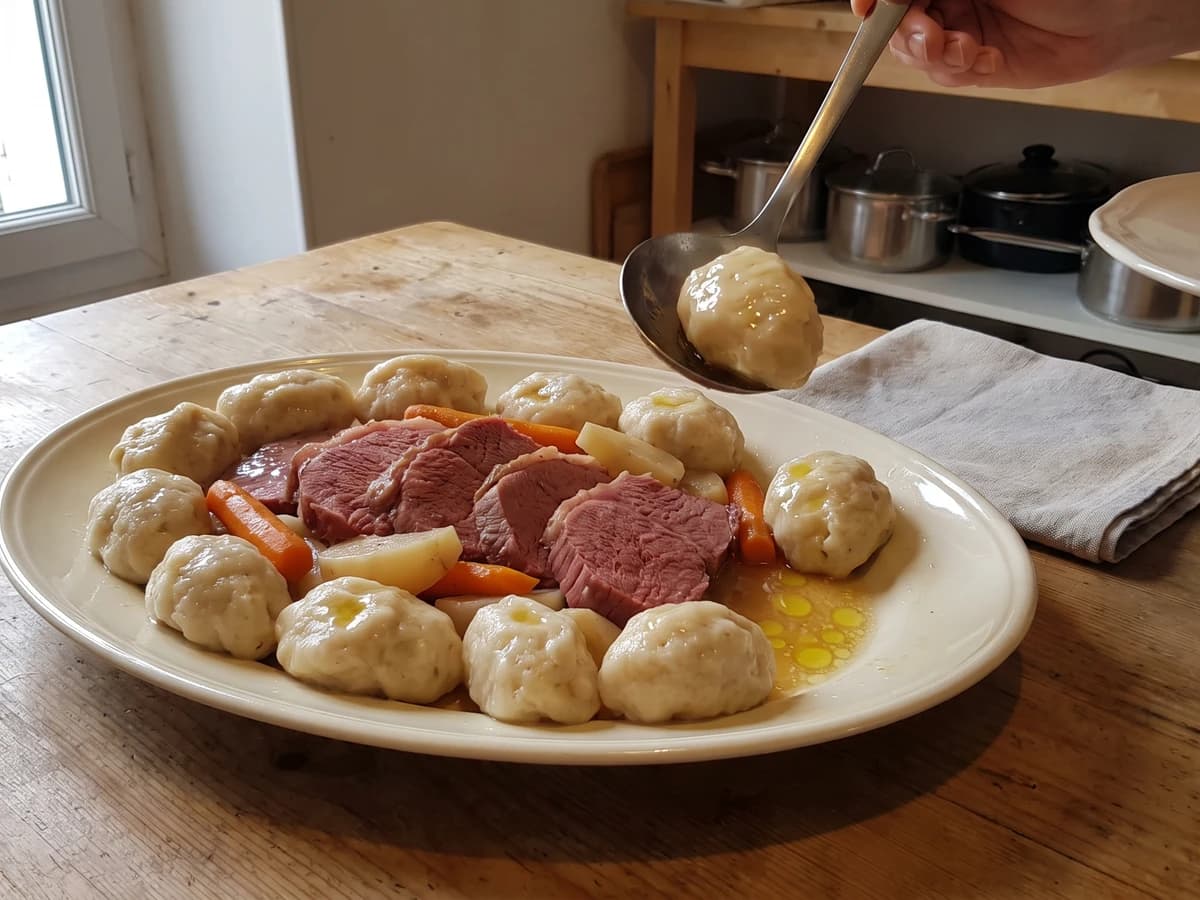
Boulettes au suif, poached beside salt beef, turn equal weights of flour and finely chopped suet into tender, rich dumplings. Keep the beef liquor at a bare tremble and the old garnish works beautifully at home.