
Chef Lupita
Arroz a la Oaxaqueña
Oaxaca's red rice, stained with tomato and fried in lard, steamed with carrots, ejotes, black beans, and epazote. The side that anchors a Oaxacan family meal and earns its place beside the main.
A cooking platform built around craft, culture, and the stories behind what we eat.
Created by
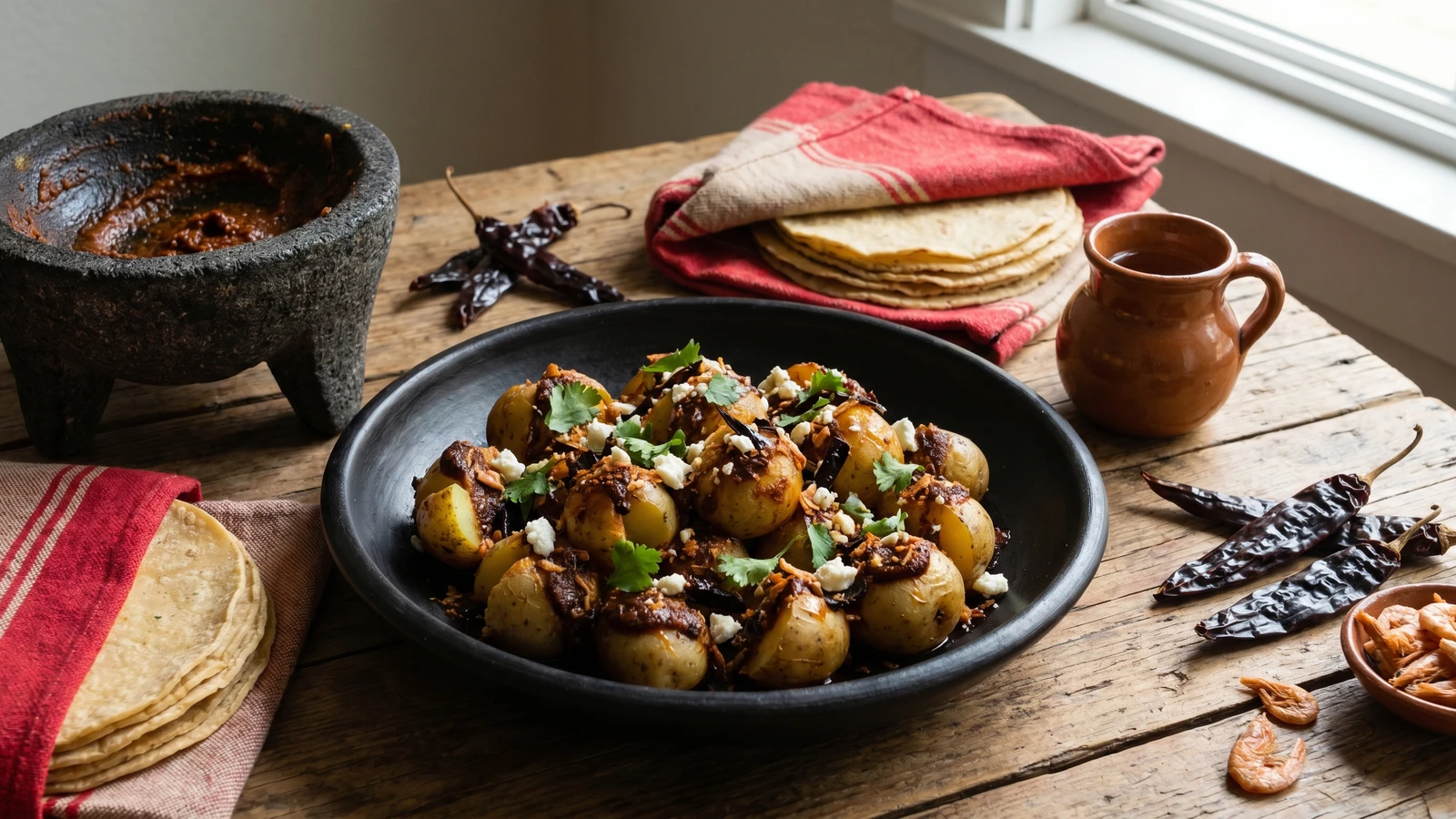
Oaxaca's Sierra Mixe potatoes dressed in chintextle, the smoke-dried chile pasilla mixe pounded with dried shrimp, charred garlic, and avocado leaf into a paste that turns a humble papa into a regional declaration.
This is a Oaxacan dish, and more specifically a Sierra Mixe one. The Mixe people, the Ayuujk, live in the rugged highlands northeast of the city of Oaxaca, and the chile that defines this dish, chile pasilla mixe, grows almost nowhere else. It is naturally smoke-dried over wood fires the way the Mixe have been doing it for generations, and that smoke is not a seasoning, it is the entire identity of the chile. If you cannot find pasilla mixe, you cannot make chintextle. You can make something else and call it something else. Cada estado, su propia cocina.
Chintextle is the paste itself. Pounded chile, dried shrimp, charred garlic, oregano de monte, hoja de aguacate, salt. That is it. The Mixe spread it on tlayudas, eat it with beans, stir it into eggs, and yes, toss it with boiled potatoes that have been crisped in lard. The dish is humble in its bones, papas, but the chintextle does the work of a dish three times its size. Smoky, salty from the camaron seco, with the faint anise of avocado leaf hovering behind everything.
I learned this version from a senora named Dona Eufemia in the Tlacolula market, in 2014. She was selling chintextle by the half-kilo in clear plastic bags and she let me sit on a stool behind her stall for two hours while she explained why the chile has to be torn, not chopped, and why the shrimp goes in with heads on. I wrote it in the same notebook I carry now. The Mixe do not need recognition from anyone outside the Sierra to know what they have. But the rest of us should know. Saber cocinar es saber vivir.
The chile pasilla mixe, also called chile pasilla oaxaqueno or chile mixe, is a smoke-dried variety of Capsicum annuum cultivated almost exclusively in the Mixe highlands of northeastern Oaxaca, where indigenous farmers cure the fresh chiles in wood-fired adobe smokers using oak and mesquite, a technique documented in colonial-era accounts and likely far older. Chintextle itself derives its name from the Nahuatl 'chiltextli,' meaning ground chile, and the paste belongs to a broader Oaxacan family of chile-and-dried-seafood condiments that pair the inland highlands with the trade routes to the Pacific and Gulf coasts. The dish was added to the Slow Food Ark of Taste in the 21st century as part of an effort to protect the chile pasilla mixe from displacement by industrially produced chiles, and the Sierra Mixe remains one of the few places in Mexico where chile is still smoked at the household level rather than in commercial facilities.
Quantity
2 pounds
scrubbed
Quantity
1 tablespoon
Quantity
8
stemmed and seeded
Quantity
1/3 cup
ground or finely crushed
Quantity
4
unpeeled
Quantity
1 teaspoon
Quantity
1 teaspoon
toasted and crumbled
Quantity
1/2 teaspoon, plus more to taste
Quantity
3 tablespoons
Quantity
1
finely diced
Quantity
1, juiced
Quantity
for serving
Quantity
for serving
Quantity
for serving
warmed
| Ingredient | Quantity |
|---|---|
| small waxy potatoes (papas cambray or fingerlings)scrubbed | 2 pounds |
| kosher salt for the cooking water | 1 tablespoon |
| dried chile pasilla mixe (chile pasilla oaxaqueno)stemmed and seeded | 8 |
| dried shrimp (camaron seco), heads onground or finely crushed | 1/3 cup |
| garlic clovesunpeeled | 4 |
| dried Mexican oregano (preferably oregano de monte) | 1 teaspoon |
| avocado leaves (hoja de aguacate)toasted and crumbled | 1 teaspoon |
| kosher salt | 1/2 teaspoon, plus more to taste |
| pork lard (manteca de cerdo) | 3 tablespoons |
| small white onionfinely diced | 1 |
| lime | 1, juiced |
| fresh cilantro leaves (optional) | for serving |
| crumbled queso fresco or queso seco oaxaqueno (optional) | for serving |
| hand-pressed corn tortillas (optional)warmed | for serving |
Place the scrubbed potatoes in a heavy pot and cover with cold water by two inches. Add the tablespoon of salt. Bring to a boil over high heat, then reduce to a steady simmer. Cook for 15 to 20 minutes, until a knife slides into the largest potato with no resistance. Drain and let them sit until they are cool enough to handle. Cut them in half if they are bigger than a walnut. Leave the skins on. The skin holds the chintextle.
Heat a dry comal or heavy skillet over medium heat. Toast the chile pasilla mixe one at a time, pressing them flat with a spatula for about 20 seconds per side. The skin will puff and the smoke will turn fragrant, deeply smoky, almost like dried chipotle but rounder. Move them to a plate as they finish. On the same comal, char the unpeeled garlic cloves until the skins are blackened in spots and the cloves are soft inside, about 6 to 8 minutes. Peel them once cool.
On the same comal, lower the heat to medium-low and toast the dried shrimp for one to two minutes, stirring constantly, until they smell sharply of the sea and turn a shade darker. Remove. Toast the avocado leaves for 10 seconds per side, until you smell anise. They scorch fast. Watch them.
In a molcajete, work the toasted garlic, salt, and oregano into a paste. Add the avocado leaf and the dried shrimp and grind until the shrimp breaks down completely. Tear the toasted chiles into pieces and add them in batches, grinding until the paste is uniform, dark, and tacky. You should not need to add water. The oils in the chile and the moisture in the garlic carry it. This is chintextle. In a blender it goes faster but the texture will be smoother and slightly less interesting. The molcajete version has the soul.
Heat the lard in a wide cast iron skillet or heavy comal over medium-high until it shimmers. Add the diced onion and cook for two minutes, until it softens and starts to color at the edges. Add the boiled potatoes cut side down where you can. Let them sit undisturbed for three minutes, then turn. You want golden, crisp edges, not a stir-fry. La manteca es el sabor.
Lower the heat to medium. Add three to four heaping tablespoons of the chintextle paste directly to the skillet with the potatoes. Toss gently to coat every piece. The paste will warm, loosen in the lard, and turn from tacky to glossy. Cook for two more minutes so the chile blooms in the fat. Taste for salt. Squeeze the lime over the top off the heat. The acid wakes up the smoke. Asi se hace y punto.
Tip the potatoes into a warm clay cazuela or onto a barro negro platter. Scatter cilantro and crumbled queso fresco over the top. Serve with warm corn tortillas. The leftover chintextle keeps in the refrigerator for two weeks under a film of lard, and you will use it on everything: tlayudas, eggs, beans, more potatoes. Recetas probadas y garantizadas.
1 serving (about 300g)
Culinary guides, cultural storytelling, and the editorial depth that makes cooking meaningful.
Discover Culinary ExplorerChef Lupita
Oaxaca's red rice, stained with tomato and fried in lard, steamed with carrots, ejotes, black beans, and epazote. The side that anchors a Oaxacan family meal and earns its place beside the main.
Chef Lupita
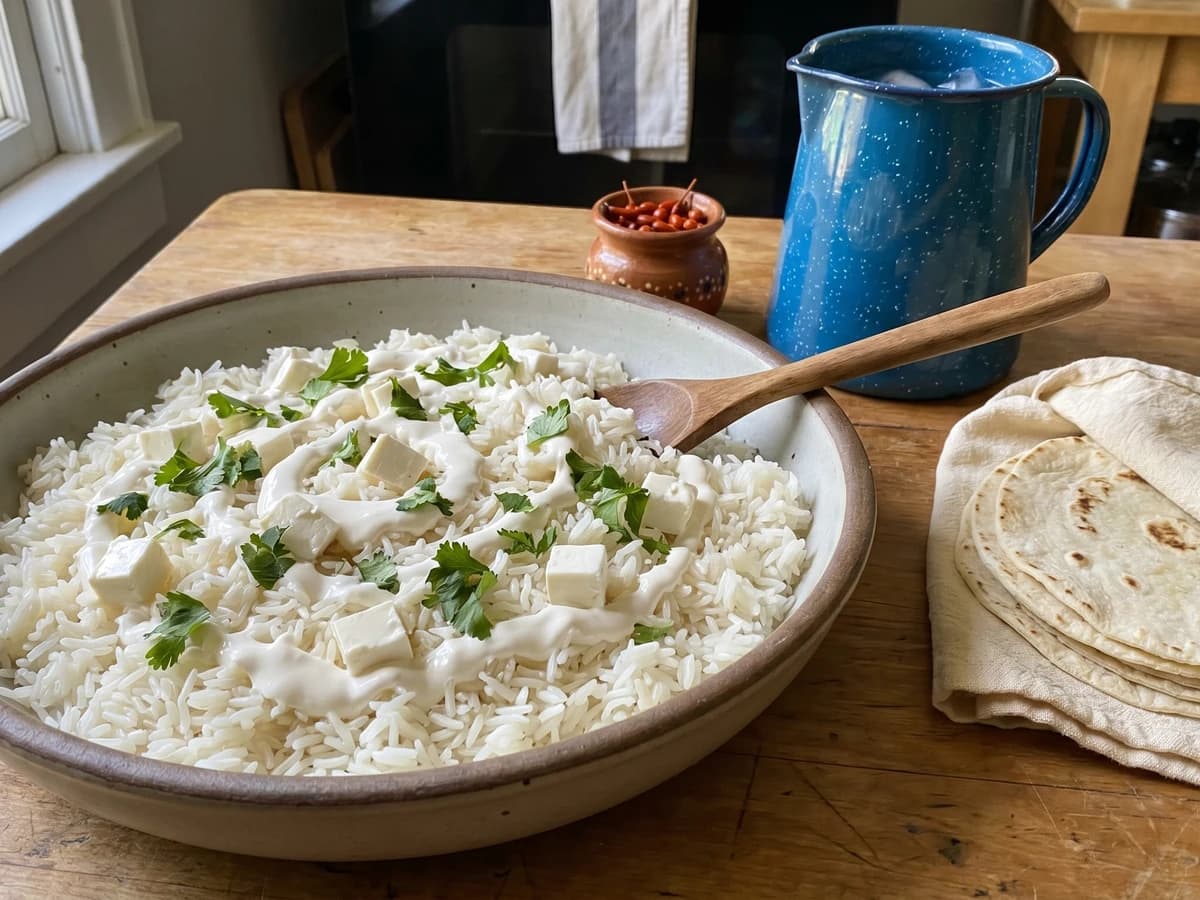
Sinaloa's home-cook white rice topped with cold cubes of cream cheese that soften into the warm grain, finished with crema and a sprinkle of chiltepin at the table. The trick that makes a side dish feel like a small luxury.
Chef Lupita
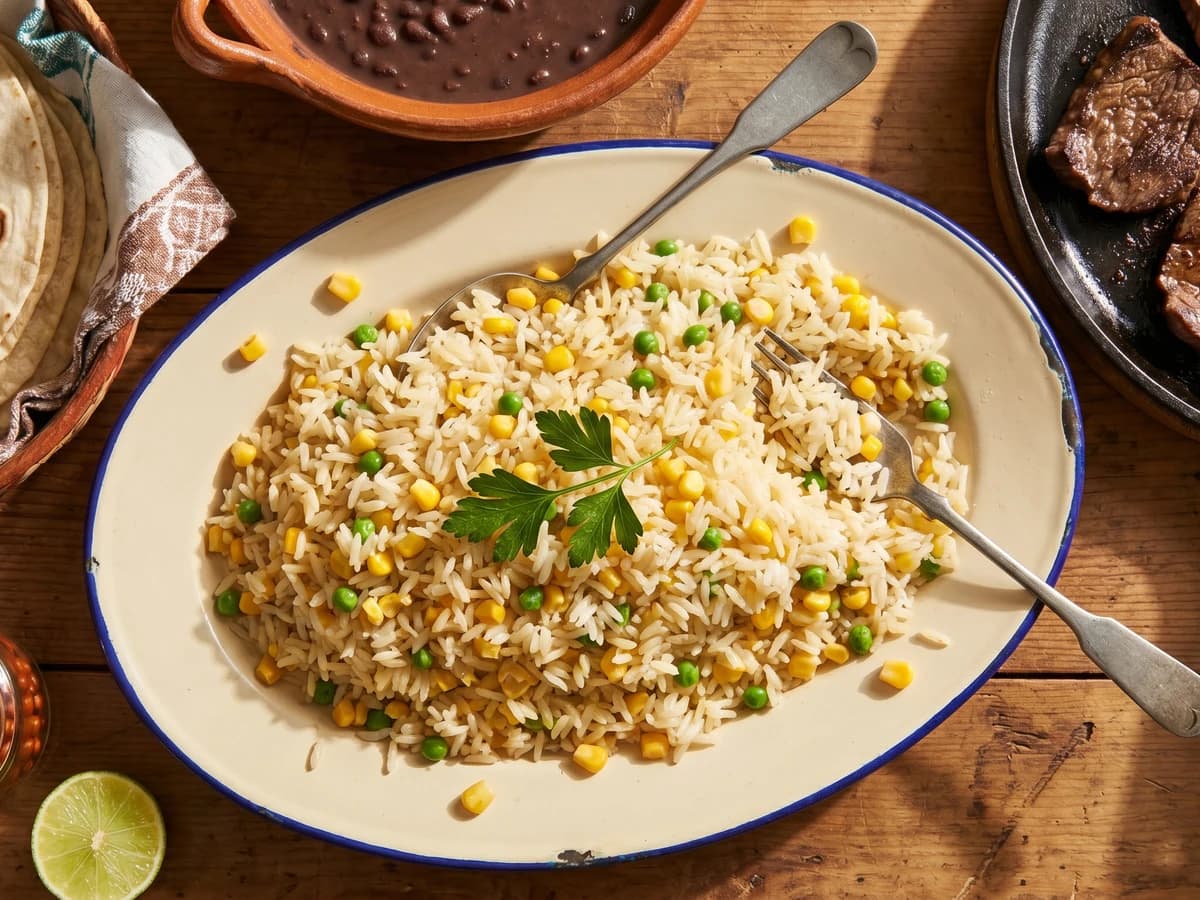
Sonora's white rice, toasted in butter and steamed with sweet corn and tender peas. The clean, quiet partner to a plate of carne asada, not the red rice of central Mexico.

Chef Lupita
Yucatán's white rice with sweet corn kernels, toasted in lard with garlic and onion. The quiet base that holds up against the peninsula's bold achiote-stained stews.