
Chef Lupita
Acitrón de Cidra Conventual
Puebla's convent-style acitrón, made from cidra peel instead of endangered biznaga, built through repeated syrup soakings until the cubes turn firm, translucent, and ready for rosca or chiles en nogada.
A cooking platform built around craft, culture, and the stories behind what we eat.
Created by
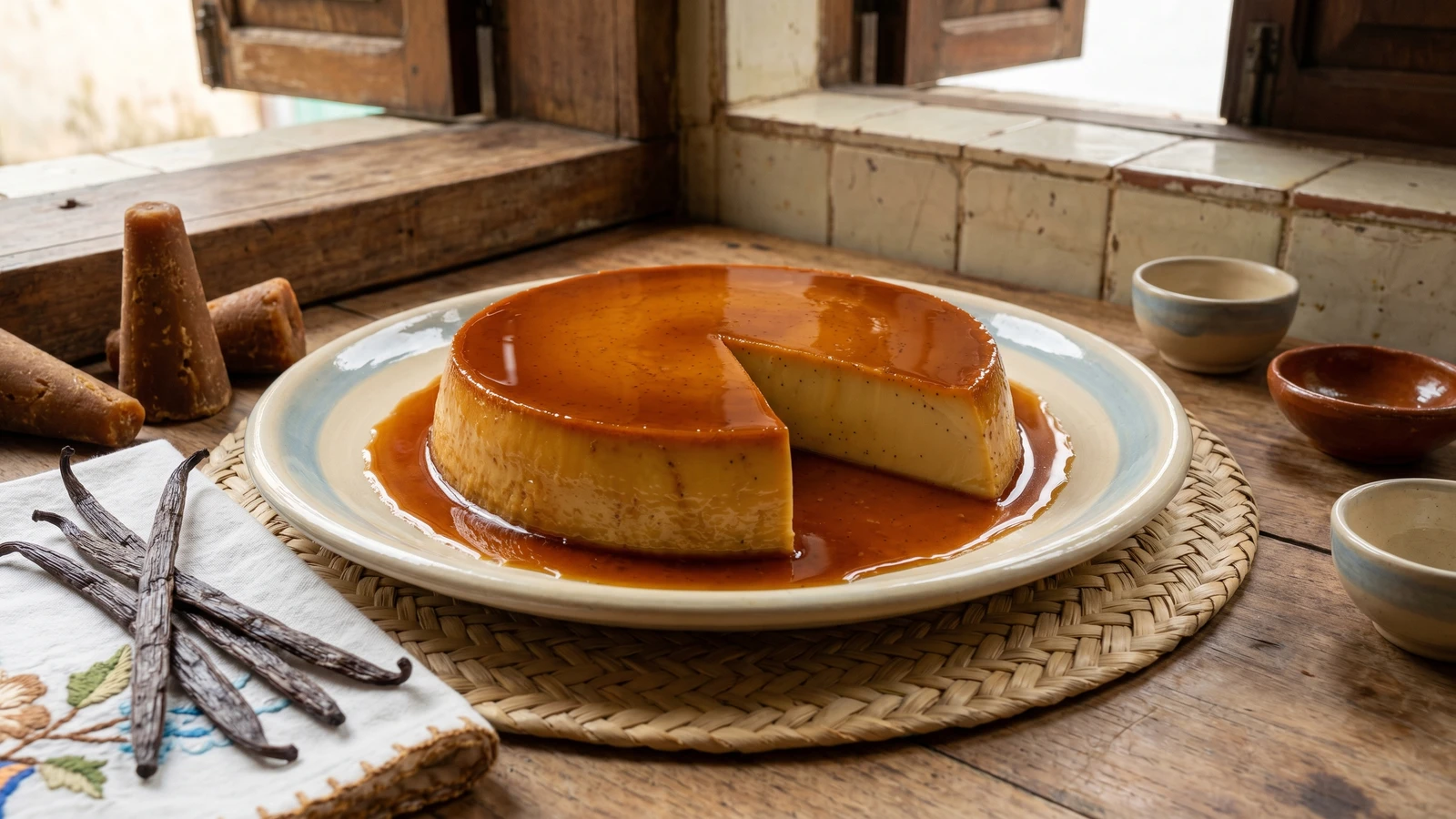
Veracruz's Gulf coast flan, set over dark piloncillo caramelo and infused with whole vainilla de Papantla pods, the Totonac ingredient no bottle of extract can imitate.
Veracruz, the Totonacapan region, Papantla. That is where this flan begins. Not in a supermarket bottle labeled vanilla flavoring, not in a pastry school shortcut. The vainilla de Papantla grows in the humid heat between the Gulf air and the green hills, and when it is cured properly, one pod can perfume a whole kitchen.
Flan came through Spain, yes, but Veracruz made this version speak with its own voice. Eggs, milk, and piloncillo are familiar in many Mexican kitchens. The difference here is the pod. You split it, scrape the seeds, and warm both seeds and pod in the milk so the custard tastes of real vanilla: floral, dark, a little smoky, never flat. Extract is for when the dish only needs a whisper. This flan is built around vanilla. Use the pod.
The caramelo is made with piloncillo, not white sugar. It cooks darker and tastes deeper, with the edge of cane molasses. Watch it closely because piloncillo goes from bitter-good to burned quickly. The water bath is not decoration, it protects the eggs from turning grainy. La cocina no es decoración, es trabajo.
I learned this kind of flan from women in Veracruz who kept their vanilla pods wrapped in cotton like something valuable, because they are valuable. Serve it cold, turned out onto a cream and pale blue plate from Tlacotalpan if you have one, with the caramelo running down the sides. Cada estado, su propia cocina.
Vanilla planifolia is native to Mexico, and the Totonac people of northern Veracruz cultivated and cured vanilla in the Papantla region long before it became a global spice. For centuries Mexico held the practical monopoly on vanilla because the orchid depended on local pollination; after Edmond Albius developed hand pollination on Reunion Island in 1841, vanilla cultivation spread worldwide. Flan entered Mexico through Spanish colonial cooking, but Veracruz's use of whole Papantla vanilla pods made the custard a regional expression rather than a generic milk dessert.
Quantity
8 ounces
chopped
Quantity
1/4 cup
Quantity
1 teaspoon
Quantity
1 pinch
Quantity
2
split lengthwise, seeds scraped
Quantity
2 cups
Quantity
1 can (12 ounces)
Quantity
1 can (14 ounces)
Quantity
5
Quantity
2
Quantity
1/2 teaspoon
Quantity
1 teaspoon or 1 tablespoon
| Ingredient | Quantity |
|---|---|
| piloncillochopped | 8 ounces |
| water | 1/4 cup |
| fresh lime juice | 1 teaspoon |
| fine sea salt | 1 pinch |
| whole vainilla de Papantla podssplit lengthwise, seeds scraped | 2 |
| whole milk | 2 cups |
| evaporated milk | 1 can (12 ounces) |
| sweetened condensed milk | 1 can (14 ounces) |
| large eggs | 5 |
| large egg yolks | 2 |
| fine sea salt | 1/2 teaspoon |
| Mexican vanilla sugar or piloncillo syrup (optional) | 1 teaspoon or 1 tablespoon |
Set an 8-inch round flan mold or metal cake pan beside the stove. Choose a roasting pan large enough to hold it for the water bath. Heat the oven to 325F. Put a kettle of water on to boil, then let it settle off the heat. You want hot water for the bath, not a violent boil splashing into the custard.
Combine the chopped piloncillo, water, lime juice, and pinch of salt in a small heavy saucepan over medium heat. Stir until the piloncillo dissolves, then stop stirring and let it bubble until it turns glossy, thick, and dark mahogany, about 7 to 9 minutes. Piloncillo is already brown, so do not wait for the visual cue of white sugar caramel. Smell it. It should smell like toasted cane, not smoke.
Immediately pour the hot piloncillo caramelo into the flan mold. Wearing an oven mitt, tilt the mold so the caramelo covers the bottom and climbs a little up the sides. It will set quickly. Leave it alone while you make the custard.
Split the vainilla de Papantla pods lengthwise and scrape out the seeds with the back of a knife. Put the seeds, the pods, whole milk, and evaporated milk in a saucepan. Warm over medium-low heat until the milk is hot and fragrant, with tiny bubbles at the edge, about 8 minutes. Do not boil it. Turn off the heat, cover, and let the vanilla steep for 20 minutes. This is where the dish gets its name.
Remove the vanilla pods from the milk and save them to dry in sugar if you like. In a blender, combine the infused milk, sweetened condensed milk, eggs, egg yolks, and 1/2 teaspoon salt. Blend on low just until smooth, about 20 seconds. Do not whip air into it. Air makes bubbles, and bubbles make a rough flan.
Strain the custard through a fine-mesh sieve directly into the caramel-lined mold. Tap the mold gently on the counter to release large bubbles. Cover tightly with foil. Straining is not fussiness. It catches the chalazae from the eggs and gives you the clean texture Veracruz cooks expect from a proper flan.
Set the covered mold inside the roasting pan. Pour hot water into the roasting pan until it reaches halfway up the sides of the mold. Bake for 55 to 65 minutes, until the edges are set and the center trembles like soft gelatin when you nudge the pan. If the center sloshes, it is not done. If it is stiff, you went too far.
Lift the mold from the water bath and remove the foil. Cool at room temperature for 1 hour, then refrigerate at least 6 hours, preferably overnight. Flan is a make-ahead dessert because the custard needs time to settle and the caramelo needs time to loosen into syrup. Recetas probadas y garantizadas.
Run a thin knife around the edge of the flan. Set a rimmed serving plate over the mold, hold both firmly, and flip in one confident motion. Let it sit for 30 seconds before lifting the mold so the piloncillo caramelo can run down the sides. Serve cold, in wedges, with no whipped cream and no extra decoration. The vanilla did the work. Así se hace y punto.
1 serving (about 215g)
Culinary guides, cultural storytelling, and the editorial depth that makes cooking meaningful.
Discover Culinary ExplorerChef Lupita
Puebla's convent-style acitrón, made from cidra peel instead of endangered biznaga, built through repeated syrup soakings until the cubes turn firm, translucent, and ready for rosca or chiles en nogada.

Chef Lupita
Ciudad de México's Tulyehualco alegría is popped huautli folded into piloncillo honey, pressed with peanuts, pepitas, and raisins, then cut into the rectangular bars that built a pueblo's identity.

Chef Lupita
Oaxaca's pre-Columbian amaranth bar, popped on a hot comal and bound with piloncillo, honey, and the sacred Zapotec grain that the Spanish tried, and failed, to outlaw.

Chef Lupita
Querétaro's mercado candy of popped amaranto pressed with dark piloncillo syrup, pepitas, pecans, and cacahuate, a Bajío sweet that respects the seed before it decorates the table.