
Chef Lupita
Arroz a la Oaxaqueña
Oaxaca's red rice, stained with tomato and fried in lard, steamed with carrots, ejotes, black beans, and epazote. The side that anchors a Oaxacan family meal and earns its place beside the main.
A cooking platform built around craft, culture, and the stories behind what we eat.
Created by
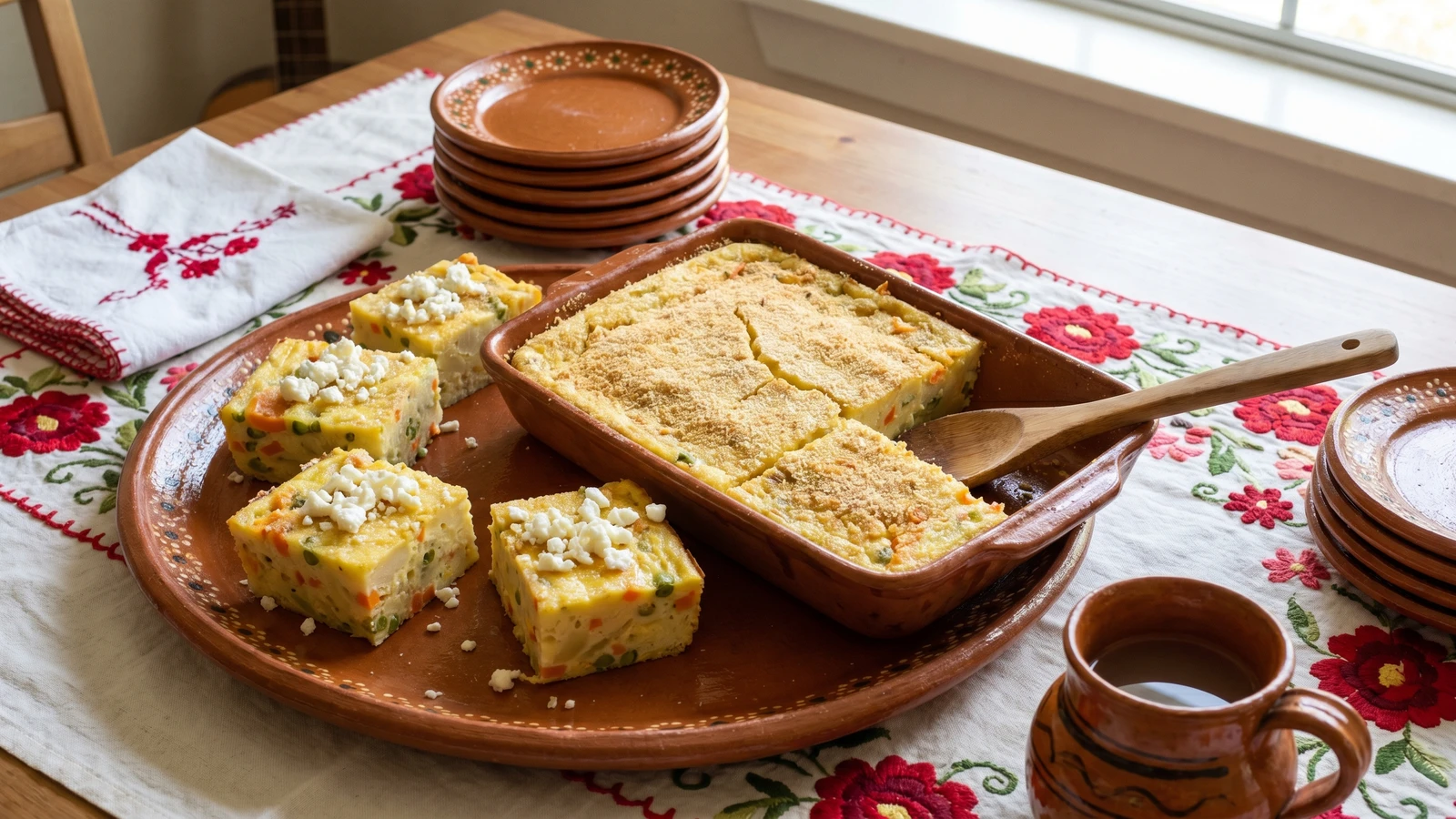
From the Istmo de Tehuantepec in Oaxaca, a baked potato cake of mashed papas enriched with butter and whipped eggs, peas, carrots, sliced into squares for weddings, velas, and the long banquet tables of the istmenas.
This is from the Istmo de Tehuantepec. Not from the Valles Centrales, not from the Sierra, the Istmo. Oaxaca has many cuisines and the istmena cuisine is its own world: tehuanas in their bordados embroidered dresses, the matriarchal markets of Juchitan, the velas that fill plazas with gold and music for days at a time. The papa horneada belongs to that table.
This is not weeknight food. This is wedding food, vela food, baptism food. It is mashed potato turned into a cake, lifted with whipped egg whites, studded with peas and carrots, baked until the top is golden and the inside is dense and velvety, then sliced into squares and arranged on platters for a hundred guests. The istmenas know how to feed a crowd. They have been doing it for generations and the papa horneada is one of the dishes that proves it.
The technique is the recipe. Hot potatoes, riced or hand-mashed. Butter and warm milk beaten in while everything is hot. Yolks first. Whites whipped to soft peaks and folded in last with patience. A food processor turns potato into glue. A stand mixer overworks the whites. This is hand work. The fat carries the flavor, the whites carry the lift, and the breadcrumbs against the dish let the squares come out clean. Cada estado, su propia cocina, and this one belongs to the women of the Istmo.
My mother never made this. She was from Jalisco. I learned it from a senora named Dona Berta in Juchitan, on a Saturday morning before a wedding, in a kitchen with three other women working and a radio playing sones istmenos. She told me: 'The potato has to be hot when you mash it, and the whites have to be soft when you fold them. Get those two things right and the cake takes care of itself.' Recetas probadas y garantizadas.
The papa horneada of the Istmo de Tehuantepec reflects the layered culinary history of southern Oaxaca, where indigenous Zapoteca foodways absorbed the European potato (introduced from the Andes via Spanish trade routes in the 17th and 18th centuries) and adapted it to the celebratory format of the vela, the multi-day patron-saint feast that anchors social life in Juchitan, Tehuantepec, and the surrounding pueblos. The dish's enriched preparation, with butter, separated eggs, and a baked custard-like set, shows the influence of late-colonial convent and hacienda cooking on regional festive cuisine, similar in technique to a souffleed pudin but rooted in the Istmo's distinct matriarchal banquet tradition. The velas themselves were inscribed by Mexico's Secretaria de Cultura as part of the country's intangible cultural heritage, and dishes like the papa horneada are inseparable from that ceremonial economy: cooked in volume by the women of the household for an entire community, sliced into squares, and served alongside the estofado, the relleno, and the garnachas istmenas.
Quantity
3 pounds
peeled and cut into 2-inch chunks
Quantity
2 tablespoons
Quantity
1 cup
warm
Quantity
10 tablespoons
melted, plus more for the baking dish
Quantity
6
separated, at room temperature
Quantity
1 cup
Quantity
2 medium
peeled and cut into small dice
Quantity
1/2 medium
finely chopped
Quantity
2
finely minced
Quantity
2 tablespoons
Quantity
1 1/2 teaspoons, plus more to taste
Quantity
1/2 teaspoon
Quantity
1/4 teaspoon
Quantity
1/2 cup
for the dish and the top
Quantity
1/4 cup
crumbled, for finishing
| Ingredient | Quantity |
|---|---|
| Yukon Gold or white potatoespeeled and cut into 2-inch chunks | 3 pounds |
| kosher salt (for the boiling water) | 2 tablespoons |
| whole milkwarm | 1 cup |
| unsalted buttermelted, plus more for the baking dish | 10 tablespoons |
| large eggsseparated, at room temperature | 6 |
| fresh peas (or thawed frozen peas) | 1 cup |
| carrotspeeled and cut into small dice | 2 medium |
| white onionfinely chopped | 1/2 medium |
| garlic clovesfinely minced | 2 |
| manteca de cerdo (pork lard) | 2 tablespoons |
| kosher salt | 1 1/2 teaspoons, plus more to taste |
| freshly ground black pepper | 1/2 teaspoon |
| freshly grated nutmeg | 1/4 teaspoon |
| fine breadcrumbsfor the dish and the top | 1/2 cup |
| queso fresco (optional)crumbled, for finishing | 1/4 cup |
Place the peeled potato chunks in a large pot and cover with cold water by two inches. Add the two tablespoons of salt. Bring to a boil over high heat, then reduce to a steady simmer. Cook for 18 to 22 minutes, until a knife slides through without resistance. Cold water start, not hot. The potatoes cook evenly that way, from the outside to the center, instead of cooking the surface and leaving the middle hard.
While the potatoes simmer, heat the manteca in a small skillet over medium. Add the diced carrot and cook for four minutes, until it starts to soften but still has bite. Add the chopped onion and cook three minutes more, until translucent. Add the garlic and the peas. Cook for two more minutes. Season with a pinch of salt and pull the pan off the heat. La manteca es el sabor. The vegetables carry it into the cake.
Drain the potatoes well and return them to the warm pot for thirty seconds to dry off. Pass them through a ricer or mash them by hand with a wooden masher. No food processor. The food processor turns potato into glue. You want a soft, fluffy mash, not a paste. Do this while they are hot. Cold potatoes resist the butter and the milk.
Beat the warm milk and the melted butter into the hot potatoes until you have a smooth, glossy puree. Season with the 1 1/2 teaspoons of salt, the black pepper, and the nutmeg. Taste it now. The base should be assertively seasoned because the eggs and breadcrumbs are going to mute it. Beat in the egg yolks one at a time. Fold in the carrots, peas, and onion. Let the mixture cool for ten minutes so the heat does not cook the whites in the next step.
In a clean, dry bowl, whip the egg whites with a pinch of salt to soft peaks. Soft, not stiff. The whites should hold their shape but still bend at the tip when you lift the whisk. Fold one third of the whites into the potato base to lighten it, working with a spatula in patient strokes. Then fold in the rest in two more additions. Do not stir. Stirring deflates the whites and you lose the lift. The whites are what give the cake its velvety, cloud-like density. No me vengas con atajos.
Heat the oven to 375F. Generously butter a 9-by-13-inch baking dish, then dust the inside with about a quarter cup of breadcrumbs, tapping out the excess. The breadcrumbs make a thin golden crust against the dish so the cake releases cleanly when you cut it into squares. This is how they prepare it in the kitchens of Tehuantepec for the velas, where the squares need to come out clean for the platters.
Spread the potato mixture evenly into the prepared dish. Smooth the top with a spatula. Scatter the remaining breadcrumbs across the surface and dot with a few small pieces of butter. Bake on the middle rack for 40 to 45 minutes, until the top is deep golden and a knife inserted into the center comes out clean. The cake should rise gently in the dish and pull just slightly from the edges. If the top browns too fast, tent it loosely with foil for the last ten minutes.
Let the cake rest in the dish for fifteen minutes before slicing. This is not optional. Cut it hot and it falls apart. Rested, it slices into clean squares with a defined top crust and a velvety, dense interior the color of soft butter. Sprinkle the queso fresco across the top if using. Cut into squares of equal size and serve. Asi se hace y punto.
1 serving (about 225g)
Culinary guides, cultural storytelling, and the editorial depth that makes cooking meaningful.
Discover Culinary ExplorerChef Lupita
Oaxaca's red rice, stained with tomato and fried in lard, steamed with carrots, ejotes, black beans, and epazote. The side that anchors a Oaxacan family meal and earns its place beside the main.
Chef Lupita
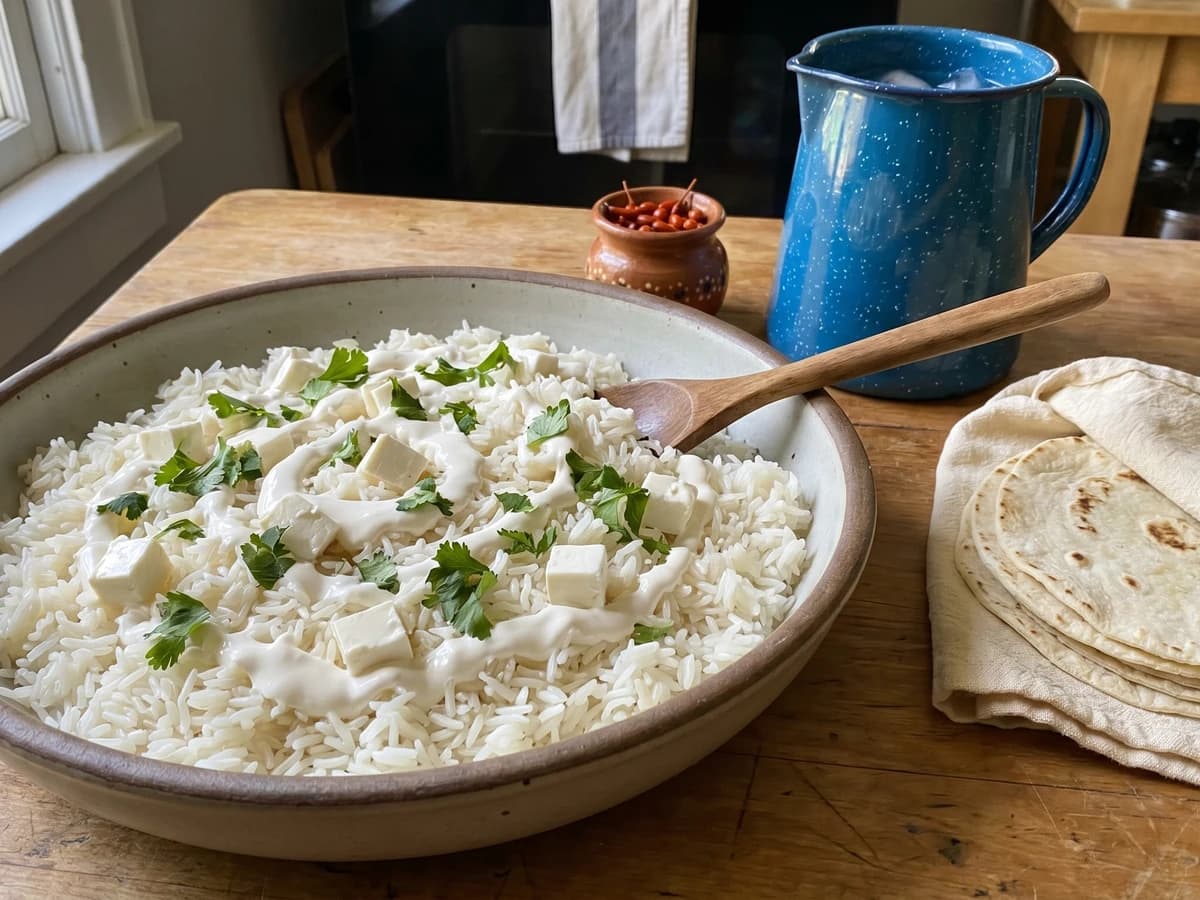
Sinaloa's home-cook white rice topped with cold cubes of cream cheese that soften into the warm grain, finished with crema and a sprinkle of chiltepin at the table. The trick that makes a side dish feel like a small luxury.
Chef Lupita
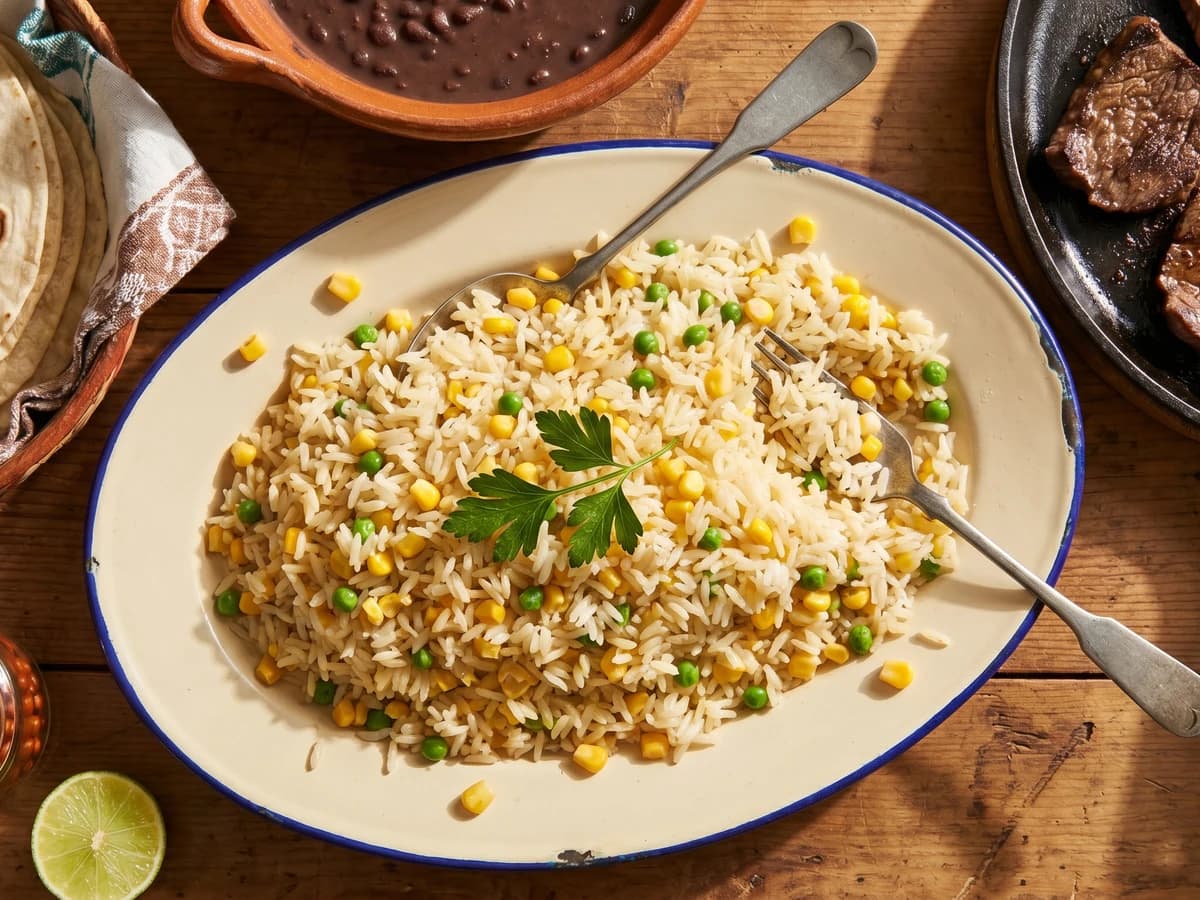
Sonora's white rice, toasted in butter and steamed with sweet corn and tender peas. The clean, quiet partner to a plate of carne asada, not the red rice of central Mexico.

Chef Lupita
Yucatán's white rice with sweet corn kernels, toasted in lard with garlic and onion. The quiet base that holds up against the peninsula's bold achiote-stained stews.