
Chef Graziella
Mozzarella in Carrozza
The Neapolitan art of frying cheese in a bread carriage, where the simplest ingredients become something that pulls into golden strings when you break it apart.
A cooking platform built around craft, culture, and the stories behind what we eat.
Created by
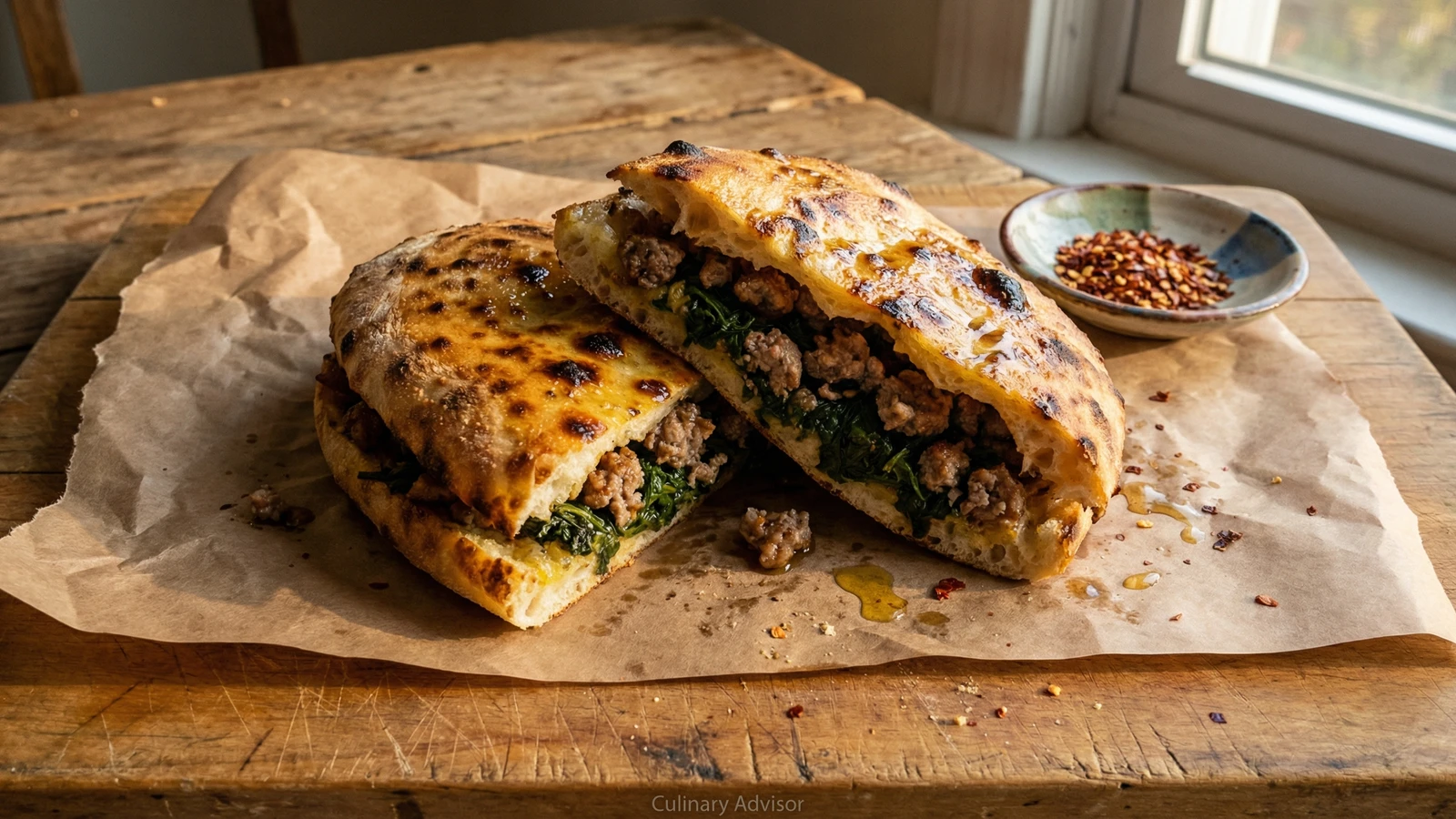
The stuffed bread of Gragnano, where Neapolitan pizza dough becomes a pocket for crumbled sausage and bitter greens. This is what the pizza makers eat when they are hungry.
Panuozzo comes from Gragnano, the town famous for its pasta, not its bread. Yet the bread is remarkable. Pizza dough, shaped into an oval, baked until the crust blisters and chars in spots, then split while still warm and stuffed with whatever the cook has at hand. The bread absorbs the juices of the filling. It becomes something more than a vessel.
The filling here is pure Naples: sausage crumbled and browned until the fat renders out, and friarielli, those bitter greens that Neapolitans love and most Americans have never tasted. Friarielli are not broccoli rabe, though they are close cousins. They are smaller, more bitter, more intensely flavored. If you cannot find them, broccoli rabe will do. The bitterness is the point.
This is not a delicate sandwich. It is food for people who work, who are hungry, who want something substantial. The bread must be warm. The filling must be hot. You eat it standing, or sitting at a counter, with napkins ready. There is no elegant way to consume a panuozzo, and none is required.
Panuozzo emerged in the 1980s from a pizzeria in Gragnano, where a cook shaped pizza dough into an elongated form and baked it specifically for stuffing. The name derives from 'pane,' bread, with the Neapolitan diminutive. It spread through the Campania region as pizza makers discovered that their dough, properly baked, made a superior sandwich bread.
Quantity
500g, plus more for dusting
Quantity
325ml
about 70°F
Quantity
10g
Quantity
3g
Quantity
1 tablespoon, plus more for the filling
Quantity
450g
casings removed
Quantity
450g
tough stems removed
Quantity
4
sliced thin
Quantity
1/4 teaspoon
Quantity
to taste
| Ingredient | Quantity |
|---|---|
| tipo 00 flour | 500g, plus more for dusting |
| warm waterabout 70°F | 325ml |
| fine sea salt | 10g |
| active dry yeast | 3g |
| extra virgin olive oil | 1 tablespoon, plus more for the filling |
| Italian pork sausagecasings removed | 450g |
| friarielli or broccoli rabetough stems removed | 450g |
| garlic clovessliced thin | 4 |
| red pepper flakes | 1/4 teaspoon |
| kosher salt | to taste |
Dissolve the yeast in the warm water and let it stand for five minutes until slightly foamy. In a large bowl, combine the flour and salt. Add the yeast mixture and olive oil. Stir with a wooden spoon until a shaggy mass forms, then turn it onto a floured surface and knead for 10 minutes. The dough should become smooth, elastic, and slightly tacky but not sticky. If it clings to your hands, add flour sparingly.
Shape the dough into a ball and place it in a lightly oiled bowl. Cover with plastic wrap and let it rise in a warm place until doubled in size, about 2 hours. The dough is ready when you press it with a fingertip and the indentation springs back slowly.
Punch down the risen dough and divide it into four equal pieces. Shape each piece into an oval about 8 inches long and half an inch thick. Place them on a parchment-lined baking sheet, cover loosely with a kitchen towel, and let them rest for 20 minutes while you prepare the filling and preheat the oven.
Crumble the sausage into a large cold skillet. Set it over medium heat and cook, breaking the meat into small pieces with a wooden spoon, until browned and the fat has rendered, about 12 minutes. The meat should be in small crumbles, not large chunks. Transfer to a plate with a slotted spoon, leaving the fat in the pan.
Add two tablespoons of olive oil to the sausage fat in the pan. Add the sliced garlic and red pepper flakes. Cook over medium heat until the garlic is fragrant and just turning gold at the edges, about one minute. Add the friarielli with any water still clinging to the leaves. Season with salt. Cook, stirring occasionally, until the greens are tender and slightly wilted but still have some texture, 6 to 8 minutes. Return the sausage to the pan and toss everything together. Taste for seasoning.
Heat your oven to 475°F. If you have a baking stone or steel, place it on the middle rack. Bake the panuozzi until puffed and blistered, with dark spots on the surface, 12 to 15 minutes. The bread should sound hollow when tapped on the bottom. Remove from the oven and let cool just until you can handle them, about 3 minutes.
While the bread is still warm, use a serrated knife to split each panuozzo horizontally, leaving one long edge attached like a hinge. Open the bread and stuff generously with the sausage and friarielli mixture. Press closed gently. Serve immediately. The bread must be warm, the filling must be hot. This is not a sandwich that waits.
1 serving (about 340g)
Culinary guides, cultural storytelling, and the editorial depth that makes cooking meaningful.
Discover Culinary ExplorerChef Graziella
The Neapolitan art of frying cheese in a bread carriage, where the simplest ingredients become something that pulls into golden strings when you break it apart.
Chef Juliette
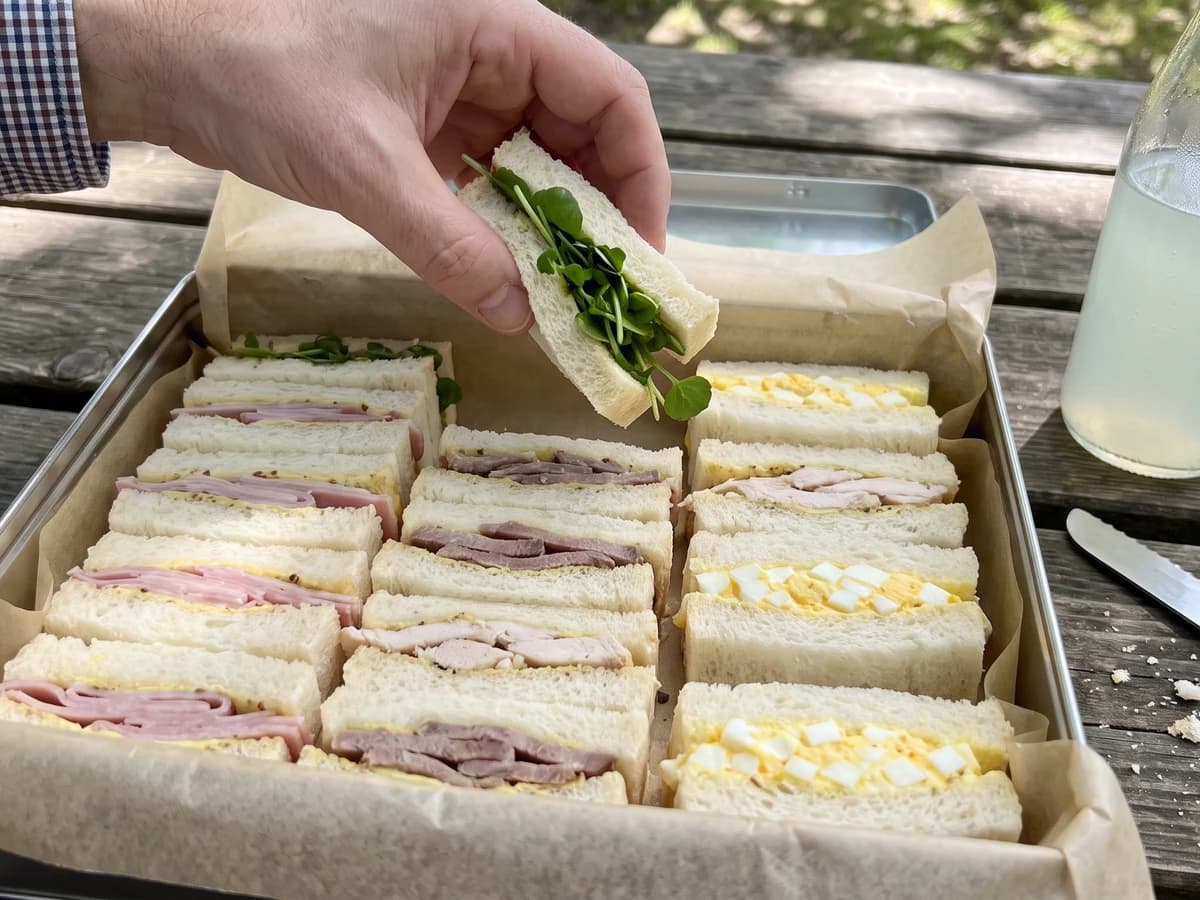
Five classical fillings between bread buttered to every edge, cut into tidy rectangles and held under a light weight: a French buffet lesson in softness, proportion, and restraint.
Chef Juliette
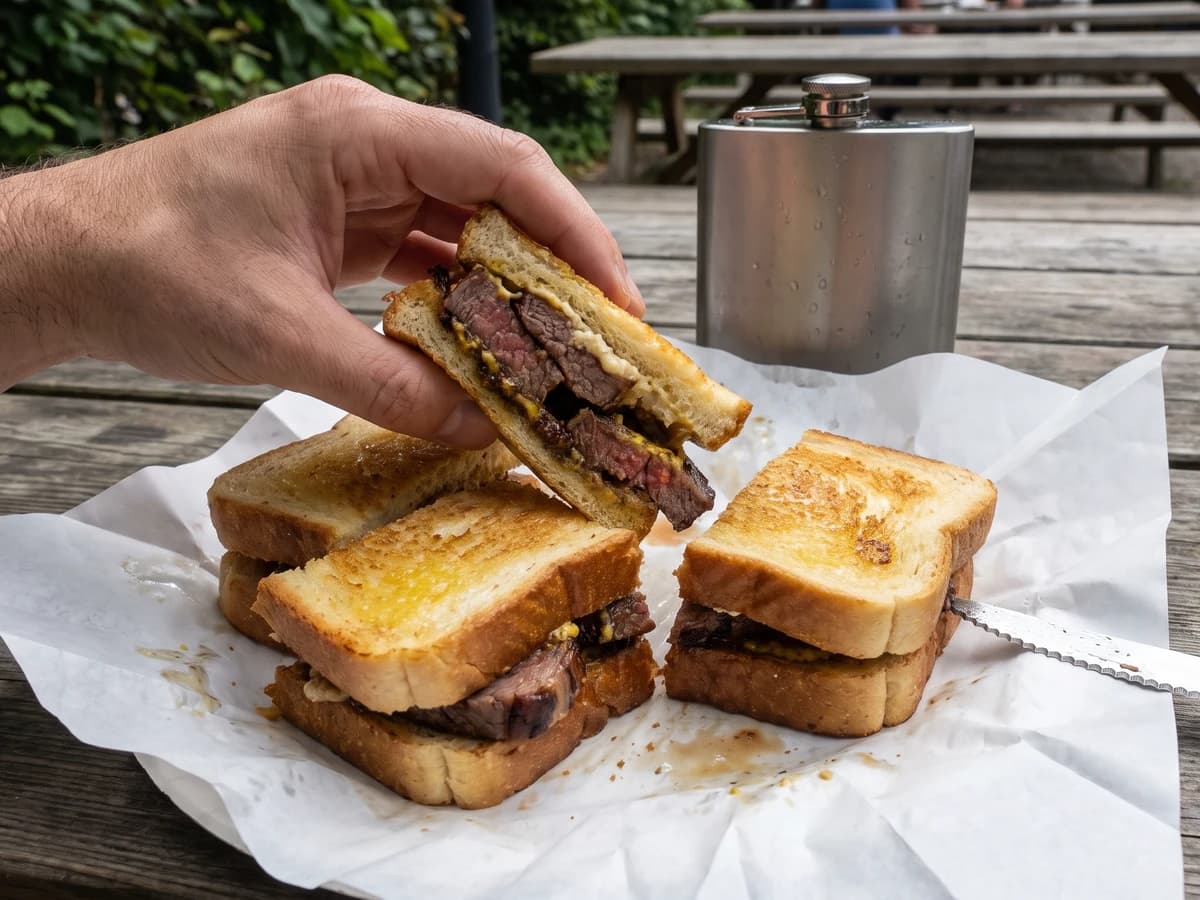
Steak grilled dark at the edges, cooled, sharpened with horseradish and mustard, then pressed between buttered loaf heels until the crumb catches every juice: a race-day sandwich substantial enough to be supper.

Chef Thomas
Back bacon crisped in a hot pan, a ripe tomato that actually tastes of something, crisp lettuce and real butter on proper toast. A sandwich that earns its place in the notebook.