
Chef Lupita
Acambaritas de Acámbaro
Guanajuato's daily bread from Acámbaro, a small glazed roll built on pata, enriched with manteca de cerdo, and baked until the top shines lightly for merienda.
A cooking platform built around craft, culture, and the stories behind what we eat.
Created by
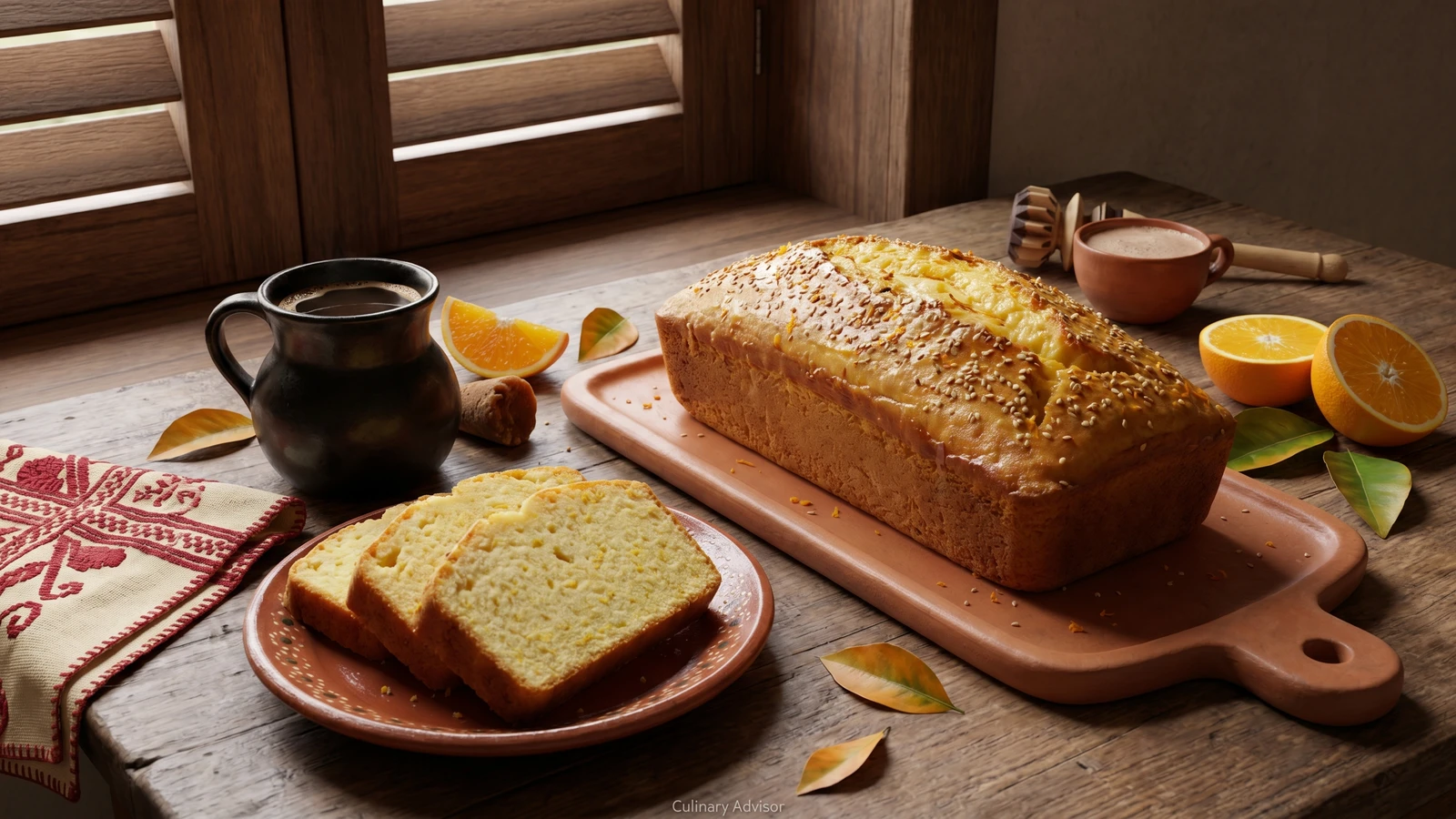
Oaxaca's everyday orange tea cake, built on fresh-squeezed naranja, mantequilla, and zest crushed into the sugar. Served in thick slices with café de olla at six in the morning.
This panqué is from Oaxaca. Not the Oaxaca of mole negro and tlayudas, the Oaxaca of the panaderías. Every state in Mexico has its bread tradition, and Oaxaca's runs deep, pan de yema for everyday, hojaldras for fiestas, marquesote for celebrations, and panqué de naranja for the tea hour and the morning café. This is wheat-flour bread, the panadería tradition, not the maíz tradition. Both belong to Oaxaca. Do not flatten one into the other.
What makes this panqué Oaxacan is not exotic. It is the discipline. Fresh-squeezed naranja from the local trees, never bottled. Zest from the whole fruit, rubbed into the sugar with your fingertips so the oils release. Crema mexicana in the batter, which gives the crumb a tang and a tenderness that milk alone cannot. Real mantequilla, not margarina. The panaderas at Mercado Alarii in Zaachila will tell you the same thing the Sánchez family in Miahuatlán will tell you: the difference between a forgettable orange cake and a panqué you remember is whether the cook respected the orange. Crush the zest into the sugar. Squeeze the juice that morning. La cocina no es decoracion, es trabajo.
My mother kept a copy of this recipe in her notebook, written down from a panadera she met on a trip to the Sierra Norte in 1994. The margin note read: tres naranjas, no menos. Three oranges, no fewer. She underlined it twice. I make this panqué the way she wrote it down, and I serve it the way the panaderas of the Valles Centrales serve it: in thick slices, on barro rojo from Atzompa, alongside a clay jarro of café de olla sweetened with piloncillo. Saber cocinar es saber vivir.
Mexican panadería culture is the direct legacy of the Spanish colonial wheat trade and the religious orders that brought European baking to New Spain in the 16th century, with Puebla, Mexico City, and Oaxaca becoming the three great panadería capitals of the colonial era. Panqué, derived from the English 'pound cake,' entered Mexican baking in the 19th century during the Porfiriato when French and English pastry techniques flooded urban kitchens, and Oaxaca's panaderas adapted the form by integrating local ingredients including criollo orange varieties and crema mexicana. The Mercado Alarii in Zaachila and the panaderías of Miahuatlán still produce panqué de naranja by hand using methods unchanged for at least four generations, a quiet continuity that runs underneath Oaxaca's better-known maíz traditions.
Quantity
2 1/4 cups
sifted
Quantity
2 teaspoons
Quantity
1/2 teaspoon
Quantity
1/2 teaspoon
Quantity
1 cup
at room temperature
Quantity
1 1/4 cups
Quantity
3
grated on the smallest holes of a Microplane
Quantity
4
at room temperature
Quantity
3/4 cup (from about 4 oranges)
Quantity
1/2 cup
or whole milk Mexican-style sour cream
Quantity
1 teaspoon
Quantity
1/4 cup
Quantity
1/3 cup
Quantity
1 tablespoon
lightly toasted
| Ingredient | Quantity |
|---|---|
| all-purpose wheat floursifted | 2 1/4 cups |
| baking powder | 2 teaspoons |
| baking soda | 1/2 teaspoon |
| fine sea salt | 1/2 teaspoon |
| unsalted mantequilla (butter)at room temperature | 1 cup |
| granulated sugar | 1 1/4 cups |
| zest of medium oranges (naranja dulce)grated on the smallest holes of a Microplane | 3 |
| large eggsat room temperature | 4 |
| fresh-squeezed orange juice | 3/4 cup (from about 4 oranges) |
| crema mexicanaor whole milk Mexican-style sour cream | 1/2 cup |
| Mexican vanilla extract | 1 teaspoon |
| fresh-squeezed orange juice (for glaze) | 1/4 cup |
| granulated sugar (for glaze) | 1/3 cup |
| ajonjolí (sesame seeds) (optional)lightly toasted | 1 tablespoon |
Heat the oven to 350F. Butter a 9 by 5 inch loaf pan generously with mantequilla, then line the bottom and long sides with a strip of parchment, leaving an overhang for lifting later. The Oaxacan panaderas use molde de hojalata, simple tin loaf pans worn dark from years of use. A heavy aluminum or steel pan works the same way. Avoid glass. Glass holds heat unevenly and the crust browns wrong.
Whisk the sifted flour, baking powder, baking soda, and salt together in a bowl. Sift it again if you want the crumb fine. This is a chemically leavened panqué, not a yeasted bread, and the leavening has to be distributed evenly through the flour or you will get tunnels and dense pockets. Asi se hace y punto.
Place the sugar in the bowl of a stand mixer. Add the orange zest. Using your fingertips, rub the zest into the sugar until the sugar turns pale orange and smells like the entire fruit. This step is non-negotiable. The oils in the zest live in the colored skin and they only release when you crush them into something. Skip this and your panqué will taste like orange juice, not like orange. There is a difference.
Add the room-temperature mantequilla to the orange-scented sugar. Beat with the paddle attachment on medium-high for a full five minutes. Set a timer. The mixture should turn pale, almost ivory, and triple in volume. This is where the cake gets its lift. Mantequilla cold from the refrigerator will not aerate. Mantequilla too soft will collapse. You want it cool and pliable, the way it sits on a Tlacolula counter on a mild morning.
With the mixer on medium, add the eggs one at a time, beating for thirty seconds after each addition. Scrape the bowl down between eggs. The batter should look smooth and glossy. If it looks broken or curdled, the eggs were too cold. Stop, set the bowl over a pot of warm water for a minute, and beat again. The batter will come back together.
In a separate bowl, whisk the orange juice, crema mexicana, and vanilla together. The crema is what makes this Oaxacan and not just any orange cake. It carries fat and acid in the same spoonful, and the crumb comes out tender and slightly tangy, the way a panqué from Mercado Alarii in Zaachila tastes.
With the mixer on the lowest speed, add the flour mixture in three additions, alternating with the orange juice and crema mixture in two additions. Begin and end with the flour. Mix only until each addition disappears. Stop the moment the last streak of flour is gone. Overmixed panqué turns rubbery. The gluten in wheat flour develops fast once liquid hits it, and a panqué is not a bolillo. You do not want chew here.
Scrape the batter into the prepared loaf pan. Smooth the top with a wet spatula and run a knife down the center lengthwise, just barely. This little channel encourages the cake to crack down the middle the way a proper panqué should, in a clean even split. Bake on the middle rack for 50 to 55 minutes. The top should be deep golden, the crack should be set and dry, and a thin skewer pushed into the center should come out with a few moist crumbs but no wet batter.
While the cake is baking, combine the 1/4 cup orange juice and 1/3 cup sugar in a small saucepan over medium-low heat. Stir until the sugar dissolves completely, about three minutes. Do not let it boil hard or it will turn syrupy. The moment the panqué comes out of the oven, leave it in the pan and brush the warm glaze over the top in three coats, letting each one soak in. The hot crumb drinks the glaze and locks the orange flavor in for days.
Let the panqué cool in the pan for 20 minutes, then lift it out using the parchment overhang and transfer to a wire rack. Cool to just barely warm before slicing. If using ajonjolí, scatter the toasted seeds across the glazed top while it is still tacky. Serve in thick slices alongside café de olla or a jícara of chocolate de agua. Recetas probadas y garantizadas.
1 serving (about 110g)
Culinary guides, cultural storytelling, and the editorial depth that makes cooking meaningful.
Discover Culinary ExplorerChef Lupita
Guanajuato's daily bread from Acámbaro, a small glazed roll built on pata, enriched with manteca de cerdo, and baked until the top shines lightly for merienda.

Chef Lupita
Michoacan's Tinguindin aguacatas are flat, leaf-scored sweet breads made with harina de trigo, piloncillo, anise, and manteca de cerdo, shaped by hand for the wood oven.

Chef Lupita
From Ajijic on Lake Chapala, Pan Tachihual is a lightly sweet wedding loaf built with harina de trigo, harina de maiz, piloncillo, manteca, anise, and the old Guadalajara pata.

Chef Lupita
Comitán's pan de yema shaped into little pigs, birds, and rabbits, a Chiapas bakery bread rich with egg yolks, manteca de cerdo, and anís, baked golden on hoja de plátano.