
Chef Juliette
Ordinary Brioche Paste
Pâte à brioche ordinaire teaches enriched dough properly: wake the leaven, build strength before the last egg, then work in pliable butter by stages and let one long fermentation do its quiet work.
A cooking platform built around craft, culture, and the stories behind what we eat.
Created by
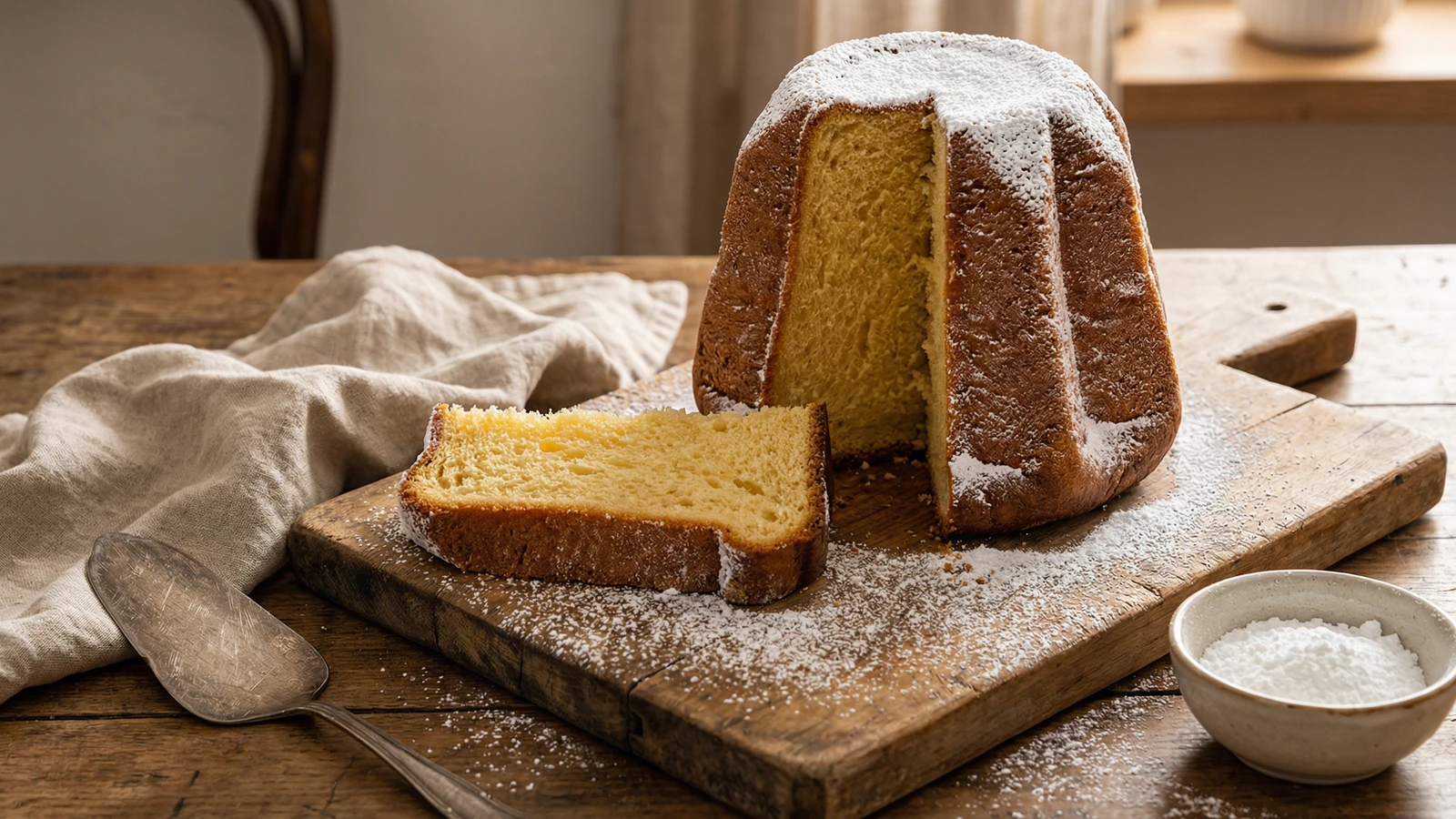
The golden star of Verona's Christmas table, where butter, eggs, and patience create a bread so light it seems to defy gravity. This is what Milan's panettone wishes it could be.
Every December, Italy divides itself into two camps: those who prefer panettone and those who know better. Pandoro is the bread of Verona, and Veronese will tell you, with the certainty of people who have eaten it since childhood, that it is superior in every way. No candied fruit. No raisins. Just pure golden bread, impossibly light, fragrant with butter and vanilla.
This is not a bread for the impatient. The dough requires multiple rises over nearly two days. It demands high-quality butter, fresh eggs with deeply golden yolks, and flour strong enough to support all that richness. The technique is precise: temperatures matter, timing matters, and there is no rushing the yeast.
What you get for your patience is a bread that tears into soft, golden strands. The crumb should be fine and even, the color of morning sun. When you dust it with vanilla-scented powdered sugar and slice it horizontally, the star shape creates a Christmas tree of golden layers. This is the bread that Veronese children dream about. It is worth the effort.
Domenico Melegatti, a Veronese pastry chef, patented pandoro in 1894, including its distinctive eight-pointed star mold inspired by the Dolomite mountains. The bread likely evolved from older Veronese Christmas breads like the nadalin, enriched over centuries with butter and eggs as prosperity allowed. The name means 'golden bread,' and Verona has defended its supremacy over Milan's panettone ever since.
Quantity
100g
Quantity
50g
Quantity
7g
Quantity
150g
Quantity
65g
Quantity
3
Quantity
50g
Quantity
200g
Quantity
100g
Quantity
5
Quantity
200g
Quantity
1 teaspoon
Quantity
1/2 teaspoon
Quantity
from 1 lemon
finely grated
Quantity
100g
Quantity
seeds from 1/2 bean
| Ingredient | Quantity |
|---|---|
| Manitoba flour or bread flour (for biga) | 100g |
| water, lukewarm | 50g |
| fresh yeast | 7g |
| Manitoba flour or bread flour (for first dough) | 150g |
| granulated sugar (for first dough) | 65g |
| large egg yolks (for first dough) | 3 |
| unsalted butter, very soft (for first dough) | 50g |
| Manitoba flour or bread flour (for second dough) | 200g |
| granulated sugar (for second dough) | 100g |
| large egg yolks (for second dough) | 5 |
| unsalted butter, very soft (for second dough) | 200g |
| vanilla extract | 1 teaspoon |
| fine sea salt | 1/2 teaspoon |
| lemon zestfinely grated | from 1 lemon |
| powdered sugar (for serving) | 100g |
| vanilla bean (for serving) (optional) | seeds from 1/2 bean |
In a small bowl, dissolve the yeast in the lukewarm water. Let it stand for 5 minutes until slightly foamy. Add the flour and mix until you have a rough, shaggy dough. Cover tightly with plastic wrap and let rise at room temperature (70-75°F) for 12 hours, or overnight. The biga should triple in size and smell yeasty and slightly tangy.
Place the risen biga in the bowl of a stand mixer fitted with the dough hook. Add the 150g flour, 65g sugar, and three egg yolks. Mix on low speed until combined, then increase to medium and knead for 8 minutes. The dough will be sticky. Add the 50g soft butter in three additions, mixing until each is fully incorporated before adding the next. Continue kneading until the dough is smooth, elastic, and pulls away from the sides of the bowl, about 10 minutes more.
Transfer the dough to a lightly oiled bowl, cover tightly with plastic wrap, and let rise in a warm place (75-80°F) until tripled in volume, 4 to 5 hours. The dough should be puffy and airy, filled with bubbles when you look at it from the side of the bowl.
Return the risen dough to the mixer bowl. Add the 200g flour, 100g sugar, five egg yolks, vanilla, salt, and lemon zest. Mix on low until combined, then knead on medium for 10 minutes. The dough will seem impossibly wet at first. Do not add more flour. Add the 200g soft butter in five or six additions, waiting until each is fully absorbed before adding the next. This process takes 15 to 20 minutes. The finished dough should be very soft but pull away from the bowl cleanly. It will feel silky and slightly tacky.
Transfer the dough to a large oiled bowl (it will expand considerably). Cover tightly and let rise in a warm place until tripled again, 5 to 6 hours. You may also refrigerate the dough overnight at this stage, then bring it to room temperature for 2 hours before proceeding. The slow, cold rise develops flavor.
Generously butter a pandoro mold, making sure to coat every crevice of the star pattern. On a lightly floured surface, gently deflate the dough and shape it into a smooth ball by tucking the edges underneath. Place it seam-side down in the prepared mold. The dough should fill the mold about one-third full. Cover loosely with oiled plastic wrap.
Let the dough rise until it reaches just below the rim of the mold, 3 to 4 hours at warm room temperature. Do not let it rise above the rim or it will collapse in the oven. The surface should dome slightly and feel pillowy when touched gently.
Position a rack in the lower third of the oven and preheat to 350°F (175°C). Bake the pandoro until deeply golden brown and a long skewer inserted into the center comes out clean, 45 to 50 minutes. The internal temperature should reach 190°F (88°C). If the top browns too quickly, tent loosely with foil after 30 minutes.
Let the pandoro cool in the mold for 10 minutes, then turn it out onto a wire rack. It must cool completely, at least 4 hours or overnight, before slicing. The structure needs time to set. Cutting into it warm will compress the crumb.
Mix the powdered sugar with the vanilla seeds or vanilla powder. Place the pandoro in a large paper bag, add the vanilla sugar, and shake vigorously to coat. Alternatively, dust generously using a fine-mesh sieve. Slice horizontally into star-shaped layers and stack them slightly offset to resemble a Christmas tree. Serve within three days for best texture.
1 serving (about 105g)
Culinary guides, cultural storytelling, and the editorial depth that makes cooking meaningful.
Discover Culinary ExplorerChef Juliette
Pâte à brioche ordinaire teaches enriched dough properly: wake the leaven, build strength before the last egg, then work in pliable butter by stages and let one long fermentation do its quiet work.

Chef Juliette
Ordinary brioche takes one exact measure of butter and a patient rise in the mould, becoming so light and silken that it can cradle fruit without losing its tender crumb.

Chef Juliette
Pâte à brioche ordinaire, butter-rich yet firm, teaches the useful side of brioche: slow fermentation, disciplined mixing, and a dough that rolls cleanly for lining, wrapping, and every sturdy pastry job.

Chef Thomas
A proper British bloomer, slashed deep and baked until the cuts open wide and the crust turns deep, glossy gold. The kind of loaf that makes the rest of the day feel deliberate.