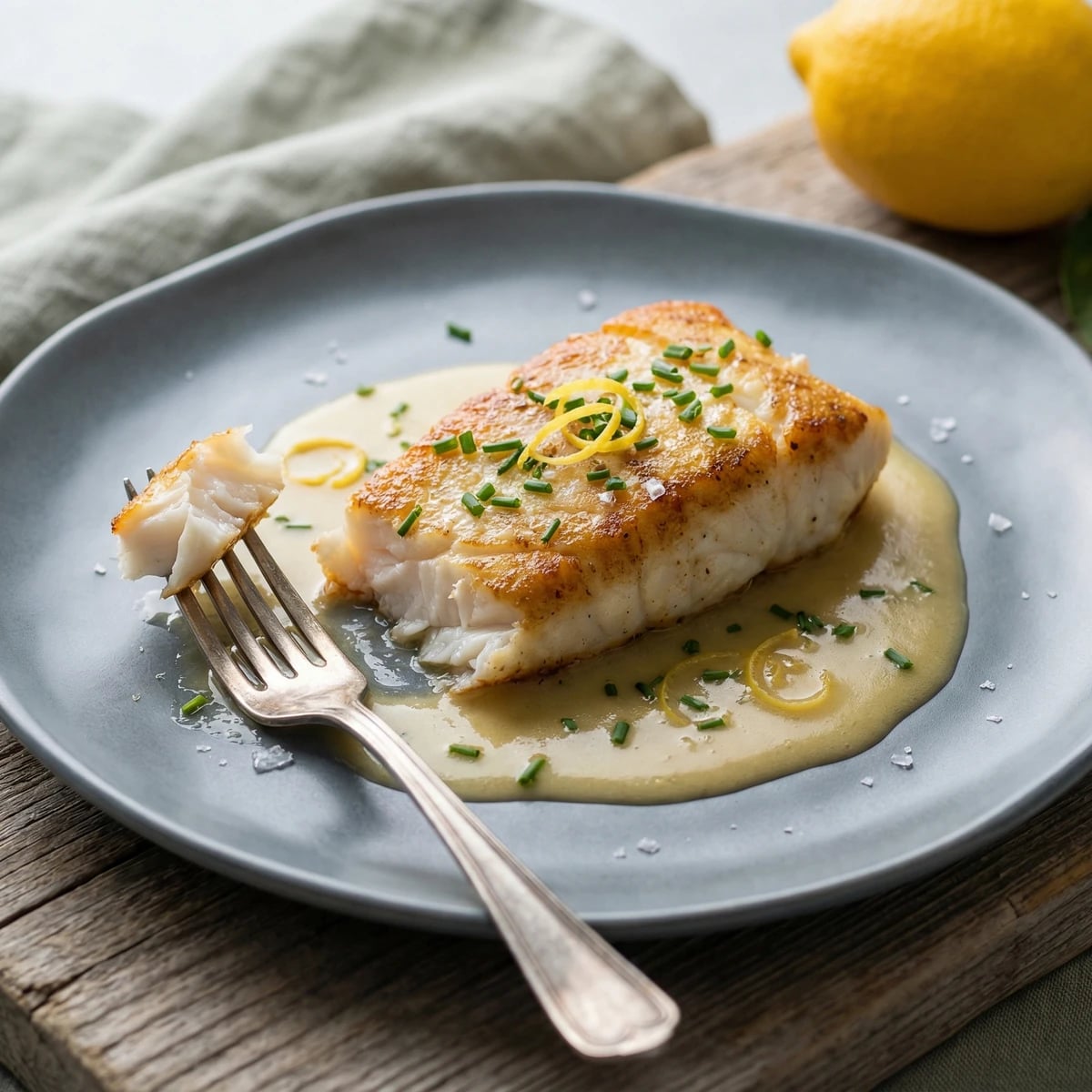
Ivory Pacific halibut seared to a golden crust and draped in silky lemon beurre blanc, a dish that honors the waters of the Pacific Northwest and the French technique that transformed American fine dining.
Main Dishes
French
Dinner Party
Date Night
20 min
Active Time
25 min cook•45 min total
Yield4 servings
The Pacific halibut is one of the great gifts of the Northwest coast. The Makah and Tlingit peoples understood this centuries before Europeans arrived, harvesting these massive flatfish from cold, clean waters using hooks carved from bone. When I first saw a whole halibut brought to dock in Seattle, I understood immediately why this fish commands such reverence. Dense, white flesh that flakes into perfect petals. A sweetness reminiscent of Dungeness crab. Texture that stands up to high heat without turning woolly or dry.
Beurre blanc is a sauce that terrifies home cooks unnecessarily. Yes, it's an emulsion. Yes, it can break. But generations of French grandmothers made this sauce without thermometers or formal training, and you can too. The trick is simple: cold butter, added gradually, whisked constantly, heat kept gentle. That's it. The acid from white wine and shallots stabilizes the emulsion while the butter melts into something glossy and rich.
This dish represents something I've championed my entire career: French technique applied to American ingredients with respect for both traditions. The Scandinavian fishermen who settled the Northwest brought their own traditions of simple fish cookery. Asian immigrants contributed techniques for preserving freshness and building clean flavors. All of this converges on your plate tonight.
Seek out Pacific halibut during its season, March through November. Ask your fishmonger about the catch. Know where your fish came from. This matters not just for sustainability but for quality. A fish that traveled three thousand miles in a cargo hold cannot compare to one that came off a day boat this morning.
The technique, the tradition, and the story behind every dish.
cold unsalted butter (for sauce)cut into tablespoon-sized pieces
12 tablespoons (1 1/2 sticks)
lemonzested and juiced
1
fresh chivesfinely snipped
1 tablespoon
flaky sea salt (optional)
for finishing
Equipment Needed
•12-inch stainless steel or cast iron skillet
•Small heavy-bottomed saucepan
•Fish spatula with thin, flexible blade
•Instant-read thermometer
•Fine-mesh sieve (optional)
Instructions
1
Prepare the halibut
Remove halibut fillets from the refrigerator 20 minutes before cooking. Cold fish hitting a hot pan steams rather than sears. Pat each fillet aggressively dry with paper towels, pressing firmly to remove surface moisture. Season both sides with kosher salt and white pepper. White pepper here isn't merely aesthetic, though the absence of black specks matters on this pristine fish. White pepper carries a sharper, more immediate heat that complements rather than competes with the delicate flesh.
Run your fingers along the fillet to check for pin bones. A pair of needle-nose pliers or fish tweezers removes them cleanly. Pull at an angle toward the head end.
2
Prepare the reduction
Combine minced shallots, white wine, and white wine vinegar in a small saucepan. Bring to a simmer over medium heat and reduce until approximately 2 tablespoons of liquid remain. This takes 8 to 10 minutes. The mixture should look syrupy and the shallots should be translucent and soft. Remove from heat and let cool for 2 minutes. This reduction is the foundation of your sauce. The acid will stabilize the emulsion while the shallots provide aromatic depth.
Make this reduction while the fish tempers. Time management is the mark of a confident cook.
3
Sear the halibut
Heat a large stainless steel or cast iron skillet over medium-high heat for 2 minutes. Add grapeseed oil and swirl to coat. When the oil shimmers and flows like water across the surface, the pan is ready. Lay the halibut fillets in the pan, presentation side down (the side that faced the skin). Do not move them. Listen for an aggressive sizzle that settles into a steady hiss. After 3 minutes, the edges will turn opaque and a golden crust will form. Resist the urge to peek. Lifting and checking releases heat and interrupts crust development.
4
Add butter and finish cooking
Add the 2 tablespoons of butter to the pan. It will foam immediately. Tilt the pan slightly and use a spoon to baste the fillets with the foaming butter, spooning it over the top repeatedly. This does two things: it builds flavor on the uncooked surface and helps cook the fish more evenly. After 1 minute of basting, flip the fillets carefully using a thin fish spatula. Cook for 2 to 3 minutes more, continuing to baste. The fish is done when an instant-read thermometer inserted into the thickest part reads 130°F, or when the flesh feels firm but springs back gently when pressed. Transfer to a warm plate and tent loosely with foil.
5
Build the beurre blanc
Return the saucepan with the shallot reduction to low heat. Add the tablespoon of heavy cream and stir to combine. The cream isn't traditional, but it provides insurance against breaking. Now begin adding the cold butter one tablespoon at a time, whisking constantly. Do not stop whisking. Do not walk away. Each piece of butter should be mostly melted before you add the next. The sauce will transform from thin liquid to creamy, pale gold emulsion. This takes 4 to 5 minutes. If the sauce looks greasy or the butter is melting too quickly, remove the pan from heat and continue whisking. The residual heat will continue the process.
The butter must be cold. Warm butter melts too fast and breaks the emulsion. Keep your butter in the refrigerator until the moment you need it.
6
Finish the sauce
Once all butter is incorporated, remove the pan from heat. The sauce should coat the back of a spoon and drip slowly. Stir in the lemon juice and zest. Taste. Adjust with salt if needed. The sauce should be bright and rich in equal measure, the acid cutting through the butter's richness. Strain through a fine-mesh sieve if you prefer a smooth sauce, pressing on the shallots, or leave them in for rustic texture. I prefer the shallots left in. They've earned their place.
7
Plate and serve
Spoon a generous pool of beurre blanc onto each warm plate. Set a halibut fillet slightly off-center on the sauce. Drizzle additional sauce over the top of each fillet. Scatter snipped chives across the plate and finish with a few flakes of sea salt. Serve immediately. Beurre blanc waits for no one. It sits at the edge of stability, and time is not its friend.
Chef Tips
•Seek out Pacific halibut from Alaska or British Columbia, where fisheries are managed sustainably. Atlantic halibut is endangered and should be avoided. Your fishmonger should know the origin. If they don't, find a better fishmonger.
•The ideal thickness for halibut fillets is one inch. Thinner pieces overcook before developing a proper crust. Thicker pieces require finishing in the oven, which complicates timing with the sauce.
•If your beurre blanc breaks and turns greasy, don't despair. Pour the broken sauce into a blender with a tablespoon of cold cream and blend on high for 30 seconds. The mechanical action will often re-emulsify the sauce.
•Pair this with a Chablis or a lean, mineral-driven Sauvignon Blanc from the Loire Valley. The wine's acidity mirrors the lemon in the sauce while its restraint lets the fish shine.
•Serve alongside simply prepared vegetables that won't compete: steamed asparagus, wilted spinach, or roasted fingerling potatoes. This dish is about the fish and the sauce. Everything else is supporting cast.
Advance Preparation
•The shallot reduction can be made up to 4 hours ahead and refrigerated. Reheat gently before building the sauce.
•Halibut should be purchased the day you plan to cook it. Fresh fish deteriorates rapidly.
•Beurre blanc cannot be made ahead. It must be prepared just before serving. Have all your butter cut and measured before you start cooking the fish.
Frequently Asked Questions
Nutrition Information
1 serving (about 200g)
Calories
640 calories
Total Fat
52 g
Saturated Fat
27 g
Trans Fat
0 g
Unsaturated Fat
23 g
Cholesterol
175 mg
Sodium
125 mg
Total Carbohydrates
2 g
Dietary Fiber
0 g
Sugars
1 g
Protein
37 g
Where cooking meets culture.
Culinary guides, cultural storytelling, and the editorial depth that makes cooking meaningful.