
Chef Lupita
Acambaritas de Acámbaro
Guanajuato's daily bread from Acámbaro, a small glazed roll built on pata, enriched with manteca de cerdo, and baked until the top shines lightly for merienda.
A cooking platform built around craft, culture, and the stories behind what we eat.
Created by
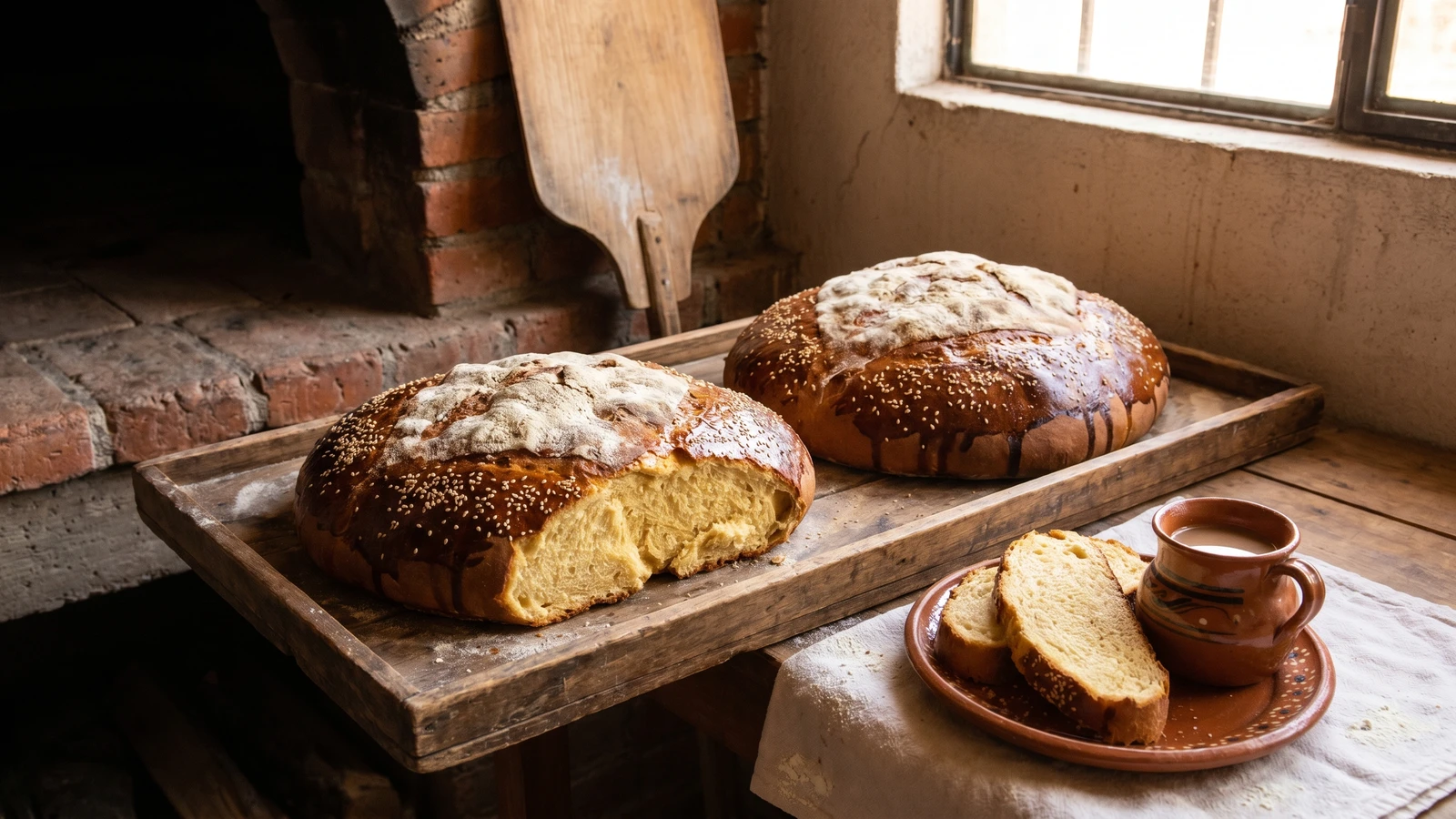
Guanajuato's Acambaro loaf is built on masa madre pata, piloncillo, wheat flour, manteca de cerdo, and the memory of wood-fired vault ovens that made the town famous.
Guanajuato, the Bajio, Acambaro. That is where this bread lives. Not in a generic basket of Mexican sweet bread, not beside a costume of cinnamon and sugar. Pan Grande belongs to a town of wheat, water, and hornos de boveda, where the panaderia guild learned to make loaves big enough for a family table and sturdy enough to travel.
The ingredient that defines it is the pata, the old masa madre kept from one bake to the next. It is not baking powder. It is not a packet of instant yeast pretending to be tradition. The pata gives the bread its mild acidity, its long keeping quality, and that honest chew under the brown crust. The manteca de cerdo softens the crumb. La manteca es el sabor, even in bread.
I ate Pan Grande in Acambaro from a wooden tray still dusted with flour, beside loaves with irregular tops and dark edges from a real fired oven. A woman at the counter told me, without drama, that the water mattered and the wait mattered more. She was right. This bread teaches patience before it feeds anybody. Cada estado, su propia cocina.
Acambaro's wheat-bread tradition is tied to the colonial grain economy of the Bajio, where Spanish-introduced wheat took root in the 16th century and local bakers built a regional identity around large enriched loaves baked in masonry vault ovens. The town's pan became a transport food for families and travelers moving between Guanajuato, Queretaro, and Michoacan, which helped make Pan Grande the public symbol of Acambaro rather than only a household bread. In 2025, Pan Grande de Acambaro received national Indicación Geográfica Protegida recognition, formalizing the link between the loaf, its pata, its local water, and the panadero knowledge of the town.
Quantity
250 grams
refreshed 8 to 12 hours before mixing
Quantity
750 grams, plus more for dusting
Quantity
150 grams
grated
Quantity
120 grams
softened
Quantity
3
at room temperature
Quantity
250 milliliters
lukewarm
Quantity
10 grams
Quantity
1 teaspoon
Quantity
1 tablespoon
lightly crushed
Quantity
1 egg beaten with 1 tablespoon water
Quantity
2 tablespoons
for topping
| Ingredient | Quantity |
|---|---|
| active masa madre pata or firm wheat sourdough starterrefreshed 8 to 12 hours before mixing | 250 grams |
| bread flour | 750 grams, plus more for dusting |
| piloncillograted | 150 grams |
| pork lard (manteca de cerdo)softened | 120 grams |
| large eggsat room temperature | 3 |
| well water or filtered waterlukewarm | 250 milliliters |
| fine sea salt | 10 grams |
| ground canela mexicana | 1 teaspoon |
| anise seedlightly crushed | 1 tablespoon |
| egg wash | 1 egg beaten with 1 tablespoon water |
| white sesame seedsfor topping | 2 tablespoons |
The night before baking, feed your masa madre pata so it is strong, domed, and pleasantly sour by morning. This bread is not raised with baking powder. No me vengas con atajos. The pata gives Pan Grande its structure, aroma, and keeping power.
Stir the grated piloncillo into the lukewarm well water until mostly dissolved. If small pieces remain, leave them. They melt into dark freckles during baking and give the loaf that Bajio sweetness.
In a large bowl, combine the flour, salt, canela, and crushed anise. Add the pata, piloncillo water, eggs, and softened manteca de cerdo. Mix by hand until no dry flour remains. The dough will feel heavy and a little sticky. Good. Enriched bread should make you work.
Knead on a lightly floured table for 15 to 18 minutes, pushing with the heel of your hand and folding the dough back over itself. It should become smooth, elastic, and fragrant with anise. If it tears immediately, keep kneading. The women who perfected this bread did not stop when their arms got tired.
Place the dough in a lightly greased bowl, cover, and let it rise at cool room temperature for 6 to 8 hours, until expanded by about half. Do not expect a fast commercial-yeast balloon. Pata works with patience. Saber cocinar es saber vivir.
Turn the dough onto the table and divide it in two. Shape each piece into a broad oval, pulling the surface tight without tearing it. Set the loaves on floured wooden boards or parchment-lined trays. Dust lightly with flour and cover with a clean cotton cloth.
Let the loaves proof for 3 to 4 hours, until they look swollen and a fingertip pressed gently into the side leaves a slow-moving dent. If the room is cold, wait. The calendar does not bake the bread. The dough does.
Heat a baking stone or heavy sheet pan in a 425F oven for at least 45 minutes. In Acambaro, the hornos de boveda give fierce bottom heat and caramelized edges. At home, the stone is your compromise. It is not the same, but it respects the method.
Brush the loaves with egg wash and scatter sesame seeds over the top. Make three shallow diagonal cuts with a sharp blade. Do not cut too deep. This is Pan Grande, not a baguette trying to look French.
Slide the loaves onto the hot stone and bake at 425F for 10 minutes. Lower the oven to 375F and bake 22 to 25 minutes more, until the tops are deep golden, the edges are dark caramel, and the bottom sounds hollow when tapped.
Move the loaves to a rack and let them cool at least 1 hour before slicing. Cut too early and the crumb turns gummy. Serve thick slices with cafe de olla or hot chocolate in clay cups. Recetas probadas y garantizadas.
1 serving (about 875g)
Culinary guides, cultural storytelling, and the editorial depth that makes cooking meaningful.
Discover Culinary ExplorerChef Lupita
Guanajuato's daily bread from Acámbaro, a small glazed roll built on pata, enriched with manteca de cerdo, and baked until the top shines lightly for merienda.

Chef Lupita
Michoacan's Tinguindin aguacatas are flat, leaf-scored sweet breads made with harina de trigo, piloncillo, anise, and manteca de cerdo, shaped by hand for the wood oven.

Chef Lupita
From Ajijic on Lake Chapala, Pan Tachihual is a lightly sweet wedding loaf built with harina de trigo, harina de maiz, piloncillo, manteca, anise, and the old Guadalajara pata.

Chef Lupita
Comitán's pan de yema shaped into little pigs, birds, and rabbits, a Chiapas bakery bread rich with egg yolks, manteca de cerdo, and anís, baked golden on hoja de plátano.