
Chef Lupita
Acambaritas de Acámbaro
Guanajuato's daily bread from Acámbaro, a small glazed roll built on pata, enriched with manteca de cerdo, and baked until the top shines lightly for merienda.
A cooking platform built around craft, culture, and the stories behind what we eat.
Created by
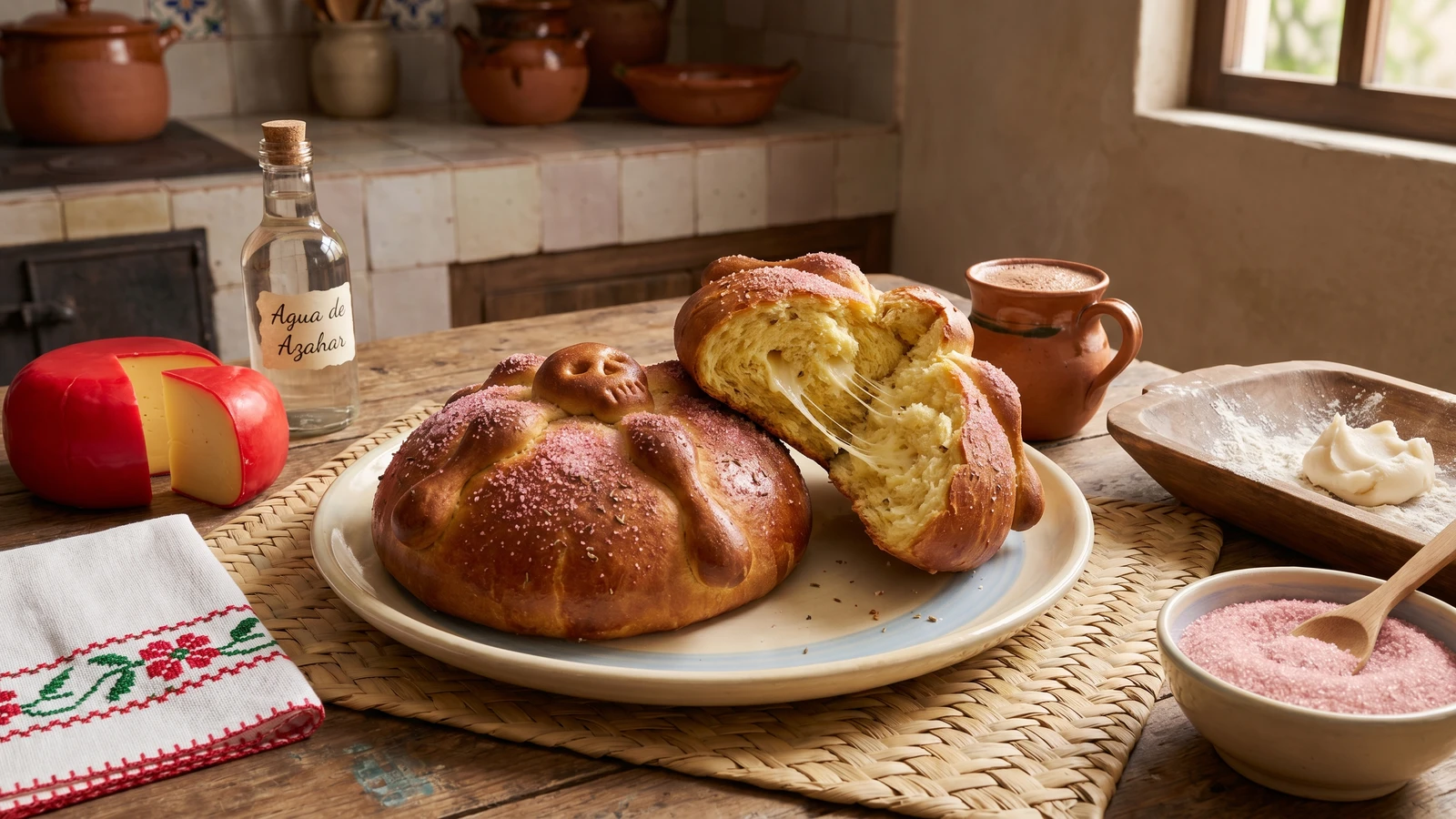
Yucatán's pan de muerto for Hanal Pixán, scented with toasted anise and orange-blossom water, enriched with lard, and finished in pink sugar instead of the white of central Mexico.
This is the pan de muerto of Yucatán. Not the orange-zest version from Ciudad de México with its white sugar dome and butter crumb. The Peninsula has its own bread for the dead, and if you are setting a Hanal Pixán altar in Mérida, Valladolid, or any town in the milpa belt of the south, this is the bread that goes on it.
The defining flavors are anís en grano, toasted whole and left whole in the crumb, and agua de azahar, the orange-blossom water that every Yucateca panadería keeps next to the manteca. The fat is lard, not butter. The finish is pink or red sugar, not white. Each of those choices is a regional fingerprint, not a preference. Cada estado, su propia cocina, and Yucatán has been making this bread its own way for generations longer than the modern pan de muerto poblano-capitalino has existed.
The modern Mérida variation tucks queso de bola, the Edam cheese in red wax that Yucatán adopted from Dutch trade routes through Holbox and Puerto Progreso, into the center of the loaf. The cheese softens during the bake and pulls in long threads when you tear it open. The older country version is unfilled and eaten with chocolate de metate or a cup of xocolatl beaten with anise and clove. Both are correct. Both belong on the altar.
My mother's notebook does not have this recipe. She was from Jalisco and her Día de Muertos bread was the central Mexican one with sesame on top. I learned this version from doña Genny in a panadería off Calle 47 in Mérida, where she worked the dough in a wooden artesa and refused to weigh anything because her hands knew the weight. I weighed everything when I got home and converted it for the rest of you. Recetas probadas y garantizadas.
Hanal Pixán, which translates from Yucatec Maya as 'food of the souls,' is the Peninsula's syncretic observance of the days when the dead return, blending pre-Columbian Maya ancestor rites with the Spanish Catholic All Saints and All Souls calendar of November 1 and 2. The bread itself is a colonial introduction layered onto a much older indigenous practice of leaving food offerings of pibil-style underground-cooked meats and corn breads for the returning spirits, and the use of anise reflects the spice trade that flowed through the port of Sisal beginning in the 16th century. The pink sugar finish, distinctive to Yucatán and parts of Campeche, is documented in regional panadería records back to at least the late 19th century and is believed by some historians to echo the red of achiote, the sacred Maya pigment used in both cuisine and pre-Hispanic burial rites.
Quantity
500 grams
plus more for dusting
Quantity
2 1/4 teaspoons (1 packet)
Quantity
120 milliliters
warmed to 110F
Quantity
100 grams
Quantity
1 teaspoon
Quantity
1 tablespoon
lightly toasted
Quantity
4
at room temperature
Quantity
2
at room temperature
Quantity
2 tablespoons
Quantity
1 tablespoon
finely grated
Quantity
150 grams
softened but not melted
Quantity
100 grams
cut into small cubes
Quantity
2 large
Quantity
100 grams
for finishing
Quantity
2 tablespoons
for brushing
| Ingredient | Quantity |
|---|---|
| all-purpose flourplus more for dusting | 500 grams |
| active dry yeast | 2 1/4 teaspoons (1 packet) |
| whole milkwarmed to 110F | 120 milliliters |
| granulated sugar | 100 grams |
| fine sea salt | 1 teaspoon |
| whole anise seed (anís en grano)lightly toasted | 1 tablespoon |
| large eggsat room temperature | 4 |
| large egg yolksat room temperature | 2 |
| agua de azahar (orange-blossom water) | 2 tablespoons |
| orange zestfinely grated | 1 tablespoon |
| manteca de cerdo (pork lard)softened but not melted | 150 grams |
| queso de bola (Edam) (optional)cut into small cubes | 100 grams |
| egg yolks beaten with 1 tablespoon whole milk (for the wash) | 2 large |
| granulated sugar tinted with pink or red food coloringfor finishing | 100 grams |
| melted manteca de cerdofor brushing | 2 tablespoons |
Heat a dry comal or small skillet over medium-low. Add the whole anise seeds and toast for about 90 seconds, shaking the pan, until you smell that warm licorice scent rise off the comal. That smell is the aceite essential waking up. The anise is what separates this bread from the central Mexico pan de muerto with orange zest alone. No me vengas con atajos. Slide the seeds onto a plate to stop the cooking.
Pour the warm milk into a small bowl. The milk should feel like bathwater on the inside of your wrist, not hot. Hotter than 115F and you kill the yeast. Stir in one tablespoon of the sugar and sprinkle the yeast across the top. Leave it for 8 to 10 minutes. It should foam and smell like fresh bread. If nothing happens, your yeast is dead and you start over. Bread does not forgive shortcuts here.
In a stand mixer bowl with the dough hook, combine the flour, remaining sugar, salt, and the toasted anise seeds. Make a well in the center. Add the bloomed yeast mixture, the four whole eggs, the two yolks, the agua de azahar, and the orange zest. Mix on low until a shaggy dough forms, about 2 minutes. The agua de azahar is non-negotiable. In Yucatán the panaderías keep a glass bottle of it on the shelf next to the lard. You can find it in any Mexican mercado and in many Middle Eastern groceries. Substituting vanilla here makes the bread a different bread.
With the mixer running on medium-low, add the softened manteca one tablespoon at a time. Wait until each addition is absorbed before adding the next. This takes 8 to 10 minutes. The dough will look broken and greasy at first, then it pulls together. La manteca es el sabor. Butter changes the crumb and dulls the anise. The dough is ready when it slaps the sides of the bowl cleanly and pulls into a smooth, slightly sticky ball that passes the windowpane test.
Lightly grease a large bowl with manteca. Turn the dough into the bowl, cover with a damp cotton servilleta, and set in a warm corner of the kitchen. Yucatán is humid and warm and the dough rises fast there. In a cooler kitchen it takes longer. Let it rise until doubled, about 1 1/2 to 2 hours. Do not rush this with a hot oven trick. Slow fermentation is what gives this bread its tender, almost cake-like crumb.
Punch down the dough and turn it onto a lightly floured surface. Divide into two equal pieces. From each piece, pinch off about 80 grams of dough and set aside for the bones and the calavera. Shape the larger pieces into smooth round balls by pulling the dough underneath itself until the top is taut. If you are making the modern Mérida version with queso de bola, flatten each ball, scatter the cubed cheese in the center, and pull the dough back over to seal completely before reshaping into a round.
Take the reserved dough and divide it. For each loaf you need four thin ropes about 4 inches long for the huesos (bones), and one small ball for the calavera (skull) on top. Roll each rope with your palms, pinching small bumps along the length to form the knuckles of the bones. Press the four bones across the top of each loaf in a cross pattern. Press the small ball down firmly in the center where the bones meet. The cross of bones represents the four cardinal directions of the Maya cosmos. This is not decoration. This is the meaning of the bread.
Place the shaped loaves on a heavy baking sheet lined with parchment, leaving plenty of room between them. Cover loosely with the damp servilleta and let rise again until visibly puffy and almost doubled, about 45 minutes to 1 hour. While they rise, set the oven to 350F so it is fully preheated when the bread goes in. A cold oven gives you a dense bread.
Brush each loaf gently and thoroughly with the egg yolk and milk wash. Get into the crevices around the bones. Bake on the middle rack for 30 to 35 minutes, rotating the pan halfway through. The loaves are done when they are deep golden brown, sound hollow when tapped underneath, and read 195F at the center. The kitchen will smell like anise, citrus blossom, and warm bread. That is the smell of Hanal Pixán in Mérida the last week of October.
While the loaves are still warm but not blistering hot, brush the entire surface with the melted manteca. Then scatter the pink or red tinted sugar generously over the top, pressing lightly so it adheres. This is the Yucatán signature. The rest of Mexico finishes pan de muerto with white sugar or sesame. The Peninsula uses pink, sometimes deep rose, sometimes the red of achiote. Pregúntale a las señoras del mercado de Lucas de Gálvez and they will tell you the color marks the bread as theirs. Let cool on a rack until the sugar sets, about 30 minutes, before slicing.
1 serving (about 100g)
Culinary guides, cultural storytelling, and the editorial depth that makes cooking meaningful.
Discover Culinary ExplorerChef Lupita
Guanajuato's daily bread from Acámbaro, a small glazed roll built on pata, enriched with manteca de cerdo, and baked until the top shines lightly for merienda.

Chef Lupita
Michoacan's Tinguindin aguacatas are flat, leaf-scored sweet breads made with harina de trigo, piloncillo, anise, and manteca de cerdo, shaped by hand for the wood oven.

Chef Lupita
From Ajijic on Lake Chapala, Pan Tachihual is a lightly sweet wedding loaf built with harina de trigo, harina de maiz, piloncillo, manteca, anise, and the old Guadalajara pata.

Chef Lupita
Comitán's pan de yema shaped into little pigs, birds, and rabbits, a Chiapas bakery bread rich with egg yolks, manteca de cerdo, and anís, baked golden on hoja de plátano.