
Chef Lupita
Acambaritas de Acámbaro
Guanajuato's daily bread from Acámbaro, a small glazed roll built on pata, enriched with manteca de cerdo, and baked until the top shines lightly for merienda.
A cooking platform built around craft, culture, and the stories behind what we eat.
Created by
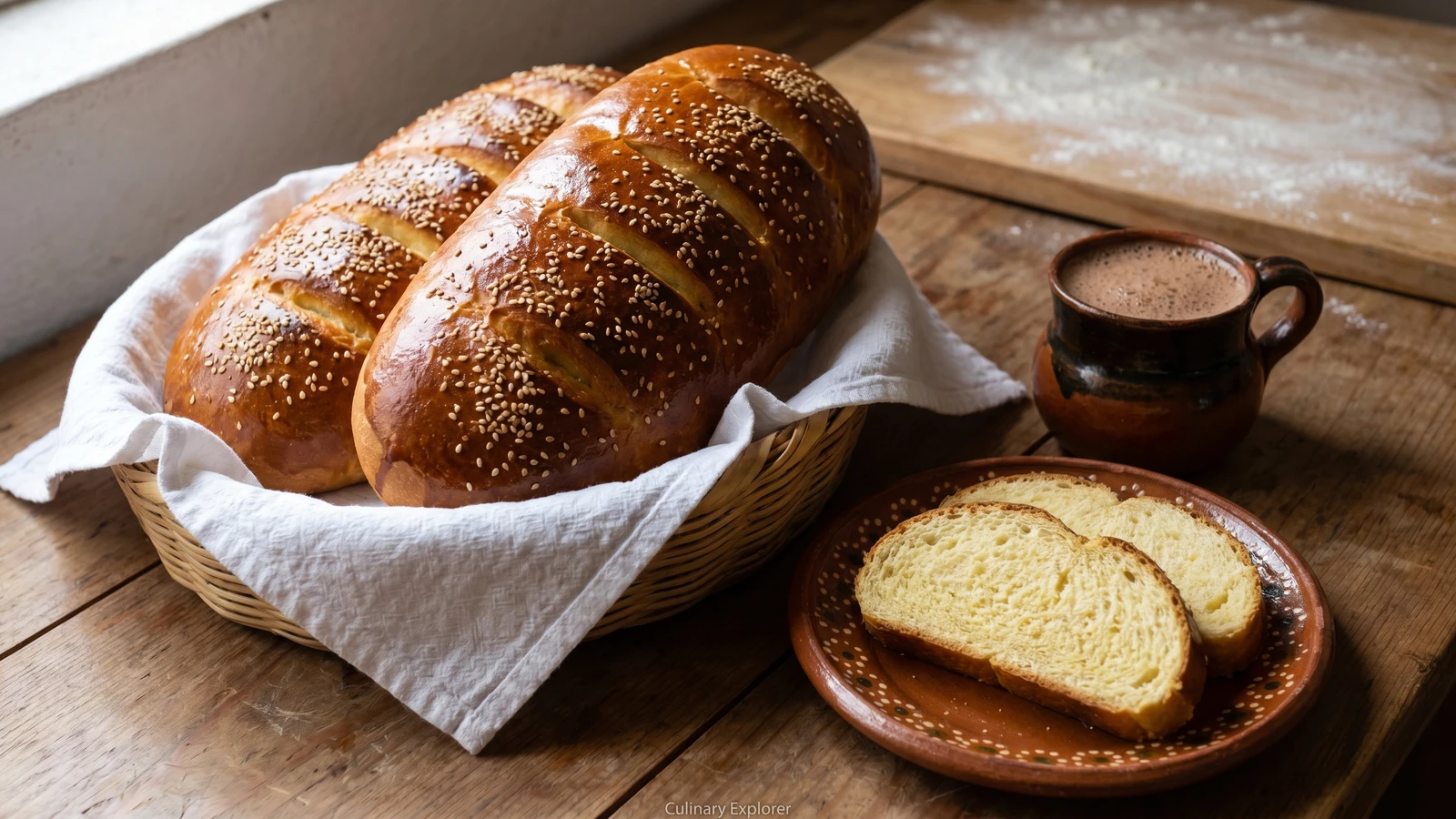
Tlaxcala's patronal feast bread, a golden enriched loaf from San Juan Totolac and San Juan Huactzinco, scented with walnut essence and baked for families who know celebration takes work.
Tlaxcala owns this bread. San Juan Totolac and San Juan Huactzinco, west of the state capital, are the towns you name before you name the ingredients. This is not pan dulce for a glass case. This is pan de fiesta, the loaf that appears for patronal feasts, weddings, baptisms, and the kind of table where one bread is cut for many hands.
The scent that defines it is esencia de nuez, walnut essence. Not cinnamon. Not vanilla pretending to be tradition. The dough is enriched with eggs, milk, sugar, butter, and a little manteca de cerdo for tenderness. The bakers in Huactzinco work the dough until it is smooth and alive, then shape long loaves or rounded pieces that brown deep and glossy in wood ovens. In a home kitchen, your oven will do the job if you respect the fermentation.
I learned this bread from women who were not measuring with spoons. They measured by the feel of the dough under the palm and the smell of the oven when the crust began to darken. So I give you measurements, because teaching requires structure, but do not stop using your hands. The dough should feel soft, elastic, and slightly tacky, never dry. No me vengas con atajos. The rise is part of the bread.
Serve it in thick slices on barro rojo de Tlaxcala or a woven basket lined with a clean servilleta. Coffee, atole, or chocolate de metate belong beside it. Cada estado, su propia cocina.
Pan de fiesta tlaxcalteca grew from the wheat-bread traditions introduced after the Spanish conquest in the 16th century, when Tlaxcala's early colonial convents and village ovens helped establish wheat baking alongside older maize cookery. San Juan Huactzinco and San Juan Totolac became known for feast breads baked in communal and family wood ovens, especially for patron saint celebrations. The use of walnut essence is a regional marker, tied to local bakery practice rather than to the national pan dulce repertoire.
Quantity
1 cup
warmed until just lukewarm
Quantity
2 1/4 teaspoons
Quantity
3/4 cup
divided
Quantity
5 cups
plus more as needed
Quantity
1 1/2 teaspoons
Quantity
4
at room temperature
Quantity
2
at room temperature
Quantity
6 tablespoons
softened
Quantity
3 tablespoons
softened
Quantity
2 teaspoons
Quantity
1 teaspoon
Quantity
1 tablespoon
Quantity
1 large egg beaten with 1 tablespoon milk
Quantity
2 tablespoons
for topping
| Ingredient | Quantity |
|---|---|
| whole milkwarmed until just lukewarm | 1 cup |
| active dry yeast | 2 1/4 teaspoons |
| granulated sugardivided | 3/4 cup |
| bread flourplus more as needed | 5 cups |
| fine sea salt | 1 1/2 teaspoons |
| large eggsat room temperature | 4 |
| large egg yolksat room temperature | 2 |
| unsalted buttersoftened | 6 tablespoons |
| manteca de cerdosoftened | 3 tablespoons |
| walnut essence (esencia de nuez) | 2 teaspoons |
| Mexican vanilla extract | 1 teaspoon |
| orange blossom water (optional) | 1 tablespoon |
| egg wash | 1 large egg beaten with 1 tablespoon milk |
| sesame seedsfor topping | 2 tablespoons |
Pour the lukewarm milk into a large bowl. Stir in the yeast and 1 tablespoon of the sugar. Let it stand for 8 to 10 minutes, until the surface looks foamy and smells gently fermented. If it stays flat, your yeast is dead. Start again. Feast bread does not forgive dead yeast.
In the bowl of a stand mixer, combine the bread flour, remaining sugar, and salt. Add the foamy yeast mixture, whole eggs, egg yolks, walnut essence, vanilla, and orange blossom water if using. Mix with the dough hook on low until a rough dough forms, about 3 minutes. It will look uneven at first. Leave it alone and let the flour hydrate.
Add the softened butter one tablespoon at a time, then add the manteca de cerdo in small pieces. Knead on medium-low for 10 to 12 minutes, until the dough pulls from the sides of the bowl and feels smooth, elastic, and slightly tacky. La manteca es el sabor, and here it also gives the crumb its soft pull. If the dough is wet enough to smear, add flour 1 tablespoon at a time. Do not make it stiff.
Transfer the dough to a lightly greased bowl and cover with a clean kitchen towel. Let it rise in a warm place for 1 1/2 to 2 hours, until doubled and puffy. Press a floured finger into the dough. If the indentation fills slowly, it is ready. If it springs back fast, give it more time. The women who perfected this bread watched the dough, not the clock.
Turn the dough onto a lightly floured table and divide it into 2 equal pieces. Shape each piece into a tight oval loaf, tucking the edges underneath so the top is smooth. Place the loaves on parchment-lined baking sheets, leaving space for expansion. In Totolac and Huactzinco you will see larger feast loaves shaped by practiced hands. Yours should be generous, not timid.
Cover the shaped loaves lightly and let them rise for 45 to 60 minutes, until swollen and soft. Heat the oven to 350F during the last 20 minutes. If you have a baking stone, heat it on the middle rack. A wood oven gives a deeper crust, but a steady home oven works when the dough has been allowed to rise properly.
Brush the loaves gently with the egg wash. Do not press the air out. Sprinkle sesame seeds over the top. Use a sharp knife or lame to make 3 shallow diagonal cuts across each loaf. The cuts guide the expansion so the bread opens cleanly instead of tearing wherever it wants.
Bake for 30 to 35 minutes, rotating the pans halfway through, until the loaves are deep golden brown and sound hollow when tapped underneath. The crust should be glossy and firm, the kitchen should smell of egg, walnut, and toasted sesame. If you use a thermometer, the center should read 190F to 195F.
Move the loaves to a rack and let them cool at least 45 minutes before slicing. Cut too early and you crush the crumb you worked for. Serve thick slices in a basket lined with a servilleta, or on barro rojo de Tlaxcala with chocolate de metate, cafe de olla, or atole. Recetas probadas y garantizadas.
1 serving (about 805g)
Culinary guides, cultural storytelling, and the editorial depth that makes cooking meaningful.
Discover Culinary ExplorerChef Lupita
Guanajuato's daily bread from Acámbaro, a small glazed roll built on pata, enriched with manteca de cerdo, and baked until the top shines lightly for merienda.

Chef Lupita
Michoacan's Tinguindin aguacatas are flat, leaf-scored sweet breads made with harina de trigo, piloncillo, anise, and manteca de cerdo, shaped by hand for the wood oven.

Chef Lupita
From Ajijic on Lake Chapala, Pan Tachihual is a lightly sweet wedding loaf built with harina de trigo, harina de maiz, piloncillo, manteca, anise, and the old Guadalajara pata.

Chef Lupita
Comitán's pan de yema shaped into little pigs, birds, and rabbits, a Chiapas bakery bread rich with egg yolks, manteca de cerdo, and anís, baked golden on hoja de plátano.