
Chef Lupita
Acitrón de Cidra Conventual
Puebla's convent-style acitrón, made from cidra peel instead of endangered biznaga, built through repeated syrup soakings until the cubes turn firm, translucent, and ready for rosca or chiles en nogada.
A cooking platform built around craft, culture, and the stories behind what we eat.
Created by
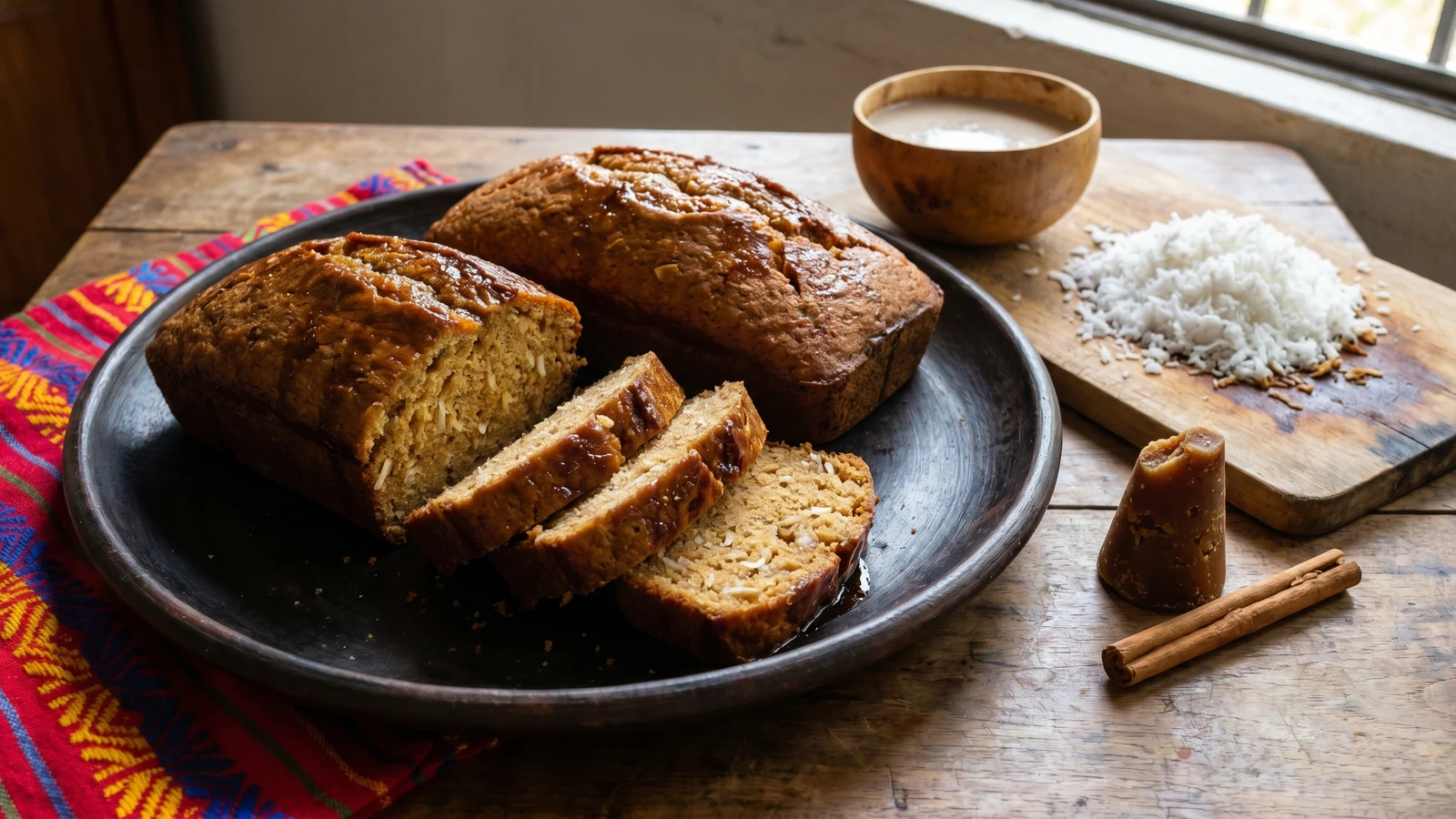
Veracruz's Afro-Jarocho coconut bread from Sotavento and Coyolillo, dense with fresh coconut, piloncillo syrup, canela, and coconut milk squeezed by hand before the dough goes into the oven.
Veracruz, the Sotavento, Coyolillo, and the old port kitchens are where this bread belongs. This is not a generic tropical cake with coconut sprinkled on top. It is Afro-Jarocho home bread, dense, lightly sweet, and built from the coastal pantry: mature coconut, piloncillo, canela, wheat flour, and the fat that comes from the coconut milk itself, helped by a little manteca de cerdo because Mexican pan bread knows what makes a crumb tender.
The work starts before the bowl. You crack the coconut, save the water, grate the meat, squeeze the milk, and cook the piloncillo until it smells like dark cane and cinnamon. Desiccated coconut will not do this. White sugar will not do this. If you remove the fresh coconut and piloncillo, you haven't made Veracruz pan de coco. You've made a bakery shortcut with a coastal name. No me vengas con atajos.
I learned this style from women who spoke about coconut the way chile vendors at La Merced speak about guajillo: with authority, not decoration. In Coyolillo, where Black Veracruz memory survives in carnival, music, food, and family kitchens, sweets like this carry the same lesson my mother wrote all through her notebook: use what the land gives you, and use it completely.
This bread is better after it rests. The crumb settles, the piloncillo deepens, and the coconut perfumes the loaf from inside. Make two loaves. One for the table today, one wrapped for tomorrow morning with cafe de olla or atole in a jicara. Saber cocinar es saber vivir.
Veracruz became New Spain's principal Atlantic port in the 16th century, and enslaved Africans and their descendants shaped the foodways, music, and labor systems of the Gulf coast from the port city into communities such as Coyolillo in Actopan. Coconut entered Mexican coastal cooking through colonial maritime routes across the Caribbean and the Pacific, then settled into sweet pantries built on piloncillo, canela, platano macho, yuca, and fresh fruit. Veracruz pan de coco shares a wider Afro-Caribbean logic with Garifuna coconut breads from the Central American coast, but this version belongs to the Afro-Jarocho kitchens of the Gulf.
Quantity
2 large
water reserved and meat finely grated
Quantity
1 cup
for squeezing coconut milk
Quantity
1 cone (8 ounces)
chopped
Quantity
3/4 cup
for the piloncillo syrup
Quantity
1
Quantity
1 1/4 teaspoons
divided
Quantity
2 1/4 teaspoons
Quantity
4 cups
plus more only if needed
Quantity
1/3 cup, plus 1 tablespoon
softened, with extra for greasing
Quantity
2 cups
reserved from the coconuts
| Ingredient | Quantity |
|---|---|
| mature brown coconutswater reserved and meat finely grated | 2 large |
| hot waterfor squeezing coconut milk | 1 cup |
| piloncillo conechopped | 1 cone (8 ounces) |
| reserved coconut water or plain waterfor the piloncillo syrup | 3/4 cup |
| Mexican canela stick | 1 |
| fine sea saltdivided | 1 1/4 teaspoons |
| active dry yeast | 2 1/4 teaspoons |
| all-purpose flourplus more only if needed | 4 cups |
| manteca de cerdosoftened, with extra for greasing | 1/3 cup, plus 1 tablespoon |
| fresh grated coconutreserved from the coconuts | 2 cups |
Pierce the soft eyes of each coconut and drain the water into a cup. Smell it. It should smell clean and sweet, never sour. Crack the shells, pry out the meat, and grate it finely. Set aside 2 cups of the fresh grated coconut for the dough. This is the body of the bread, not decoration.
Put the remaining grated coconut in a blender with 1 cup hot water and enough reserved coconut water to help it move. Blend until thick and white. Pour into a clean cotton cloth and squeeze hard over a bowl until you have 1 cup fresh coconut milk. It should look rich and slightly glossy from its own fat. That is what gives the bread its coastal character.
Combine the chopped piloncillo, 3/4 cup reserved coconut water or plain water, the canela stick, and 1/4 teaspoon salt in a small saucepan. Simmer over medium-low heat until the piloncillo dissolves and the syrup lightly coats a spoon, about 8 to 10 minutes. Remove the canela and cool the syrup until warm, not hot. Measure 3/4 cup for the dough and save the rest for brushing the loaves.
Warm the fresh coconut milk until it feels like a warm bath, not hot. Stir in the yeast and 1 tablespoon of the piloncillo syrup. Let it stand 8 to 10 minutes, until foamy. If it does not foam, your yeast is dead or your milk was too hot. Start again. Bread does not forgive dead yeast.
In a large bowl, mix the flour with the remaining 1 teaspoon salt. Add the foamy coconut milk, 3/4 cup piloncillo syrup, softened manteca de cerdo, and the 2 cups reserved fresh grated coconut. Mix until a heavy, sticky dough forms. Knead 8 to 10 minutes by hand, or 6 minutes in a stand mixer with the dough hook. The dough should be tacky and dense, not dry. Add flour by the tablespoon only if it refuses to come together.
Grease a bowl with a little manteca de cerdo and place the dough inside. Cover with a clean cloth and let it rise in a warm part of the kitchen for 1 1/2 to 2 hours. It may not double dramatically because coconut and piloncillo are heavy. Look for a puffed surface and a finger mark that fills back slowly.
Grease two 8-inch round cake pans or oven-safe clay cazuelas with manteca de cerdo. Divide the dough in half, shape each half into a round, and press it gently into the pans. Cover again and let rise 45 to 60 minutes, until the dough looks swollen and relaxed. The second rise gives the crumb room. Skip it and the bread bakes tight.
Heat the oven to 350F. Bake the loaves for 35 to 40 minutes, until the tops are deep golden brown, the edges pull slightly from the pan, and the center registers about 195F. Brush the tops with the reserved piloncillo syrup as soon as they come out. The surface should turn glossy and dark, with coconut showing through the crumb.
Let the loaves rest at least 45 minutes before slicing. Hot pan de coco crumbles because the piloncillo and coconut have not settled. Serve thick slices on a dark clay platter with cafe de olla, atole de coco, or nothing at all. The bread knows what it is. Asi se hace y punto.
1 serving (about 75g)
Culinary guides, cultural storytelling, and the editorial depth that makes cooking meaningful.
Discover Culinary ExplorerChef Lupita
Puebla's convent-style acitrón, made from cidra peel instead of endangered biznaga, built through repeated syrup soakings until the cubes turn firm, translucent, and ready for rosca or chiles en nogada.

Chef Lupita
Ciudad de México's Tulyehualco alegría is popped huautli folded into piloncillo honey, pressed with peanuts, pepitas, and raisins, then cut into the rectangular bars that built a pueblo's identity.

Chef Lupita
Oaxaca's pre-Columbian amaranth bar, popped on a hot comal and bound with piloncillo, honey, and the sacred Zapotec grain that the Spanish tried, and failed, to outlaw.

Chef Lupita
Querétaro's mercado candy of popped amaranto pressed with dark piloncillo syrup, pepitas, pecans, and cacahuate, a Bajío sweet that respects the seed before it decorates the table.