
Chef Lesia
Gombovtsi (ґомбовці, plum-stuffed steamed dumplings)
The first cut is the whole argument: pale potato dough, toasted butter crumbs, then a hot purple plum collapsing into syrup at the center.
A cooking platform built around craft, culture, and the stories behind what we eat.
Created by
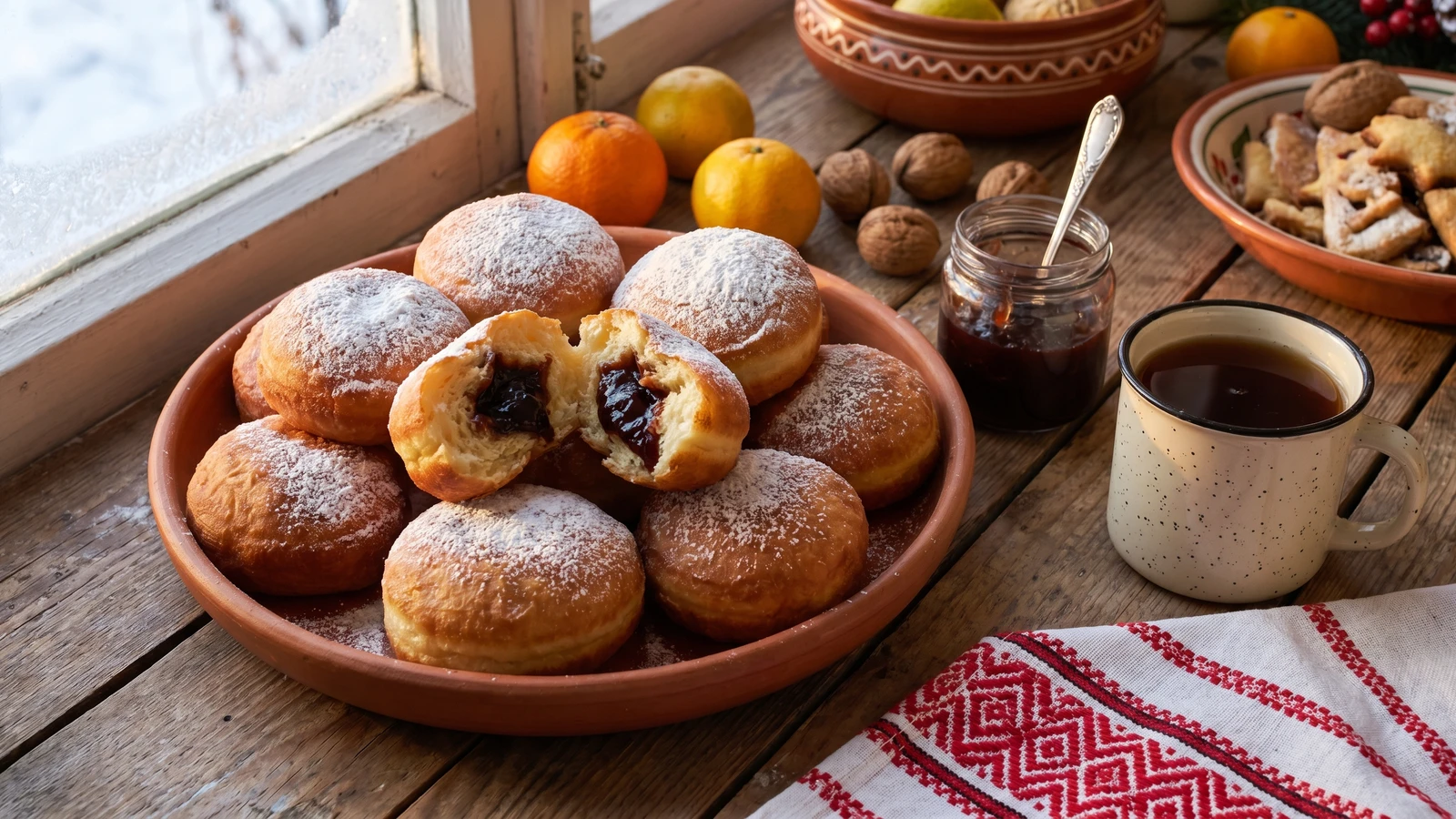
The first bite should give way to a dark seam of plum povydlo, tart and thick, inside a doughnut fried gold enough to make the Christmas table lean closer.
The arresting thing is the line of jam. Not the sugar on your fingers, though that helps, and not the gold of the fried dough, but that dark plum povydlo hiding inside, thick enough to stay put, sharp enough to wake the sweet bread around it. A good pampukh is light, but it is not timid.
These are the Christmas doughnuts of the west, especially Halychyna, made for Rizdvo when the house already smells of poppy seed, honey, dried fruit, and somebody's coat drying by the door. They are sweet pampukhy, not the garlic pampushky that meet borshch, and the spelling matters because the table knows the difference. Aunt Nadia wrote only "fry until it sounds right," which is irritating until you hear it: the oil settles into a steady lively hiss, not a furious spit, and the doughnuts turn the color of a winter candle.
The one thing that decides the dish is the jam. Use thick povydlo, the long-cooked plum butter, or rose-petal jam if you can find it. Thin jam leaks, burns, and makes comedy of your careful work. If that's all you have, cook it down first until a spoon dragged through the pan leaves a path. Then fill generously. There's no tradition of a shy doughnut.
Pampukhy are especially tied to western Ukrainian Christmas tables in Halychyna, Volyn, Bukovyna, and the Carpathian foothills, where Polish pączki, Jewish fried festival sweets, and Ukrainian wheat-and-fruit baking met in market towns and home kitchens. Older fast-day versions for Sviat Vechir could be made without eggs or dairy, while richer modern holiday pampukhy often use milk, yolks, and butter. Fillings tell you where you are: plum povydlo in orchard country, rose-petal jam around Lviv and foothill gardens, poppy seed where the Christmas table is already heavy with mak.
Quantity
500g
plus more for dusting
Quantity
7g
Quantity
60g
Quantity
250ml
Quantity
3
Quantity
1
Quantity
50g
Quantity
1 tablespoon
Quantity
1 tablespoon
Quantity
1 teaspoon
Quantity
1 teaspoon
finely grated
Quantity
250g
Quantity
1.5 litres
for frying
Quantity
80g
for finishing
| Ingredient | Quantity |
|---|---|
| strong white flourplus more for dusting | 500g |
| dried yeast | 7g |
| sugar | 60g |
| warm milk | 250ml |
| egg yolks | 3 |
| whole egg | 1 |
| soft butter | 50g |
| neutral oil or unrefined sunflower oil | 1 tablespoon |
| vodka or dark rum | 1 tablespoon |
| fine sea salt | 1 teaspoon |
| lemon zestfinely grated | 1 teaspoon |
| thick plum povydlo or rose-petal jam | 250g |
| neutral oilfor frying | 1.5 litres |
| caster sugar or icing sugarfor finishing | 80g |
Stir the yeast and a spoonful of the sugar into the warm milk and leave it until the surface looks foamy and alive. If it sits flat and sulky, start again with fresher yeast. Doughnuts are generous, but dead yeast is dead yeast.
Put the flour, remaining sugar, salt, and lemon zest in a large bowl. Add the foamy milk, yolks, whole egg, vodka or rum, and the spoon of oil, then mix until a rough dough forms. Work in the butter last, a little at a time, until the dough turns soft and slightly glossy.
Knead by hand or mixer until the dough smooths out and pulls away from the bowl in long elastic strands. It should feel tender, warm, and alive under your palms, not stiff like bread dough. If it clings badly, dust with flour by the pinch, not the handful.
Cover the bowl and leave the dough somewhere warm until it has grown light and doubled. Press it gently with a floured finger; if the dent slowly fills back, it is ready. Watch the dough, not the clock. A cold kitchen is allowed to be slow.
Turn the dough onto a lightly floured surface and roll it to about 1.5cm thick. Cut rounds with a glass or cutter, then cover them with a cloth and let them puff until they look soft at the edges. Scraps can be pressed together once, but don't bully them or they'll fry tough.
Heat the oil in a wide heavy pot until a scrap of dough rises with small eager bubbles around it. Fry a few rounds at a time, giving them space, and turn when the underside is deep golden. Listen for a steady lively hiss. If the oil roars, lower the heat; if it goes quiet, wait for it to recover.
Lift the pampukhy onto a rack or paper-lined tray and let the oil drip away. While they are still warm, roll them in caster sugar or dust them with icing sugar. They should feel light in the hand, with a thin golden skin and a soft middle.
Spoon the thick povydlo or rose jam into a piping bag fitted with a small plain nozzle. Push into the pale side of each doughnut and fill until you feel the doughnut grow a little heavier in your hand. Stop before the jam tries to announce itself out the other side. Eat one while standing. Quality control is holy work.
1 serving (about 75g)
Culinary guides, cultural storytelling, and the editorial depth that makes cooking meaningful.
Discover Culinary ExplorerChef Lesia
The first cut is the whole argument: pale potato dough, toasted butter crumbs, then a hot purple plum collapsing into syrup at the center.

Chef Lesia
The first spoonful of Christmas Eve is dark wheat, white poppy milk, honey, nuts, and memory. Kutia comes before everything else because grain must speak first.

Chef Lesia
Two dry, crackling hazelnut meringues hold a whole city's pride between them, with cocoa buttercream, pale cream flowers, and the sound of a knife breaking through sugar.

Chef Lesia
A cake made from white curd goes to the table wearing black: dense, lemon-scented syr under dark chocolate glaze, sliced cold and proud from the west.