
Chef Lupita
Birria Tacos with Consome
Jalisco's goat birria, born around Cocula and carried into Guadalajara's markets, slow-braised in ancho, guajillo, cascabel, and chile de arbol, then tucked into corn tortillas crisped in its own red fat.
A cooking platform built around craft, culture, and the stories behind what we eat.
Created by
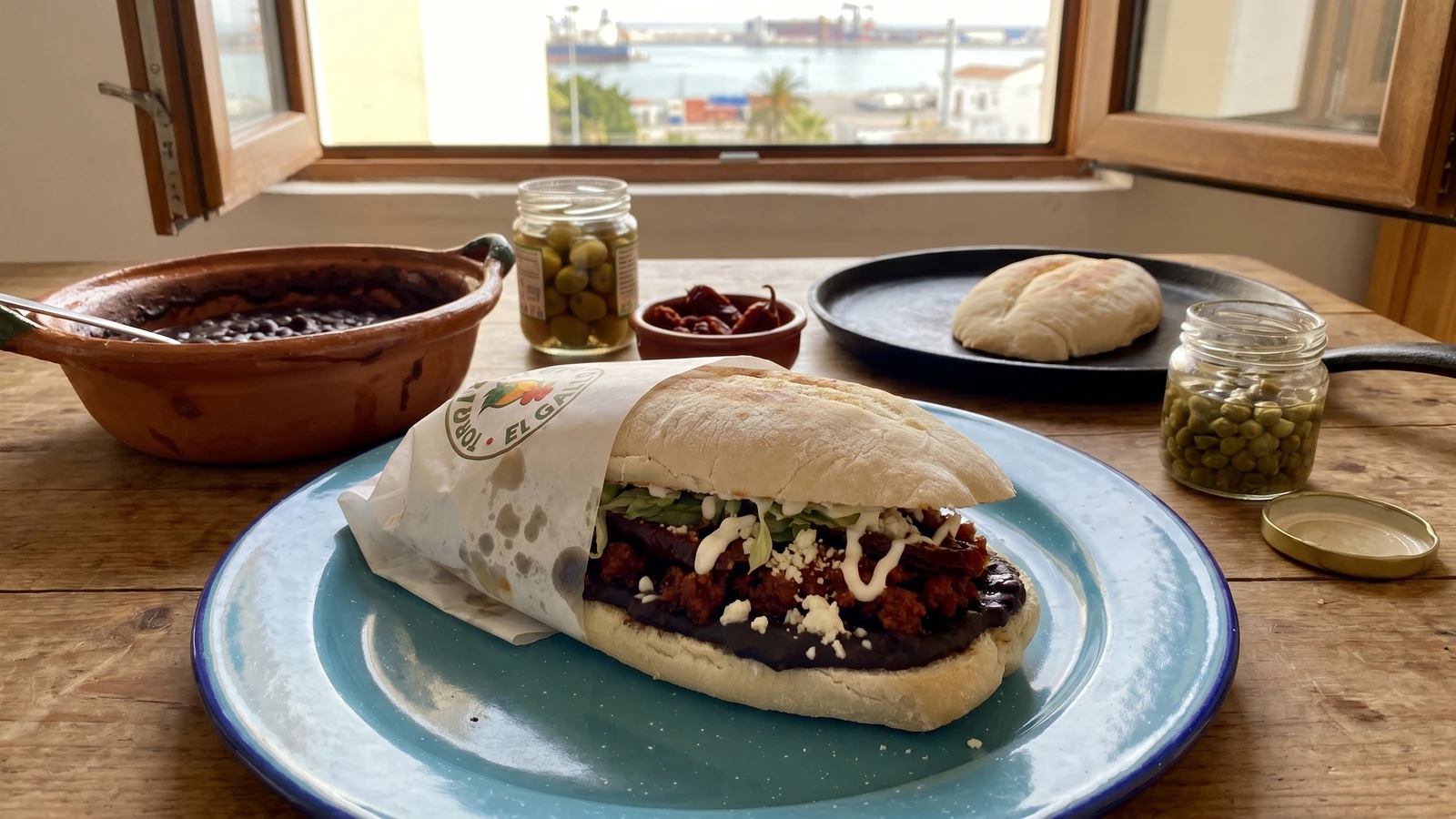
Veracruz's original pambazo, before Mexico City dipped it in red chile. A pale, flour-dusted roll split and loaded with lard-rich black refried beans, crumbled chorizo, and smoky chipotle. La Tercera Raíz on one plate.
This is Veracruz. The port. And this is the original pambazo, the one that came before Mexico City got hold of it and started dipping the bread in guajillo. The chilango pambazo is red, soaked in chile, stuffed with papa con chorizo. The jarocho pambazo is pale. It stays pale. That is the whole point.
The bread is a white roll dusted in flour, and the flour stays on. You do not drown it in red sauce here. The name says it plainly: pan bazo, the humble bread, the cheap bread of the poor, dusted white and split down the middle. Inside go frijoles negros refritos, fried in manteca until they turn dark and glossy. Black beans. Not pinto. Then chorizo, then chipotle. That is the trinity of the jarocho pambazo and it does not need a fourth thing.
Veracruz does not cook like the central highlands. There is no guajillo-ancho-mulato base here. The port's pantry is jitomate, olive, caper, chipotle, chiltepín, the Indigenous hand and the Spanish hand and the African hand all working the same plate. This is La Tercera Raíz, the third root. Veracruz is where Spain came ashore, where the wheat and the olives and the capers landed, and where the cooking of three continents learned to live in one kitchen.
My notebook has a page from a señora who sold pambazos near the portales on the malecón, the ones you eat at sunset with the boats coming in. She refried her beans in lard until they were the color of dark chocolate and warmed the bread on a plancha so old it had a groove worn into it. She told me the bread should never be wet. Toast it, do not soak it. Saber cocinar es saber vivir.
The word 'pambazo' descends from 'pan basso' or 'pan bazo,' a colonial term for the low-grade, grayish bread made from second-rate flour and eaten by the poor of New Spain. The dish later split into two regional identities: the Veracruz original keeps the pale, flour-dusted roll filled with black beans and chorizo, while the central Mexican version, soaked in guajillo sauce and stuffed with potato and chorizo, became the pambazo most of the country pictures today. Veracruz cuisine carries 'La Tercera Raíz,' the African heritage that arrived through the port alongside Spanish wheat, olives, and capers, making it one of the few Mexican regional kitchens where the Indigenous, European, and African roots are all equally visible on the plate.
Quantity
1 pound (about 2 cups)
picked over and rinsed
Quantity
1/2 medium
left in one piece
Quantity
1/2 medium
finely chopped
Quantity
3
peeled
Quantity
2 sprigs
Quantity
1 tablespoon, plus more to taste
Quantity
5 tablespoons
divided
Quantity
12 ounces
casings removed
Quantity
1 can (7 ounces)
Quantity
6
split almost through with a hinge
Quantity
2 tablespoons
for dusting the rolls
Quantity
2 cups
Quantity
1 cup
Quantity
1 cup
Quantity
for serving
| Ingredient | Quantity |
|---|---|
| dried black beanspicked over and rinsed | 1 pound (about 2 cups) |
| white onion (for the beans)left in one piece | 1/2 medium |
| white onion (for refrying)finely chopped | 1/2 medium |
| garlic clovespeeled | 3 |
| fresh epazote | 2 sprigs |
| kosher salt | 1 tablespoon, plus more to taste |
| lard (manteca de cerdo)divided | 5 tablespoons |
| Mexican chorizocasings removed | 12 ounces |
| chipotle chiles en adobo | 1 can (7 ounces) |
| pambazo rolls or telerassplit almost through with a hinge | 6 |
| all-purpose flourfor dusting the rolls | 2 tablespoons |
| shredded romaine or iceberg lettuce | 2 cups |
| Mexican crema | 1 cup |
| crumbled queso fresco | 1 cup |
| pickled red onion or thinly sliced white onion (optional) | for serving |
Put the soaked, rinsed black beans in a heavy pot or olla de barro. Cover with cold water by three inches. Add the half onion in one piece and the garlic. Bring to a gentle simmer and cook, partially covered, for about an hour and a half, until the beans are soft and creamy at the center. Add the epazote and the salt only in the last twenty minutes. Salt them early and the skins toughen. The epazote is not decoration. It is the herb that makes a Gulf-coast black bean taste like itself.
Melt 4 tablespoons of lard in a wide skillet or cazuela over medium heat. Add the finely chopped onion and cook until soft and golden, about five minutes. Ladle in the beans with a little of their liquid and mash them as they fry, adding more liquid as you go. Cook until they pull away from the pan in a thick, glossy paste, dark and almost black. La manteca es el sabor. These beans are the mortar that holds the whole pambazo together, so do not let them go dry and do not skimp on the fat.
In a separate skillet, crumble the chorizo and cook over medium heat, breaking it apart with a spoon, until it renders its red fat and the edges crisp, eight to ten minutes. Good Mexican chorizo throws off enough fat that you will not need to add any. If yours runs lean, add a spoonful of lard. Do not drain it. That red fat is the flavor.
Slice 4 to 6 chipotles en adobo into thin strips and stir them into the cooked chorizo along with a spoonful of the adobo from the can. Let it warm together for a minute. Taste. It should be smoky and a little sweet, with heat that climbs slowly. This is the Veracruz chile, the smoked jalapeño, carrying the wood smoke that runs through so much of the Gulf-coast pantry. No guajillo here. That is the highlands.
Split each roll almost all the way through, leaving a hinge. Dust the tops lightly with flour, the way the panaderos do, so the bread reads pale and matte. Melt the last tablespoon of lard on a comal or heavy griddle and warm the rolls cut side down until just toasted and hot through. Do not soak this bread. The jarocho pambazo stays dry on the outside and the flour stays white. That is what makes it Veracruz and not chilango.
Open each warm roll. Spread a thick layer of the hot refried black beans across the bottom, all the way to the edges. Pile on the chorizo with its chipotle, then top with shredded lettuce, a drizzle of crema, and a handful of crumbled queso fresco. Add pickled onion if you like. Close it, press it gently between your hands, and eat it right away while the beans are hot and the bread is still warm. Así se hace y punto.
1 serving (about 425g)
Culinary guides, cultural storytelling, and the editorial depth that makes cooking meaningful.
Discover Culinary ExplorerChef Lupita
Jalisco's goat birria, born around Cocula and carried into Guadalajara's markets, slow-braised in ancho, guajillo, cascabel, and chile de arbol, then tucked into corn tortillas crisped in its own red fat.

Chef Lupita
Sonora's working morning burrito: chicharrón de cáscara stewed in chile colorado with diced potato, rolled tight in a paper-thin tortilla sobaquera and eaten standing up at the carreta.

Chef Lupita
Mocorito's pork chilorio, shredded and confited in lard with chile ancho and pasilla, rolled into a thin handmade flour tortilla. The burrito Sinaloa sends out into the world.

Chef Lupita
Sonora's morning burrito of mashed pinto frijoles puercos and melted queso asadero, wrapped in a paper-thin sobaquera and seared on the comal until the cheese pulls in long strings.