
Chef Lesia
Arnautka (арнаутка, southern durum-wheat loaf)
Durum wheat makes bread the color of late steppe sun: golden, firm, nutty, and strong enough to hold salo, tomato juice, and green sunflower oil without collapsing.
A cooking platform built around craft, culture, and the stories behind what we eat.
Created by
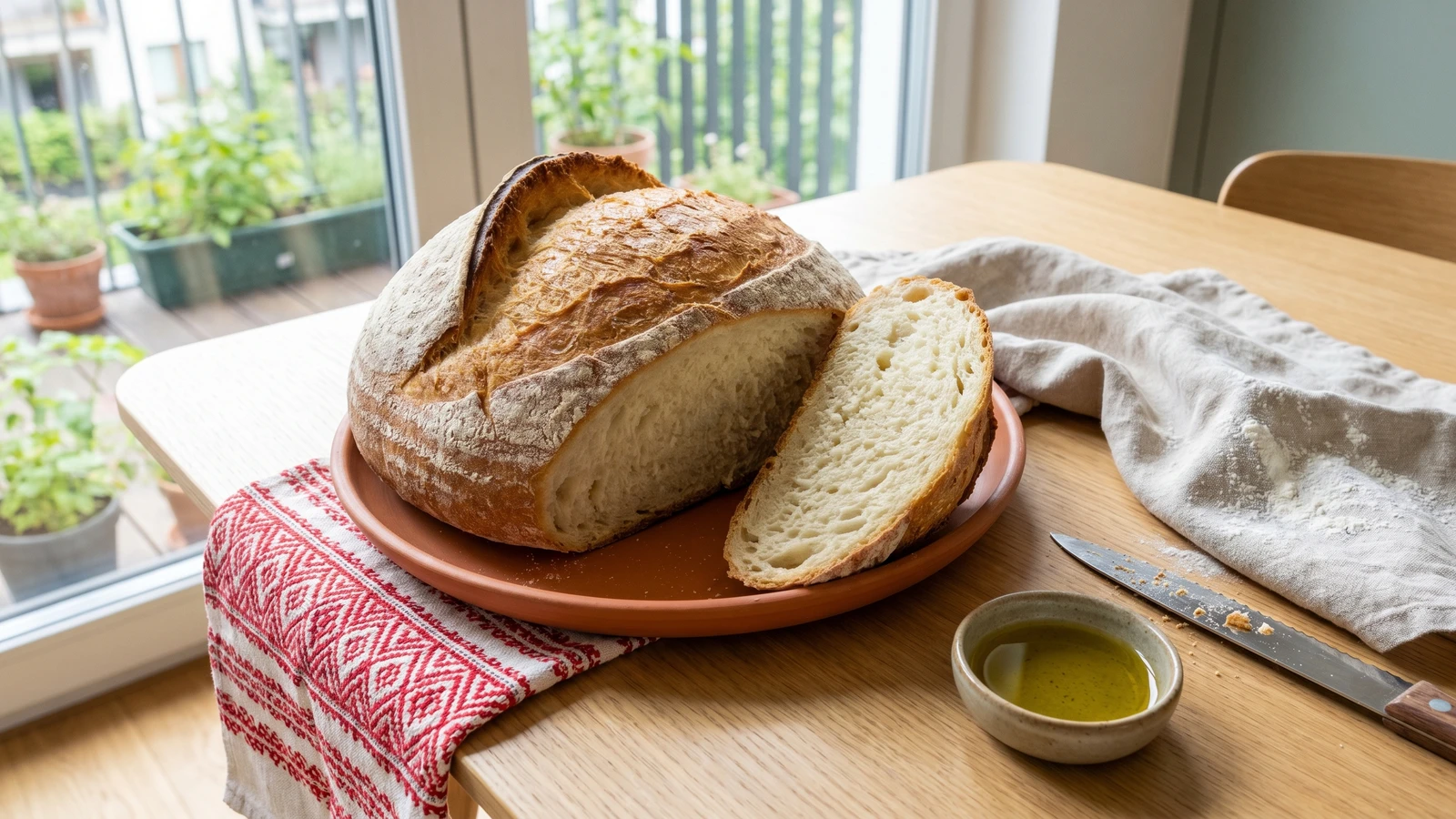
One curved slash turns an ordinary round loaf into palyanytsia: a wheat bread with a lifted golden kozyr, the little visor that tells you the dough had strength.
The most beautiful part is the cut. One curved slash, made just before the loaf goes into the oven, lifts as the bread swells and becomes a kozyr, a little visor of crust standing proud over the soft white crumb. If the dough is weak, it sulks flat. If you have waited properly, it opens like a smile.
This is everyday wheat bread with ceremony still inside it. Not sweet, not enriched, not trying to be a festival loaf, just flour, water, salt, yeast, and time doing their work. The poolish sits cold overnight until it smells faintly of beer and ripe wheat; that is the one why that decides the loaf. Slow fermentation gives the crumb tenderness and flavour without making the bread heavy, and it gives the slash enough strength to lift cleanly.
Aunt Nadia wrote bread instructions as if the dough were a neighbour she expected me to know already: "until it sounds right." I laughed the first time. Then I tapped a baked loaf and understood. Hollow underneath, crackly at the visor, warm wheat smell deep in the room. My hands remember quicker than my head does.
Bake one big loaf. Slice it for sandwiches, tear it beside soup, eat the heel with green sunflower oil and salt while nobody is looking. That's not theft. That's the baker's portion.
Palyanytsia is a traditional Ukrainian round wheat loaf, especially associated with the wheat-growing center and south, where good white bread carried both daily and ceremonial meaning. The raised kozyr, formed by a curved side slash, became so recognizable that Soviet-era bakery standards listed Ukrainian palyanytsia as a distinct round loaf rather than a generic bread. In 2022 the word palyanytsia became a living marker of Ukrainian identity, because its soft consonants are notoriously difficult for many Russian speakers to pronounce correctly.
Quantity
150g
Quantity
150g
Quantity
1/8 teaspoon
Quantity
350g
Quantity
180g
Quantity
1 teaspoon
Quantity
10g
Quantity
1 tablespoon, plus more for the bowl
Quantity
for dusting
| Ingredient | Quantity |
|---|---|
| strong white bread flour (poolish) | 150g |
| cool water (poolish) | 150g |
| dried yeast (poolish) | 1/8 teaspoon |
| strong white bread flour | 350g |
| lukewarm water | 180g |
| dried yeast | 1 teaspoon |
| fine sea salt | 10g |
| unrefined sunflower oil | 1 tablespoon, plus more for the bowl |
| fine flour or semolina (optional) | for dusting |
The night before, stir the poolish flour, cool water, and tiny pinch of yeast into a loose paste. Cover it and put it in the fridge. By morning it should be bubbled across the top and smell faintly of beer, wheat, and something waking up.
Scrape the poolish into a large bowl, add the lukewarm water and yeast, then mix in the flour and salt. Add the sunflower oil last. The dough should be soft and a little tacky, not wet enough to pour and not stiff like dumpling dough. Cover it for twenty minutes so the flour drinks properly.
Knead by hand for about ten minutes, or in a mixer until the dough pulls from the bowl and stretches without tearing at once. It should feel springy under your palms and smoother than when you started. If it sticks, oil your hands lightly instead of burying it in flour.
Put the dough in a lightly oiled bowl, cover it, and leave it until it has doubled and looks full of breath. A warm kitchen moves faster, a cold one slower. Press one floured finger into the side; if the dent fills back lazily, the dough is ready.
Tip the dough onto a lightly floured surface and shape it into a tight round, pulling the edges underneath until the top is smooth. Set it seam-side down on a floured tray or peel. The skin of the dough is what will hold the kozyr, so make it taut without tearing it.
Cover the shaped loaf and let it rise until it feels airy but still has strength. Heat the oven to 230C with a baking stone or heavy tray inside. Just before baking, make one deep curved slash across the upper third of the loaf, like a crescent eyebrow. Cut with confidence; a timid scratch will not lift into a visor.
Slide the loaf onto the hot stone or tray and bake until the crust is deep golden and the cut has lifted into its kozyr. Lower the oven to 200C once the loaf has sprung and continue until the underside sounds hollow when tapped. That hollow knock is Aunt Nadia's "until it sounds right."
Let the bread cool on a rack for at least an hour before slicing. I know. Cruel. But hot crumb tears and turns gummy under the knife, while cooled crumb pulls apart softly and cleanly. The heel is yours.
1 serving (about 77g)
Culinary guides, cultural storytelling, and the editorial depth that makes cooking meaningful.
Discover Culinary ExplorerChef Lesia
Durum wheat makes bread the color of late steppe sun: golden, firm, nutty, and strong enough to hold salo, tomato juice, and green sunflower oil without collapsing.

Chef Lesia
A proper hearth loaf announces itself before you cut it: dark crust, hollow knock, flour caught in the blisters, and that deep oven smell that makes people move closer.
Chef Lesia
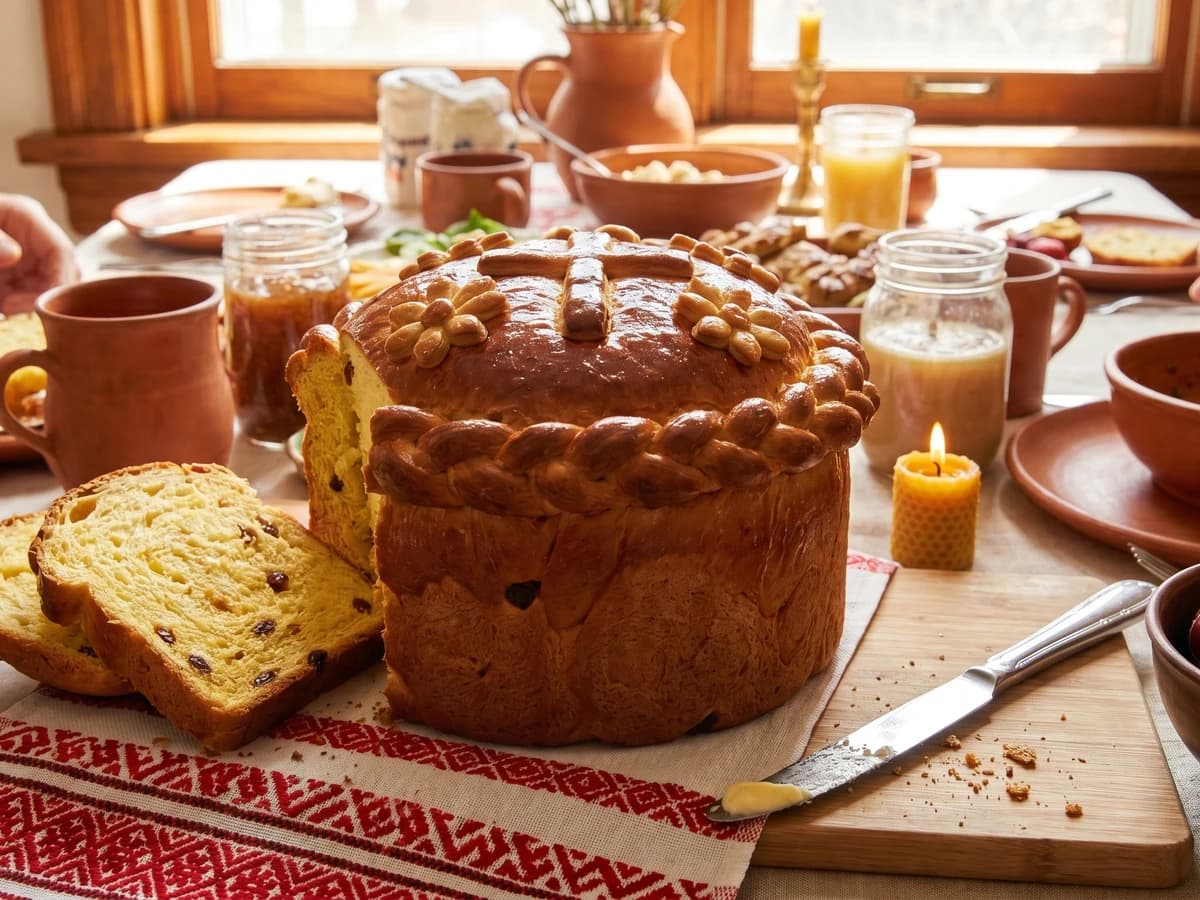
This is the Easter bread that climbs upward before it spreads out, a golden tower of eggs, butter, braids, flowers and crosses from Bukovyna's western table.
Chef Lesia
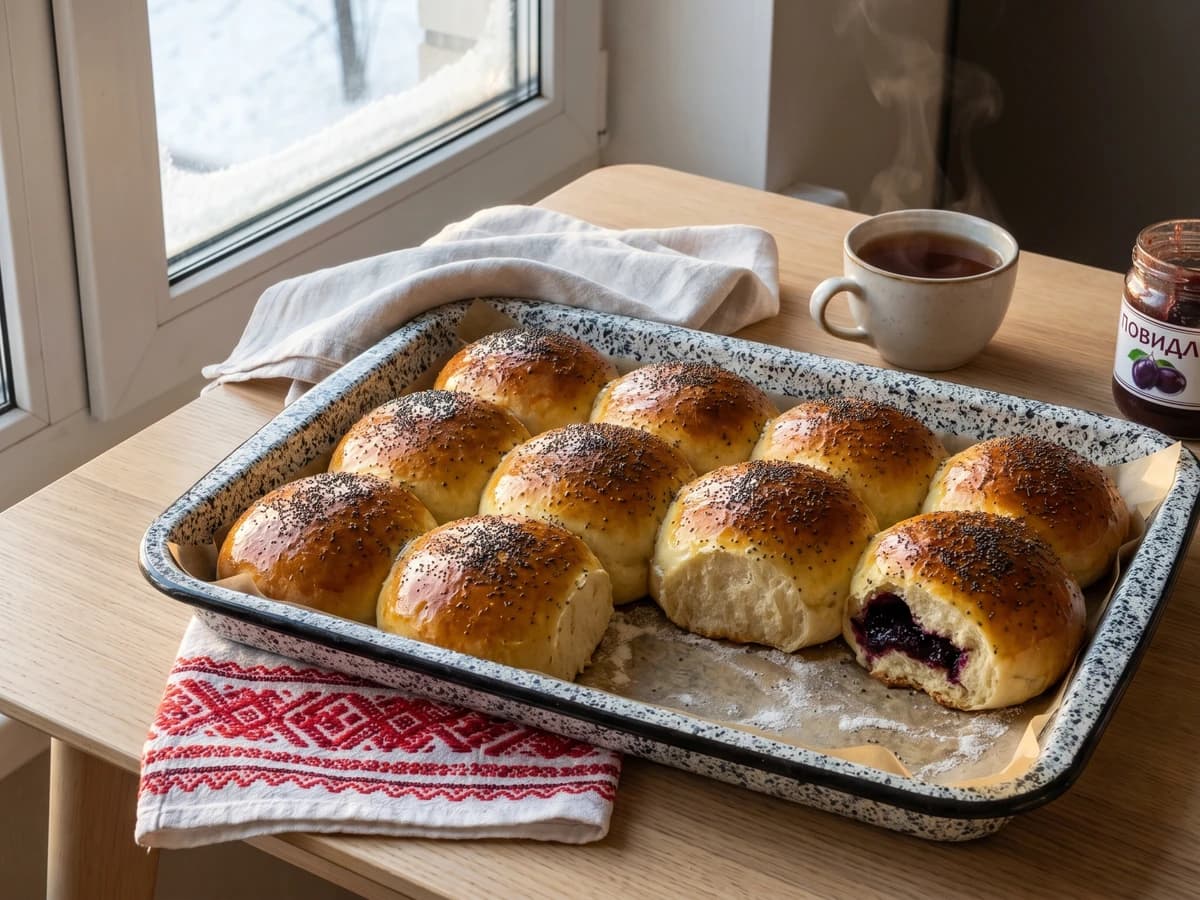
The sweetest part of bulochky is not sugar but milk: it makes a dough that pulls apart in pale threads, ready to stay plain or hide a spoon of thick povydlo.